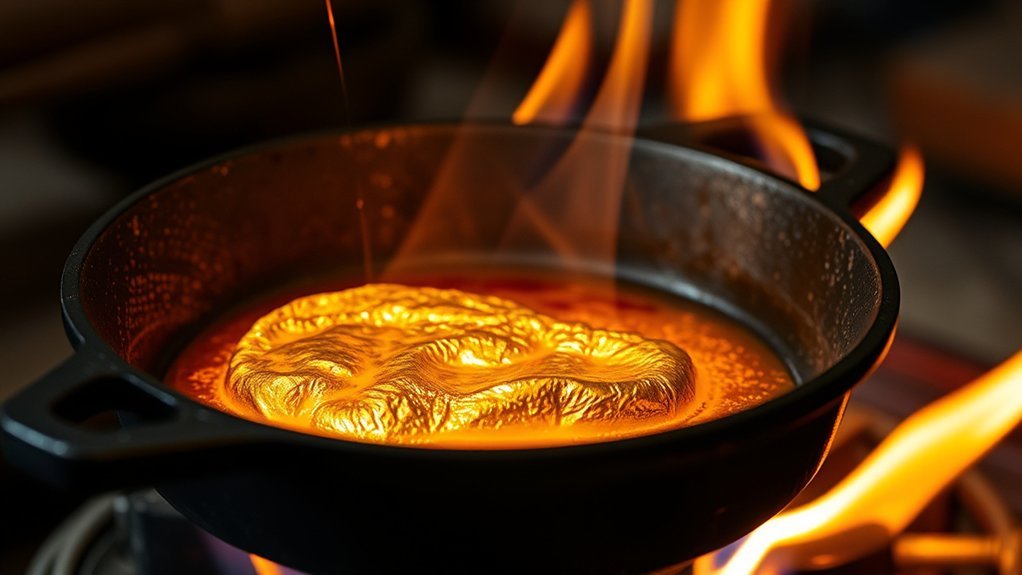

You might wonder if a cast iron skillet can handle melting gold since it’s a common, sturdy kitchen tool.
However, gold’s melting point is around 1,064°C (1,947°F), far beyond the typical heat tolerance of cast iron cookware.
Using a skillet risks damage from thermal shock and uneven heating, which can compromise both your tool and the gold itself.
Understanding these limits is essential before attempting to melt precious metals at home.
Key Takeaways
- Gold melts at about 1,064°C (1,947°F), a temperature far exceeding typical cast iron skillet heat tolerance.
- Cast iron skillets are not designed for extreme heat and risk warping or damage under gold melting conditions.
- Uneven heat distribution in cast iron impedes precise temperature control needed for safely melting gold.
- Molten gold can react with or stick to the skillet surface, causing contamination or damage.
- Specialized crucibles and furnaces are recommended for safe, efficient, and clean gold melting instead.
Can You Melt Gold in a Cast Iron Skillet?
How feasible is it to melt gold in a cast iron skillet? Gold melting requires temperatures around 1,064°C (1,947°F), which significantly exceeds typical cookware operating ranges.
When assessing cookware suitability, cast iron skillets are durable and conduct heat evenly, but they are not designed for such extreme temperatures. You risk damaging the skillet’s structural integrity and coating due to thermal stress.
Additionally, cast iron’s heat retention properties may cause uneven heating, complicating the melting process. While the skillet can technically reach high temperatures on specialized equipment, its design doesn’t support repeated exposure to gold melting conditions.
For precise and safe gold melting, dedicated crucibles made from refractory materials are preferable to ensure controlled heating and prevent contamination or cookware failure.
How Much Heat Can Cast Iron Skillets Safely Withstand?
At what temperature can you safely use a cast iron skillet without risking damage? Cast iron skillets typically withstand temperatures up to 500°F (260°C) during typical cooking without compromising their structure.
Their molt capacity is irrelevant here, as cast iron’s melting point exceeds 2,150°F (1,177°C), far beyond typical kitchen heat sources. In terms of heat handling, cast iron excels due to its high thermal mass and even heat distribution, but exposing it to sudden extreme heat or thermal shock can cause warping or cracking.
Therefore, while cast iron can endure prolonged high heat, you should avoid direct flame intensities exceeding conventional cooking ranges. Understanding these limits ensures you won’t harm your skillet’s performance or integrity when applying high heat for standard culinary use.
Why You Can’t Easily Melt Gold in a Cast Iron Skillet
Even though cast iron skillets can handle extremely high temperatures, they fall short when it comes to melting gold. Gold melts at approximately 1,064°C (1,947°F), a temperature that is at the upper edge or beyond the typical heat tolerance of cast iron cookware.
While cast iron can withstand high heat, it cannot sustain the prolonged exposure needed to liquefy gold without risking structural damage or warping. The cast iron limitations also include uneven heat distribution, which hinders achieving and maintaining the precise temperature gold requires to melt uniformly.
Additionally, the skillet’s surface may react with molten gold, contaminating the metal or causing adherence issues. Hence, you cannot melt gold efficiently or safely in a cast iron skillet due to these critical thermal and material constraints.
Tools and Methods to Melt Gold Beyond Cast Iron Skillets
What alternatives exist when cast iron skillets can’t meet the demands of melting gold? You should consider specialized tools designed for high temperatures and chemical resistance. Crucibles made from graphite, ceramic, or silicon carbide provide ideal crucible materials, capable of withstanding gold’s melting point of 1,064°C (1,947°F).
These crucibles ensure even heat distribution and prevent contamination, which is critical when working with melted gold. Additionally, you can use propane or induction furnaces, which deliver controlled, consistent heat exceeding the melting threshold.
These methods avoid the thermal limitations and potential reactions seen in cast iron. By selecting appropriate crucible materials and heating equipment, you’ll achieve efficient, clean melting processes that maintain gold’s purity and structural integrity, far surpassing the capabilities of cast iron skillets.
Home Safety Tips and Best Alternatives for Melting Gold
How can you guarantee safety while melting gold at home without compromising efficiency? Prioritize gold safety by working in a well-ventilated area, wearing heat-resistant gloves, safety goggles, and using a proper crucible designed for high temperatures.
Avoid cast iron skillets, as they lack temperature control and can contaminate the gold. Instead, opt for electric melting furnaces or propane torches with precise flame regulation. Ensure your setup includes a sturdy heatproof surface and fire extinguisher.
Adhering to casting ethics means responsibly sourcing your gold and disposing of any waste properly to minimize environmental impact. By following these protocols, you maintain personal safety, preserve gold purity, and uphold ethical standards throughout the melting process, ensuring both effective results and responsible craftsmanship.
Frequently Asked Questions
What Is the Purity of Gold Needed for Melting?
You’ll want gold with at least 18 karats purity for efficient melting. Higher melting purity ensures fewer impurities during gold refining, resulting in cleaner melts and more precise control over the alloy’s composition and quality.
Can Other Metals Be Melted in a Cast Iron Skillet?
You’ve heard, “Don’t put all your eggs in one basket.” You can melt some metals in a cast iron skillet, but ensure skillet material compatibility and melted metal safety. High melting points may damage the skillet or release toxins.
How Does Melting Gold Affect Its Value?
Melting gold can alter its purity, impacting value. You must prioritize melting safety and adhere to metal ethics, ensuring no contamination or unauthorized modification occurs. This preserves gold’s integrity and market worth during refining or recycling processes.
What Historical Methods Were Used to Melt Gold?
You’ll witness warring warriors wielding warmth. Historical methods harnessed hearths and hammered crucibles, carefully calculating gold’s melting points.
Ancient alchemists applied precise, analytical approaches, mastering metal manipulation through controlled combustion and calibrated containment techniques.
Can Melted Gold Be Safely Stored in a Cast Iron Skillet?
You can’t safely store melted gold in a cast iron skillet due to potential reactions and contamination. For safety considerations, use crucibles made from inert materials designed to withstand high temperatures and prevent alloying or oxidation.
Conclusion
You can’t casually cast gold in a cast iron skillet without courting costly consequences. Cast iron can’t consistently contain the crushing heat—over 1,064°C—that gold demands. Attempting this risks skillet shattering, scorching, and suboptimal smelting.
Instead, select specialized, sturdy crucibles designed for soaring temperatures and steady, safe smelts. Prioritize precision and protection to prevent peril and preserve purity.
Proper preparation powers perfect, professional-grade gold melting beyond the pitfalls of common cookware. When considering whether you can melt gold in a cast iron skillet, it’s best to avoid this method for safety and quality reasons.