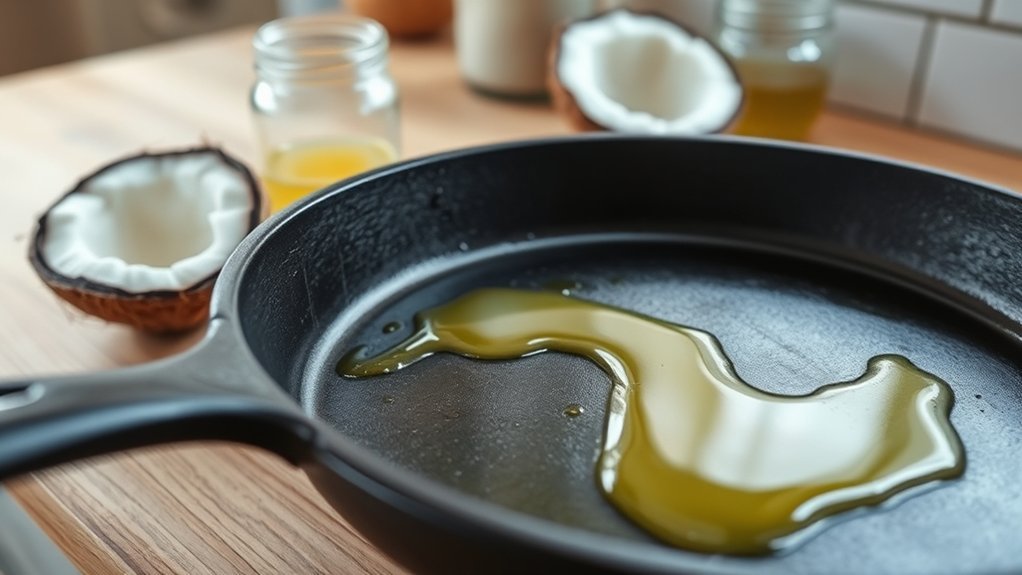

Did you know that nearly 70% of home cooks experiment with different oils when seasoning their cast iron skillets? One common question is whether you can use coconut oil for cast iron skillet seasoning. Coconut oil is popular for its natural properties and pleasant aroma, which makes it an attractive option for many.
However, coconut oil has a moderate smoke point, which means it may not withstand high heat as well as other oils. Additionally, its seasoning characteristics could influence the durability and non-stick quality of your skillet. Understanding these factors will help you decide if coconut oil is the right choice for your cast iron care.
Key Takeaways
- Coconut oil can be used to season cast iron, promoting a durable, non-stick layer through polymerization.
- Its moderate smoke point (~350°F) supports seasoning but requires careful temperature control to avoid burning.
- Multiple thin coats and baking at 400°F for an hour improve coconut oil’s seasoning effectiveness.
- Coconut oil’s natural antimicrobial properties help maintain skillet hygiene during use.
- For high-heat seasoning or neutral flavor, oils with higher smoke points may be better alternatives.
Can You Use Coconut Oil to Season Cast Iron?
How effective is coconut oil for seasoning your cast iron skillet? Coconut oil can be used, but its effectiveness depends on seasoning chemistry and oil viscosity. The seasoning process requires the oil to polymerize and bond to the skillet’s surface, creating a durable non-stick layer.
Coconut oil’s relatively low viscosity means it spreads easily, but its high saturated fat content affects polymerization. Unlike oils rich in unsaturated fats, coconut oil tends to create a softer, less resilient seasoning layer that may wear faster.
You’ll need to apply multiple thin coats and bake the skillet at a high temperature to encourage proper bonding. While coconut oil works, it’s not the most optimal choice due to its seasoning chemistry and viscosity characteristics compared to other oils specifically suited for cast iron.
What Makes an Oil Good for Cast Iron Seasoning?
When seasoning your cast iron, you want an oil with a high smoke point to withstand the heat without burning. The oil’s ability to polymerize is essential, as this creates a hard, durable coating on the skillet.
Understanding these factors helps you choose the best oil for a lasting, non-stick surface.
Oil Smoke Point
Why does the smoke point of an oil matter when seasoning a cast iron skillet? The oil smoke point is the temperature at which oil begins to break down and produce visible smoke.
When seasoning, you want oil that can withstand high heat without excessive oil smoke, ensuring a controlled and effective seasoning process. If the oil smokes too early, it can create unpleasant odors and degrade the seasoning layer.
A higher smoke point oil provides better polymerization viability because it remains stable long enough to bond with the cast iron surface. This stability is indispensable for building a durable, non-stick coating.
Polymerization Ability
What makes an oil effective for seasoning cast iron is its ability to polymerize, that is, to undergo a chemical reaction that transforms the oil into a hard, durable layer bonded to the skillet’s surface. This polymerization chemistry depends on the oil’s fatty acid composition and heat tolerance.
When heated beyond its smoke point, the oil forms cross-linked molecules that create a resilient coating. To choose the right oil, consider these factors:
- High unsaturated fat content promotes polymerization
- Adequate heat tolerance prevents premature burning
- Ability to form a stable, non-sticky layer
- Resistance to oxidation for long-lasting seasoning
- Compatibility with repeated heating cycles
Understanding these aspects helps you select an oil that builds a strong, effective seasoning layer on your cast iron skillet.
Does Coconut Oil Handle the High Heat Needed for Seasoning?
How well does coconut oil withstand the high heat required for seasoning a cast iron skillet? When choosing seasoning oils, understanding oil smokepoints is critical. Coconut oil’s relatively moderate smokepoint influences how it performs under the intense heat needed for seasoning.
Below is a comparison of common seasoning oils and their smokepoints to help you evaluate coconut oil’s suitability:
| Oil Type | Approximate Smokepoint (°F) |
|---|---|
| Coconut Oil | 350 |
| Flaxseed Oil | 225 |
| Canola Oil | 400 |
| Grapeseed Oil | 420 |
At 350°F, coconut oil tolerates moderate heat but may not handle the very high temperatures some seasoning methods require. This means you can use it, but you need to monitor heating closely to avoid burning the oil during seasoning.
How Coconut Oil’s Smoke Point Affects Cast Iron Seasoning
Because coconut oil’s smoke point sits around 350°F, you’ll need to carefully control the temperature during seasoning to prevent the oil from burning and producing unpleasant odors or residue. Understanding oil smoke point is crucial to ensure effective polymerization without damaging the seasoning layer.
When seasoning your cast iron with coconut oil, keep these polymerization considerations in mind:
- Preheat your oven gradually to avoid sudden temperature spikes
- Maintain oven temperature slightly below 350°F for optimal oil bonding
- Apply thin, even layers to promote uniform polymerization
- Avoid overheating, which can cause sticky or patchy seasoning
- Allow proper cooling time for the oil to fully cure and harden
Pros and Cons of Seasoning Cast Iron With Coconut Oil
You can benefit from coconut oil’s natural antioxidants and stable fats when seasoning your cast iron skillet. However, its relatively low smoke point compared to other oils might cause uneven seasoning or sticky residue.
Understanding these pros and cons helps you decide if coconut oil suits your cast iron care routine.
Benefits of Coconut Oil
Why consider coconut oil for seasoning your cast iron skillet? This two word discussion idea, coconut oil, brings several benefits to the table. You’ll find it’s a natural, food-safe option that enhances your skillet’s performance. Here’s why coconut oil works well:
- High smoke point supports effective polymerization
- Contains medium-chain fatty acids aiding in a durable seasoning layer
- Naturally resistant to rancidity, extending seasoning life
- Easily accessible and affordable for regular use
- Imparts a neutral aroma, avoiding flavor transfer to meals
Using coconut oil allows you to build a reliable non-stick surface with minimal hassle. It’s an excellent choice if you want a straightforward, health-conscious seasoning method for your cast iron cookware.
Drawbacks of Coconut Oil
How well does coconut oil perform when seasoning cast iron beyond its benefits? You should consider several coconut drawbacks before relying on it.
Coconut oil has a relatively low smoke point, which can lead to sticky residue or uneven seasoning. Its saturated fat content may polymerize inconsistently, resulting in a less durable coating compared to other oils.
Here’s a quick two word discussions table comparing key factors:
| Factor | Coconut Oil | Alternative Oils |
|---|---|---|
| Smoke Point | Low | Higher |
| Polymerization | Inconsistent | Consistent |
| Durability | Moderate | High |
| Cost | Affordable | Variable |
| Shelf Life | Moderate | Longer |
Keep these coconut drawbacks in mind to choose the best option for your cast iron skillet.
Comparing Coconut Oil to Other Popular Seasoning Oils
When choosing an oil for seasoning your cast iron skillet, understanding the differences between coconut oil and other popular options is essential. Your oil selection directly affects the seasoning’s durability and flavor impact. Coconut oil has a moderate smoke point but can impart a subtle sweetness, which not everyone prefers.
Consider these oils:
- Flaxseed oil: High smoke point, polymerizes well, neutral flavor
- Canola oil: Affordable, high smoke point, minimal flavor impact
- Grapeseed oil: Neutral taste, high smoke point, good for even seasoning
- Vegetable oil: Readily available, moderate smoke point, can leave residue
- Coconut oil: Lower smoke point, distinctive flavor, less durable seasoning
Choosing the right oil balances seasoning longevity and flavor neutrality for your cooking needs.
How to Season Your Cast Iron Skillet Using Coconut Oil
You can effectively season your cast iron skillet with coconut oil to create a durable, non-stick surface that resists rust. Start by applying a thin, even layer of coconut oil, then bake the skillet at a high temperature to polymerize the oil.
To maintain the seasoning, clean your skillet gently and reapply coconut oil as needed after each use.
Benefits of Coconut Oil
Why choose coconut oil for seasoning your cast iron skillet? Coconut oil acts as an effective seasoning oil due to its unique fatty acid profile, which promotes strong polymerization. This is a critical process that forms a durable, non-stick layer on your skillet.
Using coconut oil provides several benefits:
- High smoke point supports effective polymerization without burning.
- Creates a smooth, resilient seasoning layer that resists flaking.
- Natural antimicrobial properties help maintain skillet hygiene.
- Readily available and affordable compared to specialized oils.
- Adds a neutral flavor, avoiding unwanted taste transfer during cooking.
Seasoning Process Steps
The benefits of coconut oil make it an excellent choice for seasoning your cast iron skillet, but applying it correctly is key to achieving a durable, non-stick surface. Start by thoroughly cleaning and drying the skillet.
Next, apply a thin, even layer of coconut oil as your seasoning oil. The heat will activate polymerization chemistry, bonding the oil to the iron and creating a protective coating.
| Step | Action |
|---|---|
| 1. Clean & Dry | Remove rust and moisture |
| 2. Apply Oil | Rub thin layer of coconut oil evenly |
| 3. Heat Skillet | Bake at 400°F for 1 hour, then cool |
Following these steps ensures the seasoning oil undergoes proper polymerization chemistry, building a resilient surface.
Maintenance Tips After Seasoning
How often should you maintain your cast iron skillet after seasoning with coconut oil? Regular upkeep ensures your skillet remains non-stick and rust-free. Avoid drifting into unrelated topics; focus on practical discussion ideas for maintenance. Here’s what you should do:
Clean with hot water and a brush immediately after use, avoiding soap. Dry thoroughly to prevent rust. Apply a thin layer of coconut oil while the skillet is still warm.
Store in a dry place with a paper towel inside to absorb moisture. Re-season lightly after every few uses to maintain the protective coating.
Maintaining and Re-Seasoning Cast Iron After Using Coconut Oil
When should you re-season your cast iron skillet after using coconut oil? Since coconut oil has a relatively low oil smoke point, it can break down faster during cooking, potentially compromising the skillet’s seasoning. You should consider re-seasoning more often to maintain a strong protective layer.
Proper maintenance includes wiping the skillet clean, drying it thoroughly, and applying a thin coat of a high smoke point seasoning oil after each use.
| Step | Detail |
|---|---|
| Clean | Use hot water, avoid soap |
| Dry | Fully dry to prevent rust |
| Oil Application | Apply thin coat of high smoke point oil |
| Bake | Heat at 400°F for 1 hour to bond oil |
This routine preserves the seasoning and counters coconut oil’s limitations.
Signs Your Cast Iron Skillet Needs Reseasoning After Coconut Oil
Since coconut oil’s low smoke point can wear down your skillet’s seasoning faster, you’ll want to watch for specific signs indicating it’s time to reseason. Despite coconut oil myths suggesting it’s always gentle, its seasoning alkalinity can degrade, compromising your skillet’s surface.
Coconut oil’s low smoke point can degrade your skillet’s seasoning faster than you might expect.
Key signs include:
- Patchy or dull spots where oil no longer beads
- Rust formation indicating loss of protective layers
- Food sticking more than usual during cooking
- Flaking or peeling of the existing seasoning
- A sticky or gummy residue after heating
Recognizing these symptoms promptly helps you maintain optimal seasoning. Ignoring them lets seasoning alkalinity drop, increasing oxidation risk and reducing your cast iron’s lifespan.
Reseason as soon as you spot these signs to restore your skillet’s durability and non-stick performance effectively.
When to Avoid Coconut Oil for Seasoning Cast Iron
Why might you want to skip coconut oil for seasoning your cast iron skillet? Coconut oil has a low smoke point, which leads to misuses of heat during seasoning. This can cause sticky or uneven layers, creating off topic confusion about proper care.
Avoid coconut oil if you need a durable, high-temperature seasoning or prefer neutral flavors. Here’s when to avoid it:
| Situation | Reason | Alternative Oil |
|---|---|---|
| High-heat seasoning required | Low smoke point | Flaxseed or grapeseed |
| Desire for neutral flavor | Coconut’s distinct aroma | Canola or vegetable oil |
| Avoiding sticky residue | Polymerization issues | Avocado oil |
| Preventing off topic confusion | Misuses of heat effects | Refined oils with high smoke points |
Use oils better suited for cast iron to ensure lasting seasoning quality.
Frequently Asked Questions
Can Coconut Oil Cause a Sticky Residue on Cast Iron?
Yes, coconut oil residue can cause stickiness risk on your cast iron. If not heated properly, it leaves a sticky film.
To avoid this, heat the skillet well to fully polymerize the oil into a smooth, non-sticky layer.
Is Coconut Oil Safe for Cooking Acidic Foods in Cast Iron?
Coconut oil safety with acidic foods in cast iron is limited. You shouldn’t cook highly acidic dishes often, as acid can break down the seasoning, causing off-flavors and damage. Use neutral oils for better protection.
How Long Does Coconut Oil Seasoning Last on Cast Iron?
Your coconut oil seasoning typically lasts a few weeks, but seasoning longevity depends on use and care.
Because coconut oil can go rancid faster, you’ll need to re-season regularly to maintain a strong, protective layer on your cast iron.
Can Coconut Oil Go Rancid on a Cast Iron Skillet?
Yes, coconut oil rancidity can occur on your cast iron skillet, especially if stored improperly. This causes a sticky residue that’s tough to clean. To avoid it, season your skillet with more stable oils instead.
Does Coconut Oil Affect the Flavor of Food Cooked in Cast Iron?
You might notice a subtle tropical hint when using coconut oil flavoring on your cast iron, which some find charming. However, its seasoning longevity is shorter, so you’ll need to re-season your skillet more often for best results.
Conclusion
You can use coconut oil to season your cast iron, but it’s like a gentle breeze rather than a roaring fire—effective but not the most robust. Its moderate smoke point means you’ll need patience and care to build a solid, lasting layer.
For everyday resilience, consider oils with higher heat tolerance. Still, with mindful application, coconut oil can create a smooth, antimicrobial finish that keeps your skillet cooking beautifully.
In conclusion, while other oils may offer more durability, coconut oil can be a good choice for seasoning your cast iron skillet when used thoughtfully.