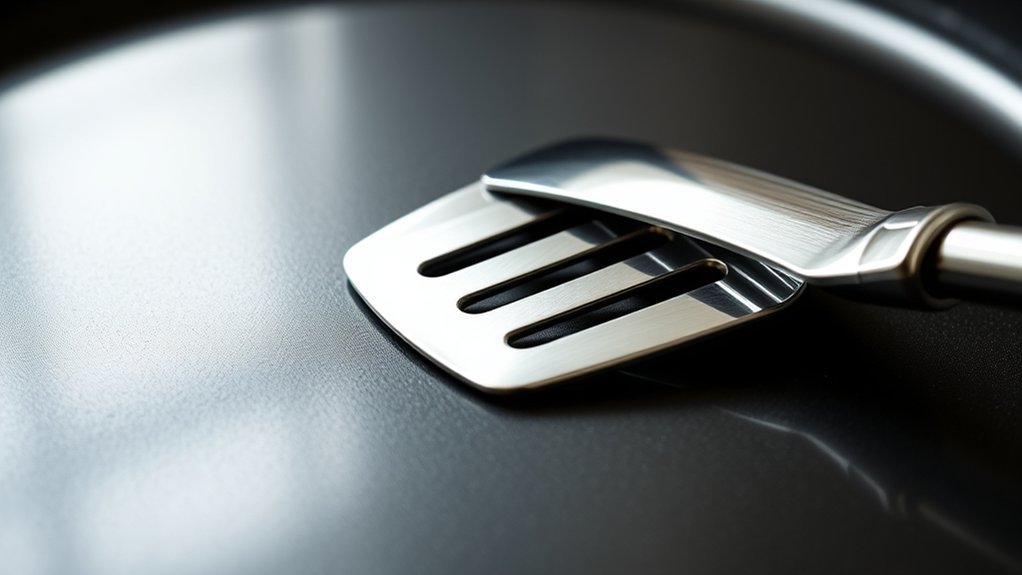

You might not realize that using metal utensils on a ceramic griddle can cause tiny scratches that quickly worsen, damaging the delicate surface.
This wear not only affects how your griddle heats but also leads to food sticking and uneven cooking.
While some metal tools are less harmful than others, understanding when and how to use them is crucial if you want to keep your griddle performing well over time.
Being cautious with your utensils will help preserve the ceramic coating and extend the life of your griddle.
Key Takeaways
- Metal utensils can scratch and chip ceramic griddle surfaces, reducing performance and lifespan.
- Avoid metal tools unless the manufacturer explicitly states they are safe to use.
- Softer utensils like silicone, wood, or bamboo are recommended to protect the ceramic coating.
- If metal must be used, choose stainless steel with smooth, rounded edges to minimize damage.
- Regular gentle cleaning and gradual heating help maintain ceramic griddle integrity and prevent coating damage.
Can Metal Utensils Damage Ceramic Griddles?
How likely are metal utensils to damage your ceramic griddle? Using metal utensils on a ceramic griddle increases the risk of scratches and chips because the surface is relatively delicate compared to traditional metal cookware.
Metal utensils can easily scratch or chip ceramic griddles due to their delicate surface.
While ceramic coatings provide excellent heat distribution and non-stick properties, they aren’t designed to withstand the abrasion caused by metal tools. When you scrape or press hard with metal utensils, you can compromise the ceramic layer, leading to reduced performance and potential flaking.
To preserve your ceramic griddle’s longevity, it’s best to avoid metal utensils during regular use. Instead, opt for softer materials like silicone or wooden tools that won’t harm the surface.
Understanding this risk helps you maintain your ceramic griddle’s quality and ensures safe, effective cooking over time.
When Is It Safe to Use Metal Utensils on Ceramic Griddles?
You should always check the manufacturer’s guidelines before using metal utensils on your ceramic griddle. Some surfaces have durable coatings designed to withstand metal tools, while others can easily scratch or chip.
Knowing your griddle’s specific durability helps you avoid damage and extend its lifespan.
Manufacturer Guidelines Matter
When is it safe to use metal utensils on ceramic griddles? The answer hinges on manufacturer guidelines. These instructions are your best source for ensuring metal safety and maintaining utensil durability without damaging your griddle. Always check the manual before using metal tools.
| Brand | Metal Utensil Use Allowed | Special Instructions |
|---|---|---|
| GriddlePro | Yes | Use only stainless steel |
| CookMaster | No | Use silicone or wood only |
| HeatWave | Yes | Avoid sharp edges |
| ChefElite | Limited | Use metal with caution |
Following these guidelines prevents scratches and extends your griddle’s life, balancing metal safety with utensil durability effectively.
Surface Coating Durability
The durability of a ceramic griddle’s surface coating plays an essential role in determining whether metal utensils are safe to use. If the surface coating is thick, well-bonded, and designed to withstand abrasion, it can tolerate occasional use of metal tools without significant damage.
However, a fragile or thin coating can chip or scratch easily, compromising the griddle’s integrity and heat distribution. When the surface coating is damaged, hot spots may develop, leading to uneven cooking and potential further deterioration.
To protect your ceramic griddle, assess the quality of its coating before using metal utensils. If in doubt, opt for softer tools. Maintaining the surface coating ensures consistent heat distribution and prolongs the lifespan of your griddle, keeping your cooking efficient and safe.
How Ceramic Griddles Handle Scratches and Wear
How well do ceramic griddles stand up to scratches and everyday wear? Ceramic griddles are generally resistant to minor scratches due to their hard, non-porous surface, but they aren’t completely impervious. Glossary terms like “abrasion resistance” describe this property, explaining how the ceramic coating withstands friction and contact.
Many audience questions focus on whether typical kitchen tools cause visible damage over time. While the surface handles light wear well, deeper scratches can occur if you’re not careful, potentially affecting performance and appearance. To maintain your griddle’s integrity, avoid abrasive cleaning tools and harsh scrubbing.
Understanding these details helps you preserve your ceramic griddle’s smooth surface and prolong its usable lifespan without compromising cooking quality.
How Metal Utensils Can Shorten Your Ceramic Griddle’s Lifespan
Using metal utensils on your ceramic griddle can cause surface scratches that compromise its smooth finish. These scratches disrupt even heat distribution, leading to hotspots and uneven cooking.
Over time, the damaged coating risks degrading, which shortens your griddle’s overall lifespan.
Surface Scratches and Damage
Why risk damaging your ceramic griddle’s surface with metal utensils? Using metal utensils can easily cause surface scratches that compromise the smooth, non-stick finish essential for even cooking.
These scratches not only mar the griddle’s appearance but also create tiny grooves where food particles and oils can accumulate, leading to sticking and difficult cleaning. Over time, repeated use of metal utensils accelerates wear and tear, significantly shortening the lifespan of your ceramic griddle.
To maintain optimal performance and durability, you need to avoid metal utensils and opt for safer alternatives like silicone or wooden tools. Protecting the ceramic surface ensures your griddle stays efficient, easy to clean, and visually appealing for years to come.
Don’t let metal utensils undermine your investment in ceramic griddles.
Heat Distribution Issues
When metal utensils scrape against your ceramic griddle, they don’t just cause surface scratches. They disrupt the even heat distribution essential for consistent cooking. These scratches create uneven spots that alter how heat spreads across the griddle’s surface, leading to hot and cold zones.
This uneven heat distribution affects your cooking results, causing food to cook inconsistently and increasing the risk of burning or undercooking. Moreover, the compromised surface weakens the griddle’s coating durability.
Over time, repeated use of metal utensils accelerates wear, making the ceramic layer more susceptible to further damage. By avoiding metal tools, you preserve the griddle’s smooth surface, ensuring uniform heat distribution and extending the lifespan of its coating durability for optimal performance.
Coating Degradation Risks
How exactly do metal utensils impact your ceramic griddle’s coating? When you use metal tools, you create microscopic scratches that lead to coating degradation over time. These scratches disrupt the smooth surface, causing uneven wear patterns that accelerate the breakdown of the ceramic layer.
As the protective coating erodes, your griddle becomes more susceptible to sticking and heat damage, which shortens its overall lifespan. Unlike silicone or wooden utensils, metal doesn’t offer the same gentle contact, increasing the risk of chipping or flaking.
To maintain your griddle’s performance and durability, it’s essential to avoid metal utensils. Instead, opt for utensils designed to preserve the integrity of the ceramic coating, preventing premature wear patterns and ensuring your griddle stays in top condition longer.
Which Metal Utensils Are Safer for Ceramic Griddles?
Choosing the right metal utensils can considerably extend the life of your ceramic griddle. When considering metal safety, opt for stainless steel utensils with smooth, rounded edges. These reduce the risk of scratching or chipping the ceramic surface, preserving its integrity.
Avoid sharp or rough-edged metals, which compromise the coating and shorten utensil durability. Additionally, thinner, flexible stainless steel tools are less abrasive than heavy, rigid ones. Titanium utensils can also be a safer metal choice due to their hardness and resistance to scratching, but they tend to be more costly.
Best Alternatives to Metal Utensils for Ceramic Griddle Cooking
Why risk damaging your ceramic griddle with metal utensils when there are better options available? Dispelling metal myths and durability myths is key. Metal isn’t the only durable choice.
Opt for these alternatives to maintain your griddle’s surface integrity and extend its lifespan.
| Utensil Type | Benefits |
|---|---|
| Silicone | Heat-resistant, gentle on surfaces |
| Wood | Durable, naturally non-abrasive |
| Bamboo | Eco-friendly, lightweight |
These options prevent scratches and wear caused by metal. Silicone resists heat without chipping ceramic, while wood and bamboo provide sturdy, safe handling.
How to Clean Your Ceramic Griddle Without Causing Damage
Although ceramic griddles are durable, improper cleaning can quickly damage their smooth surfaces. To protect your griddle, avoid abrasive scrubbers or harsh chemicals that can cause scratches or wear down the ceramic coating.
Proper cleaning preserves your ceramic griddle’s smooth surface by avoiding abrasive scrubbers and harsh chemicals.
Instead, use a soft sponge or cloth with warm, soapy water for routine cleaning. If food residue sticks, soak the griddle briefly before gently wiping it away.
Avoid unrelated topic tangents like dishwasher safety or metal utensils here, as they distract from proper cleaning methods. Also, steer clear of irrelevant discussion about seasoning or oil types, which belong elsewhere.
Stick to these focused steps to maintain your ceramic griddle’s integrity without causing damage. Doing so ensures longevity and preserves the even cooking surface you rely on.
Tips for Maintaining Your Ceramic Griddle’s Non-Stick Surface
How can you keep your ceramic griddle’s non-stick surface performing at its best? Prioritize metal safety by avoiding sharp, abrasive metal utensils that can scratch and degrade the coating. Instead, opt for metal tools with smooth edges designed for utensil durability, reducing wear on both the griddle and the utensil.
Always clean your griddle gently using non-abrasive sponges and mild detergents to prevent surface damage. Avoid drastic temperature changes after cooking, as thermal shock can weaken the ceramic layer. Regularly inspect your griddle for scratches or chips, addressing any issues promptly.
Protecting Your Ceramic Griddle: Best Practices for Cooking
When cooking with your ceramic griddle, you should always use techniques that protect its delicate surface. Avoid off topic ideas like using metal utensils that can scratch the coating. Instead, focus on these best practices:
- Use silicone, wooden, or plastic utensils to prevent abrasions.
- Preheat the griddle gradually to avoid thermal shock.
- Cook at medium or low heat to preserve the non-stick layer.
- Clean with soft sponges and mild detergents only, steering clear of abrasive scrubbers.
Don’t get distracted by irrelevant topics such as unrelated cooking tools or recipes when your priority is griddle care. Following these precise steps ensures your ceramic griddle remains functional and beautiful, extending its lifespan without compromising performance.
Frequently Asked Questions
Can Ceramic Griddles Be Used on Induction Cooktops?
You can use ceramic griddles on induction cooktops only if they have induction compatibility, usually a magnetic base. Ceramic durability alone doesn’t guarantee it, so always check the manufacturer’s specs before trying to cook on induction.
How Long Does a Ceramic Griddle Typically Last?
A ceramic griddle’s lifespan is like a well-kept secret, usually 3 to 5 years with proper ceramic durability. You’ll extend its life by following seasoning tips and avoiding harsh scrubbing or metal utensils.
Are Ceramic Griddles Dishwasher Safe?
You shouldn’t put ceramic griddles in the dishwasher, as high heat and harsh detergents can damage the ceramic coating durability. Hand washing preserves their finish and ensures long-lasting performance, maintaining optimal dishwasher compatibility is usually not recommended.
What Is the Best Way to Season a Ceramic Griddle?
To season your ceramic griddle, heat it gently, apply a thin layer of oil, and let it cool.
Follow these seasoning tips regularly, combining them with proper maintenance routines to keep your griddle non-stick and durable.
Can Ceramic Griddles Be Used for Baking?
Imagine baking flatbreads on your ceramic griddle; yes, you can use it for baking.
Mastering baking techniques on ceramic griddles lets you evenly cook delicate items like pancakes or tortillas without direct oven heat.
Conclusion
When it comes to your ceramic griddle, remember that “prevention is better than cure.” Using metal utensils risks scratching and shortening its lifespan, so opt for silicone, wood, or plastic tools instead.
If you must use metal, choose smooth-edged stainless steel and handle it gently. Regular cleaning and careful cooking habits will keep your griddle performing at its best.
Protect your investment by prioritizing care and following these guidelines for lasting, flawless results. In conclusion, using metal utensils on ceramic griddle is possible but should be done with caution to avoid damage.