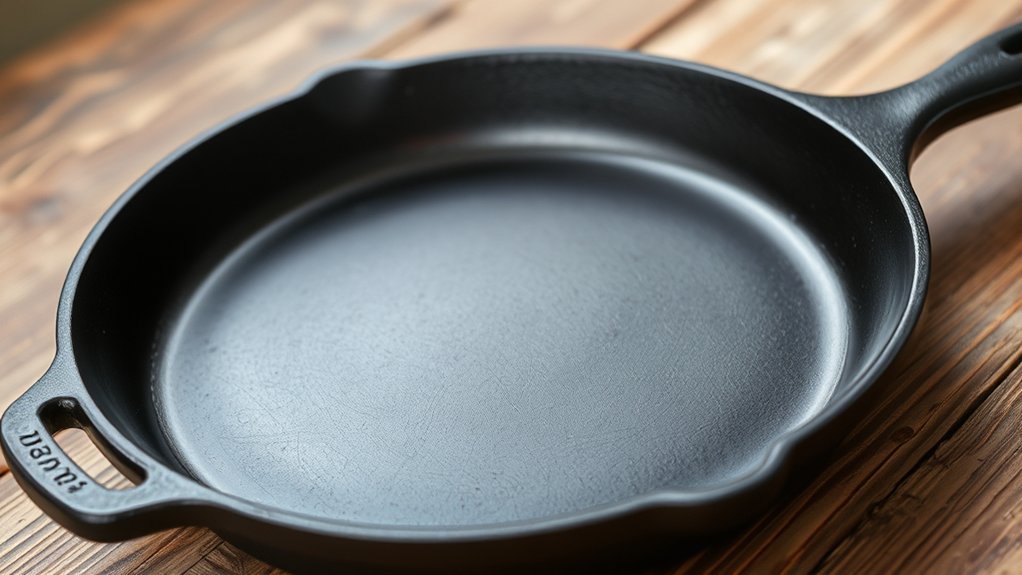

Imagine running your fingers over the rough, seasoned surface of a cast iron skillet. What does skillet look like in its various forms? You might also catch a gleam off a polished stainless steel pan, each type telling a story through its texture and finish.
These visual and tactile details hint at how the skillet performs and wears over time. From the ruggedness of cast iron to the sleekness of modern materials, every element matters.
The shape and handle design influence your cooking experience in subtle but important ways. What exactly sets these differences apart?
Key Takeaways
- Skillets typically have a round, flat cooking surface with slightly raised edges and a long handle for easy maneuvering.
- Cast iron skillets feature a rough, matte, rustic texture with a heavy, substantial feel and dark, seasoned surfaces.
- Stainless steel skillets showcase a smooth, shiny, reflective finish with a polished, modern appearance and lighter weight.
- Non-stick skillets have a sleek, dark, uniformly smooth surface designed for easy food release and quick cleaning.
- Skillet shapes vary: round for even heat, square for more cooking area, and deep for versatile frying and simmering.
What Does a Skillet Look Like Up Close?
What makes a skillet’s appearance distinctive when you look at it up close? You’ll notice the up close texture reveals much about its character and craftsmanship. The surface might show fine grains or a slightly roughened feel, hinting at its seasoning or finish.
This texture isn’t just visual; it affects cooking performance too. Meanwhile, the material sheen plays an essential role in how the skillet catches light, ranging from a dull matte to a subtle, reflective glow. This sheen can indicate the skillet’s age, care, or coating type.
How Different Skillet Materials Affect Appearance
How does the material of a skillet shape its appearance and feel? When you examine skillet materials, you notice distinct material aesthetics that influence both look and texture.
For example, aluminum often features a smooth, matte finish, giving it a sleek and modern appeal. Copper, with its warm reddish tone and shiny surface, offers a classic, vintage charm.
Meanwhile, carbon steel presents a darker, slightly textured surface that suggests durability and rustic utility. These two word discussion ideas, surface texture and color tone, help you understand how material choice informs skillet identity.
Cast Iron vs. Stainless Steel vs. Non-Stick Skillets Compared
Each skillet material brings unique visual and tactile qualities, but when you compare cast iron, stainless steel, and non-stick skillets side by side, their differences become even more striking. You’ll notice the rugged cast iron texture, offering a matte, almost rustic look that feels substantial in your hands.
Stainless steel skillets, by contrast, boast a smooth, reflective stainless steel sheen, exuding a modern and polished vibe. Non-stick skillets often appear sleek with a dark, uniform surface that’s smooth to the touch.
When deciding based on appearance, consider:
- Cast iron texture: rough and coarse, ages with seasoning
- Stainless steel sheen: bright, shiny, and resistant to scratches
- Non-stick surface: matte or semi-glossy, smooth, and even
Each skillet’s look reflects its material’s nature and use.
Which Skillet Features Matter Most?
When choosing a skillet, which features should you prioritize to match your cooking style and needs? First, consider skillet finishes, whether you prefer the natural seasoning of cast iron, the smoothness of stainless steel, or the easy-release surface of non-stick coatings. Each finish impacts heat retention, maintenance, and food flavor differently.
Next, focus on handle ergonomics. A well-designed handle offers a comfortable, secure grip, reducing wrist strain during frequent use. It should stay cool and balance the skillet’s weight effectively, so you can maneuver it confidently.
How Skillet Shapes Influence Cooking and Use
Why does the shape of a skillet matter so much in your kitchen? Skillet shapes directly affect cooking efficiency and usability, making skillet aesthetics more than just visual appeal. They influence performance. When you consider two word discussion ideas like “heat distribution” and “cooking surface,” the shape becomes essential.
Here’s how shape impacts use:
- Round Skillets: Offer even heat distribution, ideal for sautéing and frying.
- Square Skillets: Provide more cooking surface, perfect for fitting multiple ingredients.
- Deep Skillets: Combine frying and simmering, great for versatile dishes.
Understanding these shapes helps you pick the right skillet for your cooking style, balancing function with skillet aesthetics to enhance your kitchen experience.
Frequently Asked Questions
How Do I Properly Season a Cast Iron Skillet?
You properly season a cast iron skillet by applying a thin layer of oil. Flaxseed or vegetable oil works best.
Then heat it in the oven. This seasoning technique creates a durable, non-stick surface that improves with use.
Can Skillets Be Used on Induction Cooktops?
You’ll find your skillet’s aesthetics meet induction compatibility like a dancer on a magnetic floor. Cast iron skillets work perfectly on induction cooktops, delivering even heat and durability.
This makes them both functional and visually appealing in your kitchen.
What Is the Best Way to Clean a Non-Stick Skillet?
You should clean your non-stick skillet gently using soft sponges and plastic or wooden utensils to avoid scratches. Always wear gloves for safety when handling cleaning agents, ensuring your skillet lasts longer without damaging the coating.
How Long Do Different Skillet Materials Typically Last?
You know what they say: “Quality lasts.” For skillet longevity, cast iron can endure decades with care. Non-stick lasts 3-5 years, stainless steel offers 10-20 years, and carbon steel falls somewhere in between. Choose wisely!
Are Skillet Handles Oven-Safe?
Skillet handles’ oven safety depends on their material. Metal handles usually are oven-safe, while plastic or wooden ones aren’t. Always check manufacturer guidelines to avoid damage or injury when using your skillet handles in the oven.
Conclusion
When you hold a skillet, you’re grasping more than a tool—you’re engaging with a story told through texture and form. The rugged cast iron speaks of tradition and endurance, while gleaming stainless steel reflects precision and modernity. Non-stick surfaces whisper ease and convenience.
Each skillet’s look symbolizes its purpose, guiding your hands and expectations in the kitchen. By reading these visual cues, you’ll choose not just a pan, but a partner in your culinary journey.
Understanding what does skillet look like helps you connect with the right cookware, making every meal a meaningful experience.