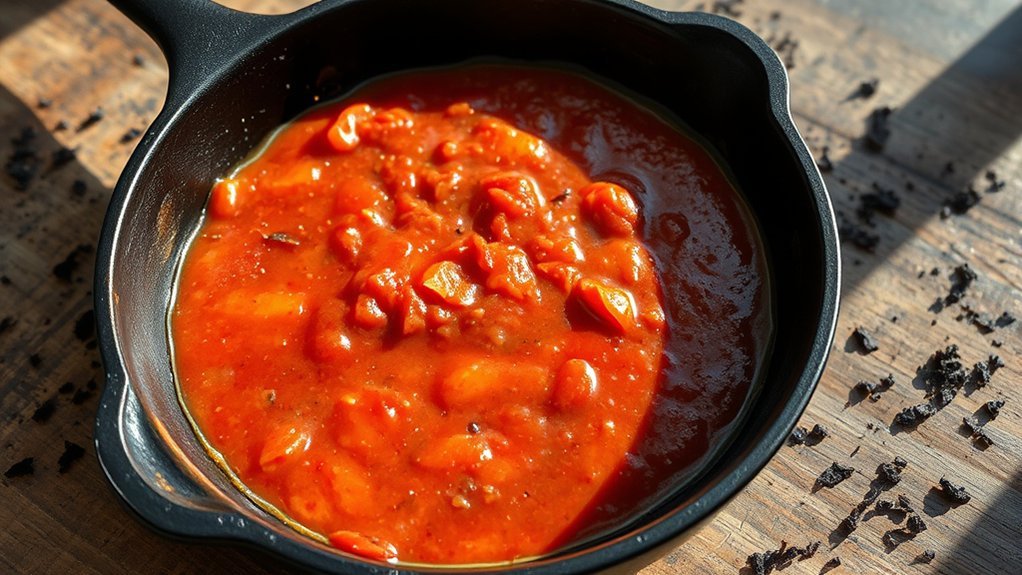

Imagine trying to paint a masterpiece with watercolors on a canvas meant for oil paints—you’ll end up with a mess, not art. That’s how it feels when you cook certain foods in a cast iron skillet. Knowing what not to cook in a cast iron skillet is essential to maintaining its quality.
You might think it’s versatile, but some ingredients and techniques can quickly degrade its seasoned surface or cause sticking and rust. Understanding what to avoid is key to preserving your skillet’s performance and longevity. Take care of your cast iron, and it will serve you well for years to come.
Key Takeaways
- Avoid cooking highly acidic foods like tomatoes or vinegar-based sauces to prevent seasoning breakdown and rust.
- Do not boil or simmer liquids for long periods, as moisture erodes seasoning and increases rust risk.
- Refrain from cooking delicate seafood that sticks easily and requires consistent heat, which cast iron cannot provide.
- Avoid baking delicate breads needing even heat, as cast iron’s heat retention causes uneven cooking and burnt crusts.
- Do not soak or use harsh detergents for cleaning, as this damages seasoning and reduces non-stick performance.
How Cast Iron Skillets Handle Different Foods
How does a cast iron skillet respond to various types of food? When you cook with it, you’ll notice it excels at high-heat searing and frying due to its excellent heat retention.
However, you must be cautious with acidic ingredients like tomatoes or vinegar-based sauces because they can cause acidic wear, gradually breaking down the skillet’s seasoning. This wear compromises the non-stick surface, requiring more frequent seasoning maintenance to keep the skillet in optimal condition.
On the other hand, neutral and fatty foods enhance the skillet’s seasoning, improving performance over time. Understanding how different foods interact with your cast iron helps you preserve its durability and cooking efficiency, ensuring you get the best results without unnecessary damage to the pan.
Why Acidic Foods Damage Cast Iron Skillets
While cast iron skillets handle many foods well, acidic ingredients pose a unique challenge. Acidic foods like tomatoes, vinegar, or citrus can strip the skillet’s seasoning, causing acidic damage that leads to rust and uneven cooking surfaces.
When you cook acidic items too long or frequently, the skillet’s protective layer weakens, exposing the bare metal.
Here’s a quick visual on why acidic damage occurs and its effects:
| Cause | Effect on Skillet |
|---|---|
| Prolonged acid exposure | Seasoning breakdown |
| Acid reacts with metal | Rust formation |
| Frequent acidic cooking | Flavor contamination risk |
Avoid acidic foods to maintain your skillet’s durability and performance. Proper care preserves the seasoning, preventing acidic damage and ensuring long-term use.
Why Salty and Sugary Foods Harm Your Cast Iron
Why should you think twice before cooking salty or sugary foods in your cast iron skillet? Both salt and sugar can accelerate damaging metal reactions that degrade the skillet’s seasoning. Salt, especially when left on the surface for extended periods, draws moisture and promotes rust.
Sugar, on the other hand, caramelizes and carbonizes quickly, which can lead to overheating seasoning layers. This overheating seasoning breaks down the protective coating you’ve carefully built, exposing the bare metal underneath.
Once exposed, your skillet becomes vulnerable to corrosion and uneven cooking surfaces. To maintain your cast iron’s integrity, avoid cooking highly salty or sugary dishes for prolonged times. Instead, reserve your skillet for recipes that won’t trigger these harmful metal reactions or damage your seasoning through overheating.
Why Eggs Stick in Cast Iron Skillets (And How to Fix It)
Salt and sugar aren’t the only challenges your cast iron skillet faces in the kitchen. Eggs can be notoriously difficult to cook without sticking. Eggs sticking usually signals a seasoning failure or improper technique.
To fix this:
- Preheat Properly: Heat your skillet evenly on medium-low before adding oil to ensure a smooth cooking surface.
- Use Enough Fat: Add a generous amount of oil or butter to create a barrier between the eggs and the pan’s surface.
- Maintain Seasoning: Regularly re-season your skillet to build a durable, non-stick layer that prevents eggs sticking.
Why Sticky and Sugary Foods Are Tough on Cast Iron
You’ll find that sticky and sugary foods often leave a stubborn residue that’s hard to remove from cast iron. The sugar can caramelize and cling tightly, while acidic ingredients risk damaging the seasoning layer.
This combination makes cleanup tougher and can shorten your skillet’s lifespan if not handled carefully.
Sugar Causes Sticky Residue
How does sugar affect your cast iron skillet? Sugar interactions create a sticky residue that’s tough to remove and can damage your skillet’s seasoning. When sugar heats, it caramelizes and bonds to the skillet’s surface, making cleanup difficult and risking uneven seasoning wear.
Here’s why you should avoid sugary foods in cast iron:
- Sticky residue buildup: Sugar caramelizes and hardens, leaving a stubborn layer.
- Seasoning degradation: Sugary buildup can strip or unevenly wear the protective seasoning.
- Difficult maintenance: Removing sticky residue requires harsh scrubbing, which can harm the skillet.
To preserve your skillet’s longevity and performance, steer clear of cooking sugary or sticky foods directly in it. Instead, use alternative cookware designed for these ingredients to maintain your cast iron’s integrity.
Acidic Damage Risks
Why do acidic foods pose such a risk to your cast iron skillet? Acidic reactions occur when foods like tomatoes, vinegar, or citrus interact with the iron surface, breaking down the seasoning layer that protects the pan.
This degradation not only leads to metallic flavors seeping into your dishes but also promotes rust formation. Unlike steel skillet comparisons, which generally resist acidity better due to their protective coatings, cast iron lacks this resilience.
Once the seasoning is compromised, the pan’s non-stick properties diminish, making cooking and cleanup more difficult. To maintain your skillet’s integrity, avoid prolonged exposure to highly acidic ingredients.
This precaution ensures your cast iron remains durable and flavorful, preventing damage that acidic reactions can cause over time.
Difficult Cleanup Challenges
While acidic ingredients can wear down your skillet’s seasoning, sticky and sugary foods present a different kind of challenge. These substances often caramelize and harden, making cleanup difficult and risking damage to your skillet’s surface.
You should avoid cooking them because:
- Sugary residues stick stubbornly, requiring abrasive scrubbing that strips seasoning and dull flavors.
- Sticky buildup traps moisture, leading to rust and compromising your skillet’s integrity.
- Cast iron lacks microwave suitability, so reheating sugary dishes in a microwave won’t prevent mess or flavor loss.
To maintain your skillet’s performance and avoid dull flavors, steer clear of sticky and sugary foods. Instead, save your cast iron for dishes that won’t demand intensive cleaning or risk degrading its seasoning.
Why Delicate Seafood Doesn’t Cook Well in Cast Iron
You shouldn’t cook delicate seafood in cast iron because it tends to stick and tear easily on the rough surface. The skillet’s uneven heat distribution can cause parts of your seafood to overcook while others remain underdone.
Plus, cleaning up after seafood residues in cast iron is often more difficult and time-consuming than with other cookware.
Sticking And Tearing
How can delicate seafood withstand the intense heat and rough surface of a cast iron skillet? It often can’t, leading to frustrating sticking issues and tearing risks. When you cook delicate fish or shellfish in cast iron, you face three main problems:
- Surface texture: Cast iron’s porous, uneven surface causes seafood to cling and tear.
- Sticking issues: Even well-seasoned skillets can’t fully prevent delicate flesh from sticking.
- Handling difficulty: Flipping or removing seafood becomes risky, as it can break apart easily.
Because of these sticking issues and tearing risks, you’ll often end up with a ruined presentation and wasted ingredients. For delicate seafood, smoother, non-stick surfaces or gentler cooking methods are smarter choices to preserve texture and flavor without damage.
Uneven Heat Distribution
Heat distribution plays an essential role in cooking delicate seafood properly, and cast iron skillets often fall short in this area. The uneven heat cast iron produces means some parts of your seafood may overcook while others remain underdone. This inconsistency can ruin the delicate texture and flavor that seafood demands.
While cast iron retains heat well, it heats unevenly, especially on modern stovetops, causing hot spots that are tough to manage. Additionally, constantly adjusting for uneven heat can affect skillet longevity by subjecting the pan to thermal stress and warping.
For delicate seafood, you need a pan that offers consistent, gentle heat to preserve the integrity of the fish. Cast iron’s uneven heat distribution makes it a poor choice for these sensitive ingredients.
Difficult Cleanup Process
Why does cleaning cast iron after cooking delicate seafood feel like such a chore? The answer lies in the difficult cleanup process caused by sticky residues. When you cook seafood in cast iron, these residues cling stubbornly, making removal tough and time-consuming. Here’s why:
- Protein Bonds: Seafood proteins bind tightly to the skillet’s surface, creating sticky residues that resist scrubbing.
- Oil Absorption: Cast iron’s porous nature absorbs oils and flavors, leading to lingering smells and grease buildup.
- Seasoning Damage: Aggressive cleaning to remove residues risks stripping the skillet’s seasoning, compromising its non-stick properties.
Because of this, delicate seafood isn’t ideal for cast iron. You’ll spend more time scrubbing than enjoying your meal, and the skillet’s maintenance becomes a constant battle.
Why Boiling Liquids and Slow Cooking Can Hurt Your Skillet
When do you risk damaging your cast iron skillet by boiling liquids or using it for slow cooking? Boiling liquids in cast iron can degrade the seasoning layer because prolonged exposure to water and high heat strips away the protective coating. This leaves your skillet vulnerable to rust and uneven cooking surfaces.
Similarly, slow cooking often involves extended simmering or braising with liquids, which can also erode the seasoning and cause moisture buildup. Over time, this repeated exposure reduces the skillet’s non-stick properties and increases the risk of rust formation.
To preserve your cast iron’s integrity, avoid recipes requiring long periods of boiling or slow cooking with significant liquid content. Instead, reserve your skillet for high-heat searing or frying, where it excels and maintains durability.
Why Baking Certain Breads in Cast Iron Needs Care
While cast iron skillets perform best with high-heat cooking, their use in baking certain breads calls for extra attention. The pan’s intense heat can disrupt bread chemistry, affecting texture and rise. To bake successfully, consider these factors:
- Heat retention: Cast iron holds heat strongly, which can cause uneven baking or burn delicate crusts.
- Air bubbles: The skillet’s surface may interfere with the formation and expansion of air bubbles, essential for bread’s lightness.
- Moisture management: Cast iron absorbs and redistributes moisture differently than traditional bread pans, potentially altering crumb structure.
How to Avoid Common Cast Iron Cooking Mistakes
How can you guarantee your cast iron skillet delivers perfect results every time? Start by avoiding common mistakes that compromise its performance. Don’t treat cast iron like mismatched cookware; each type demands specific care.
Avoid cooking highly acidic foods, as they can strip seasoning—a crucial factor often confused with an unrelated topic like non-stick pans. Also, never soak your skillet or use harsh detergents; instead, clean it with hot water and a brush immediately after use.
Avoid cooking delicate items that stick easily or require precise temperature control. Lastly, always dry and oil your skillet promptly to prevent rust.
Frequently Asked Questions
Can Cast Iron Skillets Be Used on Induction Cooktops?
Yes, your cast iron skillet works perfectly on induction cooktops due to its induction compatibility. Its magnetic properties make it ideal for modern stoves, ensuring efficient, even heating every time you cook.
How Do I Properly Season a New Cast Iron Skillet?
To season a new skillet, preheat your oven to 450°F, coat the skillet evenly with oil, and bake it upside down to avoid hotspots. Repeat this process 2-3 times for a durable, non-stick surface.
Is It Safe to Put a Cast Iron Skillet in the Dishwasher?
You shouldn’t put your cast iron skillet in the dishwasher. Dishwasher safety is poor for cast iron, as harsh detergents and water ruin seasoning.
Instead, use proper cleaning methods like hand washing with mild soap and immediate drying.
Can I Use Soap to Clean My Cast Iron Skillet?
You can use a small amount of soap to clean your cast iron skillet without worry; soap myths about ruining seasoning are outdated.
Just rinse thoroughly to avoid soap residue and immediately dry and oil your skillet afterward.
How Do I Store My Cast Iron Skillet to Prevent Rust?
To keep your skillet’s “patina perfect,” store it in a dry place, lightly oiled, and avoid stacking wet pans. This smart storage rust routine guarantees rust prevention and preserves your cast iron’s seasoned surface effortlessly.
Conclusion
You might be surprised to learn that over 60% of cast iron skillet damage comes from cooking acidic or sugary foods improperly. These ingredients can wear down the skillet’s seasoning and cause lasting harm. To protect your pan, avoid simmering sauces or baking sticky sweets in it.
Delicate seafood can also be problematic, as it tends to stick and can strip the seasoning when cooked in cast iron. Instead, opt for quick, high-heat cooking methods that help preserve the skillet’s surface and seasoning.
By understanding what not to cook, you’ll maintain your cast iron skillet’s durability and enjoy its unmatched cooking performance for years to come. Proper care and cooking choices are key to keeping your cast iron skillet in top condition.