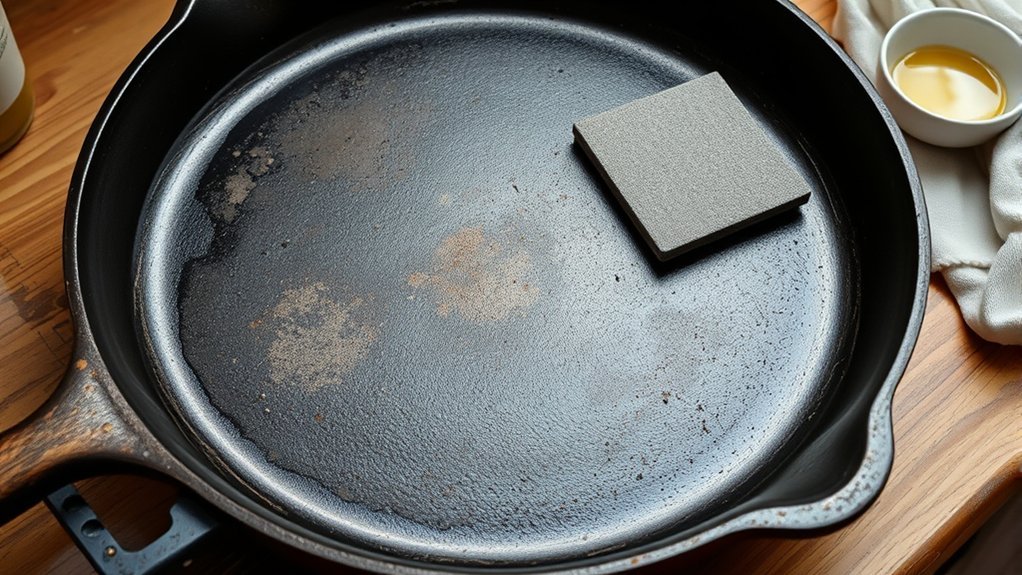

If you’ve got a cast iron griddle that’s lost its luster, restoring a cast iron griddle starts with a careful assessment of its condition—checking for rust, cracks, or uneven seasoning.
You’ll need to remove any residue safely before moving on to deeper cleaning and reseasoning.
Understanding these steps ensures your griddle performs well and lasts longer.
There are key details you don’t want to overlook when bringing it back to life.
Key Takeaways
- Inspect the griddle for rust, damage, and seasoning condition to plan appropriate restoration steps.
- Remove rust and residue using fine steel wool or baking soda paste, avoiding harsh chemicals.
- Deep clean with mild soap and a non-abrasive brush, then rinse and dry immediately to prevent rust.
- Apply a thin, even layer of high-smoke-point oil and heat repeatedly to build a durable seasoning.
- Maintain by regularly cleaning, drying, oiling after use, and storing in a dry, ventilated place.
Assess Your Cast Iron Griddle’s Condition
Before you delve into restoring your cast iron griddle, take a close look at its current state. You need to carefully assess condition factors such as surface texture, seasoning quality, and any damage.
Pay particular attention to rust considerations. Determine whether rust is superficial or deeply embedded. Light surface rust can often be treated easily, but heavy corrosion may require more intensive restoration.
Also, check for cracks, warping, or pitting that could affect performance or safety. Identifying these issues upfront helps you plan the appropriate restoration steps.
How to Safely Remove Rust and Residue
How do you effectively remove rust and residue without damaging your cast iron griddle? Prioritize rust removal and residue safety by using gentle but thorough methods. Avoid harsh chemicals that can harm the iron’s surface or leave toxic residues.
Follow these steps to protect your griddle:
Use fine steel wool or a non-metallic scrubber for light rust.
Apply a paste of baking soda and water to loosen stubborn residue.
Rinse thoroughly with warm water to remove all cleaning agents.
Dry immediately and completely to prevent new rust formation.
Apply a thin coat of cooking oil to restore the protective seasoning layer.
These steps ensure you eliminate rust and residue safely, preserving your griddle’s integrity for long-term use.
Deep Clean Your Cast Iron Griddle
To deep clean your cast iron griddle, start by tackling any stubborn residue with a gentle scrub using a non-abrasive brush or sponge. Use a small amount of mild soap to break down grease without stripping the seasoning.
Rinse thoroughly and dry immediately to prevent rust.
Removing Stubborn Residue
Stubborn residue on your cast iron griddle can hinder its performance and flavor your food with off tastes. Start by evaluating residue to determine its thickness and type. Use a firm wiping technique with a damp cloth or non-abrasive scrubber to remove loose debris first.
For tougher buildup, apply coarse salt as a natural abrasive, then scrub gently. Remember to:
- Heat the griddle slightly to loosen residue
- Avoid steel wool, which damages seasoning
- Use a plastic scraper for stuck-on spots
- Rinse with warm water, never soak
- Dry immediately to prevent rust
Proper Soap and Scrub
Once you’ve removed most of the residue, it’s time to focus on cleaning your cast iron griddle thoroughly without damaging its seasoning. Start by evaluating rust; if present, use a stiff brush or steel wool to target rusty spots gently. Avoid harsh scrubbing that strips seasoning.
Traditional soap can degrade the seasoned surface, so consider soap alternatives like mild dish detergent or specially formulated cast iron cleaners. Apply your chosen cleaner with a non-abrasive scrubber, working in circular motions to lift grime.
Rinse thoroughly with warm water and dry immediately to prevent rust. This careful approach preserves your griddle’s seasoning while ensuring it’s clean and ready for re-seasoning or cooking. Proper cleaning maintains longevity and optimal cooking performance.
Season Your Cast Iron Griddle
Start by thoroughly drying your griddle to ensure the surface is completely moisture-free.
Next, apply a thin, even layer of oil to the entire cooking area, including the edges. This prepares the metal for seasoning and helps build a durable, non-stick coating.
Preparing The Surface
How do you ensure your cast iron griddle develops a durable, non-stick surface? Start with thorough surface prep. First, perform a rust check. Eliminate any rust spots using steel wool or a wire brush. Then, clean the griddle with warm water and mild soap, scrubbing off old seasoning and debris. Dry it completely to prevent new rust from forming.
Key steps for surface prep include:
- Remove all rust and residue completely
- Avoid soaking to prevent water damage
- Dry immediately and thoroughly
- Inspect for pitting or damage
- Use a lint-free cloth for drying
Proper surface prep sets the stage for effective seasoning, ensuring your griddle remains reliable and non-stick for years to come.
Applying Oil Layers
Why is applying oil layers essential for seasoning your cast iron griddle? Because these layers create a durable, non-stick surface by polymerizing the seasoning oil onto the metal. To apply oil layers properly, use a thin, even coating to avoid sticky buildup.
Here’s a quick guide on seasoning oils and application:
| Seasoning Oil | Smoke Point (°F) | Recommended Use |
|---|---|---|
| Flaxseed Oil | 450 | Best for durable coating |
| Vegetable Oil | 400 | Easy, common choice |
| Canola Oil | 435 | Balanced drying time |
| Grapeseed Oil | 420 | Neutral flavor |
Apply a small amount of seasoning oil after cleaning. Wipe off excess, then heat the griddle to polymerize each layer. Repeat 3-4 times for optimal seasoning.
Troubleshoot Cast Iron Griddle Restoration Problems
What should you do when your cast iron griddle doesn’t season evenly or develops rust spots after restoration? Start by carefully assessing damage to identify uneven seasoning or rust patches. Then focus on repairing finish by stripping problem areas and reapplying thin oil layers.
To troubleshoot effectively:
To troubleshoot effectively, inspect, clean, remove rust, and reseason with thin oil layers and consistent heat.
- Inspect surface for sticky spots or bare metal.
- Remove rust with fine steel wool or a rust eraser.
- Clean thoroughly to avoid residue before reseasoning.
- Apply a thin, even coat of high-smoke-point oil.
- Bake at recommended temperature for an hour.
If uneven seasoning persists, repeat the oiling and baking process. Consistent heat and thin oil layers ensure a durable, smooth finish. Addressing issues early prevents more extensive damage and maintains your griddle’s performance.
Maintain Seasoning to Prevent Rust
A well-maintained seasoning layer acts as a protective barrier against moisture, preventing rust from forming on your cast iron griddle. To ensure effective rust prevention, establish a consistent oiling routine after each use. This keeps the surface sealed and ready for cooking.
| Step | Action |
|---|---|
| Clean | Remove food debris with a brush |
| Dry | Heat griddle to evaporate water |
| Apply Oil | Use a thin coat of cooking oil |
| Heat to Season | Warm griddle to bond oil layer |
Follow these steps every time you clean your griddle. Avoid soaking it in water, and never skip the oiling routine. This maintenance preserves the seasoning’s integrity, ensuring your cast iron stays rust-free and performs excellently.
Essential Tips for Long-Lasting Cast Iron Griddle Care
Maintaining the seasoning layer sets the foundation for preventing rust, but extending the lifespan of your cast iron griddle requires consistent care beyond just oiling. Follow these essential care tips to ensure durability and performance:
Proper seasoning is key, but lasting durability demands regular, attentive care beyond just oiling.
- Clean immediately after use with hot water and a soft brush; avoid soap if possible.
- Dry thoroughly to prevent moisture buildup that causes rust.
- Apply a thin coat of oil after every cleaning to maintain the seasoning.
- Store in a dry place with adequate ventilation; avoid airtight containers.
- Place a paper towel between the griddle and lid or other cookware to absorb moisture.
Incorporating these storage ideas and care tips will help you preserve your cast iron griddle’s seasoning and functionality for years to come.
Frequently Asked Questions
Can I Use a Dishwasher to Clean My Cast Iron Griddle?
You shouldn’t use a dishwasher to clean your cast iron griddle because it damages seasoning and promotes rust.
Dishwasher safety isn’t designed for cast iron, especially after cooking acidic foods, which can strip protective layers quickly.
Is It Safe to Cook Acidic Foods on a Cast Iron Griddle?
Is it safe to cook acidic foods on cast iron? Use caution; acid can strip seasoning. Like “don’t put all your eggs in one basket,” avoid acidic foods frequently.
How Do I Store My Cast Iron Griddle During Winter?
For winter storage, clean and dry your cast iron griddle thoroughly, then apply a thin layer of oil for seasonal seasoning. Store it in a dry, cool place to prevent rust and maintain its seasoning throughout the cold months.
Can I Restore a Cast Iron Griddle With Deep Cracks?
You can try restore methods like thorough cleaning and reseasoning, but deep cracks viability is low.
Deep cracks usually weaken the griddle structurally, so restoration may not fully fix or safely revive it for cooking use.
What Utensils Are Best for Cooking on a Cast Iron Griddle?
You should choose wooden, silicone, or stainless steel utensils for your cast iron griddle. This utensil choice protects seasoning and guarantees even heat distribution. It prevents damage while cooking efficiently with your griddle’s excellent heat retention.
Conclusion
Restoring your cast iron griddle is like waking a sleeping giant—each scrub and seasoning stroke breathes life back into its surface. When you remove rust and rebuild seasoning, you transform rough metal into a smooth, reliable cooking partner.
Keep it dry, oiled, and stored well, and it’ll reward you with years of even heating and rich flavors. With care, your griddle won’t just cook—it’ll become the heart of your kitchen.
By following these steps, you can successfully restore cast iron griddle performance and enjoy its benefits for many meals to come.