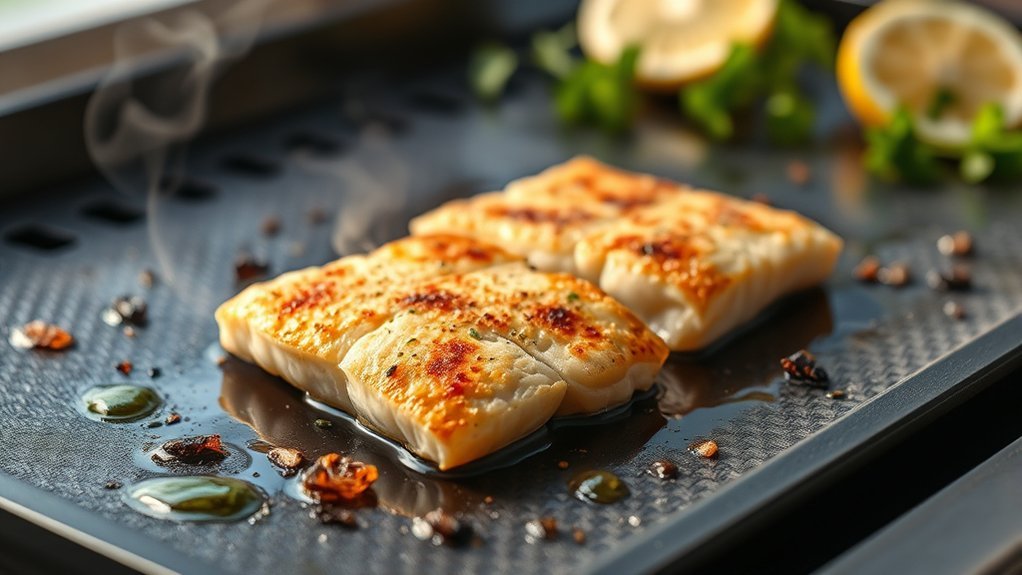

When you’re ready to cook catfish on your Blackstone griddle, the key is starting with fresh, firm fillets and seasoning them just right.
Using the Blackstone griddle allows for even heat distribution, which is essential for cooking catfish perfectly.
You’ll want to preheat your griddle to the perfect temperature and use the right oil to prevent sticking.
Proper temperature control ensures a crispy crust without burning the fish.
Cooking time and technique matter to achieve that ideal crispy crust without drying out the fish.
Understanding these steps will ensure your catfish turns out tender and flavorful every time.
Key Takeaways
- Select fresh, firm catfish fillets, preferably 1-inch thick, for even cooking and better flavor on the Blackstone griddle.
- Preheat the griddle to medium-high, clean the surface, and apply a thin layer of high-smoke-point oil to prevent sticking.
- Pat catfish dry, season evenly with salt, pepper, or Cajun spices, and optionally coat with cornmeal or light flour batter.
- Cook catfish about 3–4 minutes per side until crispy exterior and tender interior, flipping once to develop crust fully.
- Avoid overcrowding; cook catfish alongside quick sides like grilled vegetables, ensuring even heat and efficient griddle use.
Picking the Right Catfish for Your Blackstone Griddle
When selecting catfish for your Blackstone griddle, what qualities should you prioritize to guarantee the best cooking results? Start by considering catfish sourcing, as it directly impacts flavor and texture. You’ll want to choose fresh, firm fillets without any off-putting odor.
Next, evaluate farm raised vs wild catfish options. Farm raised catfish typically offer a milder taste and consistent size, making them easier to cook evenly on your griddle. Wild catfish, on the other hand, provide a richer flavor but may vary in texture and thickness.
Assess your taste preference, but ensure whichever type you pick is fresh and handled properly to avoid any compromise in cooking quality. Proper selection here sets the foundation for a perfectly cooked catfish meal on your Blackstone griddle.
Prepping and Seasoning Catfish for Griddle Cooking
After selecting the ideal catfish fillets, focus on preparing them properly to enhance flavor and guarantee even cooking on your Blackstone griddle. Start by patting the fillets dry to remove excess moisture, which helps the seasoning adhere better.
When considering catfish sourcing, opt for fresh, firm fillets from reputable suppliers to ensure quality and safety. Next, decide on your seasoning approach: simple salt and pepper or a blend of Cajun spices works well.
If you prefer a crispy texture, explore batter alternatives like cornmeal or a light flour coating mixed with spices. Apply your chosen batter or seasoning evenly on both sides. Proper prepping and seasoning set the foundation for perfectly cooked catfish, ensuring each bite is flavorful and cooked through without sticking or burning on your griddle.
Getting Your Blackstone Ready to Cook Catfish
Preparing your Blackstone griddle properly is essential to achieving perfectly cooked catfish with a delicious sear. Start by cleaning the griddle surface thoroughly to remove any residue from previous use.
Next, preheat the griddle on medium-high heat for about 10 minutes, ensuring even temperature distribution. Apply a thin layer of high-smoke-point oil to create a non-stick surface.
Before cooking, review griddle safety guidelines. Keep a fire extinguisher nearby and avoid overcrowding the cooking area. Proper catfish sourcing is also crucial; select fresh, high-quality fillets for the best results.
Once your Blackstone is clean, heated, and oiled, you’re ready to proceed confidently with cooking. Taking these steps ensures both safety and optimal flavor when preparing your catfish on the griddle.
How to Cook Catfish on a Blackstone Griddle
Start by properly preparing your catfish fillets, ensuring they’re clean and patted dry for even cooking. Next, apply a well-balanced seasoning or marinade to enhance flavor without overpowering the fish’s natural taste.
Finally, use precise cooking techniques on your Blackstone griddle to achieve a perfectly crisp exterior and tender interior.
Preparing Catfish Fillets
How do you ensure your catfish fillets cook evenly and retain their natural flavor on a Blackstone griddle? Start with proper catfish selection. Choose firm, fresh fillets with a mild scent and a consistent thickness, ideally about 1-inch thick. This helps them cook uniformly.
For fillet prep, pat the fish dry with paper towels to remove excess moisture, which promotes a better sear. Trim any remaining skin or dark muscle to avoid bitterness. If the fillets vary in size, consider butterflying thicker pieces so they cook at the same rate as thinner ones.
Finally, let the fillets rest at room temperature for 10-15 minutes before placing them on the griddle. This step encourages even cooking and preserves the catfish’s delicate flavor.
Seasoning and Marinating Tips
Why choose the right seasoning and marinade for your catfish fillets? Proper seasoning enhances the natural flavor, while a well-chosen marinade tenderizes the flesh and adds depth. Start by sourcing fresh catfish from reputable suppliers to ensure optimal taste.
Avoid overpowering spices; instead, opt for a balanced blend like smoked paprika, garlic powder, and cayenne for a mild kick. For marinade ideas, consider a mixture of lemon juice, olive oil, minced garlic, and fresh herbs like thyme or parsley.
Let the fillets soak for 20-30 minutes. Never longer, to prevent the acid from breaking down the texture excessively. Pat the fillets dry before placing them on your Blackstone griddle to achieve a perfect sear and maintain a moist interior.
Cooking Techniques on Griddle
When cooking catfish on a Blackstone griddle, controlling the heat and timing is essential to achieve a perfectly cooked fillet with a crispy exterior and tender interior. Start by preheating the griddle to medium-high, ensuring even heat distribution.
Proper griddle maintenance, like seasoning the surface before cooking, prevents sticking and enhances flavor. Use fresh catfish sourced from reputable suppliers for the best results. Cook the fillets about 3-4 minutes per side, adjusting based on thickness.
| Step | Temperature | Time |
|---|---|---|
| Preheat Griddle | Medium-High (375°F) | 5 minutes |
| Place Fillets | Direct Heat | 3-4 minutes/side |
| Flip Carefully | Medium Heat | 3-4 minutes/side |
| Rest Fish | Off Heat | 2 minutes |
This method ensures even cooking and optimal texture.
How to Get a Crispy, Golden Crust on Your Catfish
What’s the secret to achieving a crispy, golden crust on your catfish? It starts with understanding batter dynamics. Use a batter that balances moisture and binding agents. Too wet, and it won’t crisp; too dry, and it won’t adhere properly.
Mix cornmeal with a bit of flour for the perfect texture. Preheat your Blackstone griddle to medium-high heat to ensure immediate sizzle, locking in that crispy crust. Lightly oil the surface to prevent sticking, but don’t overdo it; excess oil can lead to sogginess.
Place your battered catfish gently on the griddle, avoiding overcrowding to maintain consistent heat. Flip only once, letting the crust develop fully before turning. These precise steps guarantee you achieve irresistible crispy crusts every time.
Easy Side Dishes to Serve With Blackstone Catfish
You’ll want to complement your Blackstone catfish with side dishes that enhance its flavor and texture. Fresh vegetable pairings bring a crisp balance, while classic Southern sides add comforting familiarity.
You can also whip up quick griddle recipes to keep the entire meal efficient and flavorful.
Fresh Vegetable Pairings
Which fresh vegetables complement the rich flavors of Blackstone-griddled catfish best? Consider quick-grilled asparagus, zucchini, or bell peppers, as their natural sweetness balances the catfish’s savory notes.
Before cooking, lightly oil your vegetables to help prevent sticking, a technique similar to catfish oiling that preserves moisture and flavor. Maintain your griddle by cleaning it between batches to avoid flavor crossover and ensure even heat distribution.
Slice vegetables evenly for consistent cooking, and use medium-high heat to develop a slight char without overcooking. These steps enhance texture and taste while keeping preparation efficient.
Pairing your Blackstone catfish with these fresh vegetables creates a vibrant, healthy meal that highlights both your griddle maintenance skills and your attention to balanced flavors.
Classic Southern Sides
How do you elevate your Blackstone catfish meal with traditional flavors that complement its crispy texture and savory profile? Start by pairing your perfectly cooked catfish, sourced fresh from trusted catfish sourcing suppliers, with classic Southern sides like creamy coleslaw, tangy hushpuppies, and buttery cornbread. These sides balance the catfish’s rich flavor while adding variety to your plate.
When preparing these dishes, remember to use your Blackstone griddle efficiently, cooking sides like fried okra or sautéed greens alongside the fish without overcrowding. After enjoying your meal, perform a thorough griddle cleanup to maintain your equipment’s longevity and ensure optimal performance for future cookouts.
Quick Griddle Recipes
Wondering how to whip up delicious sides quickly while your catfish cooks on the Blackstone griddle? With the right catfish selection and proper griddle maintenance, you can easily prepare tasty accompaniments without slowing down your process.
Keep your griddle clean and well-oiled to prevent sticking and ensure even cooking.
Try these quick griddle recipes to complement your catfish:
- Sautéed garlic green beans
- Grilled corn on the cob with chili lime butter
- Crispy parmesan zucchini slices
- Quick stir-fried bell peppers and onions
- Toasted garlic bread with herbs
These sides cook fast and require minimal prep, letting you focus on perfecting your catfish.
Frequently Asked Questions
Can I Cook Other Types of Fish on a Blackstone Griddle?
Yes, you can cook various fish types on a Blackstone griddle. Fish versatility allows you to prepare salmon, tilapia, or cod efficiently.
The griddle compatibility guarantees even cooking and excellent flavor retention for all fish varieties.
How Do I Clean My Blackstone Griddle After Cooking?
You should scrape off food residue while the griddle’s warm, then wipe it down with a damp cloth. Follow your cleaning routine with seasoning tips like applying a thin oil layer to protect the surface and maintain seasoning.
What Is the Best Oil to Use on a Blackstone Griddle?
Coincidentally, your oil selection doubles as a seasoning tip. Use high smoke point oils like avocado or grapeseed oil to maintain your griddle’s surface integrity while enhancing flavor and ensuring even cooking during your Blackstone sessions.
Can I Use Frozen Catfish Fillets on the Griddle?
Yes, you can cook frozen fillets on the griddle, but thawing them first guarantees even cooking and better texture.
For alternative proteins, apply the same method to maintain flavor and prevent sticking or uneven heat distribution.
How Long Does It Take to Preheat a Blackstone Griddle?
It takes about 10-15 minutes of preheating timing for your Blackstone griddle to reach optimal heat. This ensures even heat distribution across the surface, allowing you to cook your food consistently and safely.
Conclusion
Now that you’ve mastered cooking catfish on your Blackstone griddle, you’re well on your way to creating a meal so delicious it could make a fisherman weep with joy. Remember, using fresh fillets, proper seasoning, and controlling heat guarantees a perfect crust and tender interior every time.
Pair your catfish with quick griddle sides for a balanced plate that impresses. With practice, your griddle will become your secret weapon for unforgettable fish dishes.
Cooking catfish on a Blackstone griddle is a skill that will elevate your outdoor cooking and delight your taste buds every time.