
You might think cooking fresh corn in a skillet is quick and straightforward, but the exact timing can make all the difference between bland kernels and a perfectly caramelized bite.
Cooking fresh corn in a skillet requires attention to heat and timing to achieve the best flavor and texture.
When you heat the skillet just right and turn the corn regularly, those golden-brown spots start to appear, signaling tender, juicy kernels ready to pop with flavor.
But how long should you keep it on the heat to hit that ideal balance?
Key Takeaways
- Cook fresh corn in a skillet over medium-high heat for about 10 to 12 minutes per ear, turning occasionally for even cooking.
- Preheat the skillet to medium heat and add butter or oil for a golden sear before adding corn.
- Smaller ears cook faster, while older or larger ears may require additional cooking time.
- Avoid overcrowding the skillet to prevent soggy kernels and ensure even caramelization and browning.
- Look for vibrant golden kernels with slight charring and tender texture as signs of doneness.
Preparing Fresh Corn for Cooking in a Skillet
How do you get fresh corn ready for a skillet perfectly every time? Start by selecting ears with plump, fresh sweet kernels that shine with moisture. Peel back the husks carefully, removing all silk strands to avoid any chewy surprises.
Then, snap off the stem end for a clean edge. Use a sharp knife to slice the kernels off the cob, aiming to keep each kernel intact and crisp. The goal is to preserve that fresh sweet flavor and maintain the kernel’s crisp texture, which will caramelize beautifully in the skillet.
Rinse the kernels briefly under cold water and pat them dry to remove excess starch. This simple prep sets you up for an evenly cooked, flavorful corn dish every time.
Which Skillet Works Best for Cooking Corn?
What skillet will give your fresh corn that perfect golden caramelization? Cast iron is a top choice. It retains heat evenly, creating a beautiful sear that enhances your corn selection’s natural sweetness. Nonstick pans work well, too, especially if you want easy skillet cleanup afterward. Stainless steel offers great heat control but needs a bit of oil to prevent sticking.
| Skillet Type | Heat Retention | Cleanup Ease |
|---|---|---|
| Cast Iron | Excellent | Moderate |
| Nonstick | Good | Easy |
| Stainless Steel | Moderate | Moderate |
| Ceramic | Good | Easy |
Choose based on your priority: caramelization or cleanup convenience. Either way, the right skillet will elevate your fresh corn cooking experience.
How to Cook Fresh Corn on the Stovetop
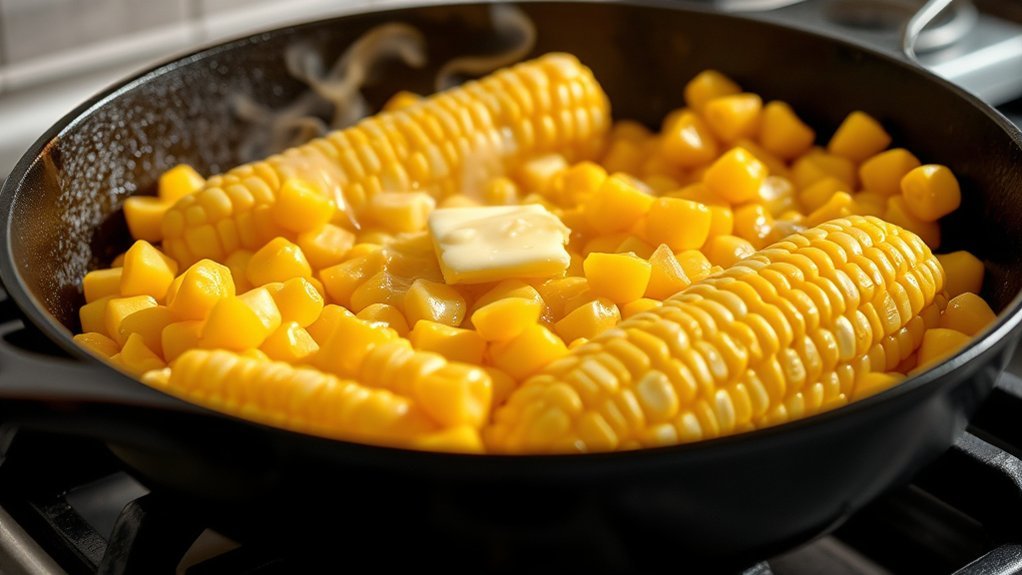
Start by husking your fresh corn and removing the silk for a clean, sweet bite. Heat your skillet over medium heat, adding a bit of butter or oil to create a golden sear on the kernels.
Keep a close eye on the timing, usually 10 to 12 minutes, while turning the ears occasionally to guarantee even cooking and vibrant color.
Preparing Fresh Corn
Wondering how to get that perfect, tender sweetness when cooking fresh corn on your stovetop? Start by prepping your fresh corn carefully to ensure every bite bursts with flavor. First, peel back the husks and remove the silky threads clinging to the kernels.
Rinse the ears under cold water to wash away any debris. Then, pat them dry to prevent excess moisture in your skillet. If you prefer, cut the corn into smaller sections for easier handling and even cooking. Finally, preheat your skillet over medium heat. This skillet heat is key to coaxing out the corn’s natural sugars without burning.
- Choose fresh corn with bright green husks
- Remove husks and silk thoroughly
- Rinse and dry ears before cooking
- Cut into manageable pieces if desired
- Preheat skillet to medium heat for even cooking
Skillet Cooking Techniques
How exactly do you achieve that perfect balance of tenderness and caramelized sweetness when cooking fresh corn in a skillet? Start by heating your pan until the butter melts and bubbles, then add corn kernels tossed lightly in corn starch for a subtle, crispy coating. Stir occasionally, letting golden edges form without burning.
Here’s a simple guide to keep you on track:
| Step | Action | Result |
|---|---|---|
| Preheat | Melt butter in skillet | Rich, even cooking |
| Coat | Toss kernels in corn starch | Light crispiness |
| Sear | Add corn, spread evenly | Caramelized sweetness |
| Stir | Rotate kernels gently | Avoid burning |
| Finish | Cook until tender | Juicy, flavorful corn |
This technique ensures your corn stays juicy with a delightful crunch and buttery aroma.
Timing and Temperature
When should you know your fresh corn has reached that ideal golden tenderness on the stovetop? It all hinges on timing and temperature. Fresh corn’s sweetness and juiciness depend heavily on kernel freshness, so proper corn storage before cooking is essential.
Start with medium-high heat and cook for about 10-12 minutes, turning frequently to guarantee even caramelization.
Keep these tips in mind:
- Use a heavy skillet to maintain consistent heat
- Avoid overcrowding the pan for even cooking
- Watch for kernels to turn a vibrant golden yellow
- Listen for a gentle sizzling sound without burning
- Test a kernel for tenderness and sweetness regularly
Mastering timing and temperature helps you savor corn bursting with flavor every time.
Cooking Time for Fresh Corn in a Skillet
Exactly how long you cook fresh corn in a skillet depends on the heat level and the size of the ears, but typically, you’ll want to sauté each ear for about 10 to 15 minutes. Medium heat is ideal to gently caramelize kernels without burning.
Smaller ears might only need 8 to 10 minutes, while larger ones can take up to 15. Turning the corn every few minutes ensures even cooking and a golden, slightly charred finish.
| Heat Level | Time Needed |
|---|---|
| Low | 12–15 minutes |
| Medium-Low | 10–12 minutes |
| Medium | 8–10 minutes |
| Medium-High | 7–9 minutes |
| High | 5–7 minutes |
Adjust skillet timing based on your pan’s heat and ear size for perfectly cooked fresh corn.
Signs Fresh Corn Is Perfectly Cooked
You’ll know your fresh corn is perfectly cooked when the kernels turn a vibrant golden color and start to glisten with natural juices. Press a kernel gently; it should be tender but still pop with a slight snap under your bite.
The sweet, juicy flavor bursting from each kernel is the final sign you’ve nailed it.
Visual Indicators
How can you tell if fresh corn is perfectly cooked without cutting into a kernel? Look for clear visual indicators that signal it’s ready to enjoy. When you’re corn swapping between pans, pay close attention to how the corn looks. It’s more than just heat; it’s about the subtle changes in appearance.
- Kernels swell slightly, becoming plump and juicy.
- Kernel color deepens to a rich golden yellow.
- A light sheen appears, glistening from natural sugars released.
- Slight charring or browning spots develop, adding flavor hints.
- The husks (if left on) turn a vibrant green and start to crisp at edges.
These visual cues ensure your fresh corn is cooked just right, without guessing or cutting into a single kernel.
Texture And Taste
What does perfectly cooked fresh corn feel and taste like? When you bite into it, you’ll notice a delightful texture contrast: kernels that are tender yet still pop slightly under your teeth. This balance keeps each bite satisfying, not mushy or tough.
The aroma balance is just as important; you’ll detect a sweet, grassy scent that hints at the corn’s freshness, enhanced by the slight caramelization from skillet cooking. The natural sugars have deepened without overpowering the corn’s subtle vegetal notes.
When cooked right, fresh corn offers a burst of juicy sweetness paired with a gentle crunch, inviting you to savor every kernel. Trust these texture and aroma cues; they’re your best guide to knowing when your skillet corn is perfectly done.
Flavor Tips for Cooking Corn in a Skillet
Why settle for plain corn when a few simple flavor boosts can transform it into a mouthwatering treat? When cooking corn in a skillet, don’t just rely on guesswork or kitchen myths. Taste testing is your best guide to perfect flavor. Here are some tips to elevate your corn:
- Add a pat of butter just before finishing to melt into juicy kernels.
- Sprinkle smoked paprika or chili powder for a smoky kick.
- Toss in fresh herbs like cilantro or chives for brightness.
- Drizzle with lime juice to balance sweetness with citrus zing.
- Finish with a pinch of sea salt to enhance natural flavors.
These quick flavor tricks make your skillet corn pop with vibrant taste and keep every bite exciting and fresh.
Mistakes That Can Ruin Your Corn Cooking Time
Adding bursts of flavor to your skillet corn is rewarding, but getting the cooking time wrong can quickly spoil your efforts. One common mistake is ignoring corn variance. Freshness and size vary, affecting how long each ear needs. Smaller ears cook faster, while older ones might need extra time.
Another pitfall is poor corn storage. If your corn isn’t fresh, it cooks unevenly and loses sweetness. Don’t start cooking without checking for freshness and trimming husks properly.
Also, avoid overcrowding the skillet. Too many kernels at once trap steam, leading to soggy corn or uneven cooking. Finally, resist the urge to rush. High heat can burn the outside while leaving the inside tough.
Master these details, and your skillet corn will come out perfectly tender and flavorful every time.
What to Serve With Skillet-Cooked Fresh Corn
Looking to elevate your meal with skillet-cooked fresh corn? Pairing it well brings out the sweetness of different corn varieties and complements your choice of butter alternatives. Whether you’ve chosen sweet yellow, bi-color, or even blue corn, the right sides can make your dish pop.
Consider these tasty companions:
- Grilled chicken or shrimp, for a smoky protein boost
- Fresh garden salad with a tangy vinaigrette, to balance richness
- Roasted sweet potatoes, adding earthy sweetness
- Black bean salsa, for a zesty, colorful contrast
- Crusty artisan bread, perfect for mopping up melted butter alternatives like olive oil or herb-infused spreads
These pairings highlight your skillet-cooked corn’s flavor while keeping your meal vibrant and satisfying.
Frequently Asked Questions
Can I Cook Frozen Corn in a Skillet the Same Way as Fresh Corn?
You can cook frozen corn kernels in a skillet, but you’ll want to thaw or cook them longer than fresh. Stir often, add butter, and enjoy the juicy, sweet discussion ideas sizzling right before you!
How Do I Store Leftover Cooked Corn From the Skillet?
You’ll want to cool your leftover corn quickly, then transfer it to airtight storage containers for leftover preservation.
Keep it in the fridge, where it stays fresh and juicy for up to 3-4 days. Perfect for snacking!
Is It Better to Cook Corn With the Husk on or off in a Skillet?
Like peeling back a sun-warmed leaf, cooking corn without the husk in your skillet sear brings out its sweet, smoky flavor and golden char marks.
Leaving the corn husk on steams rather than sears, so skip it for crispiness.
Can I Add Seasonings During Cooking or Only After the Corn Is Done?
You can add seasoning during cooking to let flavors meld deeply, or sprinkle after for fresh, vibrant spice combinations.
Try butter with smoked paprika mid-cook, then finish with chili powder and lime zest for a zesty punch.
What Is the Nutritional Difference Between Skillet-Cooked and Boiled Corn?
Like a painter’s brushstroke, cooking methods shape nutrition comparison; skillet-cooked corn retains more vitamins and antioxidants than boiled. Boiling leaches nutrients into water, so you get richer flavor and better health benefits from skillet cooking.
Conclusion
Cooking fresh corn in a skillet is like coaxing a golden sunrise from the pan—turning it patiently, you reveal tender kernels bursting with sweetness and light caramel hues.
Just as dawn needs time to glow, your corn needs 10–12 minutes to reach perfection. Treat it gently, season well, and avoid crowding to let each ear shine.
With these simple steps, you’ll bring a warm, vibrant harvest to your table every time. Knowing how long to cook fresh corn in skillet ensures you get that perfect balance of tenderness and flavor.