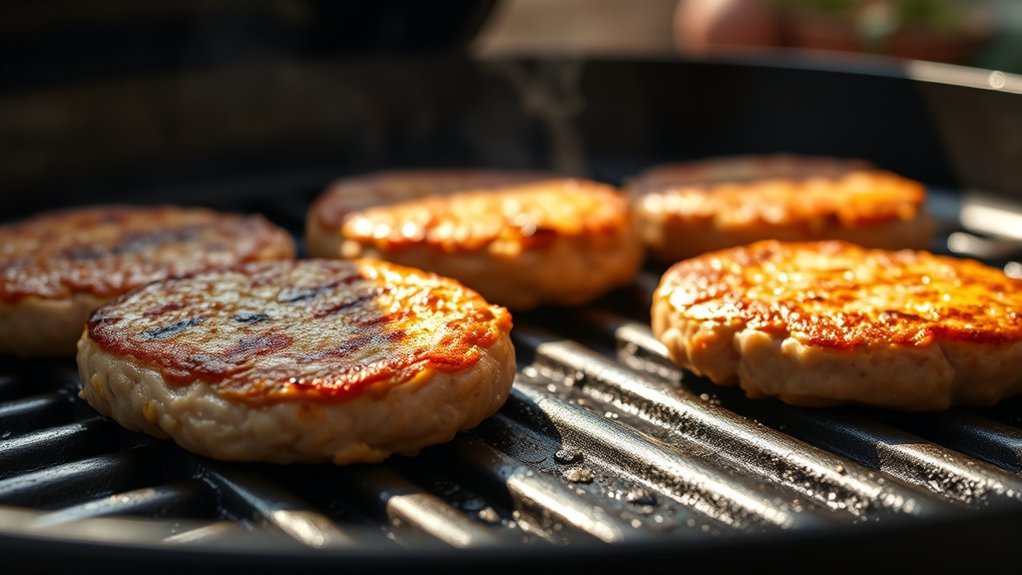

When cooking turkey burgers on a griddle, you’ll want to maintain a medium-high heat around 375°F to ensure proper searing and even cooking.
Cooking turkey burgers on a griddle requires attention to temperature and timing for the best results.
The time you spend on each side depends largely on the thickness of the patty, with thinner burgers needing less time and thicker ones requiring more careful attention.
Yet, the key to perfect turkey burgers isn’t just time—it’s also about monitoring internal temperature and moisture retention.
Key Takeaways
- Cook ½ inch turkey patties for 5 minutes per side on a 375°F griddle for even searing and thorough cooking.
- For thicker patties, increase cooking time: ¾ inch needs 6 minutes per side, and 1 inch requires 7 minutes per side at 375°F.
- Use a reliable meat thermometer to ensure the internal temperature reaches 165°F for safe consumption.
- Flip turkey burgers only once during cooking to promote uniform browning and avoid drying out the patty.
- Let cooked burgers rest for 3 minutes off heat to allow juices to redistribute and enhance juiciness.
What Temperature Should Your Griddle Be for Turkey Burgers?
How hot should you set your griddle to cook turkey burgers perfectly? Aim for a medium-high temperature, around 375°F (190°C). This setting ensures the burgers cook evenly without drying out.
Maintaining this temperature requires regular griddle maintenance: clean residual grease after each use to prevent flare-ups and uneven heating. Preheat the griddle fully before placing your turkey burgers to guarantee consistent contact and searing.
Use utensils designed with ergonomics in mind. Spatulas with comfortable grips and thin, flexible edges help flip the burgers cleanly without tearing the meat. This precision in temperature control and tool choice optimizes cooking efficiency and burger texture.
Avoid temperatures too high, which risk charring outside while leaving the inside undercooked, or too low, which can result in soggy patties.
How Long to Cook Turkey Burgers on a Griddle
Cooking turkey burgers on a griddle typically takes about 5 to 6 minutes per side when set at the recommended medium-high temperature of 375°F (190°C). This timing ensures even cooking without drying out the meat, a critical aspect of the griddle technique. Adjusting the cook time slightly based on patty thickness and griddle consistency enhances results.
| Patty Thickness | Heat Setting | Cook Time per Side |
|---|---|---|
| ½ inch | Medium-High (375°F) | 5 minutes |
| ¾ inch | Medium-High (375°F) | 6 minutes |
| 1 inch | Medium-High (375°F) | 7 minutes |
| 1 inch | Medium (350°F) | 8 minutes |
Using this method, you can optimize texture and juiciness in your turkey burger with precise griddle technique application.
How to Tell When Turkey Burgers Are Fully Cooked and Safe
You’ll know turkey burgers are fully cooked and safe when their internal temperature reaches 165°F, measured with a reliable food thermometer.
Look for visual cues like no pink color inside and clear juices running out when pressed. Also, check the texture; it should be firm but not dry, indicating thorough cooking without overcooking.
Internal Temperature Guidelines
When can you be certain that your turkey burgers are fully cooked and safe to eat? The key is monitoring the internal temperature accurately, especially since turkey butter or a touch of sesame oil can influence cooking time slightly. Follow these precise guidelines:
- Insert a reliable meat thermometer into the thickest part of the burger without touching the griddle.
- Ensure the internal temperature reaches 165°F (74°C), the USDA’s safe minimum for ground turkey.
- Let the burger rest for 3 minutes after removing it from the griddle; carryover heat will finish the cooking, ensuring safety.
Visual Cooking Indicators
While internal temperature remains the most accurate indicator of doneness, visual cues can help you gauge whether your turkey burgers are close to being fully cooked, especially when a thermometer isn’t immediately available.
In mastering turkey art, you’ll notice the edges of the patties firming and losing their raw pink hue, transitioning to an opaque, light brown. This color change reflects proper protein coagulation, a core principle of griddle science.
Additionally, small pockets of clear juices start to appear on the surface, signaling moisture retention and heat penetration. Avoid relying solely on color, as turkey can brown prematurely; instead, combine these visual signs with cooking time guidelines.
Texture and Juices Check
How can you accurately determine if your turkey burgers have reached a safe and fully cooked state beyond just visual cues? Relying solely on color or surface texture can mislead you, risking turkey safety. Instead, focus on texture and juices to confirm doneness precisely.
- Juice Color Test: Press the center gently; clear juices indicate full cooking, while pink or red juices signal undercooking.
- Firmness Check: A fully cooked patty formed properly will feel firm yet springy. Soft or mushy texture suggests incomplete cooking or poor patty formation.
- Internal Temperature: Use a meat thermometer to verify an internal temperature of 165°F (74°C), the definitive marker for turkey safety.
Combining these checks ensures your turkey burgers are both safe and delicious.
Mistakes That Dry Out Your Turkey Burgers (And How to Avoid Them)
You’ll dry out your turkey burgers if you overcook them, as excess heat squeezes out their natural juices. To keep them moist, monitor the internal temperature closely and remove them from the griddle as soon as they hit 165°F.
Additionally, incorporating binders like eggs or adding moisture-rich ingredients can help retain juiciness during cooking.
Overcooking Issues
Why do turkey burgers often turn out dry and tough despite careful cooking? The main culprit is overcooking, a common pitfall that accelerates moisture loss and compromises texture. When you cook turkey burgers beyond their ideal temperature, protein fibers contract excessively, squeezing out juices.
Watch out for these overcooking pitfalls:
- Leaving burgers on the griddle too long, especially after they reach 165°F internal temperature.
- Using overly high heat that cooks the exterior rapidly, forcing you to extend cooking time.
- Pressing down on burgers with a spatula, which squeezes moisture out prematurely.
Avoiding these mistakes helps maintain juiciness by minimizing moisture loss, ensuring your turkey burgers stay tender and flavorful.
Moisture Retention Tips
Where does moisture escape during cooking, and how can you prevent it from drying out your turkey burgers? Moisture retention hinges on minimizing water loss through protein tightening and excessive heat exposure.
First, avoid pressing down on your burgers with a spatula; this squeezes out juices, leading to dryness. Also, don’t overcook—monitor internal temperature precisely, aiming for 165°F.
Proper griddle seasoning creates a non-stick surface, reducing the need for excess oil and preventing sticking, which can tear the meat and release moisture. Incorporate binders like finely chopped onions or a small amount of olive oil into your mix to enhance juiciness.
Finally, let the burgers rest briefly off the heat; this allows internal juices to redistribute, ensuring a moist, flavorful bite every time.
Tips to Keep Turkey Burgers Juicy and Flavorful on the Griddle
How can you guarantee your turkey burgers stay moist and flavorful when cooking on a griddle? The key lies in applying precise tips during preparation, cooking, and storage.
First, keep the meat cold until just before cooking to preserve juices. Second, avoid overworking the ground turkey when forming patties, as excess handling toughens texture and releases moisture prematurely. Third, preheat your griddle properly to sear the burgers quickly, locking in flavor without drying out the meat.
Keep turkey cold, handle gently when forming patties, and preheat the griddle to lock in juicy flavor.
Also, cook to an internal temperature of 165°F; use a reliable thermometer for accuracy. After cooking, let the burgers rest briefly to redistribute juices. Lastly, if you plan to store leftovers, refrigerate promptly in airtight containers to maintain flavor and moisture for future meals.
These steps ensure juicy, flavorful turkey burgers every time.
Easy Variations to Customize Your Turkey Burgers on the Griddle
Mastering moisture and flavor in your turkey burgers sets a solid foundation, but customizing them on the griddle can elevate your meal further. Incorporate easy variations during griddle grilling to enhance texture and taste without complicating the process.
Consider mixing in ingredients or topping burgers post-cook for diverse flavor profiles.
| Variation Type | Ingredient Example | Effect on Burger |
|---|---|---|
| Mix-in | Finely chopped mushrooms | Adds moisture, umami |
| Seasoning | Smoked paprika | Introduces smoky depth |
| Topping | Avocado slices | Adds creaminess, richness |
Frequently Asked Questions
Can I Freeze Turkey Burgers Before Cooking on the Griddle?
Yes, you can freeze turkey burgers before cooking on the griddle; just freeze them flat to preserve patty texture. Use oil to prevent sticking, cook thoroughly, and pair with healthy sides. Ground chicken works similarly.
What Side Dishes Pair Best With Turkey Burgers?
You’ll want side dishes like sweet potato fries, coleslaw, or grilled veggies for balanced flavor pairings. These complement turkey burgers’ mild taste, adding texture and brightness while enhancing your meal’s nutritional profile with varied nutrients and colors.
Are Turkey Burgers Healthier Than Beef Burgers?
Turkey vs beef offers contrasting health benefits: you get leaner protein and fewer calories with turkey, but beef provides more iron and zinc.
You should weigh fat content against nutrient density when choosing healthier options.
How Do I Prevent Turkey Burgers From Sticking to the Griddle?
You can prevent turkey burgers from sticking by preheating the griddle well and lightly oiling it. Use proper grilling techniques like flipping only once, and consider mixing ground chicken with binders to improve sticking prevention.
Can I Use Ground Chicken Instead of Turkey for Griddle Burgers?
Yes, you can use ground chicken alternatives like ground chicken for griddle burgers. Adjust your griddle technique by cooking over medium heat, flipping carefully to prevent sticking, and ensuring an internal temperature of 165°F for safety.
Conclusion
Now that you know the ideal griddle temperature and exact cook times, why settle for anything less than perfectly juicy turkey burgers? By monitoring the internal temperature at 165°F and avoiding common mistakes like pressing the patties, you can ensure safe, flavorful results every time.
Remember to let them rest before serving to lock in moisture. With these precise techniques, you’ll master turkey burgers that are both delicious and reliably cooked through.
By following these tips, you’ll achieve the best results when cooking turkey burgers on griddle, making every meal satisfying and safe.