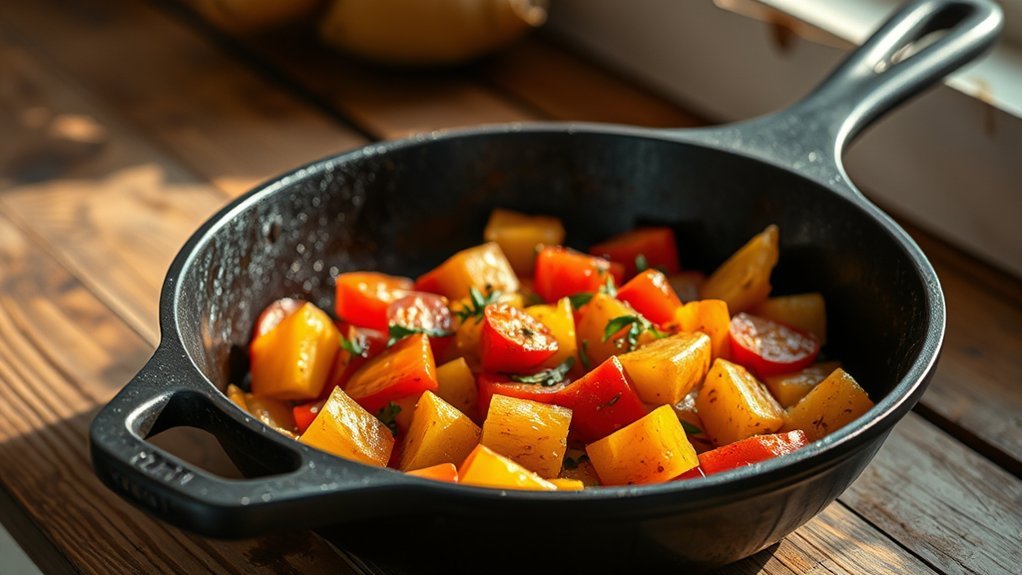

You might wonder if you can store food in a cast iron skillet.
While it can hold leftovers temporarily, doing so carelessly may damage the skillet’s seasoning, introduce rust, or even affect the food’s taste and safety.
Understanding the nuances of seasoning, moisture, and acidity is essential before you decide to keep food in cast iron for any length of time.
Proper care can help maintain your skillet’s quality while ensuring your food stays safe and tasty.
Key Takeaways
- Storing food short-term in cast iron is possible but avoid acidic or wet foods to prevent seasoning damage and rust.
- Always clean, dry, and lightly oil the skillet before storing food to maintain seasoning and prevent rust.
- Transfer leftovers to airtight containers for long-term storage to protect both food quality and skillet condition.
- Prolonged storage in cast iron increases rust risk and can cause metallic flavors, especially with acidic or moist foods.
- Refrigerate food in cast iron only briefly and ensure the pan is thoroughly dried and re-seasoned after use.
Is It Safe to Store Food in Cast Iron Skillets?
How safe is it to store food directly in a cast iron skillet? You need to understand that while cast iron is durable, storing food in it requires caution.
Storing food in cast iron is possible but requires careful attention to maintain safety and seasoning.
The seasoning effects on the skillet create a non-stick surface, but prolonged contact with acidic or moist foods can degrade this layer, compromising both flavor and food safety. If the seasoning wears off, iron can leach into your food, altering taste and potentially causing health concerns.
Additionally, moisture trapped in the skillet promotes rust, which is unsafe to consume. For optimal food safety, avoid long-term storage in cast iron, especially for acidic or wet foods.
Instead, transfer leftovers to airtight containers designed specifically for safe food storage, preserving both your meal’s quality and your skillet’s seasoning.
How Does Seasoning Affect Food Storage in Cast Iron?
Your cast iron’s seasoning creates a protective layer that helps prevent rust and minimizes food sticking during storage. However, this layer can also subtly influence the flavor of stored food, especially if acidic ingredients are involved.
Understanding how seasoning interacts with your food is key to maintaining both the skillet’s integrity and the dish’s taste.
Seasoning Layers and Protection
Why does the seasoning layer matter when storing food in a cast iron skillet? Seasoning layers form a protective barrier that prevents rust and minimizes direct contact between food and raw iron. This layer is essential for maintaining your skillet’s integrity and aligns with proper food storage ethics, ensuring safety and hygiene.
When you store food in cast iron, consider:
- The seasoning’s condition: A well-maintained layer resists moisture and acidic damage.
- Potential chemical reactions: Unseasoned or damaged layers may cause metallic flavors or contamination.
- Hygiene: Properly seasoned surfaces reduce bacterial buildup during storage.
Impact on Food Flavor
Seasoning greatly influences the flavor profile of food stored in a cast iron skillet by creating a non-reactive surface that minimizes metallic taste transfer. The seasoning chemistry involves polymerized oils forming a durable, hydrophobic layer that prevents direct contact between food and the iron.
This layer not only enhances flavor retention but also inhibits unpleasant metallic notes that can alter your dish’s taste. When you store food in a well-seasoned skillet, you preserve the original flavors without imparting off-flavors.
Moreover, this seasoning layer plays a crucial role in rust prevention, indirectly supporting flavor integrity by maintaining the skillet’s surface condition. Without proper seasoning, food stored in the skillet risks absorbing iron’s metallic tang and promotes surface degradation that negatively impacts taste.
Preventing Rust During Storage
How can you effectively prevent rust while storing food in a cast iron skillet? Rust prevention hinges on the seasoning impact, which creates a natural, protective layer on the skillet’s surface. This layer not only enhances cooking but also acts as a barrier against moisture and air, key culprits of rust.
To maintain this protection during storage, you should:
- Ensure the skillet is thoroughly cleaned and completely dry before storing.
- Apply a light coat of oil to reinforce the seasoning and seal the surface.
- Store the skillet in a dry, well-ventilated area to minimize humidity exposure.
Why Does Rust Form When You Store Food in Cast Iron?
When you store food in a cast iron skillet, moisture from the food interacts with the iron surface, triggering oxidation that leads to rust formation. This process occurs because cast iron is porous and reactive, so water and acids in food penetrate the seasoning layer.
If your skillet’s seasoning isn’t well-developed or has worn off, the bare iron becomes exposed, accelerating rust. Seasoning differences significantly impact rust prevention; a strong, well-maintained seasoning acts as a barrier against moisture and air.
Without this protective layer, the skillet’s surface oxidizes rapidly when exposed to damp conditions from stored food. Understanding this interaction helps you appreciate why storing food directly in cast iron can compromise the pan’s integrity and why rust prevention depends heavily on maintaining a robust seasoning.
How Do You Clean Cast Iron Before Storing Food?
Why must you thoroughly clean your cast iron skillet before storing food? Proper cleaning is essential for cookware safety and storage ethics. Residual food and moisture can cause bacterial growth and rust, compromising your skillet’s seasoning and health standards.
To clean effectively, follow these steps:
- Rinse with hot water immediately after use; avoid soap to preserve seasoning.
- Scrub stubborn bits with a non-abrasive brush or coarse salt to prevent damage.
- Dry completely using a towel and heat on the stove to eliminate moisture.
This precise cleaning routine ensures your skillet maintains its non-stick surface and prevents contamination. Adhering to these practices reflects responsible storage ethics, protecting both your food’s quality and your cast iron’s longevity.
Should You Refrigerate Food Stored in Cast Iron?
Once you’ve thoroughly cleaned and dried your cast iron skillet, the next consideration is how to store any leftover food safely. You should refrigerate food stored in cast iron to prevent bacterial growth and spoilage.
However, be mindful that prolonged refrigeration can affect your skillet’s seasoning impact. Moisture in the fridge may cause the seasoning layer to weaken or develop rust spots if the pan isn’t properly dried before storage.
For leftover reuse, transfer food to an airtight container when possible, but if you must store it in the skillet, ensure it’s completely dry and lightly oiled to protect the seasoning. Refrigerating food in cast iron is safe and practical, but maintaining your pan’s seasoning requires careful drying and occasional re-seasoning after storage.
Which Foods Are Best for Storing in Cast Iron?
Which foods hold up best when stored in a cast iron skillet? You want to prioritize dishes that won’t compromise the skillet’s seasoning vs flavor balance or introduce moisture that invites rust. Foods with high acidity or moisture content can strip seasoning and accelerate rust, so avoid storing those.
Ideal candidates include:
- Dry roasted nuts: They maintain the skillet’s seasoning without adding moisture.
- Cooked grains: Like rice or quinoa, as long as they’re fully cooled and dry.
- Sautéed or roasted vegetables: Provided they’re not overly wet or acidic.
These options align with rust prevention strategies by minimizing moisture contact and preserving your skillet’s seasoned surface. Choosing the right foods ensures your cast iron remains durable and flavorful for years.
How Can You Keep Your Cast Iron Safe When Storing Leftovers?
How do you protect your cast iron skillet when storing leftovers? First, ensure the skillet is completely cool before handling. Always wipe it dry thoroughly. Moisture is the enemy of storage safety and promotes rust.
After serving, clean the skillet promptly with hot water and a brush, avoiding soap to preserve the seasoning. Dry it immediately and apply a thin layer of cooking oil to maintain the protective coating.
When storing leftovers inside the skillet, cover it with a tight-fitting lid or plastic wrap to prevent contamination and moisture buildup. Store the skillet in a dry place with good air circulation to further enhance rust prevention.
Following these steps ensures your cast iron stays safe, seasoned, and ready for your next meal.
When Is It Better Not to Store Food in Cast Iron?
You shouldn’t store highly acidic foods like tomato sauce in your cast iron skillet, as they can break down the seasoning and cause metallic flavors. Avoid leaving moisture in the pan for extended periods to prevent rust from forming.
Also, cast iron isn’t ideal for long-term food storage because it can affect both the cookware’s integrity and the food’s quality.
Acidic Foods Avoidance
When should you avoid storing food in a cast iron skillet? It’s crucial to steer clear of acidic foods because they react with the skillet’s surface, causing damage and off-flavors.
Despite some storage myths suggesting otherwise, corrosive acids like vinegar or tomato-based dishes can degrade your skillet’s seasoning and impart a metallic taste.
Avoid storing:
- Tomato sauces or dishes with vinegar
- Citrus-based foods like lemon or orange marinades
- Pickled or fermented items high in acidic content
These acidic foods can break down the protective seasoning layer, resulting in corrosion and a compromised cooking surface. To maintain your cast iron’s longevity and performance, avoid storing acidic foods and opt for alternative containers designed for acidic storage.
Moisture and Rust Risk
Why does moisture pose such a significant threat to cast iron skillets during food storage? Because cast iron is highly susceptible to rust, any residual moisture inside the skillet creates an ideal environment for oxidation.
When you store food in a cast iron skillet without proper moisture control, water interacts with the iron surface, breaking down the seasoning layer and accelerating rust formation.
To prevent this, always ensure the skillet is thoroughly dried before storing food, and avoid leaving wet or high-moisture foods for extended periods.
If moisture lingers, rust can develop rapidly, compromising both the skillet’s performance and your food’s safety.
Long-Term Storage Issues
How long can you safely store food in a cast iron skillet before it starts causing problems? Generally, long-term storage isn’t recommended, as it can disrupt the skillet’s seasoning chemistry and increase rust risk.
When you store food too long, moisture accumulates, breaking down the protective seasoning layer and leading to rust. To avoid these issues, consider these points:
- Avoid storing acidic or wet foods for extended periods; they accelerate seasoning breakdown.
- Always clean, dry thoroughly, and reapply oil after storage to maintain rust prevention.
- For long-term storage, transfer food to airtight containers rather than leaving it in the cast iron.
Frequently Asked Questions
Can Acidic Foods Damage the Cast Iron Seasoning?
Yes, acidic foods can cause seasoning damage due to their acidic impact. When you cook or store acidic ingredients in cast iron, they can break down the seasoning layer.
Avoid prolonged contact to preserve your skillet’s finish.
How Long Can Cooked Food Safely Stay in Cast Iron?
You shouldn’t keep cooked food in cast iron longer than two hours; extended storage causes discoloration effects and compromises seasoning longevity.
Always transfer leftovers to airtight containers to protect your skillet’s seasoning and maintain food safety.
Does Storing Food in Cast Iron Affect Its Flavor?
Storing food in cast iron can slightly alter its flavor, especially acidic dishes. You’ll want to maintain seasoning integrity by cleaning promptly and re-oiling, ensuring your skillet’s flavor-enhancing properties stay intact over time.
Can Cast Iron Skillets Be Used for Storing Raw Food?
Don’t put all your eggs in one basket. Cast iron isn’t ideal for storing raw food long-term because it can promote bacterial growth. Prioritize food safety by using airtight containers instead, ensuring proper refrigeration and preventing contamination.
Is It Safe to Reheat Food Directly in a Cast Iron Skillet?
Yes, reheating food directly in a cast iron skillet is safe. You just need to monitor reheating safety closely, as high heat can affect seasoning impact.
Properly maintained seasoning prevents sticking and preserves skillet longevity.
Conclusion
You want your cast iron skillet to stay as robust and reliable as the day you bought it. Imagine this: a sizzling skillet, perfectly seasoned, holding your food just moments before you transfer it to a sealed container. Don’t let moisture or acidity creep in to dull that iron’s shine or invite rust.
Clean, dry, lightly oil, then refrigerate leftovers promptly. With careful care, your cast iron will serve you brilliantly—meal after meal, year after year.
When considering if you can store food in cast iron skillet, it’s best to transfer leftovers to a proper container rather than storing food directly in the skillet to maintain its seasoning and longevity.