
It’s a coincidence that the perfect timing for cooking frozen burgers on a griddle aligns closely with maintaining an even medium-high heat around 375°F.
When cooking frozen burgers on a griddle, you might think a quick flip or two is enough, but precise control over temperature and timing is essential to avoid undercooking or drying out your patties.
Understanding these nuances will change how you approach your next cookout—and there’s more to contemplate when aiming for that ideal juicy finish.
Key Takeaways
- Preheat the griddle to 375°F (190°C) for consistent medium-high heat before cooking frozen burgers.
- Cook frozen patties undisturbed for about 5 to 6 minutes on the first side to form a crust.
- Flip burgers only once or twice, cooking the second side until internal temperature reaches 160°F.
- Use steady, moderate heat to ensure even cooking without drying out or burning the exterior.
- Rest cooked burgers off heat for a few minutes to redistribute juices and maintain juiciness.
How to Prepare Your Griddle for Cooking Frozen Burgers
How do you guarantee your griddle is perfectly prepared for cooking frozen burgers? Start by preheating your griddle to a consistent medium-high griddle temperature, around 375°F (190°C). This ensures even heat distribution, which is critical for achieving an ideal burger texture.
Avoid overheating, as excessive heat can char the outside while leaving the inside undercooked. Next, clean the griddle surface thoroughly to remove any residue that might interfere with the burger’s sear. Lightly oil the surface to prevent sticking but avoid excess oil, which can cause flare-ups and affect texture.
Maintaining this precise griddle temperature throughout cooking helps develop a uniform crust, locking in juices and creating the desired balance between a crispy exterior and a tender interior. This preparation sets the foundation for perfect frozen burger cooking.
How to Cook Frozen Burgers on a Griddle for Perfect Doneness
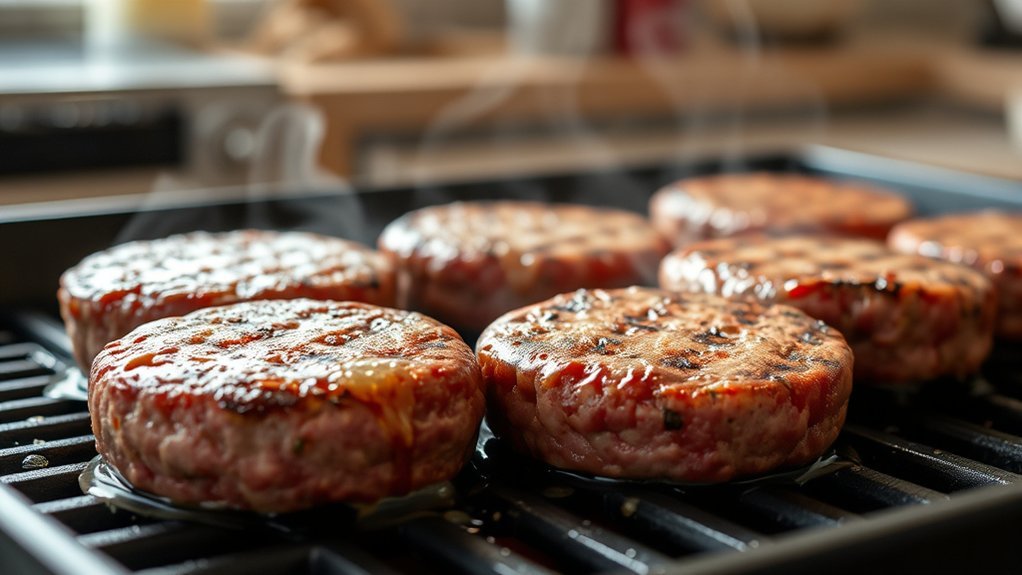
With your griddle properly heated and oiled, you can place the frozen burgers directly onto the surface without thawing. Understanding frozen burger science is key: frozen patties release moisture as they heat, requiring steady, moderate heat to cook evenly without drying out.
Place frozen burgers on a hot, oiled griddle and cook with steady, moderate heat for even, juicy results.
Thanks to your griddle seasoning, the non-stick surface prevents sticking and facilitates consistent browning, essential for perfect doneness. Start by allowing the patties to sear undisturbed, which forms a flavorful crust.
The griddle’s even heat distribution ensures the inside gradually reaches a safe temperature while maintaining juiciness. Avoid high heat spikes, as they risk uneven cooking. Use a reliable meat thermometer to confirm internal temperature, aiming for 160°F for ground beef.
This method balances surface caramelization and thorough internal cooking efficiently.
Flipping and Checking Your Frozen Burgers on the Griddle
When should you flip your frozen burgers on the griddle to achieve ideal cooking? Start by letting the burgers cook undisturbed for about 5 to 6 minutes. This initial griddle timing allows the bottom to develop a proper sear, locking in juices.
Establish a consistent flipping cadence. Flip only once or twice to ensure even cooking without unnecessary moisture loss. When flipping, use a spatula to gently lift and turn the burger; avoid pressing down, which squeezes out flavorful juices.
After flipping, monitor the second side closely, adjusting the griddle timing based on visual cues like browning and slight firmness. Check internal temperature routinely with a meat thermometer to confirm doneness. Following this precise flipping cadence and timing helps you achieve a perfectly cooked frozen burger every time.
Adjust Cooking Times for Burger Type and Thickness
Why does the type and thickness of your burger demand adjustments in cooking time? Different proteins, such as beef, chicken, turkey, or plant-based, have unique moisture content and density, impacting heat absorption and cooking rates.
Thicker patties require longer exposure to maintain a consistent internal temperature without burning the exterior. When you encounter thickness variation, you must lower the cooking temperature slightly to allow the heat to penetrate evenly.
Conversely, thinner patties cook faster and need a higher cooking temperature to develop a proper sear without drying out. By calibrating the cooking temperature based on your burger’s type and thickness variation, you ensure thorough cooking while preserving texture.
Ignoring these factors risks undercooking or overcooking, compromising both safety and flavor. Always adjust times precisely for optimal results.
Tips to Keep Frozen Burgers Juicy and Flavorful on a Griddle
How can you guarantee your frozen burgers stay juicy and flavorful on a griddle? Start by preheating the griddle to medium-high heat to create an immediate sear, locking in moisture for a juicy texture. Avoid pressing down on the patties, as this squeezes out essential juices.
For a flavor boost, season the burgers right after placing them on the griddle; salt and pepper enhance natural taste without drawing out moisture prematurely. Flip the burgers only once, halfway through cooking, to maintain even heat distribution.
Finally, let the burgers rest off the heat for a few minutes; this step allows internal juices to redistribute, preserving both juiciness and flavor. Precise control over heat and timing ensures the best results every time.
Frequently Asked Questions
Can I Cook Frozen Turkey Burgers on a Griddle?
Yes, you can cook frozen turkey burgers on a griddle. Ensure the griddle is preheated to medium-high.
Cook each side for about 6-7 minutes, and check the internal temperature reaches 165°F for safe, even griddle cooking.
Is It Safe to Cook Frozen Burgers Without Thawing First?
Is it safe? Absolutely, you can cook frozen burgers without thawing first, but treat them like a clockwork puzzle. Adjust cooking times carefully to guarantee even heat, proper internal temperature, and avoid risks tied to undercooked meat.
What Is the Best Oil to Use on a Griddle for Burgers?
The best oil for your griddle is one with a high smoke point, like avocado or canola oil. They handle high cooking temperatures well, preventing burning and ensuring your burgers cook evenly with great flavor and texture.
How Do I Clean My Griddle After Cooking Frozen Burgers?
Cleaning your griddle after burgers is like resetting a chessboard; precision matters. Use scraping tools and warm water for cleaning methods. Then apply a thin oil layer for seasoning tips, ensuring a smooth, rust-free surface for next time.
Can I Add Cheese Directly to Frozen Burgers on the Griddle?
You shouldn’t add cheese directly to frozen burgers; wait until they’re nearly cooked. Cheese timing depends on burger thickness. Thicker patties need longer before adding cheese to melt properly without burning or overcooking the meat.
Conclusion
Cooking frozen burgers on a griddle isn’t just a task—it’s a precision-driven art form demanding patience and exact temperature control. If you rush or deviate from 375°F, you risk disaster: a dry, flavorless brick instead of a juicy masterpiece.
Master this method, flipping carefully and monitoring internal temps, and you’ll transcend ordinary cooking. Your frozen patties transform into perfectly seared, flavorful wonders that could make even gourmet chefs jealous.
By following these steps, you’ll achieve delicious results every time, proving that knowing how long to cook frozen burgers on a griddle is essential for burger success.