
Frying potatoes and onions in a skillet is a simple skill that can elevate any meal, much like a painter choosing the right brush. Mastering how to make fried potatoes and onions in a skillet starts with selecting the right type of potatoes and preparing them carefully. This ensures even cooking and crispiness.
Getting the oil temperature just right is key, but knowing exactly when to add the onions can make all the difference. Let’s explore how to master each step for perfect results.
Key Takeaways
- Choose medium-starch potatoes like Yukon Gold, slice uniformly, soak in cold water 30+ minutes, then dry thoroughly for crispiness.
- Use a heavy skillet with high smoke point oil (avocado, peanut, or refined canola) and heat oil until shimmering over medium-high heat.
- Add potatoes in a single layer, cook undisturbed to form a golden crust, then add sliced onions and stir occasionally until caramelized.
- Season gradually with salt and spices while cooking, avoid overcrowding the skillet to prevent steaming and soggy potatoes.
- Finish with fresh herbs or black pepper, serve immediately, and reheat leftovers in a skillet to maintain crisp texture.
How to Make Fried Potatoes and Onions: A Quick Overview
Wondering how to make perfectly fried potatoes and onions quickly? Start by heating oil in a skillet over medium-high heat. While the oil warms, slice your potatoes and onions evenly to guarantee uniform cooking.
Avoid getting distracted by two word discussion ideas or nonessential topics. Focus on technique. Place the potatoes in the skillet first, spreading them out in a single layer to promote crispness.
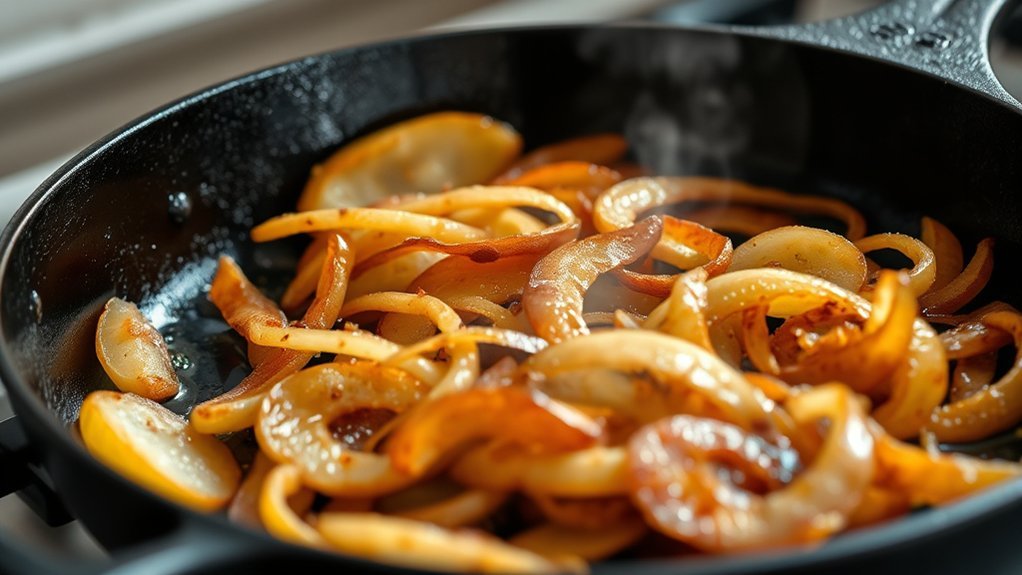
After a few minutes, add the onions on top, stirring occasionally. Season with salt and pepper to taste. Cook until the potatoes are golden brown and tender, and the onions are caramelized but not burnt.
Choose the Best Potatoes for Fried Potatoes and Onions
To achieve perfectly fried potatoes and onions, selecting the right type of potato is key. The potato variety and starch content greatly affect texture and cooking time. Here’s how to choose:
- Opt for medium-starch potatoes like Yukon Gold; they hold shape but crisp well.
- Avoid high-starch Russets if you want less crumbly, more cohesive pieces.
- Stay clear of waxy potatoes (like red or fingerlings) as they resist browning and can become too firm.
- Pick firm, blemish-free potatoes to ensure even cooking and better texture.
Prep Fried Potatoes and Onions for Even Cooking
Start by slicing your potatoes into even pieces to ensure they cook at the same rate. Next, soak the slices in cold water for at least 30 minutes to remove excess starch and prevent sticking.
This simple prep step helps you achieve perfectly crispy, evenly cooked potatoes and onions every time.
Slice Potatoes Uniformly
A key step in preparing fried potatoes and onions is slicing the potatoes uniformly. Uniform slices ensure even cooking, preventing some pieces from burning while others remain undercooked.
Here’s how to slice potatoes for the best results:
- Wash and peel the potatoes, then pat them dry to avoid slipping.
- Cut the potato lengthwise into thick slabs about ¼ inch thick.
- Stack the slabs carefully and slice them again into uniform strips.
- Finally, turn the strips and slice across to create uniform cubes or rounds, depending on your preference.
Soak To Remove Starch
Although slicing your potatoes uniformly is essential, soaking them in cold water before cooking plays an equally important role in achieving perfectly fried potatoes and onions. You need to soak starch from the potatoes by submerging the slices in a bowl of cold water for at least 30 minutes. This starch removal prevents the potatoes from sticking together and promotes even browning.
After soaking, drain the potatoes thoroughly and pat them dry with a clean kitchen towel or paper towels to remove excess moisture. Removing this surface starch ensures the potatoes fry crisp, not soggy. Don’t skip this step; it’s key for texture.
While onions don’t require soaking, prepping the potatoes this way sets the stage for consistent, golden results in your skillet frying.
Pick the Best Skillet and Oil for Crispy Potatoes
Which skillet and oil you choose can make all the difference in achieving perfectly crispy fried potatoes and onions. First, select a heavy-bottomed skillet like cast iron or stainless steel; they distribute heat evenly and retain it well.
Second, ensure your kitchen has good skillet ventilation to manage smoke and maintain air quality. Third, pick an oil with a high smoke point, such as avocado, peanut, or refined canola oil, to prevent burning and off-flavors.
Finally, avoid oils with low smoke points like unrefined olive oil, which can degrade quickly under high heat. By combining proper skillet ventilation and an oil with an appropriate smoke point, you set the foundation for crisp, delicious fried potatoes and onions every time.
Get Crispy, Golden Potatoes Every Time
Consistently achieving crispy, golden potatoes starts with properly preparing and cooking them. First, slice your potatoes evenly to ensure uniform cooking. Rinse the slices under cold water to wash away excess starch, then soak them for at least 30 minutes; this starch reduction prevents sogginess and promotes that desirable crispy texture.
After soaking, thoroughly dry the potatoes using a clean towel. Moisture will steam them, hindering crispiness. Heat your skillet with oil until shimmering before adding the potatoes in a single layer to avoid overcrowding.
Cook over medium heat without stirring initially; this allows a golden crust to form. Flip the potatoes only once they release easily from the pan. This method guarantees perfectly crispy, golden potatoes every time.
Sauté Onions to Caramelized Perfection
How do you achieve perfectly caramelized onions that add rich flavor to your fried potatoes? Mastering the caramelization technique is key. Here’s how to get that ideal onion texture and deep sweetness:
- Slice onions evenly to ensure uniform cooking.
- Heat your skillet over medium-low heat and add oil or butter to prevent burning.
- Cook onions slowly, stirring every few minutes to promote natural sugars breaking down and prevent sticking.
- Continue cooking for 20-30 minutes until onions turn a rich golden-brown color and become soft but not mushy.
This slow, patient approach lets the onions develop a complex flavor and tender onion texture, enhancing your fried potatoes with that irresistible caramelized sweetness.
When to Add Onions for Perfect Flavor
You’ll get softer, sweeter onions by adding them early, allowing them to cook alongside the potatoes. If you prefer a bit of crunch and sharper flavor, add the onions later in the cooking process.
Timing their addition controls both texture and taste, so adjust based on your desired outcome.
Early Versus Late Addition
When should you add onions to your skillet for the best flavor? Choosing between early addition and late addition affects the taste profile considerably. Consider these steps:
- Early addition means tossing onions in with potatoes at the start, allowing their sugars to caramelize and deepen flavor.
- This method yields a sweeter, more integrated taste as onions slowly cook alongside potatoes.
- Late addition involves adding onions toward the end, preserving their sharpness and delivering a punchier, fresher flavor.
- Use late addition if you want onions to stand out distinctly without blending too much into the potatoes.
Decide based on your flavor preference: mellow sweetness with early addition or bright, assertive notes with late addition. Both techniques enhance your skillet fried potatoes and onions uniquely.
Impact on Onion Texture
Why does the timing of adding onions matter for their texture? Adding onions too early results in a softer, almost mushy onion texture because they cook longer and release more moisture. If you want firmer onions with a slight crunch, add them later in the cooking process.
The caramelization timing directly affects both flavor and texture. For deep, sweet caramelized onions, add them early but monitor heat carefully to avoid burning. If you prefer lightly caramelized, crisp onions, introduce them midway or toward the end.
Adjusting when you add onions lets you control whether they blend into the potatoes or stand out with distinct texture. Mastering this timing ensures your fried potatoes and onions achieve the perfect balance of flavor and onion texture every time.
How to Season Fried Potatoes and Onions for Maximum Flavor
How do you elevate simple fried potatoes and onions into a dish bursting with complex flavors? Focus on seasoning blends and salt timing. Here’s how:
- Start with salt timing: Add salt halfway through cooking to draw out moisture without making ingredients soggy.
- Use complementary seasoning blends: Choose blends with paprika, garlic powder, and thyme to enhance earthiness.
- Season evenly: Sprinkle spices gradually while stirring to ensure every piece absorbs flavor.
- Finish with fresh herbs or a pinch of black pepper: This adds brightness and a subtle kick just before serving.
Avoid These Common Mistakes When Frying Potatoes and Onions
Don’t overcrowd your skillet, or your potatoes and onions will steam instead of crisp up. Use an oil with a high smoke point, like canola or vegetable oil, to avoid burning and off-flavors. These simple adjustments will guarantee your dish cooks evenly and tastes perfect.
Overcrowding The Skillet
What happens when you pile too many potatoes and onions into your skillet at once? You fall into overcrowding pitfalls that ruin texture and flavor. Skillet crowding traps moisture, causing your ingredients to steam instead of fry.
To avoid this, follow these steps:
- Use a large enough skillet to allow a single layer of potatoes and onions.
- Fry in batches if necessary, ensuring each piece has room to crisp.
- Keep the heat consistent; overcrowding lowers temperature, leading to soggy results.
- Stir occasionally but avoid overcrowding, which prevents even browning.
Using The Wrong Oil
Choosing the right oil plays a pivotal role in achieving perfectly fried potatoes and onions, as the wrong type can alter flavor, texture, and cooking performance. Avoid wrong oil alternatives like unrefined olive oil or butter, which have low oil smoke points and can burn quickly, imparting bitterness.
Instead, choose oils with high smoke points such as vegetable, canola, or peanut oil to withstand the heat without smoking or breaking down. Using an oil with an insufficient smoke point not only ruins the taste but also affects the crispiness of your potatoes and onions.
Monitor the oil temperature carefully; if it starts smoking, lower the heat immediately. Selecting the proper oil ensures even cooking, prevents bitterness, and produces that desirable golden-brown crust you want every time.
Easy Variations and Tips for Serving and Storing
How can you easily customize fried potatoes and onions to suit your taste or meal plan? Start by experimenting with spices like paprika or rosemary for a flavor boost. For serving, consider topping with fresh herbs or a dollop of sour cream.
When it comes to storing, proper potato storage is key. Keep them in a cool, dark place to maintain freshness. Likewise, onion prep impacts flavor and shelf life; slice just before cooking to avoid bitterness and store uncut onions in a ventilated area.
- Add bell peppers or mushrooms during cooking for extra texture.
- Swap yellow onions for sweet or red onions for varied sweetness.
- Store leftovers in an airtight container in the fridge for up to 4 days.
- Reheat in a skillet to retain crispness instead of microwaving.
Frequently Asked Questions
Can I Use Frozen Potatoes for Frying?
You can use frozen potatoes for frying, but ensure you properly thaw and dry them for best results. Maintain a consistent oil temperature around 350°F to achieve crispiness without sogginess, improving frozen potatoes feasibility.
How Long Do Fried Potatoes and Onions Last in the Refrigerator?
Fried potatoes and onions last about 3 to 5 days in the refrigerator. If you’re wondering how long do they stay good, store them in an airtight container.
Yes, you can use frozen potatoes for frying too.
Are Fried Potatoes and Onions Gluten-Free?
Yes, fried potatoes and onions are naturally gluten-free. However, you’ll want to contemplate gluten free considerations carefully, especially cross contamination risks from shared oil or surfaces.
Ensure your preparation environment is strictly clean and dedicated.
What Side Dishes Pair Well With Fried Potatoes and Onions?
You’ll want side dish pairings offering flavor contrasts, like fresh green salads with vinaigrette, steamed asparagus, or roasted Brussels sprouts. These balance the richness of fried potatoes and onions, adding brightness and texture to your meal.
Can I Make This Recipe Vegan or Dairy-Free?
You can make this recipe vegan by using vegan substitutions like plant-based butter or coconut oil. For dairy-free oil, choose olive, avocado, or sunflower oil to fry the potatoes and onions perfectly without any dairy.
Conclusion
Now that you’ve mastered the art of golden, crisp-fried potatoes and tender onions, you hold the key to skillet perfection. Remember to slice evenly, soak away excess starch, and fry in a single shimmering layer to unlock that irresistible crunch.
Season with care, add onions at just the right moment, and finish with fresh herbs. With these steps, your skillet will sing – delivering a symphony of flavors every time you cook.
By following these tips, your fried potatoes and onions in a skillet will turn out perfectly every time, making each meal a delicious success.