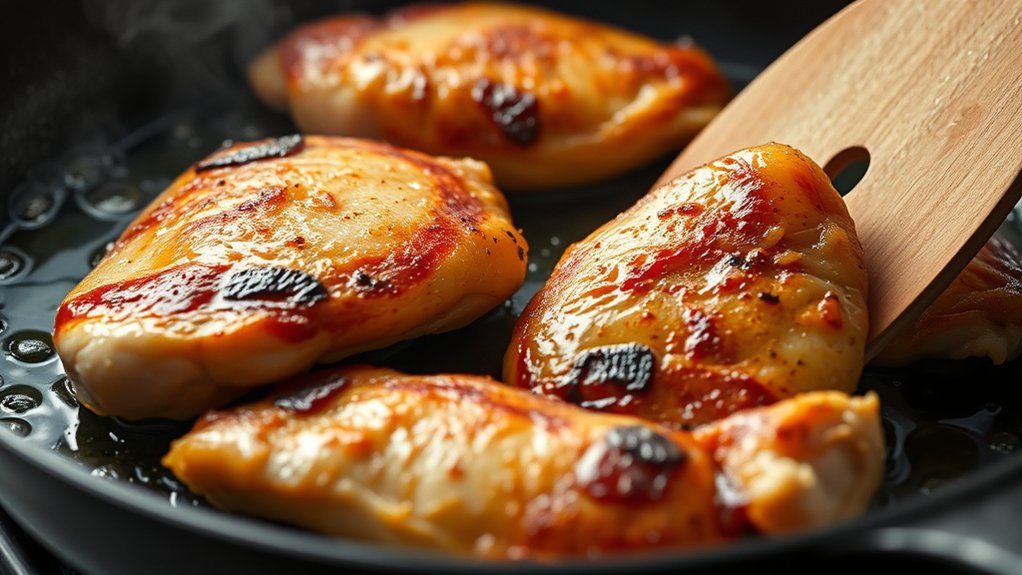

You might think cooking chicken tenderloins on skillet quickly means risking dryness, but that’s not the case when done right. By controlling the skillet temperature and timing each side properly, you can achieve juicy, tender results every time.
Understanding the ideal heat level and knowing how to check for doneness will make all the difference. Keep going to master these key steps and avoid common pitfalls.
Key Takeaways
- Cook chicken tenderloins for about 3 to 4 minutes per side over medium-high heat for even cooking and searing.
- Maintain skillet temperature between 350°F to 375°F to avoid burning or undercooking.
- Ensure internal temperature reaches 165°F (74°C) for safe consumption.
- Avoid overcrowding the skillet to maintain proper heat and browning.
- Let tenderloins rest for 5 minutes after cooking to redistribute juices and enhance tenderness.
How to Prepare Chicken Tenderloins for Skillet Cooking
How do you get chicken tenderloins ready for skillet cooking? Start by patting them dry with paper towels to ensure a good sear. Trim any excess fat or connective tissue for even cooking.
Next, season the tenderloins generously using your favorite spice blends. Think paprika, garlic powder, salt, and pepper for a simple yet flavorful option. If you’re looking for baking alternatives, keep the seasoning light since skillet cooking intensifies flavors.
Let the tenderloins rest at room temperature for 10–15 minutes; this helps them cook evenly. Avoid overcrowding the skillet later to maintain proper heat. Preparing the tenderloins this way sets you up for juicy, well-seasoned results every time you cook them on the stovetop.
What Heat Level Is Best for Cooking Chicken Tenderloins on Skillet?
When cooking chicken tenderloins on a skillet, choosing the right heat level makes all the difference in texture and juiciness. Medium to medium-high heat works best, balancing quick cooking with thorough heat penetration.
Choosing medium to medium-high heat ensures perfectly cooked chicken tenderloins with ideal texture and juiciness.
Cooking science shows that too high heat causes the exterior to burn before the interior cooks through, while too low heat leads to uneven cooking and rubbery texture. Your kitchen gear also plays a role; a heavy-bottomed skillet distributes heat evenly, helping maintain consistent temperature.
Preheat your skillet properly to avoid temperature fluctuations that compromise results. By controlling heat carefully, you ensure tenderloins develop a golden crust without drying out, preserving moisture and flavor.
This approach optimizes both safety and taste, making your skillet-cooked chicken tenderloins delicious every time.
Perfect Cooking Time for Chicken Tenderloins on Skillet
You’ll want to cook chicken tenderloins for about 3 to 4 minutes per side over medium-high heat to guarantee they’re perfectly done. Keep your skillet temperature steady around 350°F to 375°F for even cooking.
Watch for clear juices and firm texture as signs that your chicken is fully cooked.
Ideal Cooking Duration
Exactly how long should chicken tenderloins cook on a skillet to achieve juicy, tender results? Typically, cooking each side for 3 to 4 minutes on medium heat works best, totaling around 6 to 8 minutes. This duration allows the tenderloins to cook through without drying out.
To guarantee safety and taste testing accuracy, slice into the thickest part of a tenderloin to confirm it’s opaque with no pink remaining. Always prioritize kitchen safety by using a food thermometer if unsure. The internal temperature should reach 165°F (74°C).
Avoid undercooking to reduce health risks and overcooking to maintain moisture. Sticking to this ideal cooking duration helps you consistently prepare tender, flavorful chicken every time you skillet-cook.
Temperature Settings Guide
How hot should your skillet be to cook chicken tenderloins perfectly? Aim for medium-high heat, around 350°F to 375°F. This temperature ensures a golden crust without drying out the meat.
Proper equipment selection plays a key role. Use a heavy-bottomed skillet or cast iron for even heat distribution and to avoid techniques misdirection, like overheating or underheating. Preheat your pan thoroughly before adding the chicken.
Too low, and the tenderloins will stew rather than sear; too high, and they risk burning outside while staying raw inside. Maintaining consistent temperature helps you cook efficiently within the ideal time frame.
Signs Chicken Is Done
When can you tell that your chicken tenderloins are perfectly cooked? Look for firm, opaque meat with no pink inside. The juices should run clear when you cut into the thickest part.
Using a meat thermometer, aim for an internal temperature of 165°F (74°C) to ensure safety and optimal texture. Properly cooked tenderloins retain moisture, enhancing their natural flavor and tenderloin nutrition benefits, including high protein with low fat.
Balancing spice pairings like garlic, paprika, or lemon zest complements the mild taste while keeping it healthy. Avoid overcooking to prevent dryness, which diminishes both flavor and nutritional value.
Mastering these signs guarantees tender, juicy chicken every time you cook on a skillet.
How to Tell When Chicken Tenderloins Are Fully Cooked
Wondering if your chicken tenderloins are fully cooked? Use two word discussion ideas like “internal temperature” and “color check” for quick guidance. Cooking science tells us that chicken is safe to eat once it reaches an internal temperature of 165°F (74°C).
Use a meat thermometer inserted into the thickest part of the tenderloin to get an accurate read. Visually, fully cooked tenderloins lose their pink hue and turn opaque white. The juices should run clear, not pink or red.
Avoid cutting open the tenderloin too early, as this can release moisture and cause dryness. Combining these cooking science principles ensures your chicken is both safe and perfectly cooked every time. Trust these clear indicators to confidently serve tender, thoroughly cooked chicken tenderloins.
Tips to Keep Chicken Tenderloins Juicy and Avoid Dryness
To keep your chicken tenderloins juicy, start with a proper marinade to lock in moisture. Cook them at the right temperature to avoid overcooking and drying out the meat.
Finally, let the tenderloins rest briefly before serving to allow the juices to redistribute evenly.
Proper Marinating Techniques
How can you guarantee your chicken tenderloins stay juicy and flavorful throughout cooking? Proper marinating techniques are key. Start by choosing complementary marinade flavors that enhance the meat without overpowering it.
Balance acidity, oil, and seasoning to tenderize while locking in moisture. Incorporate spice pairings like garlic with rosemary or cumin with lime to add depth.
Avoid overly salty or acidic marinades, as they can dry out the tenderloins if left too long. Aim to marinate for 30 minutes to 2 hours in the fridge, which allows the flavors to penetrate without breaking down the protein excessively.
Always pat the tenderloins dry before cooking to ensure a good sear, which preserves juiciness. Following these steps keeps your chicken tenderloins moist and flavorful every time.
Optimal Cooking Temperature
Why does the cooking temperature matter so much when preparing chicken tenderloins? Because it directly affects juiciness and texture. Cooking at too high a temperature can quickly dry out the meat, while too low prevents proper browning.
Aim for medium to medium-high heat, around 325°F to 375°F in your skillet. This range ensures the tenderloins cook evenly without the risk of burning or toughness.
Avoid poorly edited advice or recipes that include unrelated terminology, which can confuse you about the right temperature. Trust straightforward guidelines to keep your chicken moist and tender.
Resting Time Importance
Although cooking chicken tenderloins to the right temperature is essential, letting them rest afterward locks in their juices and enhances tenderness. The resting time allows the muscle fibers to relax and reabsorb the juices pushed to the surface during cooking.
Skipping this step causes those flavorful juices to escape when you cut into the meat, resulting in dryness. For optimal results, let your tenderloins rest for about 5 minutes on a warm plate, loosely covered with foil. This short pause makes a significant difference in moisture retention and texture.
Understanding the importance of resting helps you avoid dry, tough chicken and ensures each bite stays juicy and tender. Don’t underestimate resting time; it’s a simple step that elevates your skillet-cooked chicken tenderloins.
Why Resting Chicken Tenderloins Boosts Juiciness
A brief resting period after cooking lets the juices redistribute throughout the chicken tenderloins, preventing them from spilling out when you cut into the meat. Contrary to the resting myth that it’s just a waiting game, juiciness science shows that resting is essential for moisture retention.
When you let the tenderloins rest, muscle fibers relax, allowing internal fluids to spread evenly.
Here’s why resting matters:
- Prevents immediate juice loss upon cutting
- Allows temperature to stabilize for even doneness
- Enhances tenderness by relaxing muscle fibers
- Improves flavor by locking in moisture
- Supports consistent texture throughout the meat
Quick and Easy Skillet Recipes With Chicken Tenderloins
Looking for quick and easy skillet recipes with chicken tenderloins? Start by choosing quality tenderloin sourcing; fresh, well-trimmed tenderloins cook evenly and taste better.
For quick, easy skillet meals, begin with fresh, well-trimmed chicken tenderloins for even cooking and great flavor.
Use the pan searing technique to lock in juices and develop a flavorful crust. Heat your skillet over medium-high heat and add a small amount of oil. Once hot, place the tenderloins in the pan without overcrowding.
Sear each side for about 3-4 minutes until golden brown and cooked through. You can quickly elevate flavors by adding garlic, herbs, or a splash of lemon juice during cooking.
Serve with simple sides like steamed vegetables or rice for a complete meal. This method saves time and maximizes taste, making it perfect for busy weeknights.
Frequently Asked Questions
Can I Marinate Chicken Tenderloins Before Skillet Cooking?
Yes, you can marinate chicken tenderloins before skillet cooking. Aim for 30 minutes to 2 hours marinade timing, and choose flavor pairings like lemon, garlic, or herbs to enhance taste without overpowering the tender meat.
What Type of Oil Is Best for Cooking Chicken Tenderloins?
You’ll want to use the best oil with a high smoke point, like avocado or canola oil, especially after tenderloin marination. These oils keep flavors intact and prevent burning, ensuring juicy, well-cooked chicken tenderloins every time.
Are Chicken Tenderloins Healthier Than Chicken Breasts?
Chicken tenderloins aren’t necessarily healthier than breasts, but they offer lean protein as healthy alternatives. You’ll want to choose cooking methods like grilling or baking to keep both options nutritious and low in added fats.
Can I Freeze Cooked Chicken Tenderloins for Later Use?
You can freeze cooked chicken tenderloins for up to 4 months. Over 90% of nutrients stay intact. Use airtight containers or vacuum bags as freeze alternatives.
Reheat gently to keep them juicy and flavorful.
How Do Chicken Tenderloins Differ From Chicken Strips?
You’ll notice how tenderloins differ by being smaller, more tender cuts than chicken strips. Marinating before skillet cooking enhances flavor and juiciness, making tenderloins perfect for quick, flavorful meals compared to larger, tougher strips.
Conclusion
Cooking chicken tenderloins on a skillet is straightforward when you keep the temperature steady and avoid overcrowding. Like a well-tuned instrument, your skillet’s heat ensures even cooking, locking in juices and flavor.
Remember to rest the tenderloins before slicing—they’ll stay moist and tender. Follow these tips, and you’ll consistently serve perfectly cooked, juicy chicken every time.
By mastering the right technique, you can make meal prep quicker and more satisfying. Knowing how long to cook chicken tenderloins on skillet will help you achieve delicious results with ease.