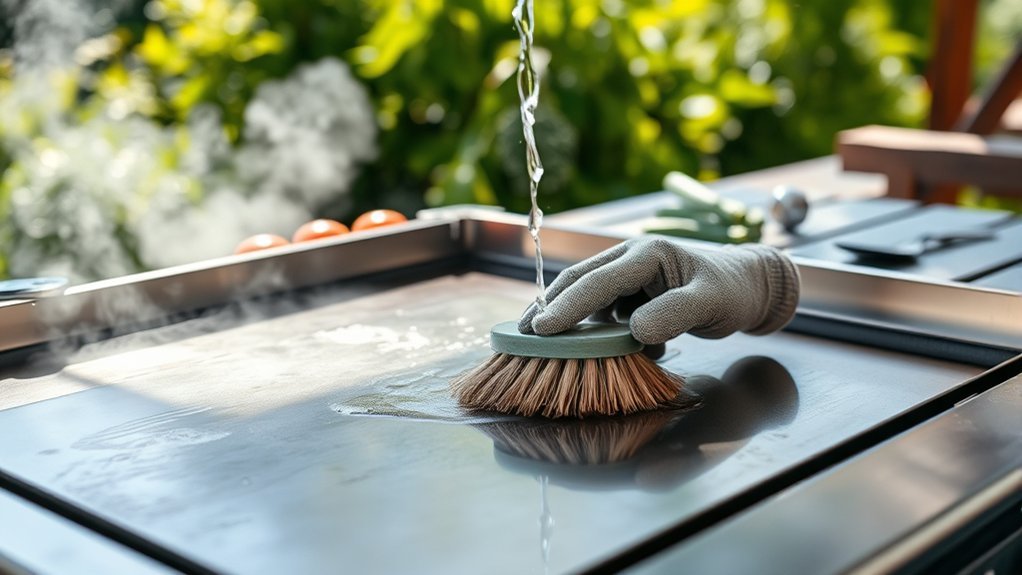

Did you know that over 70% of outdoor griddle damage stems from improper cleaning techniques? Cleaning an outdoor griddle correctly is essential if you want to extend its lifespan and maintain optimal cooking performance.
Mastering the proper cleaning process involves more than just scraping debris off the surface. You also need to prevent rust and season the griddle effectively to keep it in great shape.
By understanding these details and following specific steps, you can ensure your outdoor griddle stays in top condition after every use.
Key Takeaways
- Scrape food residue off the warm griddle using a stainless steel scraper at a 45-degree angle to avoid surface damage.
- Wash the griddle with warm water and a non-abrasive sponge, avoiding harsh detergents and never submerging it in water.
- Dry the griddle thoroughly by wiping and applying low heat for 5–10 minutes to prevent rust and condensation.
- After drying, apply a thin layer of cooking oil to season and protect the surface from moisture and corrosion.
- Perform immediate post-use cleaning by wiping grease and food particles, then reapplying oil to maintain the seasoning layer.
Why Regular Griddle Cleaning Is Essential
Maintaining regular cleaning on your outdoor griddle prevents residue buildup that can impair heat distribution and affect cooking performance. You might encounter cleaning myths suggesting infrequent maintenance or harsh chemicals, but these can damage your griddle’s surface and reduce efficiency.
Consistent cleaning eliminates carbonized grease and food particles, preserving the integrity of the cooking surface and ensuring even heat transfer. Additionally, proper cleaning before placing your griddle into weatherproof storage protects it from corrosion and rust caused by moisture exposure.
Neglecting this step compromises the griddle’s lifespan and safety. By understanding the importance of routine maintenance and dismissing common cleaning myths, you optimize your outdoor griddle’s performance and durability, ensuring it remains a reliable cooking tool season after season.
Tools and Supplies You Need to Clean Your Outdoor Griddle
To clean your outdoor griddle effectively, you’ll need a specific set of tools and supplies designed to remove grease, food residue, and carbon buildup without damaging the surface. Essential items include a stainless steel scraper to safely dislodge debris, a griddle brush with stiff nylon bristles for thorough surface cleaning, and a non-abrasive scrub pad to tackle stubborn spots.
Use high-quality griddle cleaning solution or degreaser formulated for outdoor cleaning to break down oils without harming the finish. Additionally, keep microfiber cloths or paper towels on hand for wiping and drying.
For griddle maintenance, avoid harsh chemicals or metal scouring pads that can scratch the surface. Using the right tools ensures efficient cleaning and prolongs your griddle’s lifespan.
How to Scrape Off Food Residue Without Damaging Your Griddle
A careful approach to scraping food residue ensures your griddle stays in optimal condition. Start by using a high-quality scraper designed specifically for outdoor griddles; this two word idea 1 tool minimizes surface damage.
Always scrape while the griddle is warm but not hot, as this softens residues and requires less force, preventing scratches. Maintain a consistent scraping angle, around 45 degrees, to avoid gouging the surface.
For stubborn residue, apply a small amount of cooking oil to soften buildup before scraping. Avoid metal utensils that risk damaging the griddle’s seasoned coating. This two word idea 2 layer is essential for non-stick performance.
How to Wash Your Outdoor Griddle Safely
How exactly should you wash your outdoor griddle to preserve its seasoning and prevent rust? Start by using warm water and a non-abrasive sponge or cloth. Avoid harsh detergents that strip the seasoning layer, compromising griddle maintenance and outdoor cooking safety.
Never submerge the griddle in water. Instead, dampen the surface and wipe it down thoroughly. For stubborn grease, use a scraper gently.
| Step | Tool/Material | Purpose |
|---|---|---|
| 1. Wipe surface | Non-abrasive sponge | Remove loose debris |
| 2. Apply warm water | Warm water | Loosen stuck-on grease |
| 3. Scrape residue | Metal scraper | Dislodge stubborn food bits |
How to Dry Your Griddle and Prevent Rust
Why must you dry your outdoor griddle thoroughly after cleaning? Moisture left on the surface promotes griddle rust, which compromises both performance and longevity. To prevent this, use a precise drying technique: immediately wipe the griddle with a clean, dry cloth to remove excess water.
Then, apply low heat to the griddle for 5–10 minutes, ensuring all residual moisture evaporates. Avoid air drying alone, as it allows condensation to form, accelerating rust development.
After heating, let the griddle cool slightly, then apply a thin layer of cooking oil to create a moisture barrier. Following this systematic drying technique minimizes griddle rust risks, preserving the integrity of your outdoor griddle and maintaining its optimal cooking surface for future use.
When and How to Season Your Griddle for Non-Stick Use
When should you season your outdoor griddle to guarantee a durable non-stick surface? The optimal seasoning timing is immediately after your initial cleaning and drying, or after any thorough cleaning that removes the protective oil layer. This ensures the metal is primed to bond with the oil, forming a polymerized coating critical for nonstick benefits.
To season, heat your griddle to medium-high, then apply a thin, even layer of high-smoke point oil such as flaxseed or canola using a lint-free cloth. Allow the oil to polymerize until it stops smoking, then repeat this process two to three times.
Proper seasoning timing and technique create a resilient, slick surface that resists food adhesion, improves cooking performance, and protects against rust, maximizing your griddle’s lifespan and efficiency.
How to Remove Tough Stains and Burnt Grease
You’ll need targeted methods to tackle tough stains and burnt grease on your griddle. Using specialized scrapers and heat-resistant degreasers can break down stubborn residues without damaging the surface.
Let’s cover the most effective techniques to restore your griddle’s clean, smooth finish.
Effective Stain Removal
How can you tackle tough stains and burnt grease on your outdoor griddle without damaging its surface? Effective stain removal requires selecting appropriate cleaning agents and tools, followed by rigorous effectiveness testing to ensure no corrosive damage occurs.
Start with a mixture of warm water and mild detergent, applying it with a non-abrasive scrubber. For persistent stains, a baking soda paste can be safely used. Avoid harsh chemicals or steel wool, which can degrade the griddle’s finish.
| Cleaning Agent | Effectiveness Testing Outcome |
|---|---|
| Mild Detergent | Safe, removes light stains |
| Baking Soda Paste | Effective on stubborn stains |
| Vinegar Solution | Moderate, avoid overuse |
| Commercial Degreaser | High, test for surface safety |
Test each method on a small area first to confirm stain removal without surface harm.
Burnt Grease Techniques
Why does burnt grease pose such a challenge on outdoor griddles? Burnt grease forms a hard, carbonized layer that resists standard cleaning methods. To effectively remove it, you need a combination of heat and mechanical action.
Start by heating the griddle to loosen the burnt grease, then apply a scraper designed for griddles to carefully lift off the residue without damaging the surface. Next, use a specialized degreaser or a mixture of baking soda and water; these agents chemically break down the carbon deposits.
Avoid harsh abrasives that can scratch your griddle. After applying cleaning methods, rinse thoroughly with warm water and dry completely to prevent rust.
Consistently tackling burnt grease with these targeted techniques will maintain your griddle’s performance and longevity.
Mistakes to Avoid When Cleaning Your Griddle
Frequently, improper cleaning techniques can damage your outdoor griddle and reduce its lifespan. Avoid using harsh abrasives that scratch the surface and ruin griddle aesthetics.
Don’t neglect cooling the griddle before cleaning, as thermal shock can warp the metal. Chef’s tips emphasize never soaking the griddle in water, which promotes rust. Also, avoid using soap, which can strip the seasoning layer.
| Mistake | Consequence | Correct Approach |
|---|---|---|
| Using harsh abrasives | Surface scratches | Use non-abrasive scrubbers |
| Cleaning when hot | Metal warping | Let griddle cool before cleaning |
| Soaking in water | Rust development | Wipe with damp cloth only |
| Using soap | Loss of seasoning | Clean with scraper and oil |
Stick to these guidelines to maintain functionality and appearance.
How to Maintain Your Griddle Between Uses
When should you perform routine maintenance on your outdoor griddle to ensure optimal performance? Ideally, you should maintain your griddle immediately after each use and before storage. This prevents residue buildup and corrosion, extending the griddle’s lifespan.
Employ proven techniques like seasoning the surface with oil to create a protective barrier. Consider alternatives such as using a griddle scraper or specialized cleaning pads to remove debris without damaging the surface.
Always observe safety considerations: ensure the griddle is cool before cleaning, disconnect fuel sources, and work in a well-ventilated area. Key maintenance steps include:
- Wiping the surface with a damp cloth to remove grease and food particles
- Applying a thin coat of cooking oil to prevent rust
- Checking and cleaning grease traps and burners to avoid fire hazards
These practices keep your griddle ready and safe for the next cooking session.
Frequently Asked Questions
Can I Use Soap to Clean My Outdoor Griddle?
You shouldn’t use soap on your outdoor griddle as it can strip seasoning. Instead, rely on safe scrubbing methods like a scraper or grill stone.
For tips on soap alternatives, use hot water and coarse salt to clean effectively.
How Often Should I Deep Clean My Outdoor Griddle?
You should deep clean your outdoor griddle every one to two months to maintain optimal performance and ensure rust prevention.
Regular deep cleaning removes buildup and moisture, protecting the metal surface and extending your griddle’s lifespan effectively.
Is It Safe to Clean a Griddle While It’s Still Warm?
It’s safe to clean your outdoor griddle while warm, but avoid using soap on hot surfaces to prevent damage. Instead, scrape residue off, then wait for it to cool before applying soap and thoroughly washing for best results.
What Should I Do if My Griddle Has Rust Spots?
If your griddle’s rust spots look like they’ve survived an apocalypse, don’t panic. Scrub them off with steel wool, perform rust restoration, then apply a seasoning touch up to restore its protective, non-stick surface efficiently.
Can I Store My Outdoor Griddle Outside Year-Round?
You shouldn’t store your outdoor griddle outside year-round without protection. Use a high-quality cover for outdoor storage and apply a thin oil layer regularly to guarantee rust prevention and maintain the griddle’s surface integrity.
Conclusion
Cleaning your outdoor griddle might seem like extra work, but it’s essential for performance and longevity. By scraping when warm, washing gently without harsh detergents, and seasoning regularly, you prevent rust and buildup that reduce cooking quality.
Even if you worry about time, these quick steps save effort long-term and keep your griddle non-stick and ready. Follow this precise routine, and you’ll enjoy better cooking results with less hassle every time.
Consistent care is key to maintaining your outdoor griddle. Incorporating these cleaning habits ensures your griddle stays in top shape for many delicious meals to come.