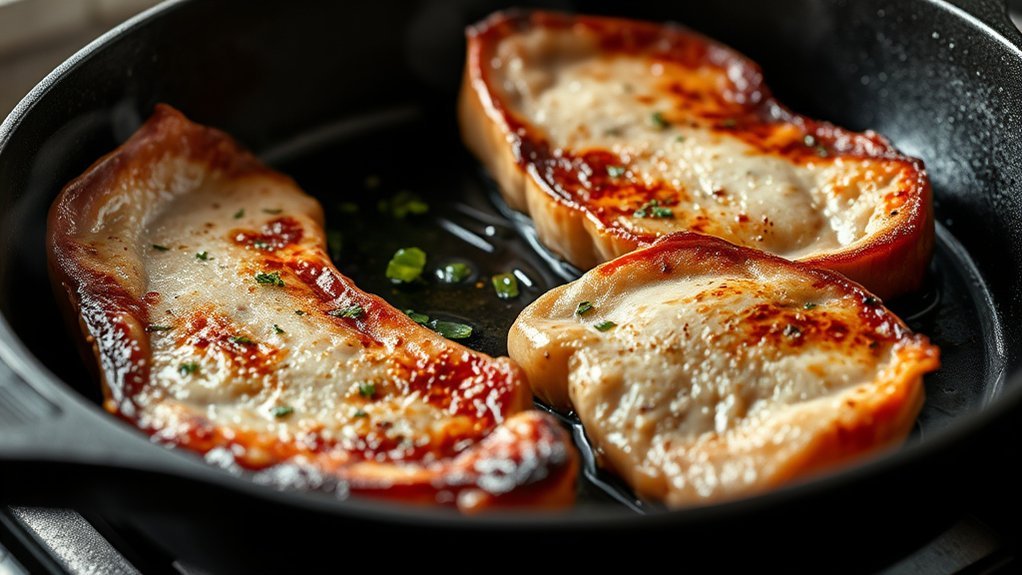

Cooking thin pork chops in a skillet can feel like walking a tightrope between dry and perfectly juicy. To master this technique, you’ll want to start with the right cut and ensure your pan is hot enough to achieve an ideal sear without overcooking.
This balance is key to making each bite tender and flavorful. Before you pick up your skillet, consider the techniques that will help you get a crisp crust and a succulent interior every time.
Key Takeaways
- Preheat a skillet on medium-high heat for at least 3 minutes and use a high smoke point oil like canola or avocado.
- Season fresh, thin pork chops (about 1/2 inch thick) just before cooking to preserve moisture and enhance flavor.
- Sear pork chops 2-3 minutes per side until golden brown, then reduce heat to medium-low to finish cooking gently.
- Avoid overcrowding the skillet and flipping chops too often to ensure proper searing and crust formation.
- Let pork chops rest a few minutes off heat to allow juices to redistribute for tender, juicy results.
Choosing Thin Pork Chops for Skillet Cooking
When selecting thin pork chops for skillet cooking, choose cuts that are about 1/2 inch thick to guarantee even cooking and a tender result. Opt for a bone-in choice if you want extra flavor and moisture retention during cooking.
Bone-in chops tend to stay juicier and develop a richer taste, which enhances your dish. If you’re budget shopping, bone-in pork chops often provide better value since they typically cost less per pound than boneless options.
Additionally, look for chops with minimal marbling and a pinkish color, ensuring freshness and quality. By focusing on thickness, bone presence, and selecting wisely during budget shopping, you set the stage for perfectly cooked, flavorful thin pork chops in your skillet.
Preparing Thin Pork Chops for the Skillet
Start by selecting fresh, high-quality thin pork chops for the best flavor and texture. Next, apply a balanced seasoning mix to enhance the natural taste without overpowering it.
Proper preparation ensures your chops cook evenly and turn out tender in the skillet.
Choosing Quality Pork Chops
How do you guarantee your thin pork chops turn out tender and flavorful? It starts with choosing pork wisely. Look for chops that have a consistent light pink color with a slight marbling of fat, as this ensures moisture and flavor.
When shopping, prioritize shop freshness. Select pork that feels firm and springs back when pressed. Avoid any with grayish hues or a sour smell, signs of diminished quality. Also, pick chops that are uniform in thickness, around ¼ inch, so they cook evenly in your skillet.
Seasoning Tips and Tricks
Selecting high-quality pork chops sets the stage, but proper seasoning brings out their full flavor. Understanding seasoning science helps you balance salt, herbs, and spices to enhance natural taste without overpowering it.
Use spice pairings like garlic and rosemary or paprika and cumin for depth. Always season both sides evenly before cooking.
| Spice | Flavor Profile | Best Paired With |
|---|---|---|
| Garlic Powder | Savory, pungent | Rosemary, thyme |
| Paprika | Smoky, sweet | Cumin, black pepper |
| Black Pepper | Sharp, mildly spicy | Garlic, paprika |
Apply seasoning just before cooking to prevent drawing out moisture. This approach ensures tender, flavorful thin pork chops every time.
Which Seasonings Make Thin Pork Chops Taste Their Best?
You can enhance thin pork chops with classic herb combinations like rosemary and thyme for a fresh, aromatic flavor. If you prefer something bolder, try spice blends featuring smoked paprika and cumin to add depth.
For a balanced twist, experiment with sweet and savory options such as brown sugar paired with garlic and mustard.
Classic Herb Combinations
Herbs play an essential role in enhancing the flavor of thin pork chops, bringing out their natural juiciness without overpowering the meat. For a classic herb combination, focus on minimal pairing to keep the herb focus sharp and clean.
Start with fresh thyme and rosemary; their earthy, piney notes complement pork exceptionally well. Add a touch of sage for a subtle, savory depth. Use these herbs sparingly, just a teaspoon of each finely chopped, so they enhance rather than mask the pork’s natural flavor.
Lightly season your chops with salt and pepper before applying the herb mix. This approach ensures the herbs support the pork’s delicate texture and flavor, making your skillet-cooked thin pork chops taste balanced and refined.
Bold Spice Blends
While classic herbs bring subtlety to thin pork chops, bold spice blends introduce a lively punch that elevates their flavor profile. Using bold spice combinations ensures your pork chops are both flavorful and memorable. Here are four effective blends to try:
- Smoky Paprika & Cumin Adds depth and warmth, perfect for a southwestern twist.
- Cayenne & Black Pepper Blends Delivers heat and sharpness without overpowering the meat.
- Garlic Powder & Coriander Offers a bright, aromatic complexity that complements pork well.
- Five-Spice Powder Combines sweet, savory, and peppery notes for a balanced bold spice profile.
Apply these blends evenly before cooking to maximize flavor absorption and create a crisp, seasoned crust on your thin pork chops.
Sweet and Savory Options
How do you balance sweetness and savoriness to bring out the best in thin pork chops? Start by choosing seasonings that complement each other. Incorporate sweet notes like brown sugar, honey, or maple syrup to add a gentle caramelized flavor during cooking.
Pair these with savory twists such as garlic powder, smoked paprika, or fresh herbs like rosemary and thyme. This combination creates a complex taste profile that enhances the pork’s natural flavor without overpowering it.
Apply the sweet seasoning sparingly to avoid cloying, then layer savory spices for depth. When cooking in a skillet, the sugars will caramelize, locking in moisture and creating a delicious crust.
Experiment with proportions until you find the perfect balance of sweet notes and savory twists that make your thin pork chops truly stand out.
Getting Your Skillet Ready for Perfect Thin Pork Chop Searing
Before you start cooking, make sure your skillet is properly preheated to achieve a perfect sear on thin pork chops. Proper preheating prevents sticking and ensures even browning.
Avoid using the wrong ingredients like low-smoke-point oils, which can burn quickly and ruin your chops. Follow these steps for skillet prep:
- Heat your skillet over medium-high heat for at least 3 minutes until it’s hot but not smoking.
- Choose an oil with a high smoke point, such as canola or avocado oil.
- Add oil just before placing the pork chops to prevent burning.
- Manage batch timing carefully; cook chops in small batches to avoid crowding and temperature drops.
This preparation sets you up for flawless searing every time.
How to Cook Thin Pork Chops in a Skillet
When should you flip thin pork chops to lock in juiciness and achieve a golden crust? Flip them once the edges turn opaque and the bottom is golden brown, usually after 2-3 minutes on medium-high heat. Use seasoning compatibility wisely; pair simple salt and pepper with herbs like thyme or rosemary to enhance flavor without overpowering.
Follow pan temperature guidelines strictly: too hot burns the outside, too low results in dryness.
| Step | Pan Temperature | Seasoning Compatibility |
|---|---|---|
| Preheat skillet | Medium-high (375°F) | Neutral oil |
| First side sear | Medium-high | Salt, pepper, thyme |
| Flip and cook | Medium | Garlic powder, rosemary |
| Rest before serving | Off heat | Optional finishing salt |
Stick to this method for perfectly cooked thin pork chops every time.
How to Tell When Thin Pork Chops Are Done
Wondering how to know if your thin pork chops are perfectly cooked? Ensuring pork safety while maintaining ideal pan temperature is key. Here’s how to check doneness precisely:
- Use a Meat Thermometer: Insert into the thickest part; 145°F (63°C) signals safe, juicy chops.
- Check Juices: Clear juices running from the chop indicate it’s done; pink juices suggest more cooking.
- Observe Texture: The chop should feel firm but springy, not soft or rubbery.
- Monitor Pan Temperature: Keep the skillet between medium and medium-high to cook evenly without burning.
Follow these steps to nail doneness every time without overcooking or risking pork safety.
Secrets to Keeping Thin Pork Chops Juicy and Tender
How do you keep thin pork chops juicy and tender despite their quick cooking time? The key lies in maintaining juicy moisture and mastering heat control. Start by patting the chops dry, then season them just before cooking to avoid drawing out excess moisture.
Use medium-high heat to quickly sear the outside, locking in juices. Avoid overcrowding the skillet to ensure even cooking. After searing, reduce heat to medium or medium-low to finish cooking gently without drying the meat.
Cooking time should be brief, typically 2-3 minutes per side, to prevent toughness. Finally, let the chops rest a few minutes off the heat; this allows juices to redistribute, preserving tender texture. Following these steps ensures your thin pork chops stay flavorful and moist every time.
Quick Sauces and Toppings for Thin Pork Chops
What elevates thin pork chops from simple to spectacular? It’s the quick sauces and toppings you add right after cooking. These elements boost flavor without overwhelming the delicate meat. Here are four effective quick sauces and toppings ideas to try:
- Lemon Butter Sauce: Melt butter, add lemon juice and zest, then pour over chops for a bright, rich finish.
- Apple Cider Glaze: Simmer apple cider with a touch of mustard and honey, then drizzle for a sweet tang.
- Garlic Herb Topping: Sauté minced garlic with fresh herbs like thyme and parsley; spoon over chops for an aromatic lift.
- Sautéed Mushrooms: Cook mushrooms in butter and garlic until golden, then top chops for earthy depth.
Use these quick sauces and toppings ideas to enhance your skillet-cooked thin pork chops effortlessly.
Common Mistakes to Avoid When Cooking Thin Pork Chops
Adding the right sauce or topping can transform thin pork chops, but even the best finishing touches won’t save chops that are overcooked or improperly prepared. Avoid these common mistakes to ensure juicy results.
Don’t skip preheating your skillet, as a cold pan causes uneven cooking. Avoid overcrowding the pan; this lowers the temperature, resulting in steaming rather than searing. Also, resist flipping chops too often; one or two flips produce a better crust.
| Mistake | Effect | Solution |
|---|---|---|
| Skipping preheat | Uneven cooking | Heat pan fully |
| Overcrowding pan | Steaming, no sear | Cook in batches |
| Excessive flipping | Poor crust formation | Flip once or twice |
Use these two word discussion ideas—preheat importance, pan crowding, flip frequency—to guide your technique.
Frequently Asked Questions
Can I Freeze Cooked Thin Pork Chops for Later Use?
Yes, you can freeze leftovers of cooked thin pork chops. Wrap them tightly to prevent freezer burn.
For best results, thaw in the fridge and reheat gently, avoiding high heat to keep them tender and juicy.
What Side Dishes Pair Best With Thin Pork Chops?
You’ll want to serve thin pork chops with side salads like arugula or mixed greens. Pairing sauces such as apple chutney or mustard cream enhance flavor, balancing the meal perfectly with fresh, tangy, or creamy notes.
Are Thin Pork Chops Healthier Than Thick Pork Chops?
Think of thin pork chops as streamlined athletes; they’re not inherently healthier than thick ones. You control healthy fat content and nutrition mainly through cooking methods, so choose grilling or baking to keep your meal lean and nutritious.
Can I Use a Grill Instead of a Skillet for Thin Pork Chops?
Yes, you can use a grill as an alternative to a skillet for thin pork chops. Just preheat the grill, oil the grates, and cook quickly to avoid drying out your chops while achieving nice grill marks.
How Long Can Cooked Thin Pork Chops Be Safely Stored in the Fridge?
You can safely store cooked thin pork chops in the fridge for 3 to 4 days. Use airtight containers for optimal freshness.
Proper cooking technique ensures safety; always cool chops quickly before refrigerating to maintain quality during storage.
Conclusion
Now that you know how to cook thin pork chops perfectly, remember that searing them for just 2–3 minutes per side locks in flavor and juiciness. Interestingly, pork is safe to eat at 145°F, allowing for a tender, moist chop when cooked properly. Avoid overcrowding your skillet to maintain a crisp crust.
With these tips, you’ll consistently enjoy juicy, flavorful pork chops that elevate any meal. Keep practicing, and you’ll master this quick, delicious dish. Following these steps will ensure your thin pork chops in skillet come out perfectly every time.