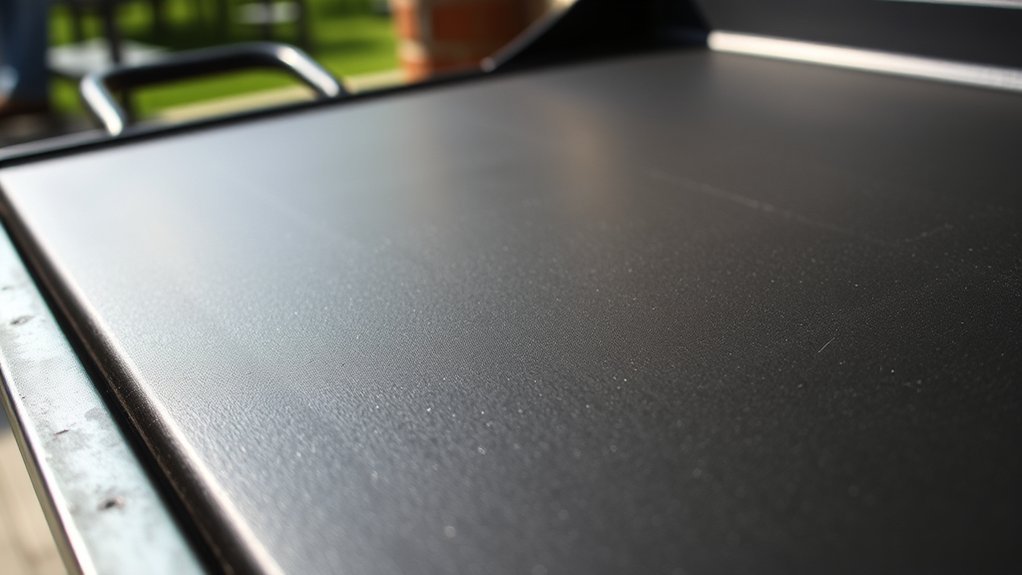

Did you know that over 70% of outdoor cooking enthusiasts prefer steel griddles for their quick heating properties? If you’ve ever wondered, “Is Blackstone griddle cast iron?” the answer might surprise you. Blackstone griddles are actually made from cold-rolled steel.
This material choice affects everything from heat retention to maintenance. Understanding these differences could change how you cook outdoors.
Let’s explore what sets Blackstone apart and why it matters for your grilling experience.
Key Takeaways
- Blackstone griddles are primarily made from cold-rolled steel, not cast iron.
- The steel used provides quicker heating and better heat responsiveness than cast iron.
- Blackstone steel griddles have a smoother, thinner surface compared to the porous cast iron.
- Steel griddles are lighter and less brittle than cast iron, enhancing portability and flexibility.
- Both materials require seasoning, but Blackstone griddles need less maintenance overall than cast iron.
What Materials Are Blackstone Griddles Made From?
What exactly are Blackstone griddles made from? When you look closely, Blackstone griddles are crafted primarily from cold-rolled steel, a choice that sets them apart from traditional cast iron. This griddle material offers excellent heat retention and quick, even heating, enhancing your cooking experience.
You’ll notice that the finishing options on Blackstone griddles are designed to protect the surface and improve durability. Typically, the griddle plate comes with a factory seasoning or a protective coating to prevent rust and guarantee a smooth cooking surface.
These finishing options also make cleanup easier, so you can focus more on cooking and less on maintenance. Understanding these materials and finishes helps you appreciate why Blackstone griddles perform so well for outdoor cooking.
Are Blackstone Griddles Made of Cast Iron?
When you look at Blackstone griddles, you’ll notice they’re crafted from cold-rolled steel rather than cast iron. This choice affects heat distribution and durability, making steel lighter and quicker to heat compared to cast iron’s heavier, more even heating.
Understanding these material differences helps you decide if a Blackstone griddle matches your cooking style.
Blackstone Griddle Materials
How does the material of a Blackstone griddle affect your cooking experience? Knowing the exact composition matters because it directly impacts heat retention, durability, and maintenance.
Blackstone griddles aren’t made of cast iron; instead, they use cold-rolled steel. This two-word idea often causes a subtopic mismatch, as many assume “griddle” equals cast iron.
Steel heats faster and offers a smooth cooking surface, allowing you to sear and flip foods easily. It’s less brittle than cast iron, so you get more resilience against warping.
However, steel requires seasoning to prevent rust, similar to cast iron, but feels lighter and less fragile. Understanding these materials helps you choose the right griddle and care for it properly, maximizing your cooking performance.
Cast Iron vs Steel
Why choose between cast iron and steel when selecting a Blackstone griddle? Understanding the cast iron vs steel differences helps you pick the right cooking surface for your needs. Blackstone griddles are primarily made of cold-rolled steel, not cast iron, which influences performance and maintenance.
- Heat distribution: Cast iron heats evenly but slowly, while steel heats quickly but can have hot spots.
- Durability: Steel is lighter and less brittle than cast iron, making Blackstone griddles more resistant to cracking or chipping.
- Maintenance: Cast iron requires seasoning and careful drying to avoid rust, whereas steel griddles also need seasoning but are usually easier to clean and maintain.
Knowing these differences ensures you get the best cooking experience with your Blackstone griddle.
How Does Blackstone Steel Differ From Cast Iron?
What sets Blackstone steel apart from traditional cast iron lies in its composition and performance characteristics. When you compare cast iron vs steel, you’ll notice that Blackstone’s steel is smoother and thinner, making it lighter and more responsive to temperature changes.
Understanding how steel differs from cast iron is crucial: steel is typically more flexible and less brittle, which means it’s less prone to cracking under stress. Cast iron, on the other hand, has a porous surface that requires seasoning to build a non-stick layer, while Blackstone steel’s smooth finish provides a naturally slick cooking surface.
This difference impacts maintenance and durability. You’ll find Blackstone steel easier to clean and less susceptible to rust if properly cared for, offering a reliable cooking experience distinct from traditional cast iron cookware.
Heat Retention and Cooking Properties of Blackstone Griddles
Alongside its composition, Blackstone griddles stand out for their impressive heat retention and cooking properties. When you use a blackstone griddle, you’ll notice how evenly it distributes and holds heat, which is crucial for consistent cooking. Here’s why it excels:
- Rapid Heating: The steel surface heats quickly, saving you time while ensuring a sizzling sear.
- Stable Temperature: Thanks to excellent heat retention, it maintains steady temperatures even when you add cold ingredients.
- Versatile Cooking: You can easily adjust heat zones for different foods, making it perfect for everything from pancakes to steaks.
This heat retention means your food cooks evenly without hot spots, giving you control and precision every time you fire up your blackstone griddle.
Pros and Cons of Blackstone vs Cast Iron Griddles
When choosing between a Blackstone and a cast iron griddle, you’ll notice key differences in their material composition that affect heat distribution and cooking performance. You’ll also want to weigh how each handles maintenance and long-term durability in your outdoor kitchen setup.
Understanding these factors will help you decide which griddle fits your cooking style and care preferences best.
Material Composition Differences
How do the materials of Blackstone and cast iron griddles shape your cooking experience? Understanding their material composition differences helps you choose wisely.
Blackstone griddles typically use steel with specialized griddle coatings that resist rust and simplify cleaning. Cast iron griddles, made from a dense iron alloy, offer exceptional heat retention but need seasoning to maintain a non-stick surface.
Consider these points:
- Blackstone’s steel base heats quickly, while cast iron’s material alloy stores heat longer, affecting temperature control.
- Griddle coatings on Blackstone prevent rust, but can wear over time, unlike the naturally seasoned cast iron surface.
- Cast iron’s heavier weight demands more care, whereas Blackstone’s lighter steel offers greater portability.
These nuances in materials directly impact durability, maintenance, and your cooking style.
Cooking Performance Comparison
Why choose between a Blackstone griddle and a cast iron griddle when it comes to cooking performance? Both have their strengths. Blackstone heats up quickly and offers a large, flat cooking surface, perfect for whipping up breakfast or handling multiple items during your coffee break.
Its even heat distribution means fewer hot spots, so your pancakes or veggies cook uniformly. Cast iron, on the other hand, excels at heat retention, giving your seared steaks that perfect crust. It’s ideal if you like a slower, more controlled cook.
However, cast iron griddles can take longer to preheat. When you consider kitchen gadgetways, Blackstone’s lightweight design and ease of use often make it a go-to for quick meals, while cast iron rewards patience with rich flavor development. Your choice depends on how you cook.
Maintenance And Durability
What sets Blackstone and cast iron griddles apart in maintenance and durability? You’ll find distinct differences that affect how you care for each. Blackstone’s steel surface demands less stone care compared to cast iron, but you still need to season it regularly to prevent rust.
Cast iron, while heavier, excels in durability but requires diligent rust prevention and thorough drying after each use.
Here’s what you should consider:
- Rust Prevention: Both need seasoning, but cast iron’s porous surface makes it more prone to rust without proper care.
- Cleaning: Blackstone griddles clean up easier with mild scrapes, while cast iron demands careful scrubbing to maintain its seasoning layer.
- Longevity: Cast iron can last decades if maintained well; Blackstone offers a durable, low-maintenance option but may wear faster under heavy use.
How to Season and Maintain Your Blackstone Griddle
Properly seasoning and maintaining your Blackstone griddle ensures it performs at its best and lasts for years. Start by cleaning the cooking surface with warm water and a scraper, avoiding soap that can strip seasoning.
After drying, apply a thin layer of high-smoke point oil, like flaxseed or canola, evenly across the surface. Heat the griddle until the oil smokes and bonds, creating a protective, non-stick layer similar to cast iron seasoning. Repeat this process a few times for a durable coating.
After each use, wipe down excess grease and food residue, then lightly oil the surface to prevent rust. Proper care enhances the Blackstone griddle’s performance, mimicking the seasoned, resilient qualities found in traditional cast iron cookware.
Choosing Between Blackstone and Cast Iron Griddles for Outdoor Cooking
When deciding between a Blackstone griddle and a cast iron griddle for outdoor cooking, you’ll want to contemplate factors like weight, heat retention, and maintenance. Both offer unique advantages, but considering topic ideas from unrelated angles helps you choose effectively.
Choosing between Blackstone and cast iron griddles requires weighing weight, heat, and upkeep for the best outdoor cooking experience.
- Weight & Portability: Blackstone griddles tend to be lighter and easier to move, while cast iron is heavier but offers sturdy stability.
- Heat Retention & Distribution: Cast iron excels at holding heat evenly, ideal for searing, whereas Blackstone heats quickly but may have hot spots.
- Maintenance & Durability: Cast iron needs regular seasoning to prevent rust but lasts decades; Blackstone requires less upkeep but can wear faster in harsh conditions.
Frequently Asked Questions
Can Blackstone Griddles Be Used on Indoor Stovetops?
You shouldn’t use Blackstone griddles for indoor use on stovetops, as their large size and high heat output compromise stovetop safety.
They’re designed for outdoor cooking, so using them indoors risks damage and fire hazards.
Are Blackstone Griddles Dishwasher Safe?
Blackstone griddles aren’t dishwasher safe, so you’ll want to hand wash them to maintain seasoning. For maintenance tips, clean with warm water and a scraper, then dry thoroughly to prevent rust and assure longevity.
What Accessories Are Compatible With Blackstone Griddles?
Think of griddle accessories as puzzle pieces; you’ll find spatulas, scrapers, covers, and side shelves designed for Blackstone. Compatibility questions fade once you match these quality tools, enhancing your cooking experience with precision and ease.
How Heavy Is a Typical Blackstone Griddle?
You’ll find a typical Blackstone griddle has a heavy weight, often around 50-70 pounds, making it sturdy but less ideal for indoor use due to its size and gas requirements.
Cast iron griddles feel heavier yet differ.
Do Blackstone Griddles Come With a Warranty?
Like a sturdy shield, Blackstone griddles come with warranty coverage protecting your investment. You’ll appreciate their responsive customer support, ensuring any issues are handled smoothly, so you can cook confidently without worrying about unexpected problems.
Conclusion
You might be surprised to learn that Blackstone griddles heat up to 30% faster than cast iron, thanks to their cold-rolled steel construction. This means you’ll spend less time waiting and more time cooking. While they don’t retain heat like cast iron, their lighter weight and smoother surface make them easier to manage and clean.
Understanding these differences helps you choose the right griddle that fits your cooking style and outdoor needs perfectly. If you’re wondering, Blackstone griddles are not cast iron, but their unique material offers its own set of advantages.