
You might think deglazing a cast iron skillet is messy or complicated, but it’s actually straightforward and essential for enhancing flavor. Deglazing a cast iron skillet involves carefully loosening those browned bits, which unlocks a depth in your dishes that’s hard to achieve otherwise.
Knowing the right liquids to use and the proper technique can transform your cooking process—and your results—more than you might expect.
Key Takeaways
- Heat the skillet until browned bits form, then remove excess grease but keep a thin flavorful layer.
- After briefly removing from heat, add ¼ to ½ cup of deglazing liquid to loosen browned bits.
- Return skillet to medium-high heat, scrape the fond gently, and reduce liquid to concentrate flavors.
- Thicken sauce with a cornstarch or flour slurry and enrich with butter while adjusting acidity or sweetness.
- Clean skillet with warm water and a soft brush, dry thoroughly, apply a thin oil layer, and store dry.
What Is Deglazing and Why It Matters for Cast Iron Skillets
Why should you bother deglazing your cast iron skillet? Deglazing is the process of loosening and dissolving browned bits stuck to the pan after cooking, creating a flavorful base for sauces. This technique is crucial for cast iron skillets because their seasoning and heat retention amplify flavors.
However, you must understand the concept pitfalls: using excessive liquid or improper timing can damage the skillet’s seasoning or produce a diluted sauce. Equipment quirks also matter; cast iron’s uneven heating demands careful control to avoid burning residues before deglazing.
Mastering deglazing not only enhances your dishes but also helps maintain your skillet’s seasoning layer, preventing rust and prolonging its lifespan. Avoid common mistakes to get the most out of this essential cooking step.
Best Liquids for Deglazing Your Cast Iron Skillet
You’ll want to choose your deglazing liquid carefully to enhance your skillet’s flavor. Wines like dry white or red add acidity and depth, while broths bring savory richness without alcohol.
If you prefer alcohol-free options, there are effective alternatives that still lift those delicious browned bits.
Wine Options Explained
How do you choose the right wine for deglazing your cast iron skillet? Focus on two word discussion idea 1 like acidity balance and flavor intensity to enhance your dish. Wine’s acidity helps lift browned bits, while flavor intensity impacts the final sauce.
Consider these wine options:
- Dry White: Crisp, high acidity; ideal for poultry and fish.
- Dry Red: Robust, tannic; perfect for beef or lamb.
- Sweet Wine: Use sparingly; adds subtle sweetness to spicy dishes.
- Fortified Wine: Rich and concentrated; great for complex sauces.
Choosing wisely ensures your deglaze complements the dish without overpowering it. Avoid overly sweet or oaky wines, as they can disrupt the two word discussion idea 2 of flavor harmony and cooking balance.
Broth Varieties Benefits
Any flavorful liquid can transform the browned bits in your cast iron skillet into a rich sauce, but broth varieties stand out for their versatility and depth. Using chicken, beef, or vegetable broth brings natural umami and enhances the skillet’s fond without overpowering your dish.
The benefits of broth varieties include adding moisture and complexity while keeping the sauce light and balanced. Broth also deglazes quickly, loosening stuck bits effectively for a smooth, flavorful base.
You can easily customize the flavor by selecting the appropriate broth type, matching your protein or vegetables. Plus, broth varieties provide a lower-acid alternative compared to wine or vinegar, preserving your skillet’s seasoning.
Choosing the right broth ensures you maximize flavor while protecting your cast iron’s integrity.
Alcohol Alternatives Guide
Broth varieties offer a gentle, flavorful way to deglaze, but sometimes you want a different twist. When choosing alcohol alternatives, consider nonalcoholic substitutes that enhance flavor without overpowering your cast iron skillet’s seasoning.
Here are some of the best liquids for deglazing:
- Apple cider vinegar: Adds brightness and acidity, cutting through richness.
- Tomato juice: Provides umami depth and a subtle tang.
- Citrus juice: Lemon or lime juice lifts flavors with fresh acidity.
- Vegetable or mushroom broth: Intensifies savory notes with earthy undertones.
These alcohol alternatives maintain the skillet’s integrity while delivering complex flavors. Using nonalcoholic substitutes ensures your dish stays balanced, especially if you prefer to avoid alcohol. Experiment with these options to find the perfect match for your recipe and taste preferences.
How to Prepare Your Cast Iron Skillet for Deglazing
Before you begin deglazing, ensure your cast iron skillet is hot and the food residue is evenly browned but not burnt. This creates the flavorful fond essential for a successful deglaze. Avoid adding liquid to a cold skillet, as it can cause sticking and uneven deglazing.
Remove excess grease but leave a thin layer to enhance flavor. Do not wash off the browned bits beforehand; this is not recommended, as it defeats the purpose. Stay focused; discussing unrelated topics like seasoning or cleaning methods here can confuse the process.
Preparing your skillet properly sets the foundation for deglazing, allowing you to lift those caramelized bits efficiently and develop rich, complex sauces. Master this step to ensure your cast iron skillet performs optimally during deglazing.
Step-by-Step Guide to Deglazing Your Cast Iron Skillet
A successful deglaze starts by carefully selecting the right liquid, such as wine, stock, or vinegar, that complements your dish. Once chosen, follow these steps for an effective deglaze:
- Remove the skillet from heat briefly to avoid burning the liquid.
- Pour in about ¼ to ½ cup of the deglazing liquid.
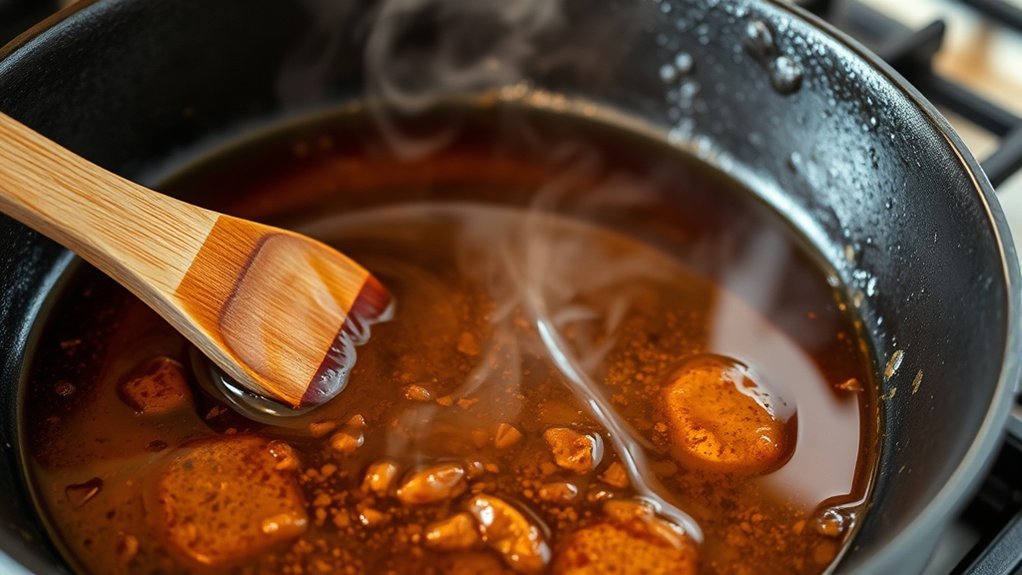
- Return the skillet to medium-high heat; use a wooden spoon or spatula to scrape up browned bits.
- Let the liquid reduce slightly, concentrating flavors and preventing excess moisture.
Avoid tips not relevant to skillet maintenance; focus solely on these precise actions. Proper deglazing not only enhances flavor but also aids in skillet upkeep by loosening food residues without harsh scrubbing. This method preserves your cast iron’s seasoning and longevity, ensuring optimal cooking performance every time.
How to Make Delicious Sauces From Deglazed Bits
Choose the right liquid like wine, broth, or vinegar to unlock rich flavors from the browned bits. Add aromatics and herbs early to build depth, then finish by thickening and balancing the sauce for perfect texture and taste.
Mastering these steps will transform your skillet drippings into irresistible sauces.
Choosing Liquid for Deglazing
How do you select the perfect liquid to release the rich flavors stuck to your cast iron skillet? Your choice directly impacts the sauce’s depth and character. Consider the techniques comparison between using acidic versus neutral liquids, as acidity helps break down fond more effectively.
Here are reliable options:
- Wine (red or white) adds complexity and acidity.
- Broth (chicken, beef, vegetable) enhances savory notes.
- Vinegar diluted with water provides sharpness without overpowering.
- Beer introduces maltiness and subtle bitterness.
Each liquid interacts differently with the fond, so your selection depends on the dish and flavor profile you want. While a wooden spoon is a common alternative utensil to scrape, the liquid’s role in loosening bits is critical for successful deglazing. Choose wisely to maximize flavor extraction.
Incorporating Aromatics and Herbs
Once you’ve selected the perfect liquid to lift those flavorful bits from your skillet, it’s time to enhance the sauce by adding aromatics and herbs. Aromatic compounds from garlic, shallots, or onions build a complex flavor foundation when sautéed briefly in the pan.
Introduce fresh or dried herb pairings that complement the main dish, for example, thyme and rosemary for beef, or basil and oregano for chicken. These herbs release essential oils that elevate the sauce’s depth without overpowering it.
Add them early enough to infuse the liquid but avoid prolonged cooking that diminishes their potency. By strategically incorporating aromatic compounds and herb pairings, you transform simple deglazed bits into a nuanced, savory sauce that highlights your cast iron skillet’s rich flavors.
Thickening and Flavor Balancing
What’s the key to turning deglazed bits into a rich, velvety sauce? It’s mastering thickening methods and flavor balancing. After deglazing, your sauce may be thin or overly sharp. Here’s how to perfect it:
Use a slurry of cornstarch or flour mixed with water to thicken without clumping. Reduce the liquid by simmering to concentrate flavors and naturally thicken.
Add butter gradually for richness and a smooth texture. Adjust acidity and sweetness with vinegar, lemon juice, or a touch of sugar for balanced taste.
Essential Tips to Clean and Maintain Your Cast Iron After Deglazing
Why is proper cleaning and maintenance essential after deglazing your cast iron skillet? Deglazing science shows that residues loosen during skillet chemistry reactions, but improper cleaning can strip seasoning or cause rust. You need to clean gently, dry thoroughly, and reseason if necessary to preserve your skillet’s non-stick surface.
| Step | Action | Tip |
|---|---|---|
| 1. Clean | Use warm water, avoid soap | Scrub with a soft brush |
| 2. Dry | Completely dry with towel | Heat on stove to evaporate moisture |
| 3. Oil | Apply a thin layer of oil | Use flaxseed or vegetable oil |
| 4. Store | Store in a dry place | Avoid stacking with wet pans |
Following these steps maintains skillet chemistry and extends your cast iron’s lifespan.
Frequently Asked Questions
Can I Deglaze a Cast Iron Skillet on an Induction Stovetop?
Yes, you can deglaze a cast iron skillet on an induction stovetop since cast iron has excellent induction compatibility.
Just assure your skillet is not enamel-coated to avoid damaging the enamel’s safety during high heat use.
Is Deglazing Safe for Enamel-Coated Cast Iron Skillets?
Yes, deglazing is safe for enamel-coated cast iron skillets since enamel safety isn’t compromised by acidic liquids. Unlike bare cast iron, deglazing won’t affect seasoning, so you can confidently use this method without worry.
How Long Should Deglazed Sauces Simmer Before Serving?
You should simmer your deglazed sauce for about 5 to 10 minutes, adjusting simmer timing to achieve your desired sauce reduction. This concentrates flavors and thickens the sauce perfectly before serving.
Can I Use Deglazing Techniques With a Stainless Steel Skillet?
Yes, you can use deglazing techniques with a stainless steel skillet. Just remember, proper skillet maintenance is key to prevent sticking and maintain heat distribution. This ensures your deglazing yields rich, flavorful sauces every time.
Does Deglazing Affect the Seasoning of a Cast Iron Skillet?
Deglazing minimally affects your cast iron’s seasoning if you act quickly. Using oil with a high smoke point afterward helps maintain seasoning.
Avoid acidic liquids for long periods to prevent seasoning impact and preserve your skillet’s surface.
Conclusion
Now that you know how to deglaze your cast iron skillet, you’re ready to turn those flavorful browned bits into liquid gold. Keep your pan hot but not scorched, choose the right liquid, and scrape up every bit of fond to make sauces that sing.
Remember, treat your skillet well after deglazing—it’s the heart of your kitchen, so don’t let it gather dust or lose its shine.
Master this, and you’ll have a secret weapon in every meal: the art of how to deglaze a cast iron skillet.