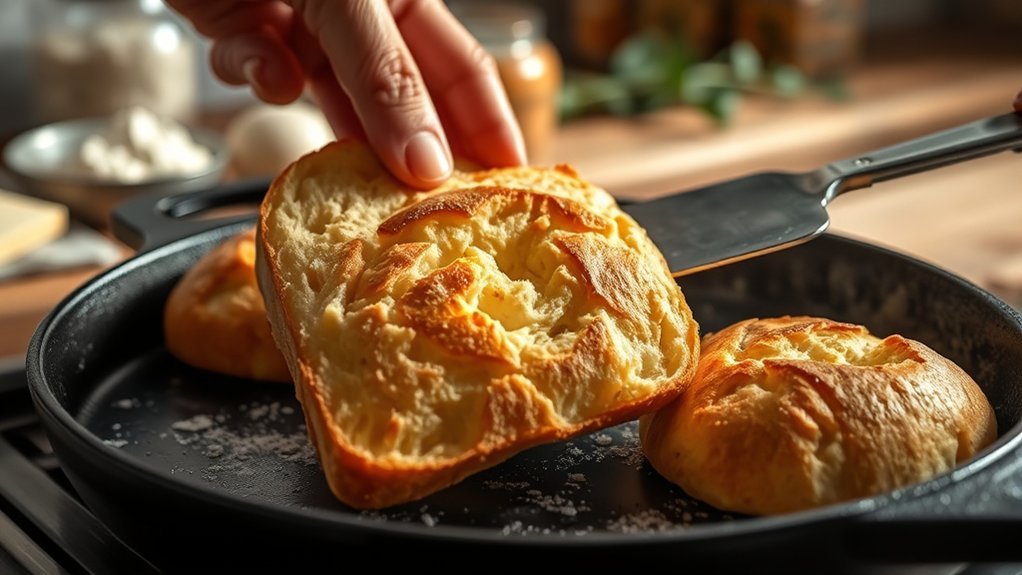

Imagine you’re preparing a rustic sourdough loaf for a quick griddle bread snack. You’ll want to slice it just right and choose the perfect fat to get that ideal crust. Griddle bread requires careful attention to heat and timing to achieve the best results.
By controlling these elements, you can transform simple bread into a flavorful base for toppings or sides. But before you start, understanding these key steps will ensure your bread crisps evenly without burning or becoming soggy.
Key Takeaways
- Choose sturdy, slightly tangy bread like sourdough and slice evenly about ¾-inch thick for optimal griddling texture.
- Preheat the griddle to medium or medium-high heat and apply a thin, even layer of butter or oil to both bread sides.
- Place bread on the griddle, cooking each side 2–3 minutes until a golden, crispy crust forms, flipping carefully to avoid tearing.
- Avoid overcrowding the griddle and gently press bread with a spatula to ensure even contact and prevent steam buildup.
- Enhance flavor by using garlic butter, herb oil, or toppings like fresh herbs, feta, balsamic glaze, or honey after griddling.
Preparing Bread for Griddling
How do you prepare bread to achieve the perfect griddle texture? Start with selecting the right bread; sourdough techniques emphasize a sturdy crumb and a slightly tangy flavor, ideal for griddling. Slice your bread evenly, about ¾-inch thick, to balance softness and crispness.
Next, decide between butter vs oil for coating. Butter provides rich flavor and encourages browning, but oil withstands higher heat without burning. Whichever you choose, apply a thin, even layer to each side of the bread before placing it on the griddle.
This step prevents sticking and promotes an even, golden crust. Avoid soaking the bread, as too much moisture ruins the texture. Proper preparation ensures your bread crisps perfectly while retaining its interior tenderness.
Griddling Bread Step-by-Step
Where do you begin once your bread is prepped and ready? First, preheat your griddle to medium heat to ensure even cooking. Place the bread slices directly on the griddle, allowing them to cook for 2-3 minutes per side.
Watch closely for a golden crust texture forming. This indicates the perfect balance of crispness and softness inside. Flip the bread carefully to avoid tearing.
Keep an eye out for a golden crust, signaling ideal crispness inside; flip gently to preserve texture.
Once both sides reach your desired crust texture, remove the bread. Now, consider toppings pairings that complement your griddled bread, such as melted cheese, fresh herbs, or a drizzle of olive oil.
Following these steps guarantees evenly cooked bread with an appealing texture and flavor base, ready for your favorite toppings pairings without burning or sogginess.
Tips for a Crispy, Golden Bread Crust
Achieving a crispy, golden crust starts with controlling heat and moisture during cooking. Preheat your griddle to medium-high to ensure the bread sizzles on contact, which promotes a crispy crust. Avoid overcrowding the surface; give each slice space for even heat distribution.
Before placing bread on the griddle, lightly brush both sides with oil or melted butter. This encourages a golden crust while preventing sticking. Keep an eye on the bread, flipping once the underside turns golden brown and crispy, usually after 2–3 minutes.
Press gently with a spatula to ensure full contact with the griddle. Finally, avoid covering the bread during cooking, as trapped steam softens the crust. Following these tips guarantees a perfectly crispy and appetizing golden crust every time.
Flavor Boosters and Toppings for Griddled Bread
What elevates griddled bread from simple to sensational? It’s the flavor boosters and toppings you choose. Start with a light brush of garlic butter or herb-infused oil before griddling to infuse subtle, savory notes.
After griddling, add toppings ideas like fresh herbs, crumbled feta, or a drizzle of balsamic glaze for complexity. For a touch of sweetness, try honey or fruit preserves paired with soft cheeses.
Don’t overlook texture—sprinkle toasted nuts or seeds to add crunch. You can also experiment with spice blends or a pinch of smoked paprika to deepen the flavor profile.
These simple additions help you customize griddled bread to suit any meal or snack, transforming basic slices into memorable bites that highlight your culinary creativity.
Creative Uses for Griddled Bread
How can you transform simple griddled bread into versatile components of your meals? Start by using griddled bread as a base for open-faced sandwiches. Layer fresh vegetables, cheeses, or spreads for quick, flavorful bites.
You can also cut it into cubes and toast them further to create homemade croutons, perfect for salads and soups. Another creative use involves making bread bowls; hollow out the center of thick griddled slices and fill them with stews or dips.
For a sweet twist, brush griddled bread with honey or cinnamon sugar before serving as a dessert accompaniment. These creative uses highlight griddled bread’s adaptability, allowing you to elevate everyday dishes with minimal effort, enhancing both texture and flavor in your cooking repertoire.
Frequently Asked Questions
What Type of Griddle Is Best for Griddling Bread?
You’ll want a cast iron griddle for griddling bread because its griddle material guarantees even heat distribution. This consistency prevents burning and promotes a perfect, golden crust every time you cook your bread.
Can Gluten-Free Bread Be Griddled Effectively?
Yes, you can griddle gluten-free bread effectively by using baking substitutes like xanthan gum. Adjust griddling strategies to lower heat, and monitor texture considerations closely to prevent crumbling and ensure even browning.
How Do I Clean My Griddle After Griddling Bread?
After cooking, wipe your griddle with a hot, damp cloth as part of your cleaning routine. Avoid soap to preserve seasoning.
Reapply a thin oil layer to maintain seasoning and prevent rusting for your next use.
Is It Safe to Griddle Bread Without Oil or Butter?
It’s safe to griddle bread without oil or butter, but be cautious. Without a slick surface, bread might stick or scorch.
You’ll need a well-seasoned griddle or nonstick pan to prevent burning and ensure even cooking.
How Long Can Griddled Bread Be Stored?
You can store griddled bread for 2-3 days at room temperature using airtight containers or resealable bags. For longer freshness, refrigerate it up to a week or freeze it, employing proper storing techniques to maintain bread freshness.
Conclusion
Griddling bread transforms simple slices into crispy, golden delights, marrying rustic tang with a caramelized crust. You’ll find that a sturdy loaf, kissed by butter or oil, crisps differently than soft, fresh bread—each offering unique texture and flavor.
With careful heat control and thoughtful toppings, you turn everyday bread into a culinary canvas. So, embrace the contrast: humble bread meets bold technique, creating a satisfying crunch that elevates any meal.
Mastering the art of griddling bread allows you to enjoy a perfect blend of texture and taste, making each bite a memorable experience.