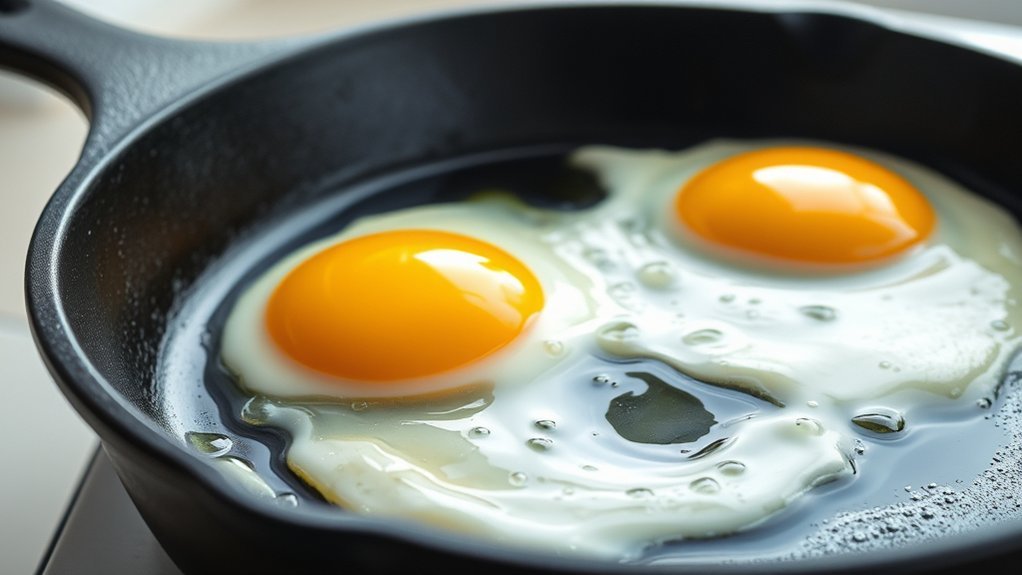

You might assume a cast iron skillet is non stick by nature, but that’s not quite true. It’s the seasoning process that transforms the surface, creating a durable layer that prevents food from sticking. This layer isn’t a quick fix—it builds over time and requires proper care.
Understanding how and when your skillet becomes truly non stick can change how you cook and maintain it. But there’s more to contemplate before you decide if it’s right for you.
Key Takeaways
- Cast iron skillets become non-stick through seasoning, which creates a polymerized oil layer on the surface.
- Proper seasoning fills pores, smooths the surface, and chemically bonds to repel food effectively.
- Well-seasoned cast iron offers a natural, durable non-stick surface ideal for medium-high heat cooking.
- Non-stick performance improves with regular seasoning maintenance and correct cooking temperatures.
- Without seasoning, cast iron is not naturally non-stick and may cause food to stick.
How a Cast Iron Skillet Develops a Non-Stick Surface
How exactly does a cast iron skillet develop its famous non-stick surface? It’s all about building up a layer called the seasoning, which forms when you heat oil on the skillet.
This layer polymerizes, creating a durable, smooth coating that fills the skillet’s tiny pores. Unlike coatings that can peel, this surface strengthens with use, meaning its durability improves over time.
Proper maintenance is key. You’ll want to avoid harsh soaps or scrubbing that strips this layer. Instead, clean gently and reapply oil after each use to keep the surface intact.
With consistent care, your skillet’s non-stick quality not only develops but lasts, making it a reliable tool in your kitchen for years to come.
Why Seasoning Makes Cast Iron Naturally Non-Stick
The seasoning layer doesn’t just protect your cast iron skillet. It fundamentally changes its cooking surface. Through seasoning chemistry, oils polymerize and bond to the iron at high heat, creating a durable, slick surface. This surface patina is what makes your skillet naturally non-stick.
Here’s why seasoning works:
- Polymerized Oil Layer: Heat transforms oil molecules into a hard, plastic-like coating that repels food.
- Microscopic Smoothing: The patina fills tiny pores and irregularities in the iron, reducing food adhesion.
- Chemical Bonding: The seasoning chemically bonds with the skillet, ensuring long-lasting non-stick properties.
When Does Cast Iron Feel Truly Non-Stick in Cooking?
You’ll notice cast iron feels truly non-stick when you’ve applied proper seasoning techniques, creating a durable, smooth surface. Cooking at ideal temperatures also prevents food from sticking or tearing.
Plus, certain foods like eggs or pancakes respond better and release easier on a well-seasoned skillet.
Proper Seasoning Techniques
When does a cast iron skillet truly become non-stick? It happens through proper seasoning techniques, which rely on seasoning science and iron chemistry. You’re essentially creating a polymerized oil layer that bonds to the skillet’s surface, filling microscopic pores and preventing food from sticking.
Follow these steps for effective seasoning:
- Clean and dry thoroughly. Moisture interferes with oil bonding.
- Apply a thin, even coat of a high-smoke-point oil. Flaxseed, grapeseed, or canola work well.
- Bake the skillet upside down at 450-500°F for an hour. This high heat triggers polymerization, forming a durable, non-stick layer.
Repeat these cycles several times. Each layer strengthens the skillet’s seasoning, making it truly non-stick through chemical bonding and surface transformation.
Optimal Cooking Temperatures
How hot should your cast iron skillet get before it starts to feel truly non-stick? The key lies in reaching and maintaining a medium-high temperature, typically around 375°F to 400°F. At this range, the seasoned surface polymerizes oils, creating a slick, non-stick layer.
It’s important to debunk myths that cast iron is non-stick at any temperature; too low, and food sticks, too high, and seasoning can degrade. Thanks to cast iron’s excellent heat distribution, the entire cooking surface heats evenly, preventing hot spots that cause sticking.
Preheat the skillet gradually, allowing the seasoning to activate fully. Once hot, add a small amount of oil to boost non-stick properties. Mastering these temperatures ensures your skillet performs at its best every time.
Types Of Food Cooked
Achieving the right temperature sets the stage, but the type of food you cook greatly influences when your cast iron skillet feels truly non-stick. Certain foods interact better with well-seasoned cast iron, making your cooking experience smoother.
Here are key discussion ideas to keep in mind:
1. Eggs and Pancakes
Their delicate nature reveals the skillet’s non-stick quality quickly; if they stick, seasoning needs improvement.
2. Searing Meats
High heat and natural fats create a barrier, enhancing the non-stick effect without unrelated topics interfering.
3. Vegetables with Oil
Lightly oiled veggies glide easily, showcasing your skillet’s readiness for versatile use.
Understanding these food types helps you avoid unrelated topics and focus on when your cast iron truly performs non-stick.
Best Foods to Cook on a Cast Iron Skillet
You’ll find cast iron skillets excel at cooking breakfast favorites like eggs and bacon, thanks to their even heat distribution.
They’re also perfect for searing steaks and vegetables, locking in flavor with a crispy crust. Mastering these techniques will make the most of your skillet’s natural non-stick qualities.
Ideal Breakfast Choices
What makes a cast iron skillet an excellent choice for breakfast cooking? Its even heat retention and natural non-stick surface let you prepare a variety of dishes with ease.
If you’re looking for the ideal breakfast options, here are three dream pairing ideas, especially after morning workouts:
1. Eggs and bacon
The skillet crisps bacon perfectly while cooking eggs evenly without sticking.
2. Sweet potato hash
Sauté diced sweet potatoes and veggies, creating a nutrient-rich, flavorful start.
3. Protein pancakes
Cook fluffy, golden pancakes that complement your post-workout protein needs.
Using a cast iron skillet for these meals maximizes flavor and texture while supporting your fitness goals. It’s a practical tool that elevates your breakfast routine efficiently and deliciously.
Perfect Searing Techniques
How do you get that perfect crust on your steak or the ideal caramelization on your vegetables? It starts with understanding seasoning science and heat transfer. A well-seasoned cast iron skillet creates a natural non-stick surface, allowing food to sear evenly without sticking.
Preheat your pan thoroughly to maximize heat transfer, ensuring a consistent, intense sear. Choose oils with high smoke points, like avocado or grapeseed oil, to harness proper oil chemistry and avoid burning.
The pan’s durability lets you apply high heat without warping, essential for locking in flavors quickly. Remember, patience is key. Let the food develop a crust before flipping.
Master these techniques, and your cast iron skillet becomes your go-to tool for perfect searing every time.
How to Maintain and Improve Your Cast Iron Skillet’s Non-Stick Surface
Wondering how to keep your cast iron skillet’s non-stick surface performing at its best? Effective cast iron maintenance dispels common non stick myths and ensures your skillet stays smooth and reliable. Here’s how you can maintain and improve its surface:
- Season regularly: Apply a thin layer of oil after each use and heat it to polymerize the oil, reinforcing the non-stick layer.
- Clean properly: Avoid soap; instead, scrub with hot water and a brush or coarse salt to remove food residue without stripping seasoning.
- Store dry: Prevent rust by drying thoroughly and lightly oiling before storage.
Following these steps keeps your skillet’s seasoning intact, enhancing its natural non-stick qualities over time with consistent care.
Common Mistakes That Ruin Your Cast Iron Seasoning
Why does your cast iron skillet lose its non-stick surface despite careful seasoning? One common mistake is overcooking oil during seasoning, which breaks down the polymerized layer, making it sticky or flaky. You want to apply a thin layer of oil and heat it just enough to create a durable, smooth coating.
Another frequent error is soap use when cleaning. While it may seem like a good idea, using soap strips away the seasoning, forcing you to reseason more often. Instead, clean your skillet with hot water and a stiff brush, avoiding harsh detergents.
Also, avoid soaking your pan, as prolonged moisture encourages rust, which damages seasoning. By steering clear of these errors, you’ll maintain a robust, non-stick surface on your cast iron skillet.
Cast Iron Skillets vs. Modern Non-Stick Pans: Which Is Better?
When choosing cookware, what makes cast iron skillets stand out compared to modern non-stick pans? The nonstick debate hinges on your cooking style and maintenance preference. Cast iron offers unmatched pan longevity, often lasting generations with proper care. Here’s how they compare:
- Durability: Cast iron resists scratches and warping, unlike many non-stick surfaces that degrade over time.
- Heat Retention: Cast iron evenly retains heat, ideal for searing and frying; non-stick pans heat quickly but cool fast.
- Maintenance: Non-stick pans require gentle use and replacement every few years; cast iron demands seasoning but improves with age.
Ultimately, if you want long-term reliability and versatility, cast iron wins. For ease and light cooking, modern non-stick pans serve well. Your choice depends on balancing these factors.
Frequently Asked Questions
Can I Use Soap to Clean a Cast Iron Skillet?
You can use mild soap for cleaning, but avoid harsh detergents to protect seasoning. After soap cleaning, dry thoroughly and apply a thin oil layer to maintain seasoning and keep your cast iron skillet non-stick and rust-free.
Is Cast Iron Safe for Acidic Foods Like Tomatoes?
Yes, cast iron is safe for acidic foods like tomatoes, but you shouldn’t cook them for long periods. Prolonged acidity can break down seasoning and impart a metallic taste, so use cast iron wisely with acidic ingredients.
How Heavy Is a Typical Cast Iron Skillet?
A typical cast iron skillet weighs between 5 to 12 pounds, making it a heavy skillet compared to aluminum or stainless steel pans.
You’ll notice the weight difference, but it guarantees excellent heat retention and even cooking.
Can Cast Iron Skillets Go in the Dishwasher?
You shouldn’t toss your cast iron skillet into the dishwasher’s grip; it’s not dishwasher safe. Soap usage and harsh detergents strip its seasoning, leaving it vulnerable.
Hand wash gently, then dry and oil to preserve its strength.
Do Cast Iron Skillets Rust Easily if Not Used?
Yes, your cast iron skillet can rust easily if unused. To prevent rust, you need consistent seasoning maintenance and proper rust prevention, like drying it thoroughly and applying a light oil coat before storing it in a dry place.
Conclusion
You might be surprised to learn that a well-seasoned cast iron skillet can last for decades—some have been used for over 100 years! By maintaining its polymerized oil layer, you’ll enjoy a naturally non-stick surface that improves with use.
Unlike modern pans, your cast iron rewards care and patience, offering unmatched heat retention and durability. Keep seasoning it regularly, and you’ll have a versatile, long-lasting tool that only gets better over time.
In conclusion, a cast iron skillet is non stick when properly seasoned, making it a reliable choice for cooking with ease and minimal sticking.