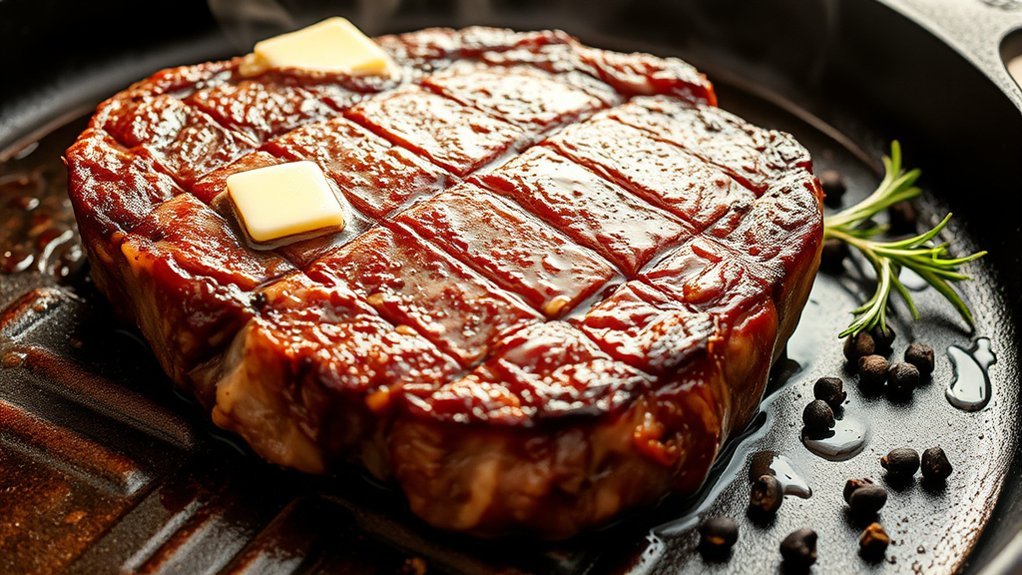

You want a well-marbled ribeye steak, you want it at room temperature, and you want a properly heated griddle. Mastering these basics sets the foundation for a perfectly cooked ribeye steak on griddle.
But nailing the sear, knowing when to flip, and resting your meat just right are what truly elevate your ribeye from good to exceptional.
Let’s explore how to get each step exactly right.
Key Takeaways
- Preheat the griddle to medium-high heat around 400°F and lightly oil it with high smoke point oil like avocado or grapeseed.
- Pat the ribeye dry, season with coarse salt and freshly ground pepper just before cooking to retain juiciness and enhance flavor.
- Sear the ribeye without overcrowding, press gently for full contact, and flip only once after 2–3 minutes to develop a crust.
- Cook to desired doneness using a thermometer (125°F rare, 135°F medium-rare, 145°F medium) and rest the steak 5–10 minutes before slicing.
- Finish with a pat of butter or garlic butter drizzle and serve with light, complementary sides like arugula salad or roasted potatoes.
Choose the Best Ribeye Steak for Griddling
How do you pick the perfect ribeye steak for griddling? Start by looking for good marbling. Those thin streaks of fat throughout the meat ensure tenderness and flavor.
Look for good marbling in your ribeye to guarantee tenderness and rich flavor.
Avoid falling into topic drift by focusing strictly on steak quality, not unrelated concepts like seasoning or cooking methods. That comes later.
Choose a steak about 1 to 1.5 inches thick. Thinner cuts cook too fast and risk drying out.
Check the color; a bright, cherry-red hue indicates freshness. Also, avoid steaks with excessive liquid in the packaging, as that can signal poor quality.
Prepare Your Ribeye for Cooking
Start by bringing your ribeye to room temperature for even cooking and better searing. Next, apply seasoning that enhances the steak’s natural flavor without overpowering it.
With quality meat and proper prep, you’ll set the stage for a perfect griddle-cooked ribeye.
Choosing Quality Ribeye
Where should you focus when selecting a ribeye steak to make sure the best flavor and tenderness? Prioritize selecting marbling, as the fat interspersed within the muscle enhances juiciness and flavor. Also, consider sourcing grass fed ribeye for a leaner, more robust taste. Inspect the color; a bright red hue indicates freshness.
Use this table to guide your ribeye selection:
| Feature | Importance | What to Look For |
|---|---|---|
| Marbling | High | Even fat distribution |
| Color | Medium | Bright, cherry red |
| Cut Thickness | Medium | At least 1 inch |
| Grass Fed Source | Optional but prized | Clear labeling |
| Freshness | High | Firm texture, no odor |
Choose carefully to ensure your griddle-cooked ribeye delivers exceptional taste and tenderness.
Seasoning Techniques
Why does seasoning matter so much when preparing your ribeye for the griddle? Proper seasoning balance elevates the steak’s natural flavors without overpowering them. Salt timing is crucial; applying salt just before cooking helps retain juiciness and creates a perfect crust. Too early, and moisture escapes, leaving a dry steak.
To master seasoning techniques, focus on:
- Using coarse salt and freshly ground pepper to enhance texture and taste.
- Applying seasoning evenly to avoid bitter spots.
- Adding complementary herbs or garlic sparingly to not mask the beef’s flavor.
Room Temperature Prep
After seasoning your ribeye carefully, allowing it to come to room temperature guarantees even cooking on the griddle. Take the steak out of the fridge about 30 to 60 minutes before cooking. This step lets the meat’s internal temperature rise, preventing an overly cold center that cooks unevenly.
When your ribeye is at room temperature, it sears more efficiently, promoting superior crust formation. The griddle’s heat hits the steak uniformly, creating that desirable caramelized exterior while locking in juices.
Avoid rushing this prep phase; a cold steak can cause temperature shocks, leading to tough texture and less flavorful results. By patiently prepping your ribeye, you set the stage for a perfectly cooked steak with a rich, well-developed crust every time.
Set Up Your Griddle for Perfect Ribeye Steak Heat
A properly heated griddle is essential for achieving a perfectly cooked ribeye steak. Start by preheating your griddle over medium-high heat, allowing it to reach the ideal temperature for searing. The right griddle heat ensures the fat rendering process begins immediately, locking in flavors and creating that irresistible crust.
To set your griddle up perfectly:
To set your griddle up perfectly, ensure even heat and oil the surface for flawless steak searing.
- Heat evenly to avoid hot spots that can burn or undercook the steak.
- Aim for a surface temperature around 400°F (204°C) to maximize caramelization.
- Lightly oil the griddle to prevent sticking and help the fat render smoothly.
Cook Your Ribeye Steak on the Griddle (Including Searing Tips)
Once your griddle reaches the optimal temperature and is lightly oiled, you’re ready to place your ribeye steak on the surface. Press it gently to ensure full contact, which helps develop a perfect crust.
As the steak sears, you’ll notice the sizzling aromas. This signals the Maillard reaction creating intense flavor. Maintain a pan sear balance by controlling heat; too high burns the exterior, too low prevents a good crust.
After 2-3 minutes, flip the steak once using tongs to avoid piercing the meat. Sear the other side with the same care, letting those sizzling aromas build. Avoid moving the steak prematurely; patience here ensures a well-formed crust.
This technique locks in juices and maximizes flavor, setting the stage for a delicious ribeye.
How to Tell When Your Ribeye Is Done
Mastering the perfect doneness requires keen observation and timing. To nail your ribeye, rely on clear doneness cues and timing guidance rather than guesswork. Start by checking the steak’s firmness: softer means rare, firmer means well done.
Perfect doneness comes from keen observation and timing—feel the steak’s firmness to determine its level of doneness.
Also, watch the juices. Clear juices indicate medium to well done, while red juices suggest rare. Use a meat thermometer for precision: 125°F for rare, 135°F for medium-rare, 145°F for medium.
- Feel the steak’s texture to gauge doneness confidently.
- Notice the color of juices for quick visual feedback.
- Use timing guidance alongside temperature checks to avoid overcooking.
Rest Your Ribeye and Serve It Right
You need to rest your ribeye for about 5 to 10 minutes to let the juices redistribute, ensuring a juicy, tender bite. Skipping this step causes the juices to spill out, leaving your steak dry.
Once rested, slice against the grain and serve with simple sides to highlight the steak’s rich flavor.
Importance Of Resting
Why does resting your ribeye steak after cooking make such a difference? Resting science shows that once you remove the steak from the griddle, carryover heat continues to cook it internally. This process allows juices to redistribute evenly throughout the meat, preventing them from spilling out when you cut into it.
When you rest your ribeye, you:
- Preserve maximum juiciness for a tender bite
- Enhance the rich, beefy flavor that defines a perfect steak
- Achieve an ideal texture that’s neither dry nor tough
Skipping this step risks losing flavor and moisture, undermining your hard work on the griddle. So, give your ribeye those essential minutes to rest, and you’ll serve a steak that’s truly irresistible.
Ideal Resting Time
To guarantee the ribeye rests long enough to lock in flavor and juices, determining the ideal resting time ensures you serve it at its best. After cooking, let your ribeye rest for about 5 to 10 minutes. This pause allows the meat’s fibers to relax, redistributing juices evenly.
Proper fat distribution during resting enhances the steak’s juicy texture and prevents the juices from spilling out when you cut into it. Cover the ribeye loosely with foil to maintain warmth without steaming the crust. Avoid cutting too soon; doing so causes valuable juices to escape, resulting in a drier steak.
Serving Suggestions
Presentation plays an essential role in enhancing your ribeye experience. After resting your steak, slice it against the grain to showcase the juicy, ripe marbling that melts in your mouth. This technique retains the steak’s tenderness and maximizes flavor.
Use the pan seasoning left on the griddle as a rich sauce by deglazing with a splash of stock or wine, then drizzle it over the slices for an added boost of umami.
Serve your ribeye with simple accompaniments that complement rather than overpower:
- Roasted garlic mashed potatoes to balance the steak’s richness
- A crisp arugula salad with lemon vinaigrette for brightness
- Grilled asparagus brushed lightly with olive oil for a smoky touch
This approach ensures every bite delights both your palate and your eyes.
Common Mistakes When Cooking Ribeye Steak on a Griddle
Cooking ribeye steak on a griddle demands attention to detail, and avoiding common mistakes can make all the difference in your results. First, neglecting griddle maintenance often leads to uneven heat and sticking. Always clean and season your griddle before cooking to ensure a consistent surface.
Second, poor oil selection can affect flavor and smoke point; choose oils with high smoke points like avocado or grapeseed oil to prevent burning. Another mistake is overcrowding the griddle, which lowers the temperature and hampers proper searing.
Avoid flipping the steak too frequently. Let it develop a crust before turning. Lastly, underestimating resting time causes juices to escape. By steering clear of these errors, you’ll maximize flavor and texture every time you cook ribeye on your griddle.
Bonus Tips for Juicy, Flavorful Ribeye Every Time
How can you guarantee your ribeye steak turns out juicy and flavorful every time you cook it on a griddle? Mastering the right pan temp and achieving a perfect juicy sear are essential.
Start by heating your griddle to medium-high. Too hot, and you risk burning; too low, and you won’t get that flavorful crust. Let the steak rest after cooking to redistribute juices evenly.
Keep these bonus tips in mind:
- Use a cast iron griddle for even heat distribution and a superior sear.
- Pat the steak dry before seasoning to enhance caramelization.
- Avoid flipping frequently; one flip ensures an even, juicy sear.
With these techniques, you’ll consistently create a ribeye that’s tender, flavorful, and restaurant-quality every time.
Frequently Asked Questions
Can I Use a Cast Iron Skillet Instead of a Griddle?
Yes, you can use a cast iron skillet as a cast iron alternative. When comparing griddle vs skillet, the skillet offers even heat and great searing.
This makes it perfect for cooking ribeye steak efficiently on your stovetop.
What Side Dishes Pair Best With Ribeye Steak?
You’ll love side dish ideas like garlic mashed potatoes, roasted asparagus, or a fresh arugula salad. These options enhance ribeye flavor pairing by balancing its rich, juicy taste with bright, savory, and creamy elements.
How Long Can Cooked Ribeye Be Stored in the Refrigerator?
You can store cooked ribeye in the refrigerator for three to four days. For ribeye storage, use airtight containers or wrap tightly.
Two word discussion ideas: freshness check and safe reheating to maintain quality and safety.
Is It Better to Marinate Ribeye Before Cooking?
Think of marination myths as shadows. Some deepen flavor, others just linger. You’ll enhance your ribeye best by timing flavor carefully; marinate briefly to boost taste without masking the steak’s natural richness.
Can I Cook Ribeye Steak on an Electric Griddle?
You can cook ribeye steak on an electric griddle, which offers even heat and easy cleanup. It’s a great cast iron skillet alternative, providing consistent temperature control and ample cooking space for perfect searing.
Conclusion
Mastering ribeye on a griddle transforms simple meat into a sizzling masterpiece. With each deliberate flip and buttery finish, you coax out flavors as rich as a symphony’s crescendo.
Remember, patience during resting lets juices settle like morning mist, ensuring every bite bursts with juiciness. Follow these steps with care, and your griddle will become the stage where ordinary steak ascends to extraordinary—an effortless dance of heat, time, and taste.
By perfecting your technique, you unlock the full potential of cooking ribeye steak on griddle, turning every meal into a celebration of flavor and texture.