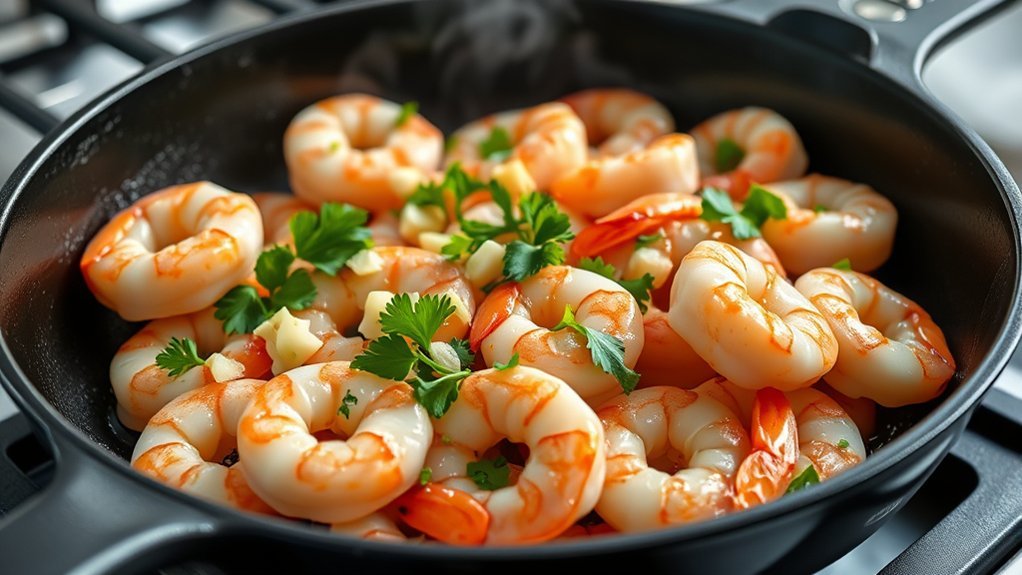

Imagine transforming simple shrimp into a savory, garlicky dish with garlic shrimp in a skillet that’s ready in minutes. You start by rinsing and drying the shrimp, then heating a skillet just right to get a perfect sear. Timing and technique are essential to avoid overcooking or under-seasoning.
Mastering these details will elevate your garlic shrimp from basic to exceptional—let’s explore how to get it exactly right every time.
Key Takeaways
- Pat peeled and deveined shrimp dry before cooking to ensure a proper sear in the skillet.
- Heat a heavy-bottomed skillet over medium-high, add olive oil and minced garlic, cooking garlic until fragrant and lightly golden.
- Add shrimp in a single layer, cooking until pink and opaque, about 1–2 minutes per side.
- Season shrimp with salt, pepper, and optional red pepper flakes for heat, stirring gently to coat evenly.
- Finish with a squeeze of lemon juice and optional fresh parsley for brightness and color before serving.
What Ingredients You Need for Garlic Shrimp
What ingredients do you need to make flavorful garlic shrimp in a skillet? Start with shrimp as your main ingredient, choosing between fresh vs frozen shrimp. Fresh shrimp offers a sweeter taste and firmer texture, while frozen shrimp is convenient and often just as good when properly thawed.
You’ll need about 1 pound of shrimp, peeled and deveined. For the garlic flavor, use 4-5 cloves of fresh garlic, minced finely to release its aroma. Add 2 tablespoons of olive oil or butter to enhance richness. Season with salt and freshly ground black pepper.
Optional ingredients include a pinch of red pepper flakes for heat, freshly chopped parsley for color, and a squeeze of lemon juice to brighten the dish. These essentials ensure your garlic shrimp will be perfectly flavorful.
How to Prep Shrimp for Perfect Results
Before cooking, thoroughly rinse your shrimp under cold running water to remove any residue or grit. Next, peel and devein the shrimp for clean, tender bites. Use a paring knife to make a shallow cut along the back and remove the dark vein.
Pat the shrimp dry with paper towels to ensure they sear properly. For shrimp prep, keep your pantry staples like salt, pepper, and olive oil nearby to season immediately after drying.
| Step | Action |
|---|---|
| Rinse | Remove grit under cold water |
| Peel & Devein | Remove shells and veins |
| Dry | Pat shrimp completely dry |
| Season | Use pantry staples to season |
This precise prep sets the stage for perfect garlic shrimp.
How to Cook Garlic Shrimp in a Skillet
Start by patting your fresh shrimp dry to ensure they sear evenly without steaming. Heat your skillet over medium-high heat, then add oil and minced garlic, cooking it just until fragrant and lightly golden to avoid bitterness.
Once the garlic is perfectly seared, add the shrimp in a single layer and cook until they turn pink and opaque.
Preparing Fresh Shrimp
How do you ensure your shrimp is perfectly prepared for cooking? Start by choosing fresh shrimp with a firm texture and a mild ocean scent. Rinse them under cold water to remove any surface residue.
If your shrimp still have shells, peel them off carefully, especially if you’re a shelling skeptic. Removing shells improves flavor absorption and texture.
Next, devein the shrimp by making a shallow cut along the back and removing the dark vein with the tip of a knife or a toothpick. This step is crucial for both presentation and taste.
Pat the shrimp dry with paper towels to prevent excess moisture, which can hinder browning. Properly preparing fresh shrimp sets a solid foundation for cooking garlic shrimp in your skillet.
Searing Garlic Perfectly
Why does perfectly searing garlic matter when cooking shrimp in a skillet? Searing garlic correctly unleashes its full flavor without burning, which can turn it bitter and ruin your dish.
Start by heating your skillet over medium heat and adding oil. Once shimmering, add finely minced garlic evenly across the pan. Use a gentle searing technique, avoid high heat, to coax out the garlic aroma balance, allowing it to become fragrant and golden within 30 to 45 seconds. Stir frequently to prevent sticking or scorching.
As soon as the garlic releases its nutty scent and slight color, immediately add the shrimp to the skillet. This precise timing ensures the garlic enhances the shrimp rather than overpowering it, creating a perfect harmony of flavors essential for delicious garlic shrimp.
Choosing the Best Skillet and Tools for Garlic Shrimp
What skillet you choose can make all the difference in cooking perfect garlic shrimp. For skillet selection, opt for a heavy-bottomed pan like cast iron or stainless steel; they provide even heat distribution essential for searing shrimp evenly. Avoid nonstick if you want a crispy finish.
Tool durability matters, too. Select utensils that won’t scratch your skillet or melt under high heat.
Here’s what you need to focus on:
Here’s what you need to focus on for perfect garlic shrimp: skillet material, size, and utensil choice.
- Material: Cast iron or stainless steel for heat retention.
- Size: A 10-12 inch skillet offers enough space to avoid overcrowding.
- Utensils: Use wooden or silicone tools for durability and skillet protection.
Choosing the right skillet and tools ensures your garlic shrimp cooks evenly and develops a perfect sear without damaging your cookware.
How to Make the Garlic Butter Sauce Richer
Where can you boost the flavor and texture of your garlic butter sauce? Start by using high-quality, unsalted butter and melt it gently to avoid burning.
Next, add a splash of heavy cream or half-and-half to enrich the sauce’s consistency, making it silkier without overpowering the garlic. For depth, incorporate a small amount of grated Parmesan cheese, stirring until it melts smoothly.
Avoid unrelated topics like adding sugar or acidic ingredients here, as they can disrupt balance. Keep your focus tight—consider two word discussion ideas such as “butter quality” and “cream addition” to guide your enhancements.
Customizing Garlic Shrimp With Herbs and Spices
You can elevate your garlic shrimp by adding fresh herbs like parsley, cilantro, or basil, which bring bright, aromatic notes. Experiment with spices such as smoked paprika, red pepper flakes, or cumin to introduce warmth and depth.
Start with small amounts, then adjust to suit your taste and create a personalized flavor profile.
Popular Herb Combinations
How can you elevate the flavor of garlic shrimp beyond the basics? Start by choosing the right herbs that complement garlic without overpowering it. If you need a garlic substitution, fresh herbs can add complexity while you maintain pan heat control for perfect cooking.
Try these popular herb combinations:
- Parsley and Basil – Adds freshness and slight sweetness, balancing garlic’s pungency.
- Thyme and Oregano – Provides an earthy, aromatic layer that enhances shrimp’s natural flavor.
- Cilantro and Chives – Offers a bright, slightly oniony note that lifts the dish.
Add herbs towards the end of cooking to preserve their flavor and avoid burning. These combinations keep your skillet garlic shrimp vibrant and full of character.
Spices to Enhance Flavor
Often, adding the right spices can transform your garlic shrimp from simple to spectacular. To get a flavor boost, start with paprika for smoky warmth and a touch of cayenne pepper if you like heat.
Ground cumin adds earthiness, while a pinch of turmeric offers subtle bitterness and vibrant color. Don’t overlook black pepper; it brightens and sharpens the dish. For a citrusy twist, consider a dash of dried lemon peel or sumac.
When sprinkling spices to enhance flavor, add them early in cooking to allow their oils to release fully. Adjust quantities based on your taste, but remember, a little goes a long way. By thoughtfully combining these spices, you’ll customize your skillet garlic shrimp to suit your palate perfectly.
Serving Ideas and Side Dishes for Garlic Shrimp
Pairing garlic shrimp with complementary side dishes elevates the entire meal, creating a balanced and satisfying dining experience. To master garlic shrimp pairings, focus on sides that absorb flavors and add texture without overpowering the shrimp.
Here are three skillet side ideas to try:
1. Lemon Herb Rice
Cook rice with lemon zest, fresh parsley, and a pinch of salt. The citrus brightens the shrimp’s garlic notes.
2. Sautéed Spinach
Quickly wilt spinach in olive oil with a hint of garlic. It adds a fresh, slightly bitter contrast.
3. Roasted Asparagus
Toss asparagus spears in olive oil, salt, and pepper, then roast until tender. Its earthiness complements the shrimp perfectly.
These sides create a well-rounded plate, enhancing the garlic shrimp’s flavor while adding variety in texture and color.
Frequently Asked Questions
Can I Use Frozen Shrimp for Garlic Shrimp?
Yes, you can use frozen shrimp for garlic shrimp. Just thaw them properly in the fridge or under cold water, then pat dry to avoid excess moisture.
Proper storage tips guarantee freshness and prevent freezer burn.
How Long Can Cooked Garlic Shrimp Be Stored?
You should store cooked shrimp in an airtight container in the fridge. The storage duration for garlic shrimp is up to 3-4 days.
Always cool it quickly and reheat thoroughly before eating to guarantee safety and freshness.
Is Garlic Shrimp Gluten-Free?
Yes, garlic shrimp is naturally gluten free, but you should check your sauce ingredients. For garlic shrimp gluten free options, use gluten free sauce options like tamari, coconut aminos, or homemade garlic butter to avoid gluten contamination.
What Wine Pairs Best With Garlic Shrimp?
Like a breeze stirring fresh seafood aromas, crisp Sauvignon Blanc or dry Riesling enhances garlic shrimp’s flavors. Choose these wine pairings to balance garlic’s pungency and complement the shrimp’s natural sweetness with bright acidity.
Can I Grill Garlic Shrimp Instead of Using a Skillet?
Yes, you can grill garlic shrimp instead of using a skillet. For garlic shrimp grilling, marinate them briefly, skewer to prevent falling through, and cook over medium heat.
It’s a great outdoor skillet alternative with smoky flavor.
Conclusion
Now that you’ve mastered garlic shrimp, you hold the golden ticket to quick, flavorful meals. With simple ingredients and your trusty skillet, you can whip up a dish that’s as vibrant as a summer sunset. Remember, seasoning and timing are your best friends—don’t rush the sear!
Experiment with herbs and cream to make it your own. Serve with your favorite sides, and enjoy a restaurant-quality meal right at home. Cooking garlic shrimp in a skillet is your shortcut to deliciousness anytime you crave it.