
When cooking brisket in a skillet, your choice of cut and equipment directly impacts the final result. You’ll want a flat brisket with balanced fat for even cooking and a heavy pan, ideally cast iron, to maintain steady heat. Proper searing creates a rich crust, but the slow simmer that follows is essential for tenderness.
Knowing how to manage heat and liquid levels will transform a tough cut into a succulent meal—here’s how to master each step.
Key Takeaways
- Choose a flat brisket cut for even thickness and consistent cooking in the skillet.
- Use a large, heavy-bottomed cast iron skillet to ensure even heat distribution and prevent crowding.
- Sear the brisket first for a flavorful crust, then add liquids to cover halfway for slow simmering.
- Maintain low heat with a tightly covered skillet and simmer brisket for 3 to 4 hours, checking tenderness regularly.
- Rest brisket for 20 minutes tented in foil, then slice against the grain about ¼ inch thick for best texture.
Choose the Right Brisket Cut for Skillet Cooking
When selecting a brisket for skillet cooking, you’ll want to focus on cuts that balance tenderness and fat content. Understanding brisket terminology is essential: the two main sections are the flat, which is leaner and uniform in thickness, and the point, which contains more marbling and connective tissue.
For skillet cooking, the flat is preferable due to its consistent thickness, ensuring even heat distribution and tender results. However, the point offers richer flavor but requires careful rendering of fat to avoid toughness.
Cost considerations also play a role; flats tend to be more expensive due to their lean profile and presentation, while points are often more affordable but demand precise technique. Choosing the right cut based on these factors ensures optimal texture and flavor in your skillet-cooked brisket.
Pick the Best Skillet and Tools for Brisket
You need a skillet that offers even heat distribution and retains high temperatures, such as cast iron or heavy-duty stainless steel. Choose a size that comfortably fits your brisket without overcrowding to ensure proper searing.
Equip yourself with essential tools like tongs, a sharp knife, and a meat thermometer for precise handling and cooking control.
Choosing Skillet Material
Which skillet material delivers the best heat retention and even cooking essential for brisket? Cast iron stands out as the superior choice due to its exceptional heat distribution and ability to maintain steady temperatures. This consistency helps develop a uniform crust, essential for brisket’s texture.
Stainless steel pans offer durability and quick heating but lack the mass to retain heat evenly, risking hot spots and uneven cooking. Aluminum skillets heat fast but provide less consistent heat distribution, possibly causing uneven browning.
When selecting your skillet material, prioritize cast iron for its thermal properties that ensure controlled cooking environments. Enamel-coated cast iron also works well, combining easy maintenance with excellent heat retention.
Choosing the right skillet material directly impacts the brisket’s final quality by delivering precise, even heat throughout the cooking process.
Essential Cooking Tools
How do you guarantee your brisket cooks evenly and develops the perfect crust? Selecting essential cooking tools is key. You need equipment that offers control and consistency, similar to sous vide precision but adapted for skillet cooking.
Here are three must-haves:
1. Heavy-duty cast iron skillet
Provides superior heat retention and even searing, crucial for that caramelized crust.
2. Instant-read meat thermometer
Ensures internal temperature accuracy, preventing overcooking or undercooking.
3. Tongs with a firm grip
Allow you to handle the brisket without piercing the meat, preserving juices.
Incorporate grilling tips like preheating tools and managing heat to mimic outdoor results indoors. These tools will elevate your skillet brisket technique to professional levels.
Size and Heat Distribution
Selecting the right skillet size and guaranteeing optimal heat distribution directly impact your brisket’s cooking quality. Choose a skillet large enough to hold your brisket without crowding, maintaining size consistency for even cooking.
A pan that’s too small causes uneven heat zones, leading to overcooked edges and an undercooked center. Prioritize heavy-bottomed skillets, such as cast iron, which excel at heat distribution by retaining and spreading heat uniformly. This consistency prevents hot spots, which can burn portions of the meat.
Additionally, use a lid or foil to trap heat and moisture, enhancing uniform cooking. Avoid lightweight pans that heat unevenly. By focusing on size consistency and superior heat distribution, you ensure your brisket cooks evenly, developing a tender, flavorful crust and juicy interior every time.
How to Trim and Season Your Brisket
You’ll want to trim excess fat from your brisket, leaving about a quarter-inch layer to maintain moisture without causing greasiness.
Select seasoning blends that complement beef, focusing on salt, pepper, garlic, and optional smoked paprika for depth. Proper trimming and seasoning set the foundation for a well-balanced, flavorful skillet brisket.
Trimming Fat Properly
Trimming fat properly is essential to achieving a tender, flavorful brisket when cooking in a skillet. You must focus on fat distribution and apply tiny trimming techniques to balance moisture and prevent greasiness. Here’s how to trim effectively:
- Identify the fat cap: Leave about 1/4 inch to protect the meat during cooking without overwhelming it.
- Remove excess hard fat: Use a sharp knife to carefully trim thick, uneven fat pockets that won’t render well.
- Perform tiny trimming: Delicately shave off small fat layers to even out thickness, ensuring consistent heat penetration and flavor absorption.
Choosing Seasoning Blends
After preparing the brisket’s fat layer with exact trimming, it’s time to enhance the meat’s natural flavors through seasoning. Selecting the right seasoning blends is essential; you want a balance that complements without overpowering.
Opt for blends featuring coarse salt, black pepper, garlic powder, and smoked paprika to build a robust base. Consider flavor pairing principles—combine complementary spices like cumin and coriander for warmth or mustard powder for a subtle tang. Avoid overly sweet or complex mixes that can mask the brisket’s richness.
Apply the seasoning evenly, ensuring it adheres well to the surface. This precise approach maximizes flavor penetration during cooking, elevating the final taste. Mastering your seasoning blends transforms a simple brisket into a layered, savory experience.
How to Sear Brisket Perfectly in a Skillet
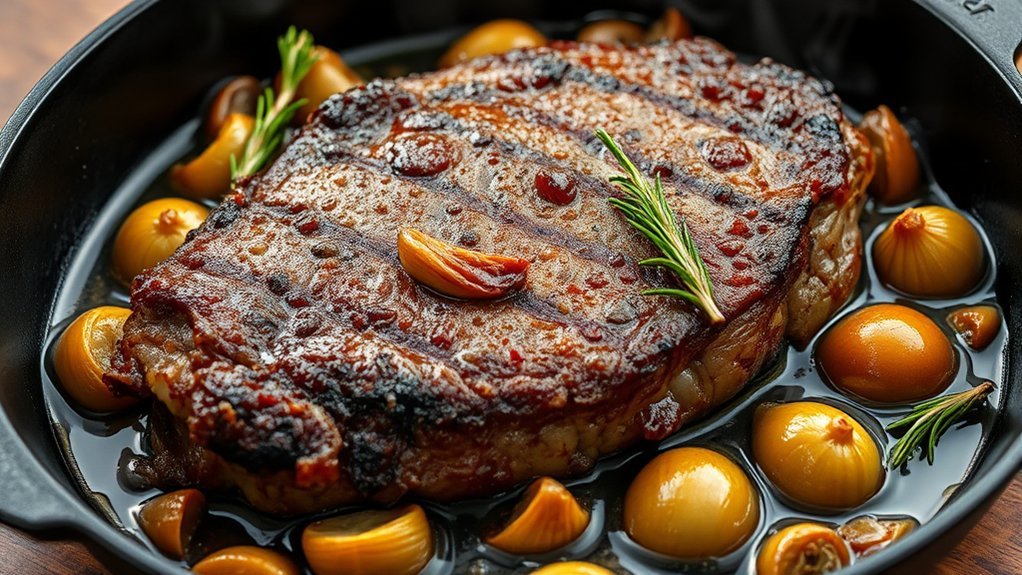
A perfectly seared brisket develops a deep, caramelized crust that locks in juices and enhances flavor. Mastering the sear technique in your skillet is essential to build flavor and create skillet fond for deglazing later.
Follow these steps:
- Preheat your skillet on medium-high until it’s smoking hot to ensure immediate crust formation.
- Pat the brisket dry and season it; moisture prevents proper browning, so avoid overcrowding.
- Sear the brisket undisturbed for 4-5 minutes per side, allowing the Maillard reaction to create a rich, dark crust and skillet fond.
This approach guarantees a robust sear, maximizing flavor development and preparing the skillet for the next cooking phase efficiently.
Best Liquids and Aromatics for Skillet Brisket
Choosing the right liquids and aromatics plays a pivotal role in elevating your skillet brisket’s flavor and tenderness. For liquids, opt for a two-word idea 1 like beef broth or red wine; these provide an acidic balance that breaks down connective tissue effectively.
Avoid overly watery options to maintain a concentrated sauce. Aromatics should include a two-word idea 2 such as garlic cloves and bay leaves, which infuse the meat with essential oils and subtle complexity. Adding onions and thyme complements this aromatic base, contributing layers of savory depth.
When combined, these liquids and aromatics create an environment that promotes even heat distribution and moisture retention, ensuring your brisket cooks tender and flavorful without drying out. Use measured amounts to prevent oversaturation and maintain skillet temperature control.
Slow-Cook Brisket on the Stove: Step-by-Step
How exactly do you achieve a perfectly tender brisket using just your stovetop? The key lies in controlling heat and moisture through a precise two word discussion idea 1 approach. Follow these steps:
- Sear Brisket: Brown the brisket evenly in your skillet over medium-high heat. This caramelizes the surface, locking in flavors.
- Add Liquids: Pour in your chosen liquids and aromatics, covering the brisket halfway to maintain a balanced two word discussion idea 2 environment.
- Simmer Low: Reduce heat to low, cover the skillet tightly, and slow-cook for 3–4 hours. Monitor occasional bubbling to ensure even heat distribution without drying out.
This controlled stovetop method guarantees tender, flavorful brisket without an oven, mastering the art of slow-cook precision.
How to Check Brisket Doneness Without an Oven
When can you tell that your brisket has reached perfect tenderness without relying on an oven thermometer? To assess brisket doneness using oven free methods, focus on texture and resistance. Insert a probe or skewer into the thickest part of the meat; it should slide in with minimal resistance, indicating that the collagen has fully broken down.
Alternatively, use the “fork test.” Twist a fork in the brisket and observe if the meat pulls apart easily without shredding. You can also gently press the brisket; it should feel tender yet firm, not mushy or too stiff. These tactile techniques provide reliable oven free methods to confirm brisket doneness precisely, ensuring your skillet-cooked brisket achieves optimal tenderness without guessing.
Rest and Slice Your Skillet-Cooked Brisket
Always allow your skillet-cooked brisket to rest for at least 20 minutes before slicing to guarantee juices redistribute evenly throughout the meat. This rest period is crucial, wait, don’t rush it. Here’s how to manage it effectively:
- Tent the brisket loosely with foil to retain heat without trapping moisture.
- Use a sharp, serrated knife to slice against the grain for optimal tenderness.
- Slice brisket into uniform pieces, about ¼ inch thick, to ensure even texture and flavor.
Resting prevents juice loss, making each bite succulent and flavorful. Skipping the rest results in dry, tough meat. So, rest? Wait, it’s the key to skillet brisket perfection. Follow these steps precisely for a professional finish.
Easy Side Dishes That Go Great With Skillet Brisket
What complements the rich, tender flavors of skillet-cooked brisket perfectly? You want side dishes that balance and enhance the brisket flavor while contrasting the skillet texture.
Roasted root vegetables like carrots and parsnips offer a caramelized sweetness that cuts through the meat’s richness. Creamy mashed potatoes provide a smooth, buttery counterpoint to the brisket’s firm texture, absorbing its savory juices effortlessly.
Roasted root vegetables bring sweet caramel notes, while creamy mashed potatoes soak up the brisket’s rich, savory juices.
A crisp coleslaw adds acidity and crunch, refreshing your palate between bites. Steamed green beans or sautéed spinach introduce subtle earthiness without overpowering the brisket flavor.
Each side dish should be prepared with simple seasoning to avoid competing with the skillet texture and the brisket’s depth. This approach ensures a harmonious, well-rounded meal that highlights the brisket’s qualities expertly.
Frequently Asked Questions
Can I Use a Non-Stick Skillet for Cooking Brisket?
Yes, you can use nonstick skillets for brisket, but low heat is essential to protect the coating. A skillet marinade works well for flavor infusion, but avoid high searing temperatures that damage nonstick surfaces.
How Long Can Cooked Brisket Be Stored in the Refrigerator?
You can keep stored brisket safely in the refrigerator for 3 to 4 days. When reheating leftovers, guarantee the internal temperature reaches 165°F (74°C) to prevent bacterial growth and maintain quality.
Is It Necessary to Marinate Brisket Before Cooking in a Skillet?
Marinating misconceptions can cloud flavor timing; you don’t have to marinate brisket before skillet cooking. Instead, focus on seasoning and precise heat control to release its rich, tender texture, ensuring ideal taste and perfect doneness.
Can Brisket Be Cooked From Frozen in a Skillet?
You shouldn’t cook brisket from frozen in a skillet. Proper brisket thawing ensures even cooking and a consistent skillet sear.
Cooking frozen brisket causes uneven heat distribution, risking a tough texture and undercooked interior.
What Is the Best Way to Reheat Leftover Skillet Brisket?
You should use low heat reheating methods, like gently warming in a covered skillet with a bit of broth, to prevent drying out and guarantee optimal texture restoration. This preserves brisket’s tenderness and juiciness effectively.
Conclusion
Mastering brisket in a skillet means embracing patience and precision—your skillet is the stage, the brisket the star. Sear to lock in flavor, simmer gently to tender perfection, and rest before slicing to reveal its true character.
Remember, the secret isn’t just cooking—it’s crafting an experience where every step transforms tough meat into melt-in-your-mouth excellence. With careful technique, your skillet brisket becomes more than a meal; it’s a triumph of skill and flavor.
In the end, mastering brisket in a skillet ensures a delicious and satisfying result that highlights both your cooking prowess and the rich taste of this classic cut.