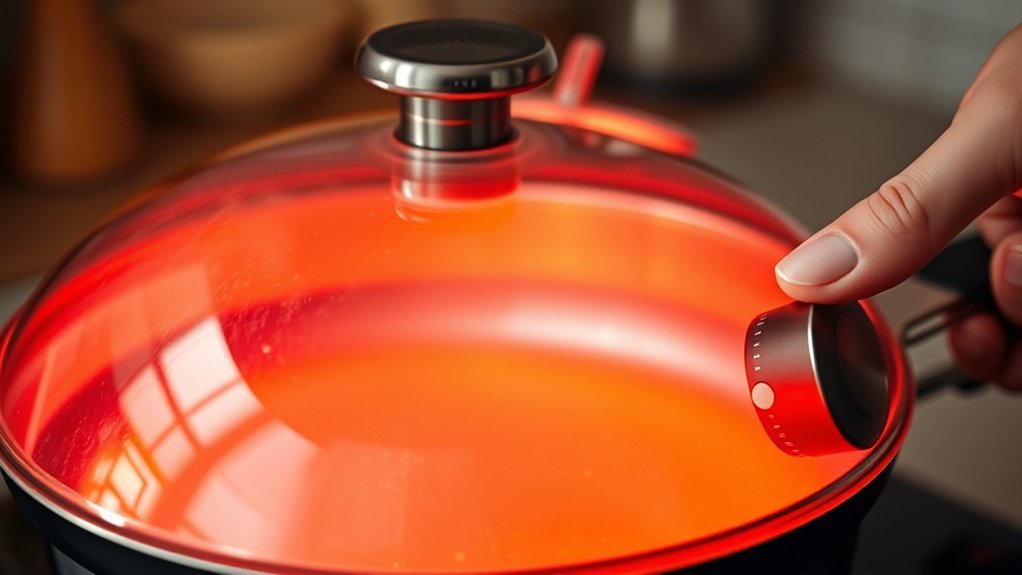

When you set your electric skillet to medium heat, you’re aiming for a temperature between 300°F and 350°F.
This medium heat range offers controlled cooking that prevents burning while allowing food to brown evenly and retain moisture.
Understanding how this setting compares to low and high heat can help you achieve better results.
But how exactly do you identify and maintain this temperature on your specific skillet?
Knowing the nuances of medium heat in an electric skillet ensures your dishes come out perfectly cooked every time.
With a bit of practice, you’ll be able to adjust and monitor the temperature for optimal cooking performance.
Key Takeaways
- Medium heat in an electric skillet ranges from 300°F to 350°F (149°C to 177°C) for balanced, even cooking without burning.
- It sits between low (200°F–250°F) and high heat (>350°F), enabling controlled browning and moisture retention.
- Medium heat supports the Maillard reaction, producing golden crusts while keeping food tender and juicy.
- Preheat the skillet for 3 to 5 minutes at medium and verify temperature with a thermometer or water test.
- Avoid overcrowding and monitor temperature stability to maintain consistent medium heat during cooking.
What Temperature Is Medium Heat on an Electric Skillet?
How do you define medium heat on an electric skillet? Medium heat typically falls between 300°F and 350°F (149°C to 177°C). This range allows you to cook foods evenly without burning or undercooking.
When setting your skillet, avoid engaging in irrelevant topic or off topic discussion about unrelated cooking methods or appliance types, as it only distracts from understanding the precise temperature control needed. Manufacturers usually mark medium heat settings numerically or with a dial, but actual temperatures can vary.
Using a thermometer can help you confirm the exact temperature. Maintaining medium heat ensures optimal cooking results, especially for sautéing, frying, or simmering, where controlled temperature is critical. Avoid confusing this with low or high heat settings, which differ significantly in temperature and cooking outcomes.
How Does Medium Heat Differ From Low and High Settings?
You’ll find that medium heat on an electric skillet typically ranges between 300°F and 350°F, sitting squarely between low and high settings. This temperature range allows for steady cooking without burning or undercooking your food.
Understanding these differences helps you control cooking effects like browning, simmering, and searing more accurately.
Temperature Range Explained
Where does medium heat fall within the temperature scale of an electric skillet? Medium heat typically ranges between 275°F and 325°F (135°C to 163°C). This setting sits between low heat, which usually ranges from 200°F to 250°F, and high heat, which exceeds 350°F.
Understanding these ranges helps you pinpoint the exact temperature needed for your cooking tasks. Medium heat provides a balanced environment that’s hot enough to brown foods without burning, unlike high heat, which can quickly char surfaces. Low heat, conversely, gently simmers or keeps food warm.
Avoid confusing this with unrelated topic discussions like appliance wattage or surface materials, which are two word discussion ideas but don’t directly affect temperature ranges. Focusing on precise temperature control ensures consistent cooking results every time.
Cooking Effects Compared
Medium heat offers a controlled balance between the gentle simmer of low heat and the intense sear of high heat. When you cook on low, you prioritize culinary hydration, allowing moisture to remain within ingredients, which suits slow-cooked dishes.
High heat, in contrast, rapidly evaporates moisture, creating a crisp exterior but risking dryness and uneven cooking. Medium heat strikes the optimal contrast ethics, balancing moisture retention and Maillard reaction for flavor development without burning.
You get even cooking at a temperature that’s hot enough to brown food efficiently but gentle enough to prevent scorching. This setting is ideal for sautéing and pan-frying when you want texture and juiciness.
Understanding these cooking effects helps you harness your electric skillet’s versatility, ensuring precise control over moisture and browning outcomes.
Why Use Medium Heat for Electric Skillet Cooking?
You use medium heat in an electric skillet because it provides a balanced cooking temperature that evenly cooks your food without burning. It helps you avoid scorching while maintaining energy efficiency during cooking.
This setting optimizes both food quality and power consumption.
Balanced Cooking Temperature
Why choose a balanced cooking temperature when using an electric skillet? Medium heat offers you a controlled environment for balanced simmering, which is essential for cooking most dishes evenly without overheating.
This temperature range allows you to maintain consistent heat distribution, which prevents hot spots and guarantees thorough cooking. By precise dialing of your electric skillet’s temperature settings, you can achieve this balance effortlessly.
Medium heat is neither too low to undercook nor too high to cause rapid moisture loss. This controlled thermal environment supports the Maillard reaction at a moderate pace, enhancing flavor development while preserving texture.
Using medium heat optimizes your cooking process, allowing you to fine-tune results with minimal adjustments and achieve professional-quality dishes every time.
Prevents Food Burning
Maintaining a balanced cooking temperature naturally reduces the risk of burning food when using an electric skillet. Medium heat offers optimal drizzle management and browning control, allowing you to cook evenly without scorching. It prevents hot spots that cause food to burn while ensuring consistent heat distribution.
| Factor | Impact on Cooking |
|---|---|
| Drizzle Management | Controls oil flow, reduces burning risk |
| Browning Control | Ensures even color, prevents overcooking |
| Heat Distribution | Avoids hot spots, promotes uniform cooking |
| Temperature Stability | Maintains consistent medium heat level |
| Cooking Duration | Extends safe cooking time, reduces burnt flavor |
Energy Efficiency Benefits
Medium heat on an electric skillet often improves energy efficiency by balancing power use with effective cooking performance. When you select medium heat, the skillet maintains temperature stability, preventing excessive power cycling that wastes energy.
This stable temperature reduces fluctuations that cause the heating element to repeatedly turn on and off, promoting continuous, efficient operation. By avoiding high heat settings, you minimize energy spikes and improve overall energy savings without compromising cooking quality.
Medium heat allows the skillet to reach and sustain an optimal temperature range suitable for most recipes, ensuring consistent results while conserving energy. You’ll notice that this approach not only lowers electricity use but also extends the lifespan of the appliance by reducing thermal stress on its components.
How to Set Your Electric Skillet to Medium Heat
How do you accurately set your electric skillet to medium heat? First, locate the temperature control dial or digital panel on your electric skillet. Medium heat typically corresponds to a range between 300°F and 350°F (149°C to 177°C).
If your skillet has temperature markings, set the dial within this range. For digital controls, select the medium heat option or manually input a temperature around 325°F (163°C). Allow the skillet to preheat for 3 to 5 minutes to stabilize at the medium heat setting.
Use an infrared thermometer or test with a drop of water; it should sizzle moderately without evaporating instantly. Adjust the dial slightly if the skillet runs too hot or too cool. This precise approach ensures consistent cooking performance at medium heat.
Which Foods Cook Best at Medium Heat?
Which foods benefit most from medium heat in an electric skillet? Medium heat suits items that require even cooking without burning. You’ll want to use it for proteins like chicken breasts and pork chops, vegetables such as bell peppers and zucchini, and even eggs. These foods need controlled heat to cook through properly while preserving moisture and texture.
Here’s a quick reference table for two word discussion ideas about foods ideal for medium heat:
| Proteins | Vegetables |
|---|---|
| Chicken breasts | Bell peppers |
| Pork chops | Zucchini |
| Eggs | Mushrooms |
Avoid unrelated topics like baking or frying at high temperatures here. Focusing on these targeted foods ensures your medium heat application is precise and effective.
How Medium Heat Changes Cooking Time and Texture
When you use medium heat in an electric skillet, it extends the cooking time compared to high heat, allowing for more even internal temperature development. This controlled heat helps maintain moisture, resulting in a tender texture rather than a dry or tough finish.
Understanding this balance is key to optimizing both cooking duration and food quality.
Impact On Cooking Duration
Why does setting your electric skillet to medium heat matter for cooking duration and texture? Medium heat provides a balanced temperature that controls cooking time effectively. You’ll notice tactile feedback when stirring, and skillet noise diminishes, signaling steady heat.
This balance prevents burning and uneven cooking, allowing food to cook thoroughly without rushing.
| Food Type | Cooking Time (Minutes) | Notes |
|---|---|---|
| Chicken Breast | 10-12 | Juicy, evenly cooked |
| Vegetables | 6-8 | Retain crunch, vibrant color |
| Fish Fillets | 5-7 | Tender, flaky texture |
| Pancakes | 3-4 per side | Golden, uniform browning |
| Stir-fry | 8-10 | Even cooking, no sogginess |
Using medium heat optimizes cooking duration and enhances texture control precisely.
Effects On Food Texture
A medium heat setting in your electric skillet directly influences the texture of your food by regulating the rate at which moisture evaporates and proteins denature. This balance prevents dissonant textures and greasy crusts, ensuring uniform doneness and mouthfeel.
When cooking at medium heat, you’ll notice:
- Even moisture retention, avoiding sogginess or dryness.
- Gradual protein coagulation, producing tender, juicy results.
- Controlled Maillard reaction, forming a golden, non-greasy crust.
- Reduced risk of burning or undercooking, preserving texture integrity.
What Common Mistakes Should You Avoid When Cooking at Medium Heat?
How can you guarantee consistent results when cooking at medium heat in an electric skillet? Avoid compromising culinary precision by not monitoring temperature stability. One common mistake is overcrowding the skillet, which lowers the internal temperature and disrupts even cooking.
Another error is neglecting to preheat the skillet properly; without reaching the target medium heat, food cooks unevenly. Also, don’t rely solely on visual cues; use a thermometer or the skillet’s temperature controls to maintain accurate heat.
Avoid frequent lifting of the lid or stirring excessively, as these actions cause temperature fluctuations. Lastly, resist using inappropriate oils with low smoke points, as they can burn at medium heat, affecting flavor and safety. Preventing these errors ensures you harness the full benefits of medium heat efficiently and reliably.
How to Maintain Consistent Medium Heat on Your Electric Skillet
Maintaining consistent medium heat on your electric skillet demands careful control and monitoring of its temperature settings. To achieve this, avoid introducing irrelevant topic shifts or misplaced context during your cooking process, which can distract from maintaining steady heat.
Maintaining steady medium heat requires focused control and avoiding distractions during your cooking process.
Follow these steps:
- Preheat the skillet to the manufacturer’s recommended medium setting before adding food.
- Use the built-in thermostat or temperature dial to keep the heat stable.
- Avoid frequently lifting the lid, which causes heat fluctuations.
- Stir food evenly to distribute heat and prevent hot spots.
How to Test and Adjust Medium Heat on Your Electric Skillet
When should you test the medium heat setting on your electric skillet to assure it matches your cooking needs? Test it before cooking a recipe that relies on precise temperature control or complex flavor pairing. Use a random technique: heat water until it simmers steadily, then adjust the dial accordingly.
Here’s a quick guide to calibrate:
| Test Step | Expected Result |
|---|---|
| Heat skillet empty | Surface warms evenly |
| Add 1 tbsp oil | Oil shimmers, not smokes |
| Place drop of water | Water dances, then evaporates |
| Adjust heat dial | Maintain steady simmer |
Repeat this process until the skillet maintains consistent medium heat. This method ensures optimal cooking performance and prevents flavor loss or burning.
When Should You Use Medium Heat Versus Other Settings on an Electric Skillet?
Why choose medium heat over low or high settings on your electric skillet? Medium heat offers balanced control, preventing burning or undercooking. You’ll use it when precise temperature management is essential, unlike unrelated topics or two word discussion ideas that don’t affect cooking.
Use medium heat when:
- Searing meats without charring the exterior.
- Cooking delicate items like eggs or pancakes evenly.
- Simmering sauces to avoid rapid boiling.
- Reheating food to maintain texture and flavor.
Low heat suits slow cooking or warming, while high heat is ideal for rapid searing or frying. Understanding when to switch between these settings ensures optimal results and prevents damage to your skillet or food. Medium heat strikes the perfect balance for most everyday cooking tasks.
Frequently Asked Questions
Can I Use Medium Heat on an Electric Skillet for Baking?
Yes, you can use medium heat on an electric skillet for baking. Adjust skillet heat settings carefully to maintain consistent temperature, ensuring even cooking.
Baking with medium heat suits recipes needing moderate, steady heat without burning or undercooking.
Does Medium Heat Affect the Electric Skillet’s Energy Consumption?
Yes, using medium heat improves energy efficiency by maintaining stable temperature control, preventing excessive power draw.
You’ll use less energy than on high heat, as the skillet cycles power to keep consistent cooking temperatures efficiently.
Is Medium Heat Safe for Non-Stick Electric Skillets?
You won’t scorch your skillet’s soul. Medium heat guarantees nonstick safety by preventing coating breakdown. Through precise heat testing, you can confidently cook without damaging the surface, maintaining durability and performance for every meal you prepare.
How Long Does It Take to Preheat an Electric Skillet to Medium Heat?
You’ll typically need 5 to 7 minutes of preheating timing to reach medium heat in an electric skillet.
Ensure heat consistency by allowing the skillet to fully stabilize before adding food for optimal cooking results.
Can I Leave an Electric Skillet on Medium Heat Unattended?
You shouldn’t leave an electric skillet on medium heat unattended due to safety risks; 60% of kitchen fires start from unattended cooking. Its heat retention can cause overheating or fire, so always monitor it closely for safe use.
Conclusion
Mastering medium heat on your electric skillet is like wielding a culinary superpower—it perfectly balances temperature to prevent burning or undercooking. By aiming for 300°F to 350°F, you unleash even browning and ideal moisture retention, transforming ordinary meals into extraordinary dishes.
Don’t underestimate this setting; it’s your secret weapon for sautéing, pan-frying, and beyond. Nail medium heat, and you’ll cook with precision and consistency every single time—no guesswork, just perfect results.
Understanding what is medium heat in an electric skillet is key to unlocking these benefits and elevating your cooking game.