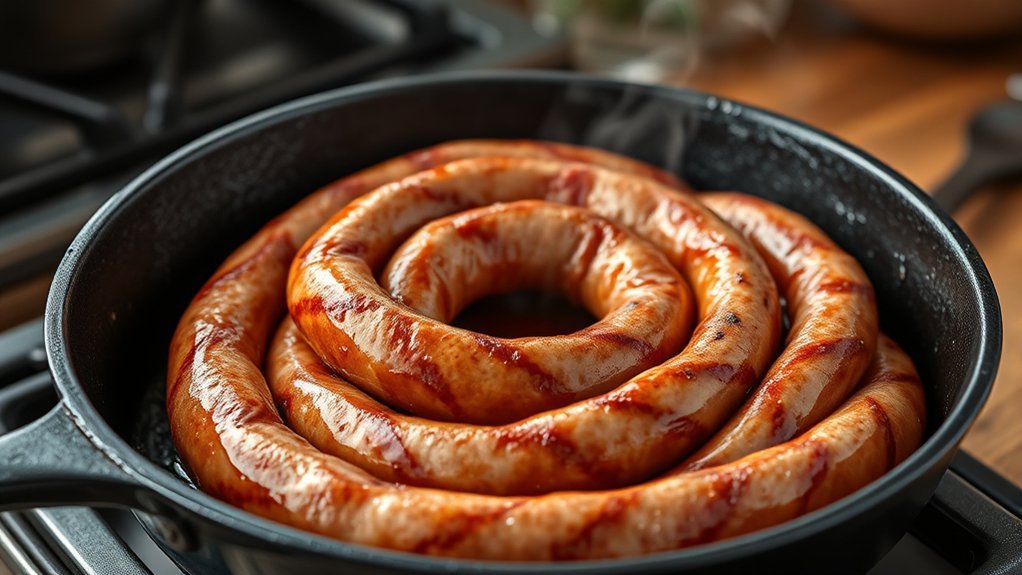

You want to achieve even browning, maintain juiciness, and ensure thorough cooking when preparing rope sausage in a skillet. To do this, you’ll need to properly preheat your pan, handle the sausage with care, and monitor the heat closely. Mastering these steps will elevate your cooking technique and guarantee a satisfying result.
But before you start, there are key preparations you shouldn’t overlook. Taking the time to prepare properly will make cooking rope sausage in a skillet much easier and more enjoyable. With the right approach, you’ll get delicious, perfectly cooked sausage every time.
Key Takeaways
- Preheat a clean skillet over medium-high heat for 3–5 minutes until water sizzles on contact.
- Pat rope sausage dry, score the casing to prevent bursting, and cut into uniform pieces if desired.
- Cook sausage over medium heat, turning regularly for even browning and consistent cooking.
- Monitor internal temperature, aiming for 160°F (71°C) for pork or 165°F (74°C) for poultry sausage.
- Let sausage rest after cooking to redistribute juices and enhance texture before serving.
How to Choose the Best Rope Sausage for Your Skillet
How do you select the best rope sausage for your skillet to ensure optimal flavor and cooking results? Start by learning how to source rope sausage from reputable butchers or specialty stores that prioritize quality and freshness.
Look for sausages made with high-grade meats and natural casings, avoiding those with excessive fillers or preservatives. When choosing, consider the type of seasoning and fat content, as these directly impact flavor and cooking behavior.
Once purchased, knowing how to store rope sausage correctly is crucial: keep it refrigerated at or below 40°F, ideally in its original packaging or tightly wrapped to prevent drying out. Proper sourcing and storage maintain the sausage’s texture and taste, setting the foundation for an exceptional skillet-cooked meal.
How to Prepare Rope Sausage for Skillet Cooking
Preparing rope sausage for skillet cooking starts with properly handling and cutting the sausage to ensure even cooking and optimal flavor release. Begin by inspecting the sausage for any packaging damage, adhering to clearance protocols to avoid contamination.
Using a sharp knife, cut the sausage into uniform pieces to promote consistent heat distribution. Always maintain kitchen safety by keeping your workspace clean and sanitized. Wash your hands thoroughly before and after handling raw sausage to prevent cross-contamination.
Remove any casing if desired, though it’s often edible and helps retain moisture. Place the cut sausage on a clean plate, ready for cooking. Following these steps ensures your rope sausage is prepped efficiently and safely, setting the stage for a delicious skillet meal without compromising hygiene or quality.
How to Heat Your Skillet for Perfect Rope Sausage Searing
Before adding your rope sausage, preheat your skillet over medium-high heat to ensure even searing and prevent sticking. Allow the pan to reach the ideal temperature by heating it for about 3-5 minutes; you can test this by flicking a few drops of water onto the surface. If they sizzle and evaporate immediately, the skillet is ready.
Use a high-quality, clean skillet to maintain consistent heat distribution. Prior to heating, thoroughly clean your skillet using appropriate cleaning brushes to remove any residue, ensuring optimal kitchen sanitation. Proper cleaning prevents unwanted flavors and maintains the integrity of your skillet’s surface.
Avoid overheating, which can damage the pan and impact cooking performance. This careful preparation sets the stage for perfectly seared rope sausage.
How to Cook Rope Sausage in a Skillet
Before cooking, make sure to pat your rope sausage dry and score the casing to prevent bursting.
Place the sausage in the heated skillet and cook over medium heat, turning regularly to ensure even browning. Keep an eye on the internal temperature and use gentle heat to maintain juiciness and flavor.
Preparing The Sausage
How do you get your rope sausage ready for the skillet to ensure even cooking and optimal flavor? Start by selecting high-quality rope sausage; choosing rope with a consistent diameter and fresh ingredients guarantees better texture and taste.
Follow proper storage guidelines. Keep the sausage refrigerated at or below 40°F and use it within the recommended timeframe to maintain freshness and prevent spoilage.
Before cooking, allow the sausage to reach room temperature for about 15 minutes. This step promotes uniform heat distribution.
If the sausage is linked, separate it into manageable portions, but avoid piercing the casing to retain juices. Finally, pat the sausage dry with a paper towel to remove excess moisture, which helps achieve a well-browned exterior when it hits the skillet.
Cooking Techniques And Tips
With your rope sausage properly prepared and at room temperature, you’re ready to cook it in the skillet. Use techniques that enhance the sausage’s tender crumb and bring out a rich, smoky aroma. Start by heating the skillet over medium heat, adding a small amount of oil to prevent sticking.
- Place the sausage in the skillet without overcrowding.
- Cook evenly by turning the sausage every 3-4 minutes.
- Use a lid occasionally to retain moisture and ensure a tender crumb.
- Avoid piercing the casing to keep juices inside.
- Cook until the internal temperature reaches 160°F (71°C) for safety and optimal flavor.
These tips ensure your rope sausage cooks evenly, stays juicy, and fills your kitchen with a delicious smoky aroma.
How to Tell When Your Rope Sausage Is Fully Cooked
You’ll know your rope sausage is fully cooked when it reaches an internal temperature of 160°F (71°C). Look for a firm texture and a golden-brown exterior as visual cues.
Cutting into the sausage should reveal no pink inside, confirming it’s safe to eat.
Internal Temperature Guidelines
When can you be certain that your rope sausage is fully cooked and safe to eat? The key is monitoring the internal temperature using a reliable meat thermometer. This ensures you meet the cropped temperature required for safe handling and consumption. Follow these guidelines:
- Insert the thermometer into the thickest part of the sausage without touching the skillet.
- Ensure the internal temperature reaches at least 160°F (71°C) for pork or beef sausage.
- For poultry-based rope sausages, aim for 165°F (74°C).
- Avoid guessing; rely on temperature rather than time alone.
- Let the sausage rest for a few minutes after cooking to allow juices to redistribute.
Visual And Texture Cues
The appearance and feel of rope sausage provide reliable indicators of doneness alongside temperature checks. When fully cooked, the sausage’s casing will have a golden-brown color with slight crispness, signaling proper heat distribution in your skillet.
Press gently on the sausage with a spatula; it should feel firm but still slightly springy, not soft or mushy. Juices released should be clear, not pink or bloody, which you can catch with a drip pan placed under the skillet to monitor.
Avoid overcooking, which makes the sausage tough and dry. Consistent heat distribution ensures even cooking, preventing raw spots. Combining these visual and texture cues with temperature measurements ensures your rope sausage is perfectly cooked, safe, and delicious every time.
Tips for Crispy, Juicy Rope Sausage Every Time
Achieving a perfectly crispy and juicy rope sausage starts with controlling the heat and preparation. To get that ideal crispy texture while maintaining moisture inside, follow these tips:
Preheat your skillet on medium heat to avoid burning the casing. Pat the sausage dry before cooking to enhance browning and crispiness.
Cook the sausage slowly, turning frequently to ensure even spice balance and prevent drying out. Use a small amount of oil or butter to help crisp the exterior without making it greasy.
Let the sausage rest for a few minutes off the heat to redistribute juices, locking in moisture.
Flavor Variations and Seasonings for Rope Sausage
How can you elevate the flavor of your rope sausage beyond the classic taste? Start by experimenting with regional blends like Cajun, Italian, or German seasonings to add distinctive, authentic notes. Incorporate spices such as smoked paprika, fennel seeds, or crushed red pepper to tailor the flavor profile precisely to your preference.
Don’t overlook topping ideas that complement the sausage’s richness. Try caramelized onions, sautéed peppers, or a drizzle of mustard-based sauces for added depth. You can also mix fresh herbs like rosemary or thyme into the skillet during cooking to infuse subtle aromatics.
Easy Side Dishes to Serve With Skillet-Cooked Rope Sausage
What pairs best with skillet-cooked rope sausage to create a balanced meal? Choosing the right two word ideas for side dishes enhances both flavor and nutrition. You’ll want sides that complement the rich, savory profile of rope sausage without overpowering it.
Consider these easy options:
- Roasted vegetables
- Mashed potatoes
- Sautéed greens
- Garlic bread
- Coleslaw
Roasted vegetables add a healthy crunch, while mashed potatoes provide creamy comfort. Sautéed greens like spinach or kale introduce freshness, and garlic bread offers a satisfying, crunchy contrast. Coleslaw brings a tangy, crisp texture that balances the sausage’s richness.
These sides are simple to prepare and pair perfectly with your skillet-cooked rope sausage, helping you serve a well-rounded, flavorful meal every time.
Frequently Asked Questions
Can I Freeze Cooked Rope Sausage for Later Use?
You can freeze cooked rope sausage for later use, but keep in mind freeze options may cause slight texture changes. To maintain quality, wrap it tightly and consume within 1-2 months for the best taste and texture.
What Type of Skillet Is Best for Cooking Rope Sausage?
You want the best skillet that hugs heat like an old friend: cast iron. It distributes warmth evenly, searing your rope sausage to perfection, locking flavors inside while giving you precise, professional control over every sizzling moment.
How Long Can Cooked Rope Sausage Be Stored in the Refrigerator?
You can store cooked rope sausage in the refrigerator for 3 to 4 days. For longer storage duration, freeze it in an airtight container, which preserves flavor and texture for up to 2 months.
Is It Necessary to Prick the Sausage Before Cooking?
You don’t need to prick sausage before cooking; doing so can release juices and dry it out.
Choosing not to prick sausage preserves flavor and moisture, making it a better cooking method for skillet preparation.
Can I Cook Rope Sausage on a Grill Instead of a Skillet?
Grilling rope sausage is like tuning a guitar; you need precise heat management and grilling techniques for perfect results. Use medium heat, turn regularly, and avoid flare-ups to keep the sausage juicy and evenly cooked on your grill.
Conclusion
Cooking rope sausage in a skillet is simple and satisfying when you select quality sausage, prepare it properly, and perfect your pan technique. Remember to maintain medium heat, monitor internal temperature meticulously, and turn the sausage to ensure even, enticingly browned edges.
With careful care, you’ll create crispy, juicy, and flavorful rope sausage every time. Savor the skillful sear, and serve with splendid sides for a sensational, satisfying meal.
Mastering these steps will guarantee a delicious result when you cook rope sausage in a skillet.