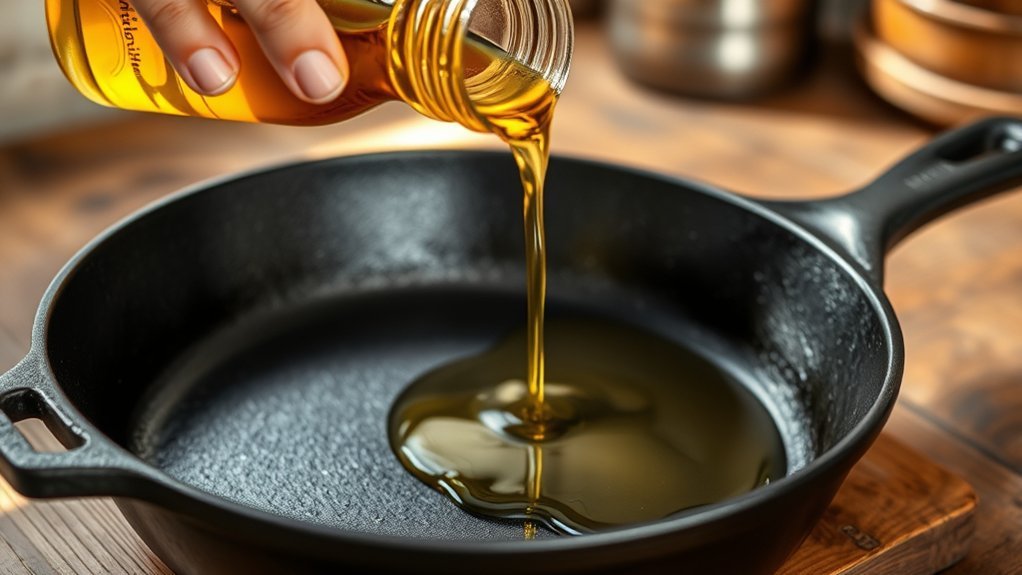

You might not realize that adding oil to a cast iron skillet isn’t just about cooking—it’s essential for building a protective, non-stick layer and preventing rust. Adding oil to a cast iron skillet correctly can transform your skillet’s performance and longevity.
Applying the right kind of oil is key. But how often should you oil it, and which oils work best? Understanding these details will help you maintain your skillet in top condition.
By following proper oiling techniques, you can avoid common pitfalls and keep your cast iron skillet durable and efficient for years to come.
Key Takeaways
- Yes, oiling a cast iron skillet maintains seasoning and creates a non-stick cooking surface.
- Apply oil after thorough cleaning or when the surface looks dry, dull, or shows rust spots.
- Use high-smoke-point oils like flaxseed, grapeseed, or vegetable oil for best seasoning results.
- Apply a thin, even oil layer, warm the skillet, and bake at 450°F to polymerize the seasoning.
- Reapply oil periodically every 5 to 10 uses or when food starts sticking to maintain durability.
Why and When to Add Oil to Your Cast Iron Skillet
Adding oil to your cast iron skillet is essential for maintaining its seasoning and ensuring even cooking. You should add oil before cooking to create a non-stick surface and protect the pan from moisture-induced rust.
The seasoning frequency depends on your cooking habits; frequent use with oily foods reduces the need for re-seasoning, while cooking acidic or sticky foods may require more regular oil application.
Proper oil storage is crucial. Keep your cooking oils in a cool, dark place to prevent rancidity, which can affect the skillet’s performance.
How to Oil Your Cast Iron Skillet for Seasoning
How exactly should you oil your cast iron skillet to build a durable, non-stick seasoning layer? The key lies in a consistent oiling technique paired with an understanding of seasoning frequency.
First, choose a high-smoke-point oil like flaxseed, grapeseed, or vegetable oil. Then, apply a thin, even layer across the entire skillet, inside and out. Avoid excess oil; too much leads to sticky residue.
Select a high-smoke-point oil and apply a thin, even coat inside and out to prevent stickiness.
Follow these steps:
- Warm the skillet slightly to open pores for better oil absorption.
- Use a lint-free cloth or paper towel for a thin, uniform coat.
- Bake the oiled skillet upside down at 450°F for an hour to polymerize the oil.
Mastering this oiling technique ensures your skillet develops a robust, lasting seasoning that enhances cooking performance.
How Often to Oil Your Cast Iron Skillet to Keep It Non-Stick
You should oil your cast iron skillet regularly to maintain its non-stick surface, typically after every few uses or whenever you notice food starting to stick.
Look for dull spots or rust as clear signs your skillet needs oiling. Applying a thin, even layer of oil and heating the skillet properly ensures the best results.
Frequency Of Oiling
When should you oil your cast iron skillet to maintain its non-stick surface? Understanding the seasoning science helps you establish an effective maintenance cadence. You don’t need to oil it after every use, but regular attention is essential to preserve the skillet’s performance.
Consider these guidelines for frequency of oiling:
- After thorough cleaning, especially if you used soap or scrubbed vigorously
- Periodically during heavy use, roughly every 5-10 cooking sessions, to reinforce the seasoning layer
- Anytime the skillet’s surface looks dry or dull, signaling a need for replenishing the protective oil
Signs Skillet Needs Oil
Maintaining optimal performance in your cast iron skillet hinges on recognizing clear signs that it needs oil. When the seasoning layer looks dull or uneven, your skillet requires re-oiling to maintain its non-stick surface.
If you notice food sticking more than usual, that’s another signal. Additionally, if the skillet starts oil smoking at lower temperatures, it means the seasoning layer is thinning and needs reinforcement.
| Sign | What It Indicates |
|---|---|
| Dull or patchy seasoning | Seasoning layer is wearing off |
| Food sticks during cooking | Non-stick surface compromised |
| Oil smokes at low heat | Seasoning layer weakened, needs oiling |
Recognizing these signs helps you know exactly when to oil, preserving skillet performance and longevity.
Best Oiling Practices
Although cast iron skillets are durable, regular oiling is essential to preserve their non-stick surface and prevent rust. Proper seasoning timing ensures the oil bonds effectively to the skillet, enhancing oil longevity and durability.
You should apply oil after every thorough cleaning and occasionally between uses if the skillet looks dry.
Consider these best oiling practices:
- Apply a thin, even layer of high-smoke-point oil immediately after washing.
- Heat the skillet briefly to allow the oil to polymerize, reinforcing the seasoning layer.
- Re-season fully every few months or when you notice food sticking, adjusting based on usage frequency and skillet condition.
Best Types of Oil to Use on Cast Iron Skillets
Since the right oil can considerably impact the seasoning and longevity of your cast iron skillet, choosing carefully is essential. You want oil types with high smoke points to withstand the heat without breaking down or creating sticky residues.
Flaxseed oil is often recommended because it polymerizes well, forming a durable, non-stick layer. Grapeseed, canola, and vegetable oils also work due to their neutral flavors and relatively high smoke points.
Avoid oils with low smoke points like extra virgin olive oil for seasoning, as they can burn and leave a sticky finish. Ultimately, selecting the right oil types ensures a robust seasoning layer that improves with use, protecting your skillet and enhancing cooking performance over time.
What Happens If You Don’t Add Oil to Your Cast Iron Skillet
What happens when you skip adding oil to your cast iron skillet? Without oil, you compromise the skillet’s essential nonstick maintenance, making food more likely to stick and burn. This reduces the skillet’s efficiency and lifespan.
Skipping oil on your cast iron skillet leads to sticking, burning, and reduced lifespan.
Additionally, oil plays a pivotal role in heat distribution; without it, you risk uneven cooking and potential hot spots. Over time, neglecting oil can also lead to rust formation, damaging the skillet’s surface.
Here’s what you can expect if you don’t add oil:
- Increased food sticking, complicating cooking and cleaning
- Uneven heat distribution, resulting in inconsistent cooking results
- Accelerated wear and risk of rust, shortening skillet durability
To preserve your cast iron skillet’s performance, consistent oil application is key.
Fixing Common Oiling Problems in Cast Iron Skillets
You need to get the oil quantity just right. Too much can leave a sticky residue, while too little won’t protect your skillet. Choosing the proper oil type is equally important to maintain a smooth, durable seasoning.
Let’s address these common oiling problems to keep your cast iron performing at its best.
Identifying Oil Quantity Issues
How do you know if you’re applying the right amount of oil to your cast iron skillet? Identifying oil quantity issues is crucial for optimal seasoning and cooking performance.
Too little oil leaves the surface unprotected, causing food to stick and the skillet to rust. Too much oil results in a sticky, uneven coating.
Watch for these signs to diagnose quantity problems:
- Dry patches or rust spots indicate under-oiling.
- Sticky or gummy residue signals excess oil.
- Uneven seasoning color suggests inconsistent oil application.
Preventing Sticky Residue
Why does your cast iron skillet develop a sticky residue after seasoning? This usually happens when the oil hasn’t fully polymerized, often due to incorrect preheating temperature or insufficient polymerization timing.
To prevent this, ensure you preheat your oven or skillet to the recommended temperature, typically around 450–500°F (232–260°C), before applying oil. This temperature range allows the oil to bond correctly with the iron surface.
Next, maintain precise polymerization timing; baking the skillet for at least one hour lets the oil fully cure, forming a durable, non-sticky layer. Rushing this process or using lower temperatures causes incomplete polymerization, resulting in a tacky finish.
Choosing Proper Oil Types
Which oil you choose plays a pivotal role in achieving a durable, non-sticky seasoning on your cast iron skillet. Different oil types respond uniquely to seasoning methods, affecting the skillet’s performance and longevity.
You should prioritize oils with high smoke points and good polymerization qualities. Consider these options:
- Flaxseed oil: Renowned for creating a hard, durable layer due to its excellent drying properties but requires careful application.
- Grapeseed oil: Offers a high smoke point and polymerizes well, making it ideal for seasoning.
- Canola oil: Widely available with a moderate smoke point, suitable for beginners practicing seasoning methods.
Selecting the right oil type ensures consistent seasoning layers, prevents sticky residues, and enhances your skillet’s non-stick surface. Choose wisely to optimize your cast iron’s durability and cooking efficiency.
Frequently Asked Questions
Can I Add Oil to a Cast Iron Skillet Before Cooking Acidic Foods?
You can add oil before cooking acidic foods, but avoid overheating to prevent oil smoking and damaging your skillet’s seasoning build up.
Use a well-seasoned pan and moderate heat for the best results without compromising flavor.
Is It Safe to Add Scented or Flavored Oils to Cast Iron Skillets?
You shouldn’t use scented oils or infused oils in cast iron skillets because their additives can burn, leaving unpleasant flavors and residues.
Stick to neutral oils for seasoning and cooking to maintain your skillet’s quality and safety.
Can Adding Oil to a Cast Iron Skillet Cause Smoke During Cooking?
Oil smoke can both hinder and help your cooking; when you add oil, it improves heat transfer but overheating causes smoke.
Managing temperature precisely prevents smoke and ensures your cast iron skillet performs optimal every time.
How Do I Store a Cast Iron Skillet After Oiling It?
After oiling, store your cast iron skillet in a dry place with good air circulation to prevent rust. Use a paper towel to wipe excess oil, ensuring proper store care and maintaining the skillet’s oil health for longevity.
Does Adding Oil Affect the Cooking Temperature of a Cast Iron Skillet?
Adding oil slightly raises the skillet’s surface temperature due to seasoning effects, improving heat retention. You’ll notice a more even oil temperature, which enhances cooking performance without drastically changing how hot your cast iron gets.
Conclusion
Think of oiling your cast iron skillet like giving your car a fresh coat of wax—it’s not just about shine but protection and performance. Skipping this step is like driving unprotected in the rain; rust and stickiness are inevitable.
By regularly applying a thin layer of high-smoke-point oil and baking it in, you guarantee your skillet stays as reliable and smooth as the day you bought it. Keep this ritual, and your cast iron skillet will reward you for decades.