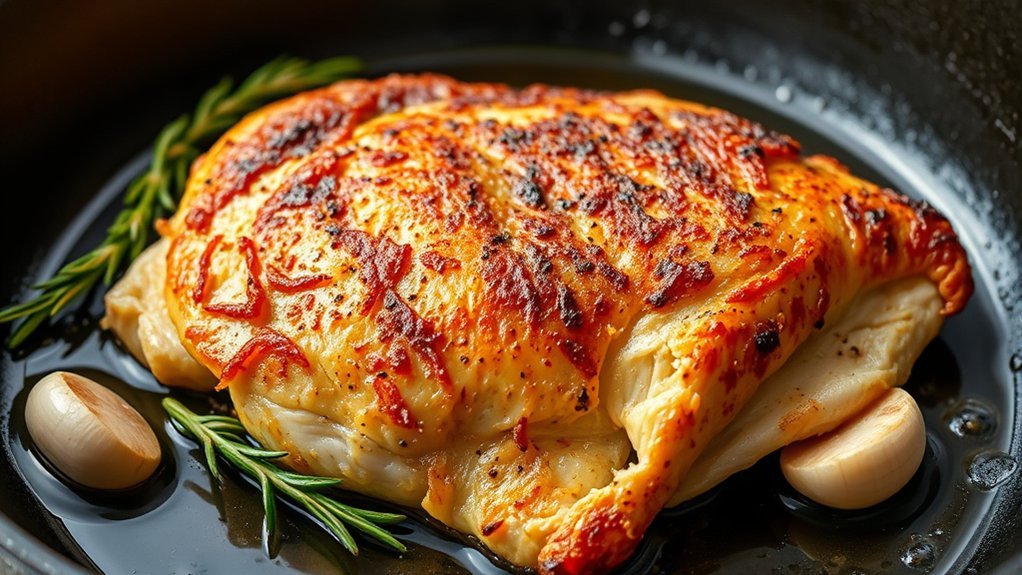

You might expect chicken breast to dry out quickly, yet when cooked properly in a cast iron skillet, it turns remarkably juicy and tender. Making juicy chicken breast in a cast iron skillet requires precise heat control and preparation techniques that many overlook.
By mastering these steps, you’ll reveal a reliably moist texture and rich flavor that standard methods can’t match. Let’s examine the critical factors that make this possible.
Key Takeaways
- Preheat the cast iron skillet on medium-high heat for at least 5 minutes until very hot to ensure a perfect sear and crust formation.
- Pound chicken breasts to an even thickness to promote uniform cooking and prevent dry edges or undercooked centers.
- Season chicken with layered spices before searing and avoid overcrowding the pan to maintain heat and proper caramelization.
- Cook skin-side down for 5–7 minutes without moving, then flip and cook 4–6 minutes until reaching 165°F internal temperature.
- Rest cooked chicken for 5 minutes to redistribute juices, ensuring maximum tenderness and juiciness before slicing.
Why Cast Iron Is Best for Juicy Chicken Breast
Why choose a cast iron skillet for cooking chicken breast? Because it excels at retaining and distributing heat evenly, ensuring consistent cooking. When you pan sear chicken breast in cast iron, the skillet maintains a high temperature, creating a perfect Maillard reaction that locks in moisture.
This process is critical for achieving a juicy texture, as it forms a flavorful crust that prevents the juices from escaping. Unlike other pans, cast iron’s heat retention minimizes temperature fluctuations, so you avoid overcooking the exterior while undercooking the interior.
Additionally, cast iron’s surface naturally improves seasoning over time, enhancing non-stick properties and flavor development. Using cast iron for pan searing chicken breast is a precise method to produce tender, juicy results with superior texture every time.
Choose the Best Chicken Breast for Juicy Results
Mastering heat retention with a cast iron skillet sets the stage, but selecting the right chicken breast is equally important for achieving juicy results. Opt for fresh, high-quality chicken breasts with a uniform thickness to promote even cooking and maintain a consistent juicy texture.
Master heat retention with cast iron and choose uniform, fresh chicken breasts for perfectly juicy results.
Avoid overly large portions, as thicker cuts risk drying out before the center cooks through. Ideal portion size ranges between 6 to 8 ounces, balancing cook time and moisture retention.
Look for chicken with minimal surface moisture to ensure proper searing and caramelization in your skillet, which enhances flavor and juiciness. Additionally, consider bone-in, skin-on breasts if you want extra moisture and flavor, though boneless skinless breasts are easier to handle.
Your choice directly impacts the final tenderness and succulence of your dish.
Prep Chicken Breast for Juicy Results
You’ll start by thawing your chicken breast gradually in the refrigerator to maintain texture and prevent bacterial growth. Next, use a meat mallet or rolling pin to pound the breast to an even thickness, ensuring uniform cooking.
These steps are essential for achieving juicy, tender results in your cast iron skillet.
Proper Chicken Thawing
How should you thaw chicken breast to guarantee it remains juicy and safe to cook? Prioritize thawing safety by planning ahead and avoiding room temperature defrosting, which promotes bacterial growth.
The most reliable method is to transfer chicken from freezer storage to your refrigerator, allowing it to thaw gradually over 24 hours. This controlled environment keeps the meat at a safe temperature, preserving texture and moisture.
For faster thawing, you can seal the chicken in a leak-proof bag and submerge it in cold water, changing the water every 30 minutes. Avoid using hot water or microwaving for thawing, as these methods can cause uneven thawing and partial cooking, compromising juiciness.
Proper thawing is essential to maintain the integrity of your chicken breast before cooking it in your cast iron skillet.
Even Thickness Tips
Why does even thickness matter when prepping chicken breasts? Because it guarantees uniform cooking, preventing overcooked edges and undercooked centers. To achieve this, you’ll want to pound the chicken to an even thickness, typically around ¾ inch.
This technique promotes consistent heat distribution, essential in cast iron skillet cooking.
Proper pan sizing also plays a role; a pan too small crowds the chicken, causing uneven cooking, while a pan too large wastes heat.
| Step | Purpose |
|---|---|
| Pound breast | Achieve even thickness |
| Measure thickness | Confirm uniformity |
| Select pan size | Match pan to breast size |
| Arrange evenly | Prevent overcrowding |
Following these steps guarantees juicy, perfectly cooked chicken every time.
Get Your Cast Iron Skillet Hot for the Best Sear
When should you heat your cast iron skillet to guarantee the perfect sear? You need to preheat it until it reaches a very high temperature, ensuring the skillet is uniformly hot. This step is essential because a hot skillet maximizes sear quality by promoting immediate Maillard reactions, which lock in juices and develop rich flavor.
Use medium-high heat and allow the skillet to heat for at least 5 minutes; you can test readiness by flicking a few drops of water onto the surface. If they sizzle and evaporate instantly, it’s ready. Avoid overcrowding the pan, as that lowers surface temperature and compromises sear quality.
Always preheating your cast iron skillet to the right temperature sets the foundation for juicy, flavorful chicken breasts with an impeccable crust.
Cook Chicken Breast Step-by-Step in a Cast Iron Skillet
Where do you begin once your cast iron skillet is perfectly heated? Start by placing the chicken breast skin-side down, ensuring full contact to initiate juicy searing. Resist moving the chicken prematurely; allow the skillet timing to develop a deep golden crust, usually 5-7 minutes on the first side.
Flip the breast carefully to maintain the sear. Reduce the heat slightly to prevent burning and cook for an additional 4-6 minutes. This controlled skillet timing lets heat penetrate evenly, preserving moisture.
Use a firm, even press to confirm the chicken releases easily from the pan before flipping, signaling a proper sear. By following these precise steps, you optimize the skillet’s heat retention, creating a beautifully caramelized exterior while locking in juiciness throughout the chicken breast.
Check When Your Chicken’s Perfectly Cooked
How can you be certain your chicken breast is perfectly cooked without cutting into it? Rely on objective measures rather than guesswork or a subtopic unrelated to doneness. This two word discussion idea focuses on precision and technique to achieve optimal results.
Use these indicators:
- Internal temperature: 165°F (74°C) ensures safety and juiciness.
- Firmness: Chicken feels springy, not rubbery or overly soft.
- Juices: Clear juices indicate thorough cooking; pink means underdone.
- Color: Even white meat without translucency signals doneness.
- Rest time: Let chicken rest 5 minutes for carryover cooking and juice redistribution.
Avoid cutting early, which releases moisture. Trust these methods to guarantee your chicken breast is perfectly cooked every time, enhancing texture and flavor with no guesswork.
Tips and Flavor Ideas to Keep Your Chicken Juicy and Delicious
You’ll want to master essential techniques like brining and proper resting to lock in moisture for juicy chicken breasts. Incorporate flavor boosters such as garlic, herbs, and citrus to enhance taste without drying out the meat.
Following these strategies ensures your cast iron skillet chicken remains tender and flavorful every time.
Essential Juiciness Techniques
Why does some chicken breast turn out dry while others stay perfectly juicy? The key lies in controlling moisture loss and applying precise techniques. Use a juicy seasoning that includes salt to enhance moisture retention and flavor.
When you pan sear, ensure the skillet is preheated to develop a flavorful crust quickly without overcooking. Follow these essential juiciness techniques:
- Pound breasts to uniform thickness for even cooking
- Pat dry before seasoning to promote browning
- Use medium-high heat for a quick, effective pan sear
- Rest the chicken 5 minutes post-cooking to redistribute juices
- Avoid overcooking; internal temperature should reach 160°F then rest to 165°F
Master these steps to consistently achieve tender, juicy chicken breast.
Flavor Boosting Ideas
Three key flavor-boosting strategies can elevate your chicken breast while maintaining its juiciness. First, optimize marinade times. Thirty minutes to two hours allows acids and enzymes to tenderize without breaking down proteins excessively, preserving juicy textures. Use marinades with balanced acidity (like lemon juice or yogurt) and complementary herbs or spices for depth.
Second, incorporate compound butters or herb-infused oils during or after cooking; this adds concentrated flavor while sealing moisture. Third, employ seasoning layering: season before searing and finish with a light sprinkle of finishing salts or spices to enhance surface flavor without drying the meat.
Frequently Asked Questions
Can I Use Frozen Chicken Breasts in a Cast Iron Skillet?
You shouldn’t cook frozen chicken breasts directly in a cast iron skillet. Proper frozen thaw timing ensures even cooking and safety.
Use safe thaw methods like refrigerator thawing or cold water baths before cooking to avoid bacteria risks and uneven heat.
How Do I Clean My Cast Iron Skillet After Cooking Chicken?
You clean residue by rinsing your cast iron skillet with hot water immediately after cooking. Avoid soap, then dry thoroughly.
Apply a thin oil layer as seasoning tips to maintain non-stick properties and prevent rust.
Is It Necessary to Oil the Skillet Before Cooking Chicken?
Yes, you should oil the skillet before cooking. Oiling the skillet guarantees proper heat transfer and prevents sticking, allowing you to achieve a perfect chicken skin sear.
This locks in juices and enhances flavor with a crispy texture.
Can I Add Vegetables to the Skillet While Cooking Chicken?
You can add vegetables to the skillet, but mastering vegetable timing guarantees flavor balance, like a symphony where each instrument enters precisely.
Add denser veggies first, then softer ones later, so everything cooks evenly and tastes perfect.
How Long Can I Store Cooked Chicken Breast Safely?
You can store cooked chicken breast safely for 3-4 days in the refrigerator. For optimal reheating, heat it to 165°F to prevent bacteria growth and maintain juiciness during the storage duration.
Conclusion
By choosing quality chicken and mastering your cast iron skillet’s heat, you’ll consistently nail juicy, perfectly cooked breasts. It’s no coincidence that a well-prepped pan and careful timing yield that ideal sear and tender interior you crave.
Follow these precise steps, and you’ll never settle for dry chicken again. Trust the technique, monitor temperature closely, and enjoy the satisfying reward of juicy, flavorful chicken every time you cook.
With these tips, making juicy chicken breast in a cast iron skillet becomes easy and reliable, ensuring delicious results every time.