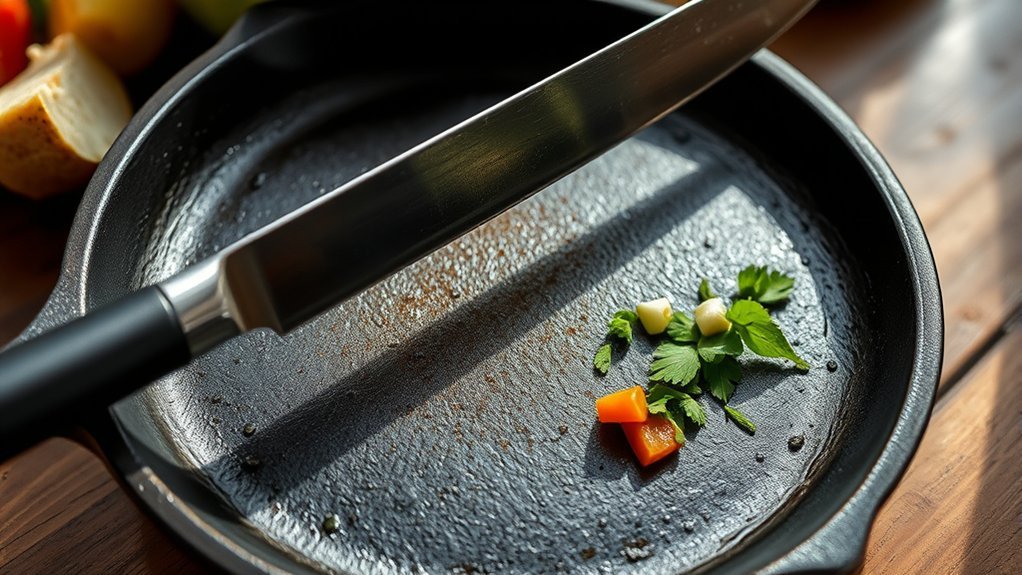

Cutting in a cast iron skillet is a common question among home cooks. It’s like walking a tightrope—you need balance and care to avoid damage.
While it might seem convenient to slice directly in the pan, doing so can dull your knives and harm the skillet’s seasoning.
Understanding when and how this affects your cookware is essential if you want to maintain its performance and lifespan. Before you reach for your knife, consider the implications that follow.
Key Takeaways
- Cutting lightly in a cast iron skillet occasionally won’t significantly damage the seasoned surface or reduce its nonstick properties.
- Avoid heavy chopping or forceful cutting in the skillet to prevent deep scratches, gouges, and damage to the seasoning.
- Use sharp, sturdy knives like chef’s or paring knives with gentle pressure if cutting directly in the skillet is necessary.
- For best care, minimize cutting in the skillet and use a cutting board or silicone/wood mats as protective alternatives.
- Immediately clean, dry, and lightly oil the skillet after cutting to preserve seasoning and prevent rust or surface damage.
Can You Safely Cut Food in a Cast Iron Skillet?
When you cut food directly in a cast iron skillet, you might wonder if it’s safe for both your cookware and your knife. From a cutting safety perspective, cast iron’s hard surface can dull your knife’s edge more quickly than a wooden or plastic cutting board.
To maintain your knife’s sharpness and performance, it’s best to minimize direct cutting on the skillet. However, occasional light slicing won’t damage the cast iron’s seasoned surface.
For optimal knife maintenance, use a proper cutting board whenever possible. If you must cut in the skillet, apply gentle pressure and avoid forceful chopping. This approach ensures both your cast iron skillet and knives remain in excellent condition, balancing convenience with long-term care.
When Does Cutting Damage a Cast Iron Skillet?
Although occasional light slicing in a cast iron skillet won’t harm its seasoned surface, applying excessive force or using sharp knives aggressively can cause damage. Cutting techniques that involve heavy chopping or prying put undue stress on the skillet’s seasoning and can scrape or chip it.
If you press down hard or rock your knife, you risk gouging the iron, especially if the skillet’s surface isn’t well-seasoned. Proper knife selection matters too; using knives that aren’t suited for delicate cutting inside the skillet increases the likelihood of damage.
To protect your skillet, maintain controlled, gentle cutting motions and avoid metal utensils that can scratch the surface. Understanding when and how cutting affects your skillet helps preserve its longevity and cooking performance.
What Types of Knives Are Best for Cast Iron Skillets?
A sharp, sturdy knife with a fine edge works best for cutting in a cast iron skillet because it allows you to apply controlled pressure without damaging the skillet’s seasoned surface. Choosing the right knife type is essential to maintain effective cutting practices and preserve your skillet.
Consider these knife types:
- Chef’s knives with a sharp, tapered blade for versatile cutting
- Paring knives for precision and delicate tasks
- Santoku knives, offering fine edges and balanced control
- Serrated knives, which can work but require careful technique
- High-carbon steel knives, maintaining sharpness longer
Avoid knives with overly thick or blunt blades, as they force excessive pressure and risk scratching. By selecting appropriate knife types, you ensure smooth cutting practices that respect your cast iron skillet’s integrity.
Does Cutting Food Hurt Your Cast Iron’s Seasoning?
How much does cutting food directly in your cast iron skillet affect its seasoning? While cutting can cause some cutting damage, the overall seasoning impact is typically minimal if you’re careful.
The seasoning layer is a polymerized oil coating that bonds tightly to the pan’s surface, making it quite resilient against light knife marks. However, aggressive or repeated cutting in the same spot can scrape through this layer, exposing bare iron and increasing the risk of rust.
You’ll notice that shallow scratches from typical kitchen knives don’t significantly degrade seasoning quality, but deep gouges might. So, while occasional cutting won’t ruin your seasoning, consistent, forceful cutting can cause cumulative cutting damage and reduce the skillet’s non-stick performance over time.
Protecting Your Cast Iron While Cutting Food
To protect your cast iron skillet while cutting food, you need to be mindful of both your blade and the skillet’s seasoning. Using a cutting board prevents dulling your knife and preserves the skillet’s surface.
Always avoid cutting directly on the cast iron to maintain its durability and non-stick qualities.
Avoiding Blade Damage
Why should you be cautious about cutting directly on a cast iron skillet? Because cast iron’s hard surface can quickly dull your knives, causing blade damage that affects their performance.
To avoid blade damage and protect your cast iron while cutting food, follow these guidelines:
- Use a wooden or plastic cutting board instead of cutting directly in the skillet.
- If cutting in the skillet, opt for a knife with a harder blade to minimize wear.
- Avoid applying excessive force when slicing to reduce blade stress.
- Keep your knives sharp; dull blades require more pressure and increase damage risk.
- Clean and dry both skillet and knife thoroughly after use to prevent corrosion.
Maintaining Skillet Seasoning
When you cut food directly in your cast iron skillet, you risk damaging the delicate seasoning layer that gives the pan its non-stick properties. Maintaining seasoning requires you to avoid actions that scrape or chip this protective coating.
To ensure cutting safety and preserve your skillet, always use a separate cutting board. This prevents knife marks that compromise the seasoning and lead to rust or uneven cooking surfaces.
If you accidentally cut in the skillet, immediately re-season the affected area by cleaning gently, drying thoroughly, and applying a thin layer of oil before heating. Consistently practicing these habits preserves the skillet’s longevity and performance.
Alternatives to Cutting Food Directly in Your Cast Iron Skillet
How can you protect the seasoning and surface of your cast iron skillet while still preparing your food efficiently? Instead of cutting directly in the skillet, consider effective cutting alternatives that preserve its nonstick options and durability.
Use these practical methods:
- Transfer food to a separate cutting board before slicing.
- Utilize silicone or wooden cutting mats placed inside the skillet.
- Cut food before cooking to avoid knife contact with the skillet.
- Employ kitchen shears for precise trimming without damaging the surface.
- Use utensils like spatulas or tongs to portion or separate food instead of knives.
These alternatives ensure your skillet remains in prime condition, maintaining its seasoning and nonstick qualities while allowing you to prepare meals efficiently and safely.
Repairing Scratches and Damage From Cutting
You need to carefully assess any scratches or damage caused by cutting to understand their impact on your skillet’s surface. Minor scratches can often be repaired by restoring the seasoning layer with proper cleaning and oiling techniques.
Taking these steps will help maintain the skillet’s non-stick properties and prevent rust from developing.
Assessing Cast Iron Scratches
Why do scratches appear on your cast iron skillet after cutting, and how serious are they? When you cut directly in the pan, small abrasions form due to the hardness of your knife against the seasoned surface.
Assessing scratches helps you determine if they impact cookware ethics, proper care and respect for your skillet’s longevity. To evaluate damage accurately, consider:
- Depth: Surface scratches are cosmetic; deep gouges may trap food.
- Location: Scratches on cooking surfaces matter more than on the rim.
- Frequency: Repeated cutting accelerates wear.
- Seasoning integrity: Scratches that expose bare metal risk rust.
- Impact on cooking: Does the damage affect heat distribution or food release?
Restoring Seasoned Surface
When scratches or minor damage appear on your cast iron skillet’s seasoned surface, restoring it promptly preserves its nonstick qualities and prevents rust. Start by thoroughly cleaning the skillet with warm water and a soft brush, avoiding harsh detergents that strip seasoning.
Dry it completely to prevent moisture from causing corrosion. Next, apply a thin layer of high-smoke-point oil like flaxseed or grapeseed over the entire surface. Heat the skillet in an oven at 450°F for one hour to polymerize the oil, effectively restoring seasoned layers.
Repeat this process if deeper scratches persist. By restoring seasoned surfaces this way, you’re protecting your skillet’s durability and maintaining its smooth, nonstick finish. Consistent care after cutting damage ensures your cast iron skillet remains a reliable kitchen tool for years.
Maintaining Your Cast Iron Skillet After Cutting Food
How should you care for your cast iron skillet after cutting food directly in it? Proper maintenance ensures the skillet’s longevity and preserves its seasoning despite the cutting technique or tool selection. Follow these steps:
Immediately remove food debris to prevent residue buildup. Avoid harsh scrubbing; use a soft brush or non-abrasive sponge.
Rinse with warm water, never soak the skillet. Thoroughly dry the skillet to prevent rust formation.
Apply a thin layer of oil to maintain the seasoning and protect the surface.
Frequently Asked Questions
Can Cutting in a Cast Iron Skillet Affect Cooking Temperature?
Cutting in a cast iron skillet can temporarily lower heat due to utensil impact, but the effect’s minimal.
You won’t notice significant cooking temperature changes unless you cut extensively or disrupt the skillet’s surface repeatedly.
Does Cutting Food in Cast Iron Cause Rust?
You won’t see a rust parade just from cutting in your cast iron, but frequent cutting can cause corrosion spots where the seasoning wears thin.
How Does Cast Iron Compare to Other Pans for Cutting Food?
You’ll find cast iron offers superior cutting durability compared to other pans, resisting scratches well. Its heat transfer, while slower than aluminum, provides even cooking.
Can You Use Metal Utensils in a Cast Iron Skillet?
You can use metal utensils in a cast iron skillet, especially since 70% of home cooks prefer them for durability. Just avoid cutting at high temperatures to prevent damaging the seasoning and maintain your skillet’s non-stick surface.
Is It Safe to Cut Frozen Food in a Cast Iron Skillet?
It’s not safe cutting frozen food in a cast iron skillet because the hard surface can damage your knife’s edge. Avoid cutting in cast iron to preserve your blades and prevent accidental slips or skillet damage.
Conclusion
You want your cast iron skillet to stay as smooth and seasoned as the day you first used it. Cutting directly in it risks dulling your knives and scratching that rich, nonstick surface.
Instead, picture slicing on a sturdy board nearby, then sliding your perfectly cut ingredients back into the skillet’s warm embrace. With careful handling and prompt care, you’ll keep your skillet gleaming and ready for countless delicious meals ahead.
Can you cut in a cast iron skillet? It’s best to avoid it to preserve the quality and longevity of your cookware.