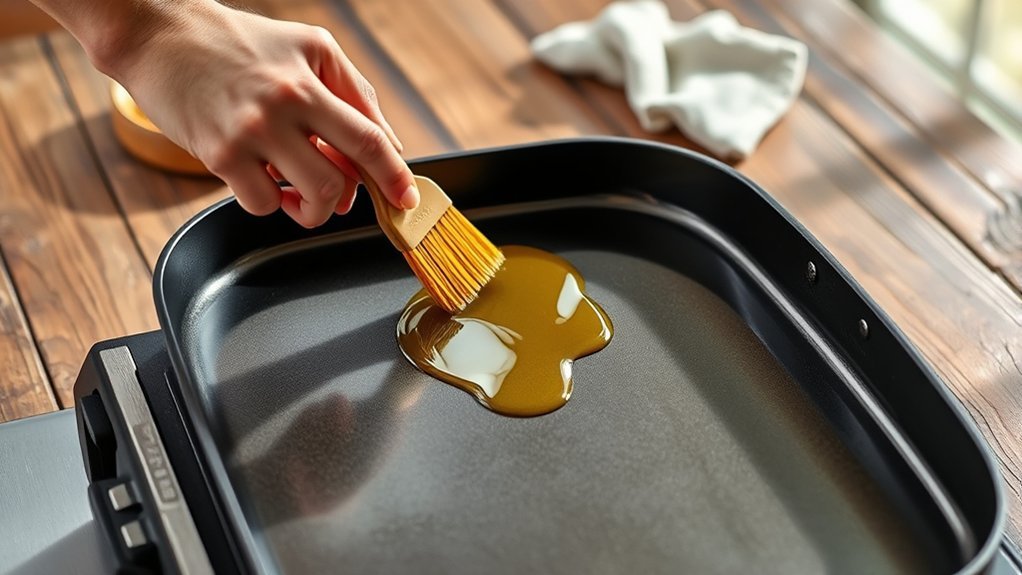

To get the most from your Weber Griddle Insert, proper seasoning is essential. Seasoning your Weber Griddle Insert creates a protective, non-stick surface that enhances cooking and prevents rust.
Start by thoroughly cleaning the griddle. Then, apply thin coats of high-smoke-point oil while heating it carefully.
Understanding the right technique and avoiding common mistakes can save you time and effort. Knowing exactly how and when to season is essential for long-lasting performance.
Key Takeaways
- Clean the griddle thoroughly with warm soapy water, removing all residue, and dry completely before seasoning.
- Preheat the griddle on medium heat, avoiding direct flames, to prepare for oil application.
- Apply a thin, even coat of high-smoke-point oil (flaxseed or grapeseed) using a lint-free cloth or paper towel.
- Heat the oiled surface until the oil polymerizes into a protective, non-stick layer, repeating 3-5 times for durability.
- After cooking and cleaning, lightly oil the warm griddle to maintain the seasoning and prevent rust.
Why Seasoning Your Weber Griddle Insert Protects and Enhances Cooking
Why should you season your Weber griddle insert before cooking? Seasoning creates a protective, non-stick layer that prevents rust and reduces food sticking, essential for cookware maintenance. When you apply oil and heat, it polymerizes to form a durable coating, improving cooking performance and extending the griddle’s lifespan.
This process also enhances flavor by preventing metal contact with food. Prioritizing seasoning safety, you avoid harmful residues and ensure the surface remains food-safe. Skipping seasoning can lead to corrosion and uneven cooking, compromising both safety and effectiveness.
Regular seasoning maintains the griddle’s integrity, making your cooking more efficient and consistent. By properly seasoning, you safeguard your investment and optimize every meal prepared on your Weber griddle insert.
What You Need to Season Your Weber Griddle Insert
To properly season your Weber griddle insert, you’ll need a few specific items that guarantee an even, durable coating. First, select a high-smoke point seasoning oil such as flaxseed, grapeseed, or vegetable oil; these oils polymerize well, creating a strong protective layer.
Next, have clean, lint-free cloths or paper towels for applying the oil evenly across the surface. A heat source like your Weber grill or stovetop is essential for reaching the necessary temperature to bond the oil to the cast iron.
Finally, use a pair of heat-resistant gloves to protect your hands during the process. These tools, combined with proper cast iron care, ensure your griddle develops a non-stick, rust-resistant seasoning that enhances cooking performance and longevity.
How to Clean Your Weber Griddle Insert Before Seasoning
Before seasoning, you need to remove all residue from your Weber griddle insert. Use warm soapy water and a non-abrasive scrubber to clean the surface thoroughly.
Dry it completely to guarantee proper seasoning adhesion.
Remove Residue Thoroughly
Residue from previous use can interfere with the seasoning process and affect your griddle’s performance. To ensure optimal results, you need to remove all food particles, grease, and carbon buildup thoroughly before seasoning. Use a scraper or stiff brush to eliminate stuck-on debris.
Pay special attention to corners and edges where residue tends to accumulate. Proper residue removal not only improves the seasoning frequency but also ensures the oil type you apply bonds effectively to the surface.
Any leftover contaminants can create uneven seasoning layers, reducing non-stick properties and causing rust. Taking the time to clean your Weber griddle insert meticulously before each seasoning session preserves its longevity and cooking efficiency.
Don’t rush this step; a clean surface is critical for achieving a durable, protective seasoning layer.
Use Warm Soapy Water
How should you properly clean your Weber griddle insert to prepare it for seasoning? Start by using warm soapy water to remove any remaining debris or oils. This step ensures the surface is clean, allowing the seasoning to adhere evenly.
Avoid unrelated subtopic distractions and focus on effective cleaning techniques.
Here’s a quick reference table for cleaning:
| Step | Description |
|---|---|
| Warm Water | Use warm water, not hot, to avoid warping. |
| Mild Soap | Apply a gentle dish soap, no harsh chemicals. |
| Soft Sponge | Scrub with a non-abrasive sponge to prevent damage. |
Following these two word ideas, “gentle cleaning” and “surface prep,” will help you achieve the best seasoning results.
How to Season Your Weber Griddle Insert
Why is seasoning your Weber griddle insert essential? Seasoning creates a protective layer that prevents rust and enhances non-stick performance, crucial for effective grill maintenance.
Start by preheating your griddle on medium heat. Apply a thin, even coat of seasoning oil, preferably a high smoke-point oil like flaxseed or canola, across the entire surface using a lint-free cloth or paper towel.
Allow the oil to heat until it polymerizes, forming a durable, slick layer. Repeat this process while the griddle is warm to ensure proper bonding of the oil to the metal.
Proper seasoning not only extends the griddle’s lifespan but also improves cooking efficiency by reducing food sticking and facilitating easier cleanup.
Regularly seasoning your Weber griddle insert is a critical step in preserving its functionality and appearance.
Number of Seasoning Coats Your Weber Griddle Insert Needs
After applying your initial thin coat of oil and allowing it to polymerize, you’ll want to build up multiple seasoning layers to create a resilient, non-stick surface. Typically, 3 to 5 coats of seasoning oils are optimal for your Weber griddle insert. Each coat reinforces the polymerized layer, enhancing durability and easing griddle care.
| Coat Number | Application Time | Purpose |
|---|---|---|
| 1 | Initial seasoning | Base polymer layer |
| 2 | After first layer | Strengthens non-stick surface |
| 3 | Midway seasoning | Enhances durability |
| 4 | Optional | Additional protection |
| 5 | Optional | Long-term griddle care |
Apply thin, even coats, heating between each. Over-seasoning wastes oil and may cause flaking.
Mistakes to Avoid When Seasoning Your Weber Griddle Insert
Don’t skip the initial cleaning, as residue can prevent proper seasoning. Avoid using too much oil, which leads to sticky, uneven layers.
Also, control the heat carefully. Overheating can damage the seasoning and the griddle surface.
Skipping Initial Cleaning
To ensure the best coating results, how thoroughly you clean your Weber griddle insert before seasoning directly affects the final quality. Skipping this essential step undermines seasoning science fundamentals, leading to uneven polymerized layers and poor nonsmoky flavors.
Residual oils, dirt, and manufacturing residues prevent proper bonding of the seasoning layer.
To avoid this:
- Wash the insert with warm, soapy water to remove factory oils.
- Rinse thoroughly and dry completely to prevent rust.
- Inspect for any remaining debris or contaminants.
Using Too Much Oil
Although oil is essential for seasoning your Weber griddle insert, applying too much can create a sticky, uneven surface that traps residue and hinders proper polymerization. When you over oil the griddle, excess oil pools instead of bonding with the metal, leading to a tacky finish rather than a durable, non-stick coating.
Achieving the correct oil spread is crucial. Use a thin, even layer that covers the surface without dripping or pooling. Apply oil with a lint-free cloth or paper towel, spreading it uniformly to avoid over oiling.
This controlled application ensures optimal seasoning, improves longevity, and maintains cooking performance. Remember, less is more; too much oil undermines the seasoning process and creates maintenance issues with your Weber griddle insert.
Overheating During Seasoning
Applying the right amount of oil sets the stage for a proper seasoning process, but controlling temperature plays an equally important role. Overheating risks can damage the griddle’s surface and degrade the seasoning layer. To avoid this, you must respect the oil smoke point, which is the temperature where oil begins to break down and smoke.
Follow these steps to prevent overheating during seasoning:
- Preheat gradually: Increase heat slowly to avoid sudden temperature spikes above the oil smoke point.
- Monitor temperature: Use an infrared thermometer to keep the griddle between 375°F and 450°F, depending on the oil used.
- Avoid open flames: Direct flame contact causes uneven heating and can exceed safe temperatures rapidly.
Controlling heat ensures a durable, non-stick seasoning layer without damage.
Tips to Maintain Seasoning on Your Weber Griddle Insert
Maintaining the seasoning on your Weber griddle insert ensures ideal non-stick performance and prevents rust. After each use, clean the surface with a scraper or warm water. Avoid soap, which strips seasoning oil layers.
Dry the griddle thoroughly to prevent moisture buildup. Follow a strict maintenance cadence: apply a thin coat of seasoning oil after every cleaning while the griddle is still warm, allowing the oil to polymerize into a protective layer.
Store your griddle in a dry environment to avoid oxidation. Regularly inspect the surface for dull or patchy areas, which signal the need for touch-up seasoning.
When and How to Reseason Your Weber Griddle Insert
Over time, even with proper upkeep, the seasoning on your Weber griddle insert will degrade due to high heat and food acids. You’ll need to reseason it when you notice rust, food sticking, or uneven cooking surfaces. Adjust your cleaning frequency accordingly to avoid stripping the seasoning layer too often.
Follow these steps to reseason effectively:
- Deep Clean: Remove all food residues using a scraper and hot water. Avoid harsh detergents that damage the seasoning.
- Dry Thoroughly: Heat the griddle on medium to evaporate moisture completely.
- Apply Oil: Use a high smoke point oil, like flaxseed or grapeseed, to coat the surface evenly. Heat the griddle to polymerize the oil, creating a durable, non-stick layer.
Repeat this process as needed to maintain optimal performance.
Frequently Asked Questions
Can I Use My Weber Griddle Insert on a Gas Stove?
Yes, you can use your Weber griddle on a gas stove, but ensure proper ventilation and monitor heat levels closely for indoor safety. Avoid overheating to prevent damage and maintain optimal cooking performance on your gas stove.
Is It Safe to Season the Griddle Insert Indoors?
Think of seasoning safety like baking bread indoors. Ventilation is key. You can season your griddle insert indoors, but expect indoor smoke.
Always use a well-ventilated area to avoid smoke buildup and ensure safe seasoning.
How Do I Store My Weber Griddle Insert When Not in Use?
When storing your Weber griddle insert, ensure it’s thoroughly cleaned and dried to prevent rust. After indoor seasoning, keep it in a dry, ventilated area, ideally covered, to maintain its non-stick surface and prolong its lifespan.
Can I Use Vegetable Oil Instead of Flaxseed Oil for Seasoning?
You’d need a mountain of patience if you relied solely on vegetable oil for seasoning! While vegetable oil works as a flaxseed oil alternative, flaxseed oil’s polymerization makes it superior for creating a durable, non-stick surface.
Will Seasoning Affect the Flavor of My Food Cooked on the Griddle?
Seasoning minimally impacts your food’s flavor once properly cured, creating a non-stick surface that prevents food interaction with metal. Initial seasoning may impart slight taste, but repeated use builds a stable, neutral seasoning flavor over time.
Conclusion
Seasoning your Weber Griddle Insert creates a sleek, protective shield that transforms its surface into a non-stick, rust-resistant powerhouse. Picture a smooth, gleaming canvas ready for sizzling steaks and golden pancakes.
By following precise cleaning, applying thin oil layers, and avoiding common pitfalls, you build lasting durability. Keep this ritual alive, and your griddle will reward you with consistent, flawless cooking every time.
With proper care and attention, seasoning your Weber Griddle Insert turns routine meals into culinary triumphs.