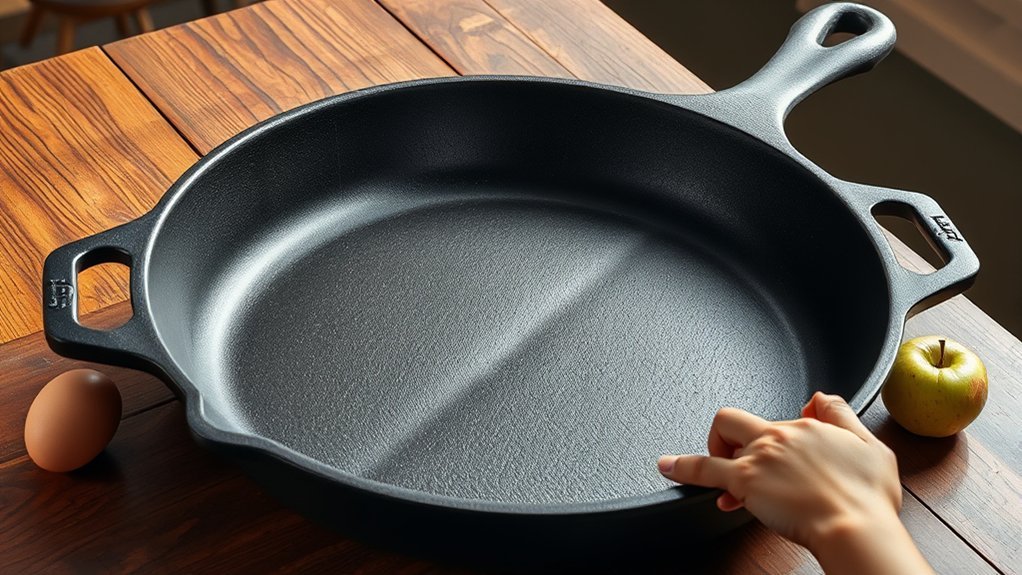

A large skillet typically spans 12 to 14 inches in diameter and holds between 4 to 6 quarts, offering significant cooking capacity. This size enhances heat distribution and prevents overcrowding, essential for even searing and efficient meal preparation.
However, these benefits come with trade-offs in storage and handling.
Understanding these factors will help you determine if a large skillet truly fits your kitchen’s needs and cooking style.
Key Takeaways
- A large skillet typically measures 12 to 14 inches in diameter.
- It has a capacity of about 4 to 6 quarts, suitable for larger meal portions.
- Larger diameter increases cooking surface area, allowing even heat distribution.
- Depth varies, with deeper skillets holding more liquids and easing stirring.
- Large skillets are ideal for searing, browning, and one-pan meals for groups.
How Big Is a Large Skillet, Really?
Exactly how big is a large skillet? Typically, a large skillet measures between 12 to 14 inches in diameter, offering a skillet capacity of approximately 4 to 6 quarts. This size allows you to cook multiple servings efficiently, making it ideal for families or meal prepping.
When considering storage solutions, the skillet’s diameter and height directly impact how much space it occupies in your kitchen cabinets or drawers. You’ll want to measure your available storage area to ensure the skillet fits without causing clutter.
Additionally, some large skillets come with nesting features or removable handles to optimize storage. Understanding these dimensions and the skillet capacity helps you select a skillet that balances cooking needs with practical storage considerations.
Skillet Size and Cooking Capacity
When you choose a skillet, its size directly determines the volume of food you can cook at once, affecting both efficiency and meal quality. A larger diameter increases cooking surface area, allowing even heat distribution for multiple ingredients simultaneously.
This improves skillet versatility, enabling tasks from searing meats to sautéing vegetables without overcrowding. Pay attention to depth as well; a deeper skillet holds more volume, ideal for dishes requiring stirring or liquid retention.
Consider two word discussion ideas like “capacity limits” and “heat zones” to assess how skillet dimensions influence cooking outcomes. Ultimately, selecting the right skillet size optimizes space utilization and enhances control over temperature gradients, ensuring your culinary efforts yield consistent, high-quality results every time.
Comparing Large and Medium Skillets
You’ll notice that large skillets typically range from 12 to 14 inches in diameter, while medium skillets measure around 10 inches. This size difference directly affects cooking capacity, with large skillets accommodating more food and offering greater surface area for even heat distribution.
Understanding these measurements helps you choose the right skillet based on your cooking volume and space requirements.
Diameter Differences Explained
How much difference does diameter really make between large and medium skillets? The diameter differences directly affect the cooking surface area and heat distribution. A large skillet typically measures 12 inches, while a medium one is around 10 inches.
This 2-inch difference may seem small but markedly increases the usable space.
| Skillet Size | Diameter (inches) |
|---|---|
| Medium | 10 |
| Large | 12 |
| Difference | 2 |
| Impact | 44% more surface |
You gain approximately 44% more cooking surface with a large skillet, enabling you to spread ingredients evenly and reduce overcrowding. Understanding these diameter differences helps you select the right skillet size for your cooking needs.
Cooking Capacity Comparison
The increased surface area of a large skillet directly translates into greater cooking capacity, allowing you to handle larger quantities of food at once. Compared to a medium skillet, a large skillet typically offers 25-40% more cooking space, making it ideal for meals requiring expanded surface contact, like searing multiple protein pieces or sautéing bulky vegetables.
This capacity difference optimizes heat distribution and prevents overcrowding, ensuring even cooking. However, consider skillet aesthetics and storage solutions before committing; larger skillets often demand more cabinet space and may affect kitchen organization.
Balancing these factors, you can choose the skillet size that matches your cooking volume needs without sacrificing efficiency or kitchen ergonomics. Ultimately, large skillets enhance functionality but require thoughtful storage and style integration.
Best Uses for Large Skillets in Your Kitchen
You’ll appreciate a large skillet when cooking for groups, as its wide surface accommodates multiple portions simultaneously. It’s ideal for searing and browning meats evenly, thanks to consistent heat distribution across the pan.
Plus, it streamlines one-pan meals by allowing you to combine ingredients without overcrowding, ensuring optimal cooking efficiency.
Cooking for Large Groups
When preparing meals for large groups, which skillet size should you reach for to guarantee even cooking and efficient use of stovetop space? A large skillet with a diameter of 12 to 14 inches offers ideal cooking capacity, allowing you to accommodate substantial food volume without overcrowding.
This size ensures heat distributes evenly across the surface, preventing hotspots and uneven cooking. Its generous surface area supports batch cooking, enabling you to prepare multiple servings simultaneously, which is crucial for timely meal service.
Additionally, a large skillet’s depth allows for versatile use, from sautéing vegetables to simmering sauces. Choosing the right large skillet maximizes efficiency, reduces cooking time, and preserves food quality, making it an indispensable tool when catering to sizeable gatherings.
Searing and Browning Meats
How exactly does a large skillet enhance searing and browning meats? It provides ample surface area, allowing you to avoid overcrowding. This is essential for proper Maillard reaction development. Follow these searing guidelines and browning techniques to maximize flavor and texture.
| Step | Description |
|---|---|
| Preheat skillet | Heat evenly to 400-450°F before adding meat |
| Pat meat dry | Remove moisture to guarantee crust formation |
| Avoid overcrowding | Leave space for heat circulation |
| Use high smoke point oil | Prevent burning and promote even browning |
| Flip once | Turn after a deep brown crust forms |
Using these precision techniques, your large skillet optimizes searing and browning by maintaining consistent heat and surface contact for superior culinary results.
One-Pan Meals Efficiency
Beyond perfecting searing and browning, a large skillet excels at streamlining one-pan meals by providing ample cooking space and even heat distribution. You can simultaneously cook proteins, vegetables, and grains without overcrowding, ensuring consistent temperature control.
Pan compatibility is crucial; ensure your large skillet works efficiently on your cooktop type, whether gas, electric, or induction, to maximize heat responsiveness. Additionally, the lid design impacts moisture retention and cooking speed. A well-fitting, heavy lid traps steam effectively, reducing cooking time and preserving flavor.
When preparing one-pan meals, leverage these technical features to optimize workflow, minimize cleanup, and enhance meal quality. Selecting a large skillet with precise pan compatibility and an engineered lid design will significantly improve your kitchen efficiency and elevate your one-pan cooking experience.
Picking the Best Material and Features for Your Large Skillet
What makes one skillet stand out from another often comes down to the material and specific features it offers. When evaluating large skillet considerations, prioritize material durability to ensure long-term performance.
Cast iron provides exceptional heat retention and even distribution but requires maintenance to prevent rust. Stainless steel resists corrosion and offers durability with a polished cooking surface, ideal for searing. Nonstick coatings simplify cleaning but may sacrifice lifespan and heat tolerance.
Additionally, look for features like a sturdy handle with heat resistance and a well-fitted lid to retain moisture and heat. A flat, heavy base prevents warping on large surfaces.
Does Your Kitchen Have Room for a Large Skillet?
Choosing the right material and features for your large skillet is only part of the equation; you also need to contemplate whether your kitchen can accommodate its size and weight. Before purchasing, assess your available large skillet storage space and ensure the skillet’s diameter and depth align with your cabinet fit.
Consider your kitchen space and cabinet dimensions before choosing the perfect large skillet.
Consider these factors:
- Measure cabinet height and depth to confirm clearance for the skillet’s handle and lid.
- Evaluate shelf strength, as heavier skillets require sturdy support to avoid damage.
- Plan for accessibility; a skillet stored too tightly or awkwardly can hinder daily use.
Frequently Asked Questions
How Do I Properly Clean a Large Skillet?
You clean a large skillet by scrubbing gently with warm, soapy water and a non-abrasive sponge, ensuring safe handling to avoid burns. Rinse thoroughly and dry immediately to prevent rust. Season if it’s cast iron.
Can Large Skillets Be Used on Induction Cooktops?
Yes, large skillets can work on induction cooktops if they have induction compatibility, meaning a magnetic base.
You’ll benefit from precise heat distribution, ensuring even cooking across the skillet’s surface with your induction setup.
Are Large Skillets Dishwasher Safe?
Of course, your large skillet isn’t a delicate heirloom. Dishwasher safety is a myth for most. To avoid warping or coating damage, you should hand wash and dry it carefully, preserving its longevity and performance.
What Is the Average Weight of a Large Skillet?
The average weight of a large skillet ranges between 3 to 7 pounds, depending on material differences. Cast iron skillets are heavier, around 6-7 pounds, while aluminum or stainless steel skillets usually weigh closer to 3-4 pounds.
How Do I Season a Cast Iron Large Skillet?
You clean thoroughly, dry completely, and apply a thin layer of oil. Next, you bake the skillet upside down at 450°F for an hour to create seasoning castiron layers, enhancing induction compatibility and ensuring durable, nonstick performance.
Conclusion
You might worry a large skillet won’t fit your kitchen or storage, but its 12 to 14-inch diameter offers unmatched cooking capacity and heat distribution, making it indispensable for searing and one-pan meals.
With thoughtful features like removable handles or nesting designs, you can save space without sacrificing performance. Investing in the right size and material ensures efficient cooking and versatile use.
In conclusion, a large skillet’s size truly enhances your culinary potential, making it a valuable addition to any kitchen.