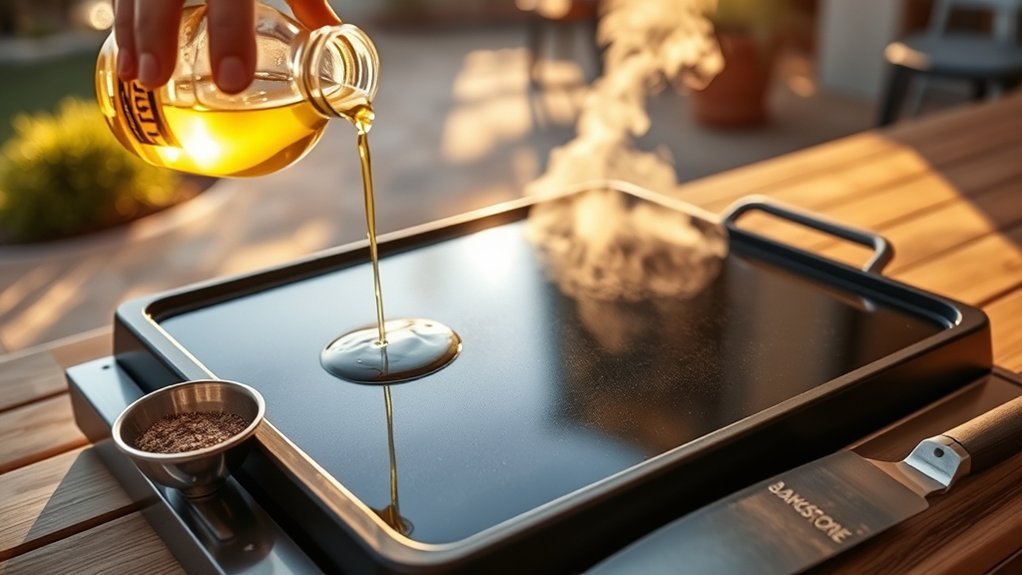

When you first get your Blackstone griddle, breaking it in properly is essential to build a durable, non-stick cooking surface. This initial process helps protect the griddle and enhances its performance over time.
You’ll need to start by thoroughly cleaning the surface to remove any factory oils or residues. Then, you’ll apply thin layers of high-smoke-point oil and heat the griddle carefully to create a strong, polymerized coating.
Understanding these steps ensures your griddle performs well and lasts longer. Next, we’ll cover exactly how to prepare and season your griddle for optimal results.
Key Takeaways
- Clean the griddle thoroughly with mild soap and warm water to remove manufacturing oils before seasoning.
- Preheat the griddle on medium heat to ensure even temperature distribution before applying oil.
- Apply a thin, even layer of high-smoke-point oil and heat on high for 10–15 minutes to polymerize the seasoning.
- Repeat the oil application and heating process two to three times for a durable, non-stick surface.
- Avoid excess oil and extreme temperatures to prevent sticky residue or burnt, brittle seasoning layers.
Why You Need to Break In Your Blackstone Griddle
Why is breaking in your Blackstone griddle essential? Breaking in your griddle establishes a durable, non-stick cooking surface through polymerized oil layers, which enhances its performance and longevity. This process, known as seasoning, offers break in benefits such as improved heat distribution and rust prevention.
When you break in your griddle properly, you ensure quality assurance by creating a protective barrier that resists food adhesion and corrosion. Skipping this step can lead to uneven cooking and faster wear.
How to Clean Your Blackstone Griddle Before Seasoning
How exactly should you clean your Blackstone griddle before seasoning to crucial results? First, remove manufacturing oils and residues using a degreaser or mild soap and warm water. Avoid harsh abrasives that damage the steel surface.
Rinse thoroughly and dry the griddle completely to prevent rust. This step is essential in BBQ jargon, often called “stripping” the griddle, and sets the stage for effective seasoning.
| Step | Purpose |
|---|---|
| Degrease Surface | Remove factory oils and grime |
| Rinse & Dry | Prevent rust before seasoning |
| Inspect Surface | Ensure no residue remains |
Following these ideas about seasoning preparation guarantees your Blackstone griddle will develop an even, durable non-stick layer during the break-in process.
How to Season Your Blackstone Griddle: Step-by-Step
After thoroughly cleaning and drying your Blackstone griddle, you’re ready to start seasoning. Begin by preheating the griddle on medium heat to ensure even temperature distribution. Proper heat control is essential.
Once warmed, apply a thin, even layer of seasoning oil using a lint-free cloth or paper towel, covering the entire surface. Allow the oil to polymerize by increasing the heat to high for about 10-15 minutes, watching for smoke to signal bonding.
After the first layer cools, repeat the process two to three more times to build a durable, non-stick coating. Each seasoning layer enhances protection against rust and improves cooking performance.
Maintain heat control throughout to avoid burning the oil, which can compromise the seasoning quality. This method ensures your griddle develops a reliable, long-lasting surface.
Common Blackstone Seasoning Mistakes to Avoid
What common pitfalls should you watch out for when seasoning your Blackstone griddle? One major seasoning pitfall is applying too much oil during the oil application phase. Excess oil can pool, causing uneven seasoning layers and sticky residue.
Conversely, too little oil prevents proper polymerization, resulting in a weak, ineffective coating. Another mistake is uneven oil distribution, which leads to inconsistent seasoning and hotspots.
Additionally, seasoning at too low a temperature fails to bond the oil with the steel surface, while excessively high heat can burn the oil, producing a brittle layer. Avoid interrupting the seasoning process prematurely; incomplete cycles hinder the formation of a durable, protective coating.
Tips to Build a Lasting Non-Stick Surface on Your Blackstone
Why does maintaining a consistent seasoning routine matter when building a lasting non-stick surface on your Blackstone griddle? Because seasoning science reveals that repeated cycles of heating oil and polymerization create a durable, smooth coating.
Focus on oil layering by applying thin, even coats of high-smoke-point oils; this prevents uneven buildup and promotes strong adhesion. Each layer undergoes heat-induced chemical changes, bonding tightly to the griddle’s surface.
Avoid thick oil applications, which can cause sticky residues. After each seasoning cycle, allow the surface to cool gradually, ensuring the polymerized layer sets properly.
Consistency in this process strengthens the protective barrier, enhancing non-stick properties and corrosion resistance. By mastering these precise techniques, you’ll efficiently develop a resilient, long-lasting non-stick surface on your Blackstone griddle.
How to Maintain Your Blackstone Griddle After Seasoning
To keep your Blackstone griddle performing optimally, clean it thoroughly after each use to prevent residue buildup. You’ll need to reapply a thin layer of oil to maintain the seasoning and protect the surface from rust.
Finally, store your griddle properly in a dry, covered area to extend its lifespan and preserve its non-stick qualities.
Cleaning After Each Use
Maintaining your Blackstone griddle after seasoning requires thorough cleaning after each use to preserve its seasoning layer and guarantee optimal performance. Implement cleaning as you go by scraping food debris during cooking and performing burn off routines immediately after use. This prevents buildup and maintains the griddle’s non-stick surface.
Use a scraper or spatula to remove residue while the griddle is still warm, then wipe it down with a damp cloth. Avoid harsh detergents that strip the seasoning.
| Step | Action |
|---|---|
| During Cooking | Scrape to remove food particles |
| After Cooking | Perform burn off routine |
| Final Cleaning | Wipe with damp cloth |
Consistent cleaning after each use ensures longevity and efficient heat distribution.
Reapplying Oil Layer
How often should you reapply the oil layer on your Blackstone griddle to preserve its seasoning and prevent rust? Ideally, you want to perform oil layer reapplication after every thorough cleaning and before each use if the surface appears dry.
This consistent reapplying oil routine maintains the non-stick seasoning and creates a protective barrier against moisture and oxidation. Use a thin, even coat of high smoke point oil, like flaxseed or canola, to ensure proper polymerization during heating.
Apply the oil while the griddle is warm, then heat it until it smokes lightly to bond the oil to the surface. Skipping oil layer reapplication risks uneven seasoning and potential rust spots, so incorporating this step into your regular maintenance will extend your griddle’s lifespan and optimize cooking performance.
Proper Storage Techniques
Where you store your Blackstone griddle markedly impacts its longevity and seasoning quality. Proper storage prevents rust and preserves the oil layer applied during seasoning. Consider storage beyond the grate to avoid moisture accumulation and contaminants.
Follow these guidelines:
- Store in a dry, ventilated area to minimize humidity exposure.
- Use a high-quality, weather-resistant cover option designed for Blackstone griddles.
- Avoid placing the griddle directly on concrete or soil; elevate it using a stand or pallets.
- Clean and reapply a thin oil layer before storage to reinforce the seasoning and prevent oxidation.
Frequently Asked Questions
Can I Use Cooking Spray to Season My Blackstone Griddle?
You can use seasoning spray for an indoor break in, but it’s best to choose one with minimal additives. This guarantees even coating and proper polymerization during seasoning, enhancing your Blackstone griddle’s nonstick surface and durability.
How Long Does the Initial Break-In Process Take?
While your griddle heats, the break-in duration usually takes 1 to 2 hours. The initial seasoning time involves applying oil and heating cycles to build a durable, non-stick surface essential for ideal cooking performance.
Is It Safe to Use Soap on My Blackstone Griddle?
You shouldn’t use soapy cleaning on your Blackstone griddle, as it removes the seasoning layer. Instead, rely on indoor seasoning techniques with oil and heat to maintain the non-stick surface and prevent rust effectively.
Can I Break in My Griddle Indoors?
Think of breaking in your griddle like starting a small campfire indoors. You need perfect ventilation.
While you can break it in indoors, ensure excellent ventilation to manage fumes safely. Prioritize your indoor safety throughout the process.
What Oils Are Best for Seasoning a Blackstone Griddle?
You’ll want to use high-smoke-point seasoning oils like flaxseed, grapeseed, or canola oil. They withstand heat application during seasoning, creating a durable, non-stick layer on your Blackstone griddle efficiently and effectively.
Conclusion
By carefully cleaning and seasoning your Blackstone griddle, you’ll transform the bare steel into a sleek, dark canvas ready for cooking. Imagine the smooth, glossy surface sizzling evenly under your favorite foods, resisting rust and sticking.
Each oiling and heating step bonds a protective layer, ensuring durability and performance. With this precise process, you’ll enjoy a reliable, non-stick cooking surface that improves with every use.
This thorough preparation is key to breaking in your Blackstone griddle, making it the centerpiece of countless delicious meals.