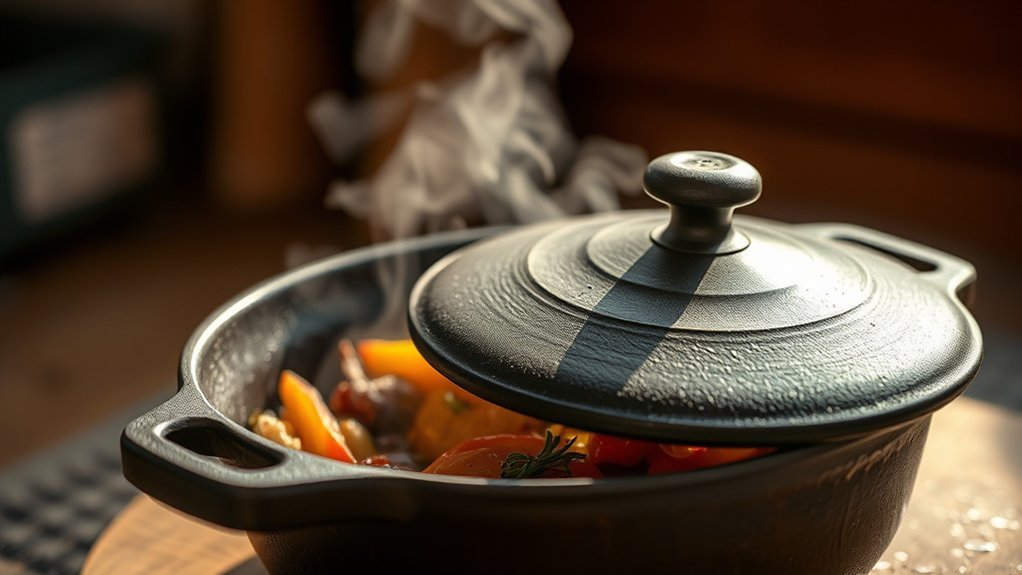

You might wonder if you can put a lid on a cast iron skillet and whether it is practical or safe.
Using a lid correctly can enhance cooking by trapping heat and moisture, which helps food cook more evenly.
However, not all lids are suitable for cast iron, and improper use can affect your skillet’s seasoning.
Understanding when and how to use a lid can improve your cooking results and protect your cookware.
Let’s explore the key considerations before you cover your skillet.
Key Takeaways
- Yes, you can put a lid on a cast iron skillet to retain moisture and heat during cooking.
- Cast iron lids fit best, but oven-safe glass, stainless steel, or heavy-duty metal lids also work well.
- Silicone lids provide an airtight seal but should not be used over direct flame or high heat.
- A properly fitting lid prevents steam escape, ensuring even cooking and moisture retention.
- After use, dry the skillet and lid thoroughly, avoid soap, and store with the lid slightly ajar.
Can You Use a Lid on a Cast Iron Skillet?
Can you use a lid on a cast iron skillet? Absolutely, you can and often should. Using a lid helps retain moisture and heat, improving cooking efficiency.
Using a lid on a cast iron skillet locks in moisture and heat, enhancing cooking results.
When selecting a lid, ensure it fits snugly and can withstand high temperatures. Cast iron lids are ideal, but oven-safe glass or metal lids also work well.
After cooking, follow proper cleaning tips: avoid soap, instead scrub with a stiff brush and hot water, then dry thoroughly to prevent rust. Season your skillet regularly to maintain its non-stick surface.
For storage hacks, keep the skillet and lid separate or place a paper towel between them to absorb moisture and avoid rust. Proper care extends your skillet’s life and maintains its performance.
When Is the Best Time to Use a Lid on Cast Iron?
Using a lid on your cast iron skillet offers distinct benefits, but knowing when to cover it can elevate your cooking results. Historically, cast iron skillets were used without lids to achieve high-heat searing, a key aspect of cast iron history. However, modern seasoning methods have improved skillet versatility, making lid use more practical.
You should use a lid when you want to trap moisture, such as simmering stews or braising meats, to enhance tenderness without drying out food. Conversely, leave the skillet uncovered during searing or frying to maintain a crisp texture.
Using a lid also aids in even heat distribution during slow cooking. By understanding when to cover your cast iron, you’ll protect your seasoning and optimize cooking performance.
Types of Lids That Work Best With Cast Iron Skillets
You’ll want to choose lids that handle cast iron’s heat without warping or cracking. Silicone and tempered glass lids offer versatility and durability, while cast iron lids provide a perfect fit and heat retention.
Always ensure the lid size matches your skillet to maintain a tight seal and optimal cooking results.
Cast Iron Compatible Lids
What types of lids work best with cast iron skillets? When selecting a lid, lids compatibility and material safety are essential. You want a lid that withstands high heat and matches your skillet’s durability.
Here are four top choices:
- Cast Iron Lids – Perfect match for heat retention and durability.
- Stainless Steel Lids – Offers excellent heat resistance and a tight seal.
- Enameled Cast Iron Lids – Combines durability with easy cleaning, maintaining material safety.
- Heavy-Duty Metal Lids – Ensure they’re designed for high temperatures to prevent warping.
Avoid lids made from materials that can melt or release toxins under high heat. Choosing the right lid enhances cooking results and preserves your skillet’s lifespan.
Silicone And Glass Options
While metal lids offer durability and heat resistance, silicone and glass options bring unique benefits that can complement your cast iron skillet. Silicone lids provide excellent silicone compatibility, creating an airtight seal that retains moisture and heat effectively.
They’re flexible and heat-resistant up to certain temperatures, making them ideal for low to medium-heat cooking. However, avoid exposing silicone lids to direct flame or extremely high heat, as this can compromise their integrity.
Glass lids offer superior glass safety, allowing you to monitor your food without lifting the lid. Tempered glass lids handle oven temperatures well but require gentle handling to avoid cracks from sudden temperature changes.
Both silicone and glass lids enhance your cooking experience when used appropriately with cast iron, balancing functionality and convenience.
Lid Size And Fit
How closely a lid fits your cast iron skillet can considerably impact your cooking results. Lid compatibility is crucial because a poorly fitting lid lets steam escape, affecting moisture and heat retention.
When choosing lid materials and sizes, consider these points:
- Opt for lids designed specifically for cast iron skillets to ensure a snug fit.
- Choose heavy materials like cast iron or tempered glass; they maintain even heat and seal well.
- Avoid lids that are too loose or too tight. They can cause uneven cooking or damage.
- If you use universal lids, verify the diameter matches your skillet’s measurements precisely.
Benefits of Using a Lid on Cast Iron Skillets
Using a lid on your cast iron skillet boosts heat retention, helping your food cook more evenly. It also traps moisture, which keeps dishes juicy and prevents drying out.
Understanding these benefits can elevate your cooking results considerably.
Enhanced Heat Retention
A lid substantially boosts your cast iron skillet’s ability to retain heat, creating a more consistent cooking environment. This enhanced heat retention means you’ll cook food more evenly and efficiently, saving energy and time.
Here’s what you gain when you use a lid:
- Reduced heat loss, maintaining a stable temperature throughout cooking.
- Faster preheating, allowing you to start cooking sooner.
- Improved control over cooking temperature, minimizing hot spots.
- Increased cookware safety by preventing sudden temperature drops that can cause warping.
Additionally, a well-designed lid can complement the skillet’s upscale aesthetics, elevating your kitchen’s look while offering practical benefits. Using a lid isn’t just smart; it’s essential for maximizing your cast iron’s performance and longevity.
Improved Moisture Control
Why does controlling moisture matter when cooking with a cast iron skillet? Moisture control directly impacts the texture and flavor of your dishes. When you use a lid, you trap steam, which helps retain natural juices and prevents food from drying out.
This is particularly useful for braising or simmering, where consistent moisture is essential. Incorporating discussion ideas about moisture control reveals that a lid allows you to manage condensation effectively, creating a self-basting environment. Without a lid, moisture escapes, leading to tougher, drier results.
Using a lid also helps maintain even cooking by circulating moisture evenly, which can enhance tenderness. By understanding these points, you can optimize your cast iron skillet’s performance and achieve better culinary outcomes through improved moisture control.
How to Use a Lid Without Damaging Your Cast Iron Skillet
How can you protect your cast iron skillet while still taking advantage of a lid’s benefits? Proper lid compatibility and heat management are essential.
Here’s how to use a lid without damaging your skillet:
- Choose lids designed for cast iron or made of materials that withstand high heat to ensure proper lid compatibility.
- Avoid rapid temperature changes; preheat the skillet and lid gradually to prevent warping or cracking.
- Use low to medium heat settings to maintain even heat management and avoid damaging the seasoning or metal.
- Remove the lid occasionally to release steam and prevent moisture buildup, which can affect seasoning quality.
Following these steps helps you enjoy the advantages of a lid while preserving your cast iron skillet’s durability and performance.
Mistakes to Avoid When Using a Lid on Cast Iron
When using a lid on your cast iron skillet, what common mistakes should you steer clear of to protect your cookware? First, avoid trapping excessive moisture by leaving the lid on for too long, which can cause rust and damage your seasoning.
Don’t place a cold lid on a hot skillet, as this thermal shock may lead to cracking. Also, never neglect proper cleaning routines; residue trapped under the lid can promote rust and degrade seasoning maintenance.
Avoid using harsh detergents or scrubbing pads that strip the skillet’s protective layer. Finally, ensure the lid fits well. An ill-fitting lid can cause uneven cooking and moisture buildup, harming your skillet’s surface.
How to Care for Your Cast Iron After Using a Lid
After using a lid on your cast iron skillet, maintaining its condition becomes essential to guarantee longevity and performance. Proper care prevents rust and preserves seasoning, key to enhancing your cooking experience. Keep these tips in mind:
- Dry Immediately: Moisture trapped by the lid can cause rust, so dry your skillet thoroughly after washing.
- Re-season if Needed: Heat the skillet and apply a thin oil layer to maintain the non-stick surface.
- Avoid Soap: Use hot water and a brush to clean; soap can strip seasoning.
- Store Properly: Store your skillet with the lid slightly ajar to allow air circulation and prevent moisture buildup.
Following these steps ensures your cast iron skillet remains a reliable, long-lasting tool in your kitchen arsenal.
Frequently Asked Questions
Can You Use a Glass Lid on a Cast Iron Skillet?
Yes, you can use a glass lid on a cast iron skillet, but be cautious. The glass lid traps moisture, which may affect seasoning impact by causing uneven seasoning or rust if not dried properly after cooking.
Does Using a Lid Affect Seasoning on Cast Iron?
Using a lid can affect seasoning impact by trapping moisture, risking rust if not dried properly.
Lid material effects matter; glass lids retain more steam, while cast iron lids help maintain heat, promoting even seasoning development over time.
Can Lids Cause Cast Iron to Rust?
Don’t throw the baby out with the bathwater. Lids can cause rust if they trap moisture. For rust prevention, choose lids made of breathable materials like cast iron or vented glass. Avoid airtight plastic or metal lids.
Are Silicone Lids Safe for Cast Iron Skillets?
Yes, silicone lids are safe for cast iron skillets. Their silicone safety prevents scratching and heat damage, and they minimize rust concerns by sealing moisture effectively. This ensures your skillet stays protected and lasts longer without corrosion issues.
How Do Lids Impact Cooking Times in Cast Iron?
Lids dramatically speed up cooking times by trapping heat and boosting steam retention, turning your cast iron into a mini pressure cooker.
You’ll notice how lids alter heat flow, making dishes cook faster and more evenly.
Conclusion
You might think lids are just for pots, but when you place one on your cast iron skillet, you promote even cooking and achieve juicy results. Just like a perfectly sealed jar preserves freshness, a snug lid traps heat and moisture, turning simple meals into tender masterpieces.
Remember to choose the right lid, avoid soap, and dry thoroughly to keep your skillet seasoned. These steps ensure your cast iron stays reliable and ready for every delicious challenge.
In conclusion, putting a lid on a cast iron skillet is a smart way to enhance your cooking and maintain the skillet’s quality over time.