
When you cook on a griddle, you might wonder if it’s a healthy choice.
Cooking on a griddle uses moderate heat and quick cooking, which can preserve nutrients better than some other techniques.
However, factors like the type and amount of oil, food selection, and cooking practices all influence the final health impact.
Understanding these details can help you make smarter decisions in the kitchen and avoid potential risks.
Key Takeaways
- Griddle cooking uses moderate heat, preserving vitamins and minerals better than high-heat methods, supporting nutrient retention in foods.
- It allows cooking with minimal oil, reducing calorie intake and supporting healthier fat consumption.
- Using oils with high smoke points like avocado or grapeseed oil lowers harmful compound formation during cooking.
- Proper temperature control and griddle maintenance reduce carcinogen risks and ensure food safety.
- Cooking lean proteins and vegetables on a griddle enables balanced, health-conscious meals with controlled portions.
Is Cooking on a Griddle Healthy?
How healthy is cooking on a griddle? It largely depends on how you use it. When you control portion sizes effectively, you can manage calorie intake more precisely, making meals healthier.
Griddles allow for cooking with minimal oil, but your oil choices matter significantly. Opting for oils with higher smoke points and beneficial fats, like olive or avocado oil, reduces harmful compounds during cooking.
Additionally, griddles promote even cooking, which can help avoid overcooking and the formation of potentially harmful substances. However, if you use excessive oil or large portions, you may negate these benefits.
How Does Griddle Cooking Affect Nutrient Retention?
Why does cooking method matter for nutrient retention? When you use a griddle, you expose food to a consistent, moderate heat that helps preserve vitamins and minerals better than high-heat methods. The griddle flavor and cooking texture enhance your food without requiring lengthy cooking times, which can degrade nutrients.
| Nutrient | Retention on Griddle | Retention on Boiling | Retention on Frying | Retention on Grilling |
|---|---|---|---|---|
| Vitamin C | Moderate (60-70%) | Low (30-40%) | Moderate (50-60%) | Moderate (50-60%) |
| Vitamin B | High (70-80%) | Moderate (50-60%) | Moderate (60-70%) | Moderate (60-70%) |
| Minerals | High (80-90%) | High (80-90%) | High (80-90%) | Moderate (70-80%) |
Using a griddle balances nutrient retention with desirable griddle flavor and optimal cooking texture.
Health Benefits of Using Less Oil on a Griddle
Where can you cut calories and still enjoy delicious meals? Using less griddle oil is a practical approach. When you reduce the amount of oil, you lower overall calorie intake without compromising texture or flavor, especially when cooking lean proteins and vegetables.
Scientific studies suggest that excessive oil can sometimes mask natural food flavors, so using less allows the true taste to shine through. Additionally, less griddle oil minimizes the risk of nutrient loss caused by high-temperature oil degradation.
You’ll retain more vitamins and antioxidants, particularly in delicate vegetables. By controlling oil quantity, you also reduce unhealthy fat consumption, supporting heart health. Balancing oil use on your griddle lets you prepare nutrient-rich meals that are both flavorful and healthier, making it a smart cooking choice.
What Are the Key Health Risks of Griddle Cooking?
When you cook on a griddle, certain risks like the formation of potential carcinogens can arise, especially at high temperatures. You also need to monitor how much oil and fat you use, as excessive amounts can affect health.
Additionally, some nutrients may degrade during griddle cooking, which can impact the overall nutritional value of your meals.
Potential Carcinogen Formation
How does cooking on a griddle influence the formation of potentially harmful compounds? When you cook at high temperatures, especially above the smoke point of your oils or fats, harmful substances like polycyclic aromatic hydrocarbons (PAHs) and heterocyclic amines (HCAs) can form. These compounds are linked to carcinogenic risks.
Proper griddle maintenance plays a crucial role in minimizing these risks. By regularly cleaning your griddle, you prevent residue buildup that can burn and produce toxic fumes. Additionally, understanding smoke point differences between cooking oils helps you choose fats that remain stable at higher temperatures, reducing harmful compound formation.
While griddles offer convenience, being mindful of temperature control and maintenance can help you cook more safely and limit carcinogen exposure.
Oil and Fat Usage
Why does the choice and amount of oil or fat matter when cooking on a griddle? Oil usage considerably impacts both the flavor and health profile of your meals. When you allocate too much fat, you increase calorie density and the risk of unhealthy fat intake.
Conversely, using minimal and appropriate fats helps reduce excess saturated and trans fat consumption. The type of fat also matters; oils with high smoke points like avocado or canola oil are preferable because they degrade less, producing fewer harmful compounds during griddle cooking.
Proper fat allocation ensures you maintain a balance between cooking effectiveness and health risks. By managing oil usage wisely, you limit exposure to oxidized fats and excessive calories, making griddle cooking a healthier option overall.
Nutrient Retention Concerns
Managing oil and fat during griddle cooking not only influences calorie intake but also affects nutrient preservation in your food. When you cook on a griddle, high heat can cause nutrient loss, especially of heat-sensitive vitamins like C and some B vitamins.
You need to maintain proper griddle safety by controlling cooking temperature and time to minimize this effect. Overcooking or charring food increases the risk of forming harmful compounds, which poses additional health concerns.
While griddles offer quick cooking, nutrient degradation can occur if you’re not careful. To reduce nutrient loss, use moderate heat and avoid prolonged cooking. By balancing temperature and timing, you preserve more nutrients while ensuring safe, tasty meals from your griddle.
Best Healthy Foods to Cook on a Griddle
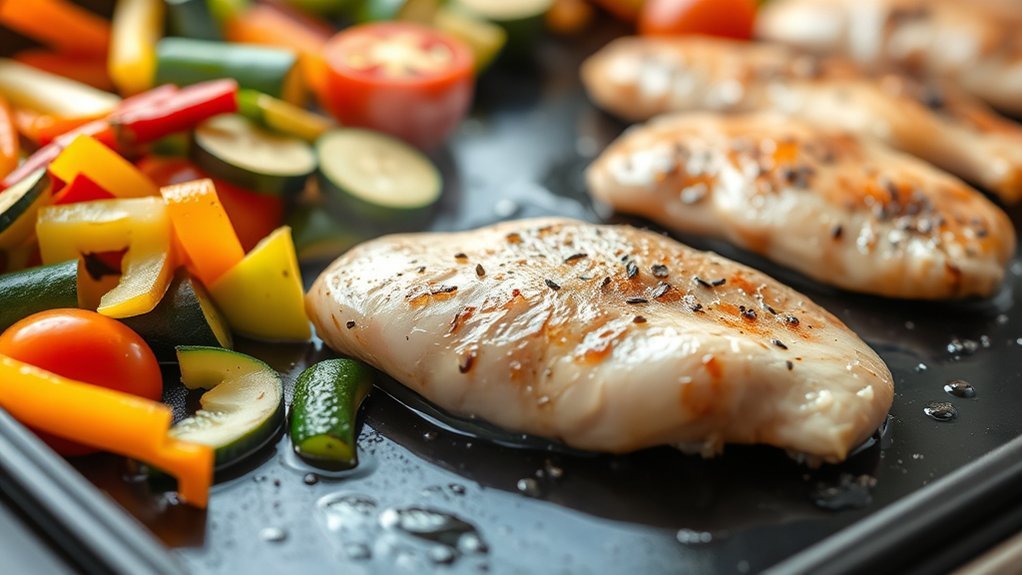
Searing lean proteins, sautéing fresh vegetables, and toasting whole-grain breads are some of the best healthy practices when cooking on a griddle. Lean cuts like chicken breast, turkey, or fish retain nutrients well while benefiting from the griddle flavor that enhances taste without excess oil.
Vegetables such as bell peppers, zucchini, and spinach cook quickly, preserving vitamins and antioxidants. Whole-grain breads offer fiber and complex carbs, making toasted options nutritious breakfast or snack choices.
Using a griddle reduces the cleanup hassle compared to frying pans, as its flat surface prevents food from sticking and allows even heat distribution. To maximize health benefits, avoid adding excessive fats or processed ingredients, and opt for fresh, whole foods that complement the griddle’s cooking style and efficiency.
How Does Griddle Cooking Compare to Frying and Baking?
How does cooking on a griddle stack up against frying and baking in terms of health and efficiency? Griddle cooking often allows you to use oil free techniques, reducing added fats compared to frying, which typically requires significant oil. This can lower calorie intake and decrease exposure to harmful compounds formed during high-temperature frying.
Unlike baking, which usually involves longer cooking times and indirect heat, griddling offers faster cooking with direct contact, preserving nutrients better. Additionally, the griddle flavor adds a unique, slightly charred taste without extra calories, enhancing food appeal.
However, frying may produce a crispier texture, and baking can evenly cook larger meals. Overall, griddling provides a balanced method, combining health benefits with efficiency, especially when you prioritize oil free techniques and flavor retention.
Can Griddle Cooking Help With Portion and Calorie Control?
Can griddle cooking assist you in controlling portions and calories effectively? Yes, it can. When you use a griddle, you have the advantage of cooking multiple items simultaneously, allowing you to monitor and manage portion sizes more precisely.
Unlike deep frying, griddling requires less oil, which naturally reduces calorie intake. This method also lets you visually track the amount of food you’re preparing, aiding in portion control.
By measuring ingredients before placing them on the griddle, you improve calorie tracking accuracy. However, portion control depends on your discipline and awareness, not just the cooking method.
Griddle cooking offers a practical way to cook balanced meals with controlled calories, but it’s essential to pair it with mindful eating habits to optimize health benefits.
Tips for Making Griddle Cooking Healthier and Safer
What steps improve both the healthfulness and safety of griddle cooking? Start by choosing non-stick or well-seasoned griddles to minimize added fats, supporting healthy grilling. Use oils with high smoke points, like avocado or grapeseed oil, to reduce harmful compounds.
Cook at moderate temperatures to prevent charring, which produces carcinogens. Maintain griddle safety by keeping the surface clean; leftover residue can harbor bacteria or cause flare-ups.
Cooking at moderate heat prevents carcinogens, while a clean griddle avoids bacteria and flare-ups for safer meals.
Always preheat the griddle evenly to guarantee thorough cooking, reducing foodborne illness risks. Use separate utensils and plates for raw and cooked foods to avoid cross-contamination.
Finally, ventilate your cooking area to disperse smoke and fumes. By following these steps, you can optimize both the nutritional benefits and safety aspects of griddle cooking.
Frequently Asked Questions
What Types of Griddles Are Safest for Home Use?
You should choose griddles made from cast iron or stainless steel for safety considerations and material durability. These materials resist warping, avoid harmful coatings, and ensure even heating, making them safer and longer-lasting for home use.
How Do You Properly Clean a Griddle After Cooking?
You clean a griddle by scraping off food residue while warm, then wiping it with a damp cloth. Follow cleaning routines with mild soap sparingly.
Reapply seasoning methods to maintain the surface’s non-stick, rust-resistant properties.
Can Griddles Be Used for Cooking Gluten-Free Meals?
You can absolutely use griddles for gluten-free cooking, but you’ll want to be mindful of gluten-free cross contamination.
Employing proper gluten-free cooking techniques, like thorough cleaning and separate utensils, helps ensure safe, contamination-free meals.
Are Electric Griddles More Energy-Efficient Than Stovetop Ones?
You’ll find electric griddles offer better electric efficiency than stovetop ones, using less energy for consistent heat.
Plus, safety considerations like automatic shut-off reduce risks, making electric griddles a more efficient, safer choice overall.
What Are the Best Utensils to Use on a Non-Stick Griddle?
Like a feather gliding on water, the best spatula for nonstick safety is silicone or nylon. These materials prevent scratches, preserving your griddle’s coating while ensuring safe, efficient cooking without damaging the surface.
Conclusion
When cooking on a griddle, you can retain up to 90% of your vegetables’ nutrients thanks to the quick, moderate heat. By choosing lean proteins, limiting oil, and avoiding charring, you reduce harmful compounds and support heart health.
Remember, griddle cooking isn’t a magic bullet but a smart tool within balanced meal planning. With mindful choices, you’ll enjoy flavorful, nutrient-rich meals that align with your health goals.
In conclusion, cooking on a griddle can be a healthy option when done thoughtfully, making it a valuable addition to your overall healthy eating strategy.