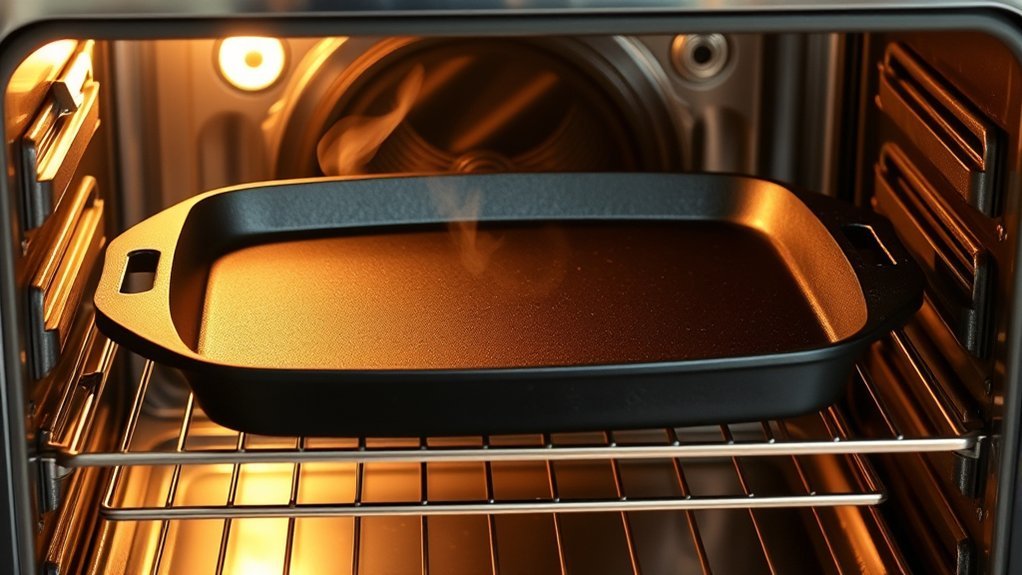

Imagine trying to bake a pizza on a cold frying pan and wondering why it didn’t cook evenly—that’s similar to using the wrong griddle in the oven. Can a griddle go in the oven? You might assume all griddles can handle the heat, but materials and coatings vary widely.
Knowing which ones can safely go in your oven and how to use them properly can save you from damage or accidents. Let’s explore what you need to watch for before you preheat.
Key Takeaways
- Griddles made of cast iron, stainless steel, or hard-anodized aluminum are generally oven-safe and withstand high temperatures.
- Avoid griddles with plastic, wooden handles, or non-oven-safe coatings, as they can melt, crack, or release harmful fumes in the oven.
- Oven-safe griddles usually have temperature limits between 350°F and 500°F; exceeding these can damage the griddle or coating.
- Always check manufacturer guidelines or labels for explicit oven-safe certification before placing a griddle in the oven.
- Use oven mitts for safe handling and place the griddle on the center oven rack for even heat distribution.
Which Griddles Can You Put in the Oven?
Which griddles can you safely put in the oven? You want to look for griddles made from oven safe materials like cast iron, stainless steel, or hard-anodized aluminum. These materials can withstand high temperatures without warping or releasing harmful substances.
Choose griddles made from cast iron, stainless steel, or hard-anodized aluminum for safe oven use.
Avoid griddles with plastic handles or wooden parts since they won’t hold up well in the oven. If your griddle has a nonstick coating, check the manufacturer’s guidelines because many nonstick surfaces can degrade or emit toxins at high heat.
Generally, nonstick griddles rated for oven use can handle temperatures up to 400°F. To ensure safety and durability, choose griddles specifically labeled as oven-safe, focusing on the construction and materials rather than just the brand or price.
This approach keeps your cooking both effective and safe.
How to Check If Your Griddle Is Oven-Safe
Knowing the materials and construction of your griddle gives you a strong starting point, but confirming its oven safety requires a few specific checks. First, inspect the manufacturer’s guidelines or user manual for explicit oven-safe statements. Next, examine the handles and any non-metal parts; plastic or wooden handles usually aren’t oven-friendly. Lastly, consider the griddle’s surface. Cast iron and stainless steel handle oven heat better than nonstick coatings, which may degrade.
To verify safely, you should:
- Review product labels or official websites for oven-safe certification.
- Check for removable or heat-resistant handles.
- Confirm the type of coating and its heat tolerance.
Following these steps ensures proper oven care and helps you apply effective cleaning tips post-use without damaging your griddle.
Oven Temperature Limits for Oven-Safe Griddles
Although many griddles are labeled oven-safe, you need to pay close attention to their maximum temperature limits to avoid damage. Oven safe guidance typically specifies a temperature ceiling, often between 350°F and 500°F, that you shouldn’t exceed.
Going beyond these temperature limits can warp the griddle, degrade non-stick coatings, or harm handles and attachments. Always consult the manufacturer’s instructions for exact limits since they vary by brand and material.
If you’re unsure, err on the side of caution and use a lower oven temperature. Sticking to recommended temperature limits ensures your griddle performs well over time and avoids costly replacements.
Following proper oven safe guidance preserves both safety and functionality when you use your griddle in the oven.
Materials and Handles Unsafe for Oven Use
How can you tell if your griddle’s materials and handles are unsafe for oven use? First, you need to identify components that don’t tolerate oven heat well. Many griddle materials and oven handles can warp, melt, or release toxins at high temperatures.
Watch out for:
- Plastic or rubber handles, which often melt or deform.
- Wooden handles or grips that can crack, burn, or catch fire.
- Non-metallic coatings on the griddle surface that may degrade or emit harmful fumes.
If your griddle has these features, it’s best to avoid using it in the oven. Always check the manufacturer’s specifications for heat tolerance. Understanding the limits of your griddle materials and oven handles keeps you safe and protects your cookware from damage.
How to Use Your Griddle Safely in the Oven
To use your griddle safely in the oven, first assure it’s made from oven-safe materials like cast iron or stainless steel. Always check and follow the manufacturer’s temperature limits to prevent damage or hazards.
When placing the griddle, handle it carefully with oven mitts and position it securely to avoid spills or burns.
Oven-Safe Griddle Materials
Which materials allow your griddle to safely withstand oven heat? Understanding oven safety and material compatibility is essential before placing your griddle inside. Not all griddles are designed for oven use, so knowing the construction material helps prevent damage or hazards.
Look for these oven-safe griddle materials:
- Cast iron: Excellent heat retention and durability; ideal for oven use.
- Stainless steel: Resists warping and corrosion, compatible with most oven temperatures.
- Anodized aluminum: Treated to withstand heat better, but verify the manufacturer’s guidelines.
Avoid griddles with plastic handles or non-stick coatings not rated for oven use. Always confirm material compatibility to guarantee safety and extend your griddle’s lifespan.
Temperature Limits To Follow
Although many griddles can handle oven temperatures, you need to stick to specific limits to avoid warping or damaging your cookware. Oven safe testing often reveals that most cast iron and stainless steel griddles tolerate up to 500°F, while non-stick or coated griddles usually have lower thresholds, around 350°F to 400°F.
Materials safety is crucial; exceeding these limits can degrade coatings or weaken the metal. Always check the manufacturer’s guidelines or product labels before placing your griddle in the oven. If you’re unsure, conduct a careful oven safe testing by gradually increasing the temperature and observing any changes.
Staying within recommended temperature limits ensures your griddle remains functional, safe, and durable for long-term use.
Proper Handling And Placement
How should you position your griddle to guarantee safe and effective oven use? First, ensure your griddle sizing fits comfortably inside your oven without touching the sides or heating elements. This prevents heat damage and promotes even cooking.
Next, consider oven storage space; avoid overcrowding to maintain proper airflow.
Follow these key handling and placement tips:
- Place the griddle on the center oven rack for balanced heat distribution.
- Use oven mitts or heat-resistant gloves when inserting or removing the griddle to prevent burns.
- Avoid stacking other cookware on the griddle to ensure stability and safe handling.
Cleaning and Caring for Oven-Safe Griddles
When was the last time you gave your oven-safe griddle a thorough cleaning? Proper griddle maintenance is essential to extend its lifespan and ensure consistent cooking performance.
After each use, let the griddle cool slightly, then wipe it down with a warm, soapy cloth to remove food residue. Avoid abrasive cleaners that can damage the surface. For stubborn spots, use a plastic scraper or a non-metal brush.
After use, cool slightly and wipe with warm, soapy cloth; avoid abrasives and use plastic scrapers for tough spots.
Regularly seasoning cast iron griddles preserves their non-stick quality and prevents rust. Also, practicing good oven care by avoiding sudden temperature changes protects your griddle’s integrity.
Store your griddle in a dry place to prevent moisture buildup. By staying on top of cleaning and maintenance, you’ll keep your oven-safe griddle in optimal condition for years to come.
Alternatives to Oven-Safe Griddles
If your griddle isn’t oven-safe, don’t worry. You have several effective alternatives that can deliver similar cooking results. When selecting replacements, focus on oven-safe materials that can handle high heat without warping or releasing toxins.
Also, consider grip and placement to ensure safety during transfers.
Here are three alternatives:
- Cast Iron Skillets: Durable and oven-safe, they offer excellent heat retention and a sturdy grip.
- Enameled Dutch Ovens: Made from oven-safe materials, these provide even heat distribution and secure handling.
- Heavy-Duty Baking Sheets: Ideal for flat cooking surfaces; choose those with heat-resistant silicone grips for safe placement.
Frequently Asked Questions
Can a Griddle Be Used on a Stovetop Burner?
Yes, you can use a griddle on a stovetop burner. Just ensure proper griddle safety by monitoring heat distribution evenly to avoid hotspots and damage.
Adjust the burner size to fit the griddle for consistent cooking results.
How Do I Season a Cast Iron Griddle?
You’ll coat your cast iron griddle with seasoning oil like it’s liquid gold, then bake it at 450°F for an hour. This seasoning process builds a non-stick, rust-proof shield, making your griddle last forever.
What Foods Cook Best on a Griddle?
You’ll cook pancakes, bacon, eggs, and grilled sandwiches best on your griddle. Use griddle accessories made from oven-safe materials to expand cooking options, like warming trays or press plates, ensuring versatility and durability during use.
Can I Use a Griddle on an Induction Cooktop?
Yes, you can use a griddle on an induction cooktop if it has induction compatibility, meaning a magnetic base. Just be careful with nonstick coating precautions. Avoid overheating to preserve its surface and guarantee even cooking.
How Long Does It Take to Preheat a Griddle?
You’ll typically wait about 5 to 10 minutes for preheating timing, reaching optimum heat. Mastering temperature control guarantees even cooking, so keep an eye on the griddle’s surface until it’s uniformly hot before adding food.
Conclusion
You can confidently use your griddle in the oven—just make sure it’s built for the heat. Double-check materials, coatings, and handles before you start, and keep temperatures within safe limits to avoid any unwelcome surprises.
When in doubt, treat your griddle like a delicate dance partner—handle with care, avoid sudden moves, and give it the respect it deserves.
That way, your cooking stays smooth and your griddle happy for many meals to come. Remember, knowing if a griddle can go in the oven is key to safe and effective cooking.