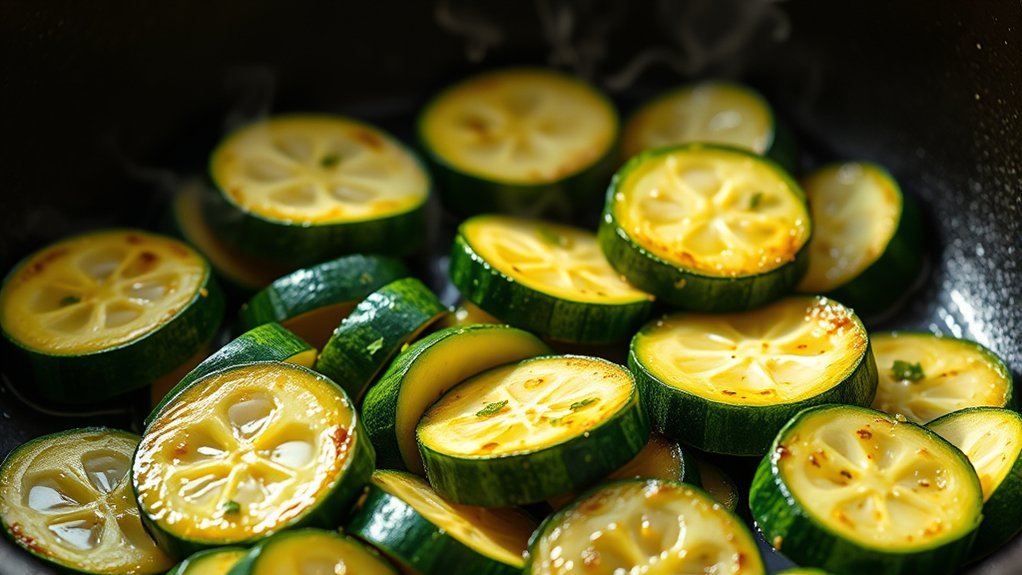

Cooking zucchini in a skillet is a simple and delicious way to prepare this versatile vegetable.
Starting with fresh zucchini and prepping it carefully ensures even cooking and a tender-crisp texture.
Mastering the right heat and seasoning balance will take your skillet zucchini from basic to outstanding.
Each step matters to achieve consistently flavorful results.
Keep reading to discover the essential tips that make cooking zucchini in a skillet a breeze every time.
Key Takeaways
- Choose firm, small to medium zucchinis with glossy, blemish-free skin for the best flavor and texture.
- Slice zucchini into uniform ¼-inch rounds or strips to ensure even cooking.
- Preheat the skillet over medium-high heat and add a high smoke point oil like avocado or grapeseed oil.
- Cook zucchini in a single layer, stirring gently every 2–3 minutes to brown evenly, for about 6–8 minutes.
- Season with salt, pepper, and herbs like basil or thyme toward the end, then remove promptly from heat.
How to Choose the Best Zucchini for Skillet Cooking
When selecting zucchini for skillet cooking, what should you look for to ensure the best flavor and texture? Focus on choosing zucchini that is firm, evenly colored, and free of blemishes or soft spots. Smaller to medium-sized zucchini typically offer a sweeter taste and better skillet texture because they contain fewer seeds and less water.
Avoid zucchini that feels spongy or has wrinkled skin, as it won’t hold up well during cooking and may result in a mushy outcome. The skin should be glossy and vibrant, indicating freshness.
Prep Zucchini for Even Cooking
To ensure your zucchini cooks evenly, start by selecting pieces that are uniform in size and shape. Then, use consistent slicing techniques, cutting the zucchini into evenly thick rounds or strips.
This preparation helps the zucchini cook at the same rate, preventing some pieces from being undercooked or overdone.
Choosing Uniform Zucchini
How do you guarantee your zucchini cooks evenly in a skillet? Start by choosing uniform zucchini. Selecting zucchinis that are similar in size and shape ensures consistent heat exposure during cooking. This uniformity prevents some pieces from overcooking while others remain underdone.
When shopping, pick firm zucchinis without soft spots or blemishes. Perform zucchini texture testing by gently pressing the skin; it should yield slightly but remain firm, indicating freshness. Avoid overly soft or overly hard zucchinis, as they can affect cooking time and texture.
Slicing Techniques for Consistency
Why does slicing zucchini consistently matter? Uniform slices ensure even cooking, preventing some pieces from overcooking while others remain underdone. To achieve this, focus on your zucchini knife grips and slicing technique.
Here’s how to get consistent results:
- Hold the zucchini firmly with a claw grip to protect your fingers.
- Use a sharp knife and practice controlled, steady cuts.
- Aim for uniform slices, about ¼-inch thick, so they cook evenly.
- Rotate the zucchini if needed to maintain consistent thickness along the entire length.
Mastering these slicing techniques helps you prep zucchini efficiently and ensures every slice cooks perfectly in your skillet. Consistency in your cuts leads to better texture and flavor in the final dish.
What Seasonings Bring Out Zucchini’s Flavor?
You’ll want to start with classic herbs like basil, thyme, and oregano to highlight zucchini’s natural sweetness.
For a more robust flavor, try bold spice combinations such as smoked paprika, cumin, or chili flakes. These seasonings enhance the vegetable’s taste without overpowering its delicate texture.
Classic Herbs for Zucchini
Which herbs best highlight zucchini’s natural sweetness and subtle earthiness? Classic herbs enhance zucchini flavor without overpowering it, allowing its delicate profile to shine. When cooking zucchini in a skillet, consider these four essential herbs:
- Basil Offers a fresh, slightly sweet aroma that complements zucchini’s mild taste.
- Thyme Adds a subtle earthiness and depth, enhancing the vegetable’s natural flavors.
- Parsley Provides a clean, bright note that balances the richness from cooking.
- Oregano Brings a warm, slightly peppery flavor that pairs well with sautéed zucchini.
Using these classic herbs lets you elevate zucchini flavor simply and effectively, ensuring your skillet-cooked dish tastes vibrant and well-rounded.
Bold Spice Combinations
Although zucchini’s delicate flavor pairs beautifully with classic herbs, bold spice combinations can transform it into a vibrant, memorable dish. To enhance zucchini’s natural sweetness and mild taste, consider using bold spice blends like smoked paprika, cumin, and chili powder.
These spices add warmth and depth without overpowering the vegetable. Another effective flavor pairing involves garlic powder, crushed red pepper, and a hint of turmeric, which introduces earthiness and a subtle heat.
When cooking, sprinkle your chosen bold spice combination evenly over sliced zucchini in the skillet, allowing the spices to toast slightly and release their aromas. This technique ensures the zucchini absorbs the flavors fully, resulting in a well-balanced dish that excites the palate while maintaining its fresh, tender texture.
Get Your Skillet Hot for Perfect Zucchini
How hot should your skillet be to achieve perfectly cooked zucchini? You want it hot enough to sear the zucchini quickly, enhancing flavor through caramelization without turning it mushy.
Understanding zucchini science helps: the vegetable contains high water content, so a hot skillet ensures moisture evaporates fast, keeping the zucchini crisp-tender.
To get your skillet ready:
- Preheat over medium-high heat until it’s shimmering but not smoking.
- Add a small amount of oil with a high smoke point, like avocado or grapeseed oil.
- Test by flicking a drop of water—it should sizzle and evaporate immediately.
- Avoid overcrowding the pan to maintain high heat.
Mastering the hot skillet technique is key to perfectly cooked zucchini every time.
Step-by-Step: Cooking Zucchini in a Skillet
A well-executed skillet-cooked zucchini starts with properly prepared ingredients and a hot pan. Begin by slicing your tiny zucchini into uniform pieces to assure even cooking.
Heat a tablespoon of oil in the skillet over medium-high heat until shimmering. Add the zucchini in a single layer to avoid overcrowding, which causes steaming instead of sautéing.
Use a wooden spoon to gently stir the zucchini every 2-3 minutes, allowing each side to brown lightly. Cook for about 6-8 minutes, until the zucchini is tender but still slightly firm.
Season with salt, pepper, and optional herbs toward the end. Remove from heat promptly to preserve texture and flavor. Following these steps guarantees perfectly cooked zucchini with a caramelized exterior and tender interior.
How to Avoid Common Skillet Zucchini Cooking Mistakes
Mastering the technique of cooking zucchini in a skillet often hinges on avoiding a few common errors that can compromise texture and flavor. To make the most of your zucchini’s nutrition and create a versatile pan salad base, keep these tips in mind:
- Don’t overcrowd the skillet. Too many zucchini pieces cause steaming, not searing.
- Avoid cutting zucchini too thick or thin; aim for uniform slices to ensure even cooking.
- Skip excessive oil. Zucchini releases moisture naturally, and too much oil leads to sogginess.
- Resist overcooking. Zucchini should be tender-crisp to retain nutrients and texture.
Following these steps helps you preserve zucchini’s nutrition and achieve the perfect skillet-cooked texture every time.
Tasty Ways to Serve Your Skillet Zucchini
Skillet-cooked zucchini offers a versatile base that complements a variety of dishes and flavors. To highlight its tender textures, serve it alongside grilled proteins or toss it into pasta for added moisture and nutrition.
You can also use it as a bed for crowd pleasing toppings like crumbled feta, toasted pine nuts, or a drizzle of balsamic glaze. For a quick meal, mix zucchini with sautéed garlic and chili flakes, then garnish with fresh herbs such as basil or parsley.
If you prefer a heartier option, incorporate skillet zucchini into casseroles or grain bowls. These serving ideas not only enhance zucchini’s natural taste but also create visually appealing plates that satisfy both texture and flavor preferences.
Frequently Asked Questions
Can I Freeze Cooked Zucchini for Later Use?
Yes, you can freeze zucchini after cooking. To maintain texture, cool it completely, drain excess moisture, and freeze in airtight containers.
For prep tips, slice uniformly and blanch briefly before freezing to preserve flavor and color.
Is Zucchini Good for a Low-Carb Diet?
You’ll love that zucchini contains only 3 grams of carbs per cup, making it perfect for a zucchini low carb diet. Its keto friendly benefits include high fiber and low calories, supporting weight management and ketosis.
How Long Does Cooked Zucchini Last in the Fridge?
Cooked zucchini lasts about 3 to 4 days in the fridge with proper storage. For timing, store it in an airtight container.
Pair it with flavors like garlic, lemon, or herbs to enhance its freshness when reheated.
Can I Use Non-Stick vs. Cast Iron Skillet for Zucchini?
You can use non-stick vs. cast iron skillets for zucchini. Non-stick offers easy cleanup and lower fat cooking, while cast iron provides superior heat retention and browning.
Choose based on skillet material differences and your cooking preference.
Are There Any Health Benefits of Eating Zucchini Regularly?
You’ll love that zucchini’s fiber benefits can reduce heart disease risk by 20%. Its mild taste profile makes it easy to add fiber to your diet, improving digestion and supporting overall health with every delicious bite.
Conclusion
Now that you know how to cook zucchini perfectly in a skillet, you can enjoy tender-crisp, flavorful results every time.
Imagine serving golden-browned zucchini seasoned with fresh thyme alongside grilled chicken for a quick weeknight meal that impresses. By choosing the right zucchini, prepping evenly, and heating your skillet just right, you’ll avoid common pitfalls.
These simple steps elevate this humble veggie to a delicious, healthy side dish you’ll want often. Mastering how to cook zucchini in a skillet ensures you get the best texture and flavor every time.