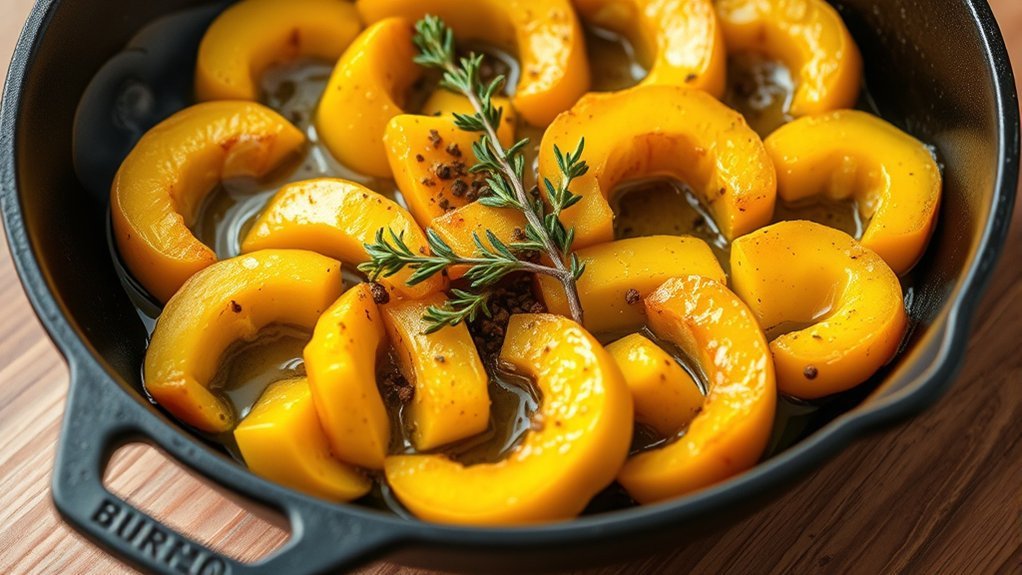

When you cook squash in a skillet, choosing the right type and preparing it properly makes all the difference. You want uniform pieces for even cooking and a hot, well-oiled pan to develop that caramelized edge.
Seasoning at the right time enhances flavor without overpowering the natural taste. Mastering this balance ensures tender, flavorful squash every time—but there are key techniques you’ll need to avoid common pitfalls.
Key Takeaways
- Choose smaller summer squashes like zucchini, wash, trim ends, remove seeds, and cut into uniform pieces for even cooking.
- Preheat a heavy-bottomed skillet (cast iron or stainless steel) on medium heat, then increase to medium-high when adding squash.
- Add oil after preheating, season with salt, pepper, and garlic powder, and avoid overcrowding to ensure proper caramelization.
- Cook squash on medium-high heat to sear and caramelize edges, then reduce to medium-low to finish cooking gently without mushiness.
- Test tenderness by pressing with a fork; squash should be tender but firm, with soft caramelized edges and a sweet roasted aroma.
Pick the Best Squash for Skillet Cooking
When choosing squash for skillet cooking, which varieties deliver the best texture and flavor? Opt for summer squashes like zucchini or yellow squash. They cook quickly and hold their shape well.
Buying squash, look for firm skin without blemishes or soft spots; these indicate freshness. Smaller squash tend to be sweeter and less watery, ideal for skillet use. Avoid oversized squash, as they can be tough and seedy.
For kitchen safety, always wash squash thoroughly to remove dirt and potential pesticides before cutting. Use a sharp knife and stabilize the squash on a cutting board to prevent slipping. Selecting the right squash ensures your skillet cooking is efficient and yields a tender, flavorful result every time.
Prep Squash for Even Skillet Cooking
Choosing the right squash sets the foundation, but proper preparation guarantees even cooking in your skillet. Start by cutting the squash into uniform pieces to ensure consistent heat distribution. Trim ends, peel if needed, and remove seeds to avoid excess moisture, which hinders savory browning. Pat the pieces dry to manage moisture effectively.
Use this guide to prep squash for even cooking:
| Step | Action | Purpose |
|---|---|---|
| 1 | Trim ends | Remove tough parts |
| 2 | Peel (optional) | Improve texture |
| 3 | Slice evenly | Ensure uniform cooking |
| 4 | Remove seeds | Prevent excess moisture |
| 5 | Pat dry | Promote savory browning |
This moisture management and uniform slicing optimize skillet cooking and enhance flavor.
Choose the Best Skillet and Heat for Caramelization
Choose a heavy-bottomed skillet like cast iron or stainless steel to ensure even heat distribution. Set your burner to medium-high heat to develop a rich caramelization without burning the squash. This balance helps you achieve that perfect golden crust and deep flavor.
Skillet Material Options
What skillet material delivers the best caramelization for squash? Cast iron tops the list, offering even heat retention essential for developing that golden crust. Knowing what texture you want, tender inside with a crisp exterior, helps you pick the right pan.
How long to sear depends on skillet heat distribution; cast iron and stainless steel excel here.
| Skillet Material | Heat Retention | Ideal For |
|---|---|---|
| Cast Iron | Excellent | Deep caramelization |
| Stainless Steel | Good | Quick searing |
| Non-stick | Moderate | Gentle cooking |
| Carbon Steel | Excellent | High-heat searing |
| Aluminum | Poor | Even heat, not for searing |
Choose cast iron or carbon steel for the best caramelized texture and efficient searing times.
Optimal Heat Settings
Once you’ve selected a skillet like cast iron or carbon steel for their superior heat retention and caramelization, the next step is managing your stove’s heat settings to maximize browning without burning. Here’s how to hit the sweet spot:
- Preheat your skillet on medium heat to allow even warmth distribution.
- Increase to medium-high when adding squash to trigger caramelization.
- Adjust by lowering heat if you notice smoking or sticking to maintain balanced textures.
- Finish on medium-low heat to gently cook through, avoiding mushiness and ensuring speedy cleanup.
Achieving Perfect Caramelization
How do you ensure your squash develops that rich, golden crust without turning soggy or burnt? Start by choosing the best skillet for caramelization. A heavy-bottomed cast iron or stainless steel pan works best, providing even heat distribution and excellent heat retention.
Avoid nonstick pans, which can prevent that necessary browning. Next, control your heat carefully. Medium-high heat strikes the perfect balance, allowing sugars to caramelize slowly without burning. This two word discussion idea 1 “heat control” is crucial to success.
Also, avoid overcrowding the pan; give each squash piece room to sizzle and brown. This two word discussion idea 2 “pan space” ensures proper evaporation of moisture, preventing sogginess. Master these techniques, and you’ll achieve perfect caramelization every time.
Cook Squash in a Skillet: Step-by-Step Guide
Start by prepping your squash with even slices to ensure uniform cooking. Use proper skillet techniques to achieve a tender texture and caramelized edges.
Finally, season thoughtfully and serve immediately for the best flavor.
Preparing Squash Properly
Why does preparing squash properly make all the difference when cooking it in a skillet? Without careful prep, you risk topic drift, focusing on irrelevant comparison like size or color rather than texture and moisture, which truly affect cooking.
To prepare squash correctly:
- Wash thoroughly to remove dirt and pesticides.
- Peel if the skin is tough; otherwise, leave it on for nutrients and texture.
- Slice evenly to ensure uniform cooking and prevent uneven softness.
- Remove seeds and stringy parts to avoid bitterness and improve mouthfeel.
Cooking Techniques Overview
When should you add oil to your skillet to achieve the perfect sautéed squash? Add oil right after preheating your skillet to medium heat. This timing ensures the oil spreads evenly and prevents sticking.
Understanding skillet history helps. It’s designed for even heat distribution, essential for cooking squash cousins like zucchini or yellow squash consistently. Use a sturdy skillet to maintain steady heat, allowing squash to brown without steaming.
Cut squash into uniform pieces to ensure even cooking. Once the oil shimmers, add squash in a single layer, avoiding overcrowding. Stir occasionally to brown all sides while preserving texture.
Mastering these cooking techniques lets you harness your skillet’s potential, delivering tender, flavorful squash every time.
Seasoning And Serving Tips
How can you elevate the flavor of your skillet-cooked squash with simple seasoning? Start by exploring versatile seasoning options that enhance natural sweetness and texture. Here are four effective ways:
- Sprinkle salt, black pepper, and garlic powder during cooking for a classic, savory base.
- Add a pinch of smoked paprika or chili flakes to introduce a subtle smoky heat.
- Toss cooked squash with fresh herbs like thyme, parsley, or basil for brightness.
- Finish with a drizzle of lemon juice or balsamic glaze to balance richness.
For serving ideas, pair your squash with grilled proteins, toss into salads, or use as a warm side dish. These seasoning options and serving ideas will ensure your skillet squash is both flavorful and versatile.
Season Skillet-Cooked Squash for Great Flavor
What elevates skillet-cooked squash from simple to spectacular is the seasoning you choose. To maximize flavor, master your seasoning timing: add salt and spices midway through cooking to allow them to meld without drawing out excess moisture too early.
Consider skillet geometry. Wider pans expose more surface area, promoting better caramelization and flavor absorption. This means your seasonings will bloom more effectively compared to a cramped pan.
Use complementary herbs like thyme or sage and a pinch of smoked paprika or cumin for warmth. Finish with fresh garlic or a squeeze of lemon for brightness. Avoid adding delicate herbs too soon; instead, sprinkle them just before serving.
Proper seasoning timing combined with the right skillet geometry ensures your squash bursts with vibrant, well-rounded flavor every time.
How to Know When Squash Is Perfectly Tender
A perfectly tender squash strikes the ideal balance between softness and structure, neither mushy nor undercooked. To master how to test tenderness, start by gently pressing a fork or the tip of a knife into the squash. You want it to slide in easily but with slight resistance.
Here’s how to confirm:
- Visualize the squash edges softening and slightly caramelized.
- Feel the squash give under gentle pressure without collapsing.
- Smell a sweet, roasted aroma indicating thorough cooking.
- Taste a small piece; it should be tender yet slightly firm.
Customize Your Skillet Squash With Herbs and Add-Ins
Once you’ve achieved the perfect tenderness, enhancing your skillet squash with herbs and add-ins can elevate its flavor profile appreciably. Begin by selecting fresh herbs like thyme, basil, or rosemary. Each offers distinct aromatic notes that complement squash well.
Consider two word discussion ideas such as “garlic butter” or “lemon zest” to add layers of complexity. Incorporate add-ins like toasted nuts, crumbled cheese, or a splash of balsamic vinegar to introduce texture and tang.
Add these herbs and add-ins during the last few minutes of cooking to preserve their vibrant flavors without overpowering the squash. By thoughtfully combining these elements, you’ll transform a simple skillet dish into a nuanced, savory experience that highlights the squash’s natural sweetness and enhances your meal’s overall appeal.
Avoid These Common Mistakes When Cooking Squash in a Skillet
Why do some skillet squash dishes fall flat despite following a recipe? It often comes down to avoidable errors. First, don’t overcrowd the pan; it steams instead of browning.
Skillet squash can fall flat if you overcrowd the pan, causing steaming instead of flavorful browning.
Second, avoid under-seasoning. Squash is mild and benefits from bold flavors. Third, don’t skip proper squash storage. Fresh squash keeps its texture and flavor better than old, soggy pieces.
Finally, don’t confuse pickled squash with fresh when cooking. Pickled squash has a different texture and acidity that alters cooking time and flavor. Keep these points in mind to improve your skillet squash:
- Use moderate heat and space for caramelization
- Season generously with salt and herbs
- Store squash in a cool, dry place before cooking
- Cook fresh squash, not pickled squash, for best results
Frequently Asked Questions
Can I Freeze Cooked Squash for Later Use?
Yes, you can freeze cooked squash for later use. For best frozen prep, cool it completely, chop if needed, and store airtight.
What Are the Nutritional Benefits of Eating Squash?
You’ll enjoy nutrition benefits from squash, as it’s rich in vitamins A and C, fiber, and antioxidants.
Squash minerals like potassium and magnesium support heart health and muscle function, making it a smart, nutritious choice for your diet.
How Long Can Cooked Squash Be Stored in the Refrigerator?
You’ll want to store cooked squash in your fridge for 3 to 5 days to maintain its specific texture and flavor profile. Beyond that, it risks losing taste and becoming mushy, so use it promptly for best results.
Can I Use a Nonstick Skillet Instead of Cast Iron?
Yes, you can use nonstick alternatives instead of cast iron. Consider skillet material considerations like heat retention and searing ability.
Nonstick pans heat quickly but don’t retain heat as well, affecting cooking texture and browning.
Is It Better to Peel Squash Before Cooking?
You don’t have to peel squash before cooking; peel vs not mainly affects texture. Leaving the skin adds firmness and nutrients, while peeling results in a softer, smoother texture.
Choose based on your preferred final dish texture.
Conclusion
Cooking squash in a skillet is simple yet transformative—you start with humble, firm slices and end with caramelized, tender bites bursting with flavor.
By balancing high heat for searing and gentle cooking to finish, you reveal textures and tastes that raw squash can’t offer.
With the right seasoning and careful technique, your skillet squash becomes more than a side—it’s a vibrant, versatile dish that’s both easy and impressive every time you cook.
Mastering how to cook squash in a skillet ensures you create a delicious and satisfying dish that highlights the vegetable’s natural sweetness and texture.