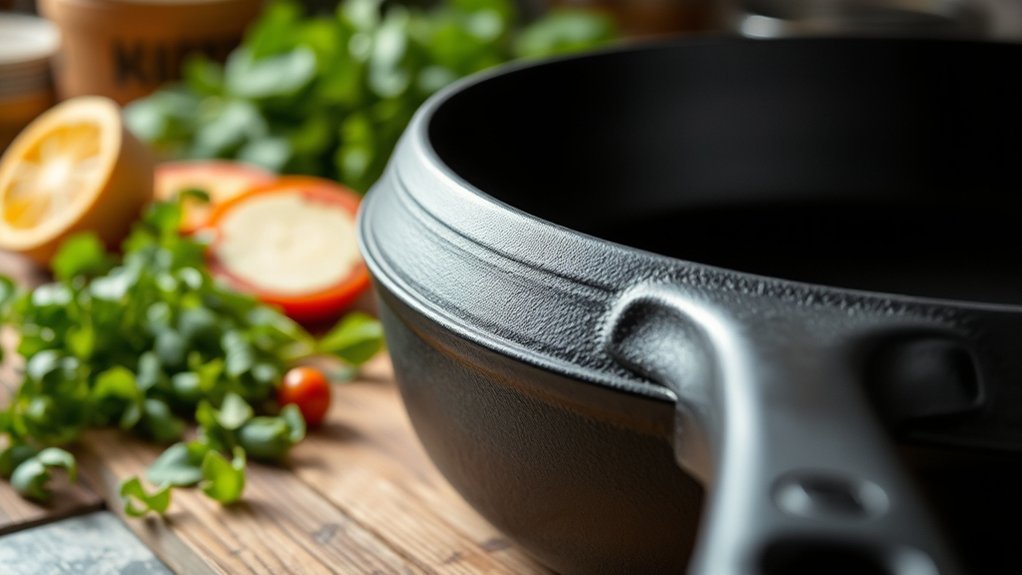

When you choose a deep skillet, you’re selecting more than just a frying pan. A deep skillet’s taller sides give you the space to cook larger portions without spilling, while the wide surface ensures even heat distribution. This balance makes it ideal for a variety of cooking techniques.
Understanding what sets a deep skillet apart can change how you approach your kitchen tasks. It can enhance your results in ways a standard pan can’t.
Key Takeaways
- A deep skillet features taller, sloped sides compared to traditional frying pans, allowing for larger portions and reduced splatter.
- Its design balances depth and surface area for even heat distribution and consistent cooking temperatures.
- Made from materials like cast iron or thick stainless steel, it offers excellent heat retention and durability.
- The skillet’s ergonomic, heat-resistant handles ensure a secure grip and compatibility with various heat sources, including induction.
- Versatile for sautéing, frying, simmering, and innovative cooking methods, it supports a wide range of recipes and techniques.
What Is a Deep Skillet?
What distinguishes a deep skillet from other cookware? At its core, a deep skillet features taller, sloped sides compared to traditional frying pans, allowing you to cook larger portions and prevent splatters.
Understanding deep skillet basics means recognizing its versatility: it handles sautéing, frying, and simmering with equal ease. When considering kitchen ergonomics, its design promotes comfortable handling, often equipped with sturdy, heat-resistant handles that provide a secure grip and reduce wrist strain.
The depth also helps contain liquids and ingredients, minimizing mess and improving cooking efficiency. By grasping these aspects, you see that a deep skillet isn’t just a larger pan; it’s a thoughtfully engineered tool that enhances your cooking experience through both form and function.
Why Pick a Deep Skillet Over Other Pans
You’ll appreciate a deep skillet for its ability to handle a wide range of cooking methods, from sautéing to simmering, without switching pans. Its superior heat retention ensures even cooking and consistent results every time.
Plus, the enhanced capacity lets you prepare larger meals more efficiently, saving you time and effort in the kitchen.
Versatile Cooking Options
A deep skillet offers a unique blend of functionality that sets it apart from other pans, making it an essential tool in your kitchen. Its high sides and broad surface allow you to explore versatile cooking options often unavailable with shallower pans.
You can seamlessly transition from frying and sautéing to creative fermentation, using the skillet as a controlled vessel for developing complex flavors. Additionally, its design supports underwater cooking techniques, like gentle simmering with water baths, which demand consistent depth and heat distribution.
This versatility means you’re not limited to conventional stovetop tasks; the deep skillet adapts to innovative culinary methods, enhancing your cooking repertoire. Choosing this pan empowers you to experiment confidently, making it a cornerstone for diverse, precise, and creative meal preparation.
Superior Heat Retention
How does a deep skillet maintain heat so effectively compared to other pans? Its design and materials play a crucial role. Deep skillets often feature heavy-gauge metals like cast iron or thick stainless steel, which provide exceptional heat retention.
These materials absorb and distribute heat evenly, preventing hot spots and allowing you to cook food uniformly. The skillet’s depth adds mass, further enhancing its ability to hold temperature steady during cooking.
This superior heat retention helps you control cooking temperatures precisely, whether you’re searing, frying, or simmering. Additionally, material durability ensures the skillet withstands repeated heating cycles without warping or degrading, making it a reliable tool in your kitchen arsenal.
Choosing a deep skillet means investing in consistent performance and long-lasting quality.
Enhanced Capacity Benefits
Deep skillets offer expanded cooking space that enhances your ability to prepare larger meals with ease. This increased capacity lets you cook dishes requiring more volume or multiple ingredients without crowding, ensuring even heat distribution and better flavor development.
Beyond traditional frying or sautéing, deep skillets serve alternative uses like simmering stews, deep-frying, or even baking, making them versatile additions to your kitchen arsenal. When considering storage ideas, their deeper design may require strategic placement, but stacking them with compatible lids or nesting with other cookware maximizes space efficiency.
Choosing a deep skillet over other pans means investing in a multifunctional tool that streamlines your cooking process while accommodating varied recipes and kitchen setups, ultimately enhancing your culinary experience.
Features That Make a Deep Skillet Great
Understanding the key features that define a great deep skillet helps you choose one that suits your cooking style and needs. A top-tier deep skillet excels in deep skillet dynamics, which means it balances depth and surface area to accommodate larger portions without compromising cooking efficiency.
A great deep skillet balances depth and surface area for efficient cooking of larger portions.
You’ll want a skillet that promotes even skillet heat behavior, ensuring consistent temperature distribution to avoid hotspots and uneven cooking. Look for sloped sides that facilitate easy stirring and flipping, enhancing versatility.
A well-designed handle offers a secure grip and stays cool during use, improving safety and control. Additionally, compatibility with various heat sources, including induction, broadens your cooking options.
Focusing on these features ensures you select a deep skillet that performs reliably and elevates your culinary results.
Choosing the Best Materials for Your Deep Skillet
Selecting the right material substantially influences your skillet’s performance, durability, and maintenance. You want a deep skillet that delivers even heat distribution and stands up to frequent use. Consider these materials:
- Cast Iron: Exceptional material durability and superior heat retention make it ideal for long, slow cooking. Requires seasoning but lasts forever.
- Stainless Steel: Offers excellent heat distribution and resists corrosion. It’s low maintenance but can have hot spots unless clad.
- Aluminum: Lightweight with rapid heat conduction but less durable. Anodized versions improve hardness and non-reactivity.
- Carbon Steel: Combines cast iron’s durability with lighter weight. Heats quickly and evenly but needs seasoning to prevent rust.
Choose based on your cooking style and maintenance preference to maximize your skillet’s lifespan and cooking efficiency.
Using a Deep Skillet for Different Cooking Methods
You’ll find a deep skillet excels at searing and browning, thanks to its even heat distribution and high sides that contain splatters. It also transitions seamlessly to the oven, making it ideal for baking and roasting dishes that require both stovetop and oven cooking.
Understanding these methods will help you maximize your skillet’s versatility in the kitchen.
Searing And Browning
How do you achieve that perfect golden crust that locks in flavor and juices? Mastering searing techniques in a deep skillet is essential. The skillet’s depth allows even heat distribution, promoting optimal browning chemistry, the Maillard reaction, that transforms your food’s surface into a rich, flavorful crust.
Follow these steps for precise searing and browning:
- Preheat the deep skillet thoroughly to ensure consistent heat.
- Pat your protein dry to prevent steaming and encourage browning.
- Use a high smoke point oil to withstand intense heat without burning.
- Avoid overcrowding the pan, which lowers temperature and hinders proper searing.
Baking And Roasting
Once you’ve mastered searing and browning in a deep skillet, you can expand its use to baking and roasting, harnessing its versatility. Its high sides and even heat distribution make it ideal for both baking techniques and roasting methods. This allows you to cook dishes that require consistent heat and moisture retention.
Whether you’re baking a frittata or roasting vegetables, the skillet ensures even cooking and excellent caramelization.
| Cooking Method | Benefits |
|---|---|
| Baking | Retains moisture; even heat |
| Roasting | Enhances caramelization |
| Braising | Combines wet and dry heat |
| Searing+Roast | Locks in flavor; finishes in oven |
| One-pan Meals | Simplifies cleanup and cooking |
Use your deep skillet to experiment confidently with diverse baking techniques and roasting methods.
Best Recipes for Deep Skillets
What makes deep skillets so versatile in the kitchen? Their depth and sturdy design let you experiment with diverse recipes while addressing tips for coating consistency and concerns about handles durability. To maximize your deep skillet’s potential, try these standout recipes:
- Shallow frying crispy chicken ensures even coating without burning.
- One-pan pasta dishes allow simultaneous sautéing and simmering.
- Deep-dish frittatas utilize depth for fluffy, evenly cooked eggs.
- Braised meats exploit heat retention for tender results.
Each recipe benefits from the skillet’s robust build and non-stick surface, provided you monitor handle durability during high-heat cooking. Mastering these dishes showcases your skillet’s adaptability, elevating your culinary repertoire with reliable, consistent performance.
Cleaning and Caring for Your Deep Skillet
Why does proper cleaning and maintenance matter so much for your deep skillet? It ensures longevity, optimal performance, and food safety.
Using effective cleaning strategies prevents residue buildup and protects the skillet’s surface. Maintenance tips like seasoning cast iron skillets regularly or avoiding abrasive cleaners on non-stick ones keep them in prime condition.
| Cleaning Strategy | Maintenance Tip | Benefit |
|---|---|---|
| Hand wash with mild soap | Season after each use | Prevents rust and wear |
| Avoid dishwasher | Store in a dry place | Extends skillet lifespan |
| Use soft scrubbers | Reapply oil coating | Maintains non-stick surface |
Where to Find Quality Deep Skillets
Where can you find a deep skillet that combines durability, performance, and value? Start by exploring reputable retailers and brands that prioritize sustainability trends and ergonomic design. Consider these four key sources:
- Specialty kitchen stores. They offer expert-curated selections emphasizing quality craftsmanship and eco-friendly materials.
- Online marketplaces. Look for top-rated models with detailed reviews that highlight ergonomic features and sustainable production.
- Manufacturer websites. Direct purchases often provide access to the latest innovations in design and responsibly sourced components.
- Culinary expos and trade shows. These events showcase cutting-edge cookware where you can assess build quality firsthand.
Frequently Asked Questions
Can a Deep Skillet Be Used on Induction Cooktops?
Yes, your deep skillet can work on induction cooktops if it has induction compatibility, usually a magnetic base. It guarantees efficient heat distribution, allowing your cooking to be even and precise on induction surfaces.
Are Deep Skillets Dishwasher Safe?
You shouldn’t toss your deep skillet in the dishwasher like a ship in a storm; many aren’t dishwasher safe due to coatings. Always check induction compatibility and manufacturer guidelines to protect its surface and ensure lasting performance.
How Heavy Is a Typical Deep Skillet?
A typical heavy skillet weighs between 4 to 8 pounds, so you’ll need to take weight considerations for comfort and control.
This heft ensures even heat distribution but might feel cumbersome during extended use.
Can You Bake With a Deep Skillet?
You can bake with a deep skillet, its baking versatility turning it into a kitchen workhorse. Its outdoor friendly design withstands campfire heat, making it perfect for both indoor ovens and open flames, enhancing your cooking options.
Do Deep Skillets Work Well for Outdoor Cooking?
Yes, a deep skillet works exceptionally well for outdoor cooking. Its sturdy construction retains heat evenly, while the depth prevents spills, letting you cook stews, stir-fries, or sear meats efficiently over open flames or grills.
Conclusion
When you choose a deep skillet, you’re investing in a pan that can handle up to 50% more food than a standard skillet, making meal prep easier and faster. Its heat-retaining design ensures even cooking, while its tall sides reduce messy splatters.
With the right materials and care, your deep skillet becomes a reliable kitchen workhorse for countless recipes. Trust this versatile tool to elevate your cooking with efficiency and precision every time.
A deep skillet is an essential addition to your cookware collection, designed to improve both convenience and performance in the kitchen.