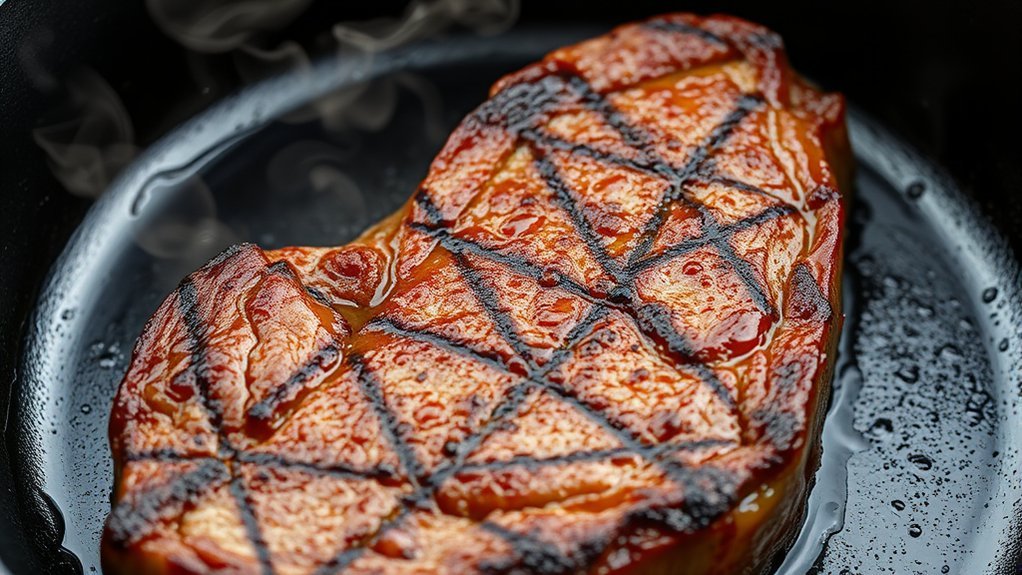

Like a master jeweler crafting a flawless gem, you need precision and control to develop the perfect crust on steak cast iron skillet. It’s not just about heat—it’s about managing moisture, timing, and seasoning to achieve that ideal sear.
Understanding these elements will transform your cooking technique and elevate your steak beyond the ordinary. Let’s explore the critical steps that ensure a consistent, restaurant-quality crust every time.
Key Takeaways
- Preheat the cast iron skillet thoroughly on medium-high until smoking hot before adding oil to ensure even, high heat for searing.
- Pat the steak dry and season generously with coarse salt and black pepper to enhance crust formation and flavor.
- Use a high-smoke-point oil and sear the steak without moving it for 2-3 minutes per side to build a deep, undisturbed crust.
- Choose thick, well-marbled cuts (at least 1.5 inches) to achieve a flavorful crust while maintaining desired doneness inside.
- Rest the steak on a wire rack loosely tented with foil to preserve crust texture and redistribute juices before serving.
Benefits of Using Cast Iron for Steak Crust
A cast iron skillet excels at creating a perfect crust on steak because it retains and distributes heat evenly, allowing you to achieve consistent, high-temperature searing. This even heat distribution prevents hot spots, ensuring that your steak develops a uniform Maillard reaction, essential for a robust crust.
You should also be aware that many tenderization myths, such as relying solely on marinades, don’t impact crust formation as much as proper searing does. Using cast iron, you maximize the skillet’s thermal mass, which sustains heat even when the steak is introduced, preserving the crust’s integrity.
Additionally, the skillet’s surface texture enhances plating aesthetics by delivering a visually appealing, caramelized exterior, elevating both the taste and presentation of your steak.
Choosing the Best Steak Cuts for a Perfect Crust
You want to select steak cuts with the right marbling to ensure even heat distribution and flavor. Thickness plays a critical role, so choose cuts thick enough to develop a crust without overcooking the interior.
Prioritize tenderness and robust flavor to balance texture and taste in your final result.
Ideal Marbling Levels
Several factors influence the ideal marbling level in a steak, but the key is finding cuts with enough intramuscular fat to render during cooking without overwhelming the meat’s structure. You want juicy marbling that melts steadily, enhancing tenderness and promoting Maillard reaction without causing flare-ups or greasy texture.
Aim for a balanced distribution of fat within the muscle fibers. This flavor balancing ensures the crust forms evenly while maintaining the steak’s integrity. Cuts like ribeye and striploin often provide this optimal marbling level.
Avoid excessively fatty cuts that can compromise the crust’s crispness or lean steaks that lack sufficient fat to develop depth in flavor. Mastering marbling allows you to achieve a crust that’s both richly flavored and structurally sound.
Thickness Matters Most
Marbling sets the foundation for flavor, but thickness dictates how well your steak develops that coveted crust. For a thick crust, choose cuts at least 1.5 inches thick. Thinner steaks cook too quickly, preventing the Maillard reaction from fully developing complex crust textures.
When using a cast iron skillet, a thicker cut lets you achieve a deep, flavorful crust on the exterior while maintaining desired doneness inside. Ribeye, strip, and filet mignon cuts excel in thickness and consistency, providing uniform heat transfer.
Avoid thin cuts; they risk overcooking before a crust forms. By prioritizing thickness, you control crust formation precisely, ensuring a balance between a crispy exterior and juicy interior. Ultimately, thickness is your most critical variable for perfect crust textures.
Tenderness And Flavor
Select cuts with prime tenderness and flavor to enhance crust development while preserving the steak’s juiciness. Understanding tenderization science helps you choose steaks that respond well to high heat without toughness, ensuring a perfect crust and ideal texture.
Pay attention to resting temperature, as it affects internal moisture retention and flavor concentration post-sear. The best cuts balance marbling and muscle structure for optimal crust formation.
- Ribeye: rich marbling aids crust and flavor retention
- Striploin: firm texture with consistent tenderness
- Filet mignon: exceptional tenderness, milder flavor
- Sirloin: balanced tenderness and bold flavor
Select these cuts to maximize crust quality while maintaining juiciness and flavor complexity through proper cooking and resting techniques.
Seasoning and Preparing Steak for Ideal Crusting
A properly seasoned and prepared steak is essential for achieving that coveted crust in a cast iron skillet. Start by ensuring your steak is dry; moisture inhibits crust formation. Pat it thoroughly with paper towels.
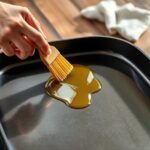
Next, apply a thin, even layer of seasoning oils. Choose oils with high smoke points like avocado or grapeseed to promote Maillard reaction without burning. Generously season the steak with coarse salt and freshly ground black pepper to enhance flavor and surface texture.
Heating Your Cast Iron Skillet for a Perfect Sear
Getting your cast iron skillet properly heated is essential for achieving that perfect sear on your steak. You need precise temperature control to develop the Maillard reaction without burning.
Properly heating your cast iron skillet is key to perfect searing and developing rich, flavorful crusts without burning.
Start with a well-maintained pan seasoning to ensure even heat distribution and prevent sticking. Follow these steps for optimal heating:
- Preheat the skillet on medium-high heat for 5-7 minutes.
- Test the temperature by flicking a few drops of water; they should dance and evaporate immediately.
- Avoid overheating, which can degrade the pan seasoning and cause uneven cooking.
- Once hot, add a high-smoke-point oil to maintain temperature and enhance crust formation.
Mastering this heating phase sets the foundation for a consistent, flavorful crust on your steak every time.
Step-by-Step: How to Get a Perfect Steak Crust
How exactly do you achieve that coveted crust on your steak using a cast iron skillet? Start by patting your steak dry to eliminate surface moisture, essential in seasoning science for Maillard reaction optimization.
Next, generously season both sides with coarse salt and freshly ground black pepper, ensuring even flavor penetration. Preheat your skillet until it’s smoking hot, then add a high smoke point oil.
Employ the pan sear technique by placing the steak firmly on the skillet without moving it, allowing a crust to form undisturbed. After 2-3 minutes, flip the steak once, repeating the process.
This precise heat control and minimal flipping maximize crust development through surface caramelization, giving you that perfect, flavorful crust every time.
Cooking Times for the Perfect Crust and Doneness
When should you remove your steak from the skillet to guarantee both a perfect crust and desired doneness? Achieving optimal crust formation requires maintaining high searing temps, typically between 400°F and 500°F. Timing varies by thickness and doneness level, so monitor closely.
Follow these guidelines:
- Rare (120-125°F): Sear 2-3 minutes per side.
- Medium-rare (130-135°F): Sar 3-4 minutes per side.
- Medium (140-145°F): Sear 4-5 minutes per side.
- Well-done (160°F+): Sear 5-6 minutes per side, then lower heat to finish.
Use an instant-read thermometer to verify internal temperature precisely. Remove the steak just before reaching your target doneness, as residual heat continues cooking. This balance ensures a robust crust without overcooking inside.
Common Steak Crusting Mistakes to Avoid
You’ll want to avoid excess moisture on your steak, as it prevents proper searing and crust formation.
Make sure your cast iron skillet is heated to the right temperature. Too low, and the steak will steam instead of sear. These common mistakes can sabotage the crust you’re aiming for.
Avoiding Moisture on Steak
Why does moisture sabotage your steak’s crust? Moisture creates steam instead of allowing the Maillard reaction, essential for crust formation, to occur. When your steak is wet, the surface temperature can’t rise enough to brown the meat properly, resulting in a soggy exterior.
For effective crust formation, focus on avoiding moisture by:
- Patting the steak dry with paper towels before seasoning.
- Avoiding marinating with high-water content just before cooking.
- Letting the steak rest uncovered in the fridge for at least 30 minutes to evaporate surface moisture.
- Minimizing flipping to prevent releasing internal juices prematurely.
Using Inadequate Heat Levels
How hot should your cast iron skillet get to achieve the perfect crust on steak? You need it scorching, around 400-500°F (204-260°C). Using inadequate heat levels is a common mistake that prevents Maillard reaction development, resulting in a pale, soggy exterior.
Avoid exhaustion topics like cooking at medium or low heat, which only prolongs cooking and fails to sear properly. Also, steer clear of unrelated heat issues such as uneven burner output or insufficient preheating.
Ensure your skillet is thoroughly preheated; a cold pan absorbs heat instead of searing the meat. Maintain high, consistent heat to rapidly brown the steak’s surface, locking in juices and flavor. Mastering this technical aspect is crucial for that coveted crust every time.
Resting and Serving Steak to Keep the Crust Intact
A properly rested steak guarantees the crust remains crisp and flavorful by allowing internal juices to redistribute without steaming the surface. To maintain resting warmth and preserve plating texture, you should:
- Tent the steak loosely with foil to retain heat without trapping moisture.
- Rest the steak on a wire rack instead of a plate to prevent sogginess.
- Avoid stacking or covering with heavy lids that cause condensation.
- Serve immediately after resting to lock in crust integrity and warmth.
Bonus Tips to Enhance Steak Flavor With Butter and Herbs
When aiming to elevate your steak’s flavor profile, incorporating butter and fresh herbs during the final cooking stages makes a significant difference. As the steak nears doneness, add a knob of unsalted butter to the cast iron skillet along with aromatics like rosemary, thyme, or sage.
Baste the steak continuously with the melted butter using a spoon to enhance tenderization techniques through gentle heat transfer. This method intensifies the crust’s richness and promotes even cooking. Additionally, consider precise spice pairing: black pepper, garlic powder, or smoked paprika complement butter and herbs without overpowering the meat’s natural flavor.
Frequently Asked Questions
Can I Use a Non-Stick Skillet Instead of Cast Iron for Steak Crust?
You can use a nonstick skillet, but its nonstick viability limits high-heat searing needed for crust. Alternative pans like stainless steel or carbon steel perform better, offering superior heat retention and Maillard reaction for ideal crust formation.
How Do I Clean a Cast Iron Skillet After Cooking Steak?
You’ll use simple cleaning methods: hot water and a stiff brush, since 82% of cast iron enthusiasts avoid soap to protect seasoning upkeep.
Dry thoroughly, then apply a thin oil layer to maintain your skillet’s non-stick surface and longevity.
Does Altitude Affect How I Cook Steak in a Cast Iron Skillet?
Yes, altitude adjustments matter because water boils off at lower temperatures, reducing moisture and heat transfer. You’ll need to increase cooking time or temperature to achieve the desired steak crust in your cast iron skillet.
Can Marinating Steak Affect the Crust Formation?
Like a painter’s brush shapes a canvas, marination effects can alter crust formation by adding moisture and acidity, which may hinder Maillard reactions.
You’ll want to balance marination time to ensure optimal crust without sogginess.
What’s the Best Oil to Use for Searing Steak in Cast Iron?
You should choose oils like avocado or grapeseed oil for oil selection due to their high smoke point. This lets you sear steak at intense heat without burning the oil, ensuring a perfect crust and flavor.
Conclusion
Getting that perfect crust on your steak is like forging steel—intense heat transforms raw potential into strength and flavor. Just as a blacksmith tempers metal, your cast iron skillet’s scorching surface seals in juices, creating a savory armor.
Remember, patience and precise heat control are your tools. Master these, and every steak you cook will boast a crust that’s not just a texture, but a triumph of technique and taste.
With the right approach, you can consistently achieve that irresistible crust on steak cast iron skillet cooking demands.