
You might have heard that pancakes cook perfectly in just two minutes per side on a griddle, but is that really the case every time?
The truth is, a lot depends on factors like griddle temperature, batter thickness, and even the size of your pancakes.
If you want to avoid undercooked centers or burnt edges, understanding these details can make all the difference.
Let’s explore what really controls the cooking time for pancakes on your griddle.
Key Takeaways
- Cook mini pancakes about 1-2 minutes per side and large pancakes about 3-4 minutes per side on a griddle at 375°F.
- Flip pancakes when bubbles form on the surface and edges are set and slightly dry for optimal doneness.
- After flipping, cook the second side for 1-2 minutes until golden and fully cooked through.
- Adjust cooking time based on batter thickness, temperature, and griddle heat to avoid burning or undercooking.
- Preheat and maintain a steady griddle temperature around 375°F for even cooking and fluffy, golden pancakes.
Best Griddle Temperature for Pancakes
Wondering what temperature will give you pancakes that are golden on the outside and fluffy on the inside? The best griddle temperature for pancakes is around 375°F (190°C). At this heat, your pancakes cook evenly without burning or undercooking.
You want the surface hot enough to create those perfect bubbles and a crisp edge but not so hot that the outside chars before the inside cooks through. Using the best griddle you have, preheat it thoroughly and keep it steady.
This balance ensures your pancake timing is spot on, letting you flip with confidence and avoid guesswork. Once you find this sweet spot, your pancakes will come out consistent, delicious, and restaurant-quality every time you cook.
How Long to Cook Pancakes: Before and After Flipping
How long should you cook pancakes on a griddle before flipping them? Typically, you’ll want to leave your batter undisturbed for about 2 to 3 minutes, depending on the batter temperature.
Cook pancakes on a griddle for 2 to 3 minutes before flipping, adjusting for batter temperature.
If your batter is cold, it might take a bit longer to set, so don’t rush the process. Technique variation also plays a role. Thicker batter needs extra time, while thinner batter cooks faster.
After flipping, cook the other side for about 1 to 2 minutes to ensure a golden, fully cooked pancake without overcooking. Pay close attention to how your pancakes react to the heat and adjust timing accordingly.
This balance between before and after flipping time guarantees a tender, fluffy pancake every time.
How to Spot When Pancakes Are Ready to Flip
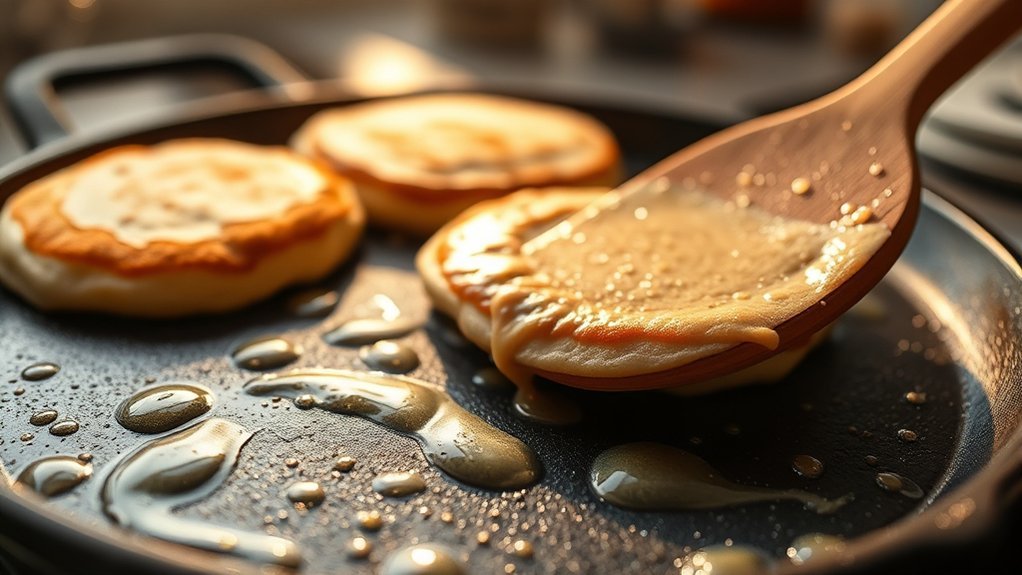
When do you know your pancakes are ready to flip? Watch for bubbling edges and a golden surface. That’s your two word discussion idea 1. As bubbles form and start to pop, the batter’s setting underneath, signaling it’s time to act.
Don’t rush; flipping too early can cause a messy, undercooked pancake. Instead, focus on the two word discussion idea 2: edge texture. The edges should look firm and slightly dry, not wet or gooey.
Gently lift a pancake’s edge with a spatula to check for a golden-brown color. When it resists and holds its shape, you’re in the perfect window to flip. Mastering these signs ensures your pancakes cook evenly, giving you that fluffy, golden stack you crave every time.
How Pancake Thickness Affects Cooking Time
When you make thin pancakes, they cook quickly and need your attention to avoid burning.
Thick pancakes take longer to cook through, so you’ll want to lower the heat to ensure they cook evenly without burning the outside. Adjusting your griddle’s temperature based on thickness makes all the difference in getting that perfect golden finish.
Thin Vs. Thick Pancakes
Why does pancake thickness change the way you cook them? When you’re making thin pancakes, they cook quickly, usually in just a couple of minutes per side. Because they’re so flat, heat reaches the center fast, so you need to watch closely to avoid burning.
Thick pancakes, on the other hand, take longer to cook through, often several more minutes per side, since the heat has to penetrate deeper. You’ll notice thick pancakes puff up nicely, but if you rush flipping, the insides might stay raw.
Thin pancakes give you that delicate, crepe-like texture, while thick pancakes are fluffy and hearty. Understanding these differences helps you time your cooking perfectly, so every bite is just right, no matter which style you prefer.
Adjusting Heat For Thickness
How should you adjust the heat on your griddle to match the thickness of your pancakes? Thick pancakes need a lower, more controlled heat so they cook through without burning. Thin ones, on the other hand, do well on medium to medium-high heat because they cook quickly.
Pay attention to your pan shape too. Flat, wide pans distribute heat evenly, perfect for thick pancakes, while smaller pans might demand more careful heat adjustments.
As you experiment, think of contrast seasoning in cooking: just as you balance flavors, you balance heat with thickness to get the perfect texture. Adjusting the griddle’s temperature based on pancake thickness ensures fluffy insides without overdone outsides, making every batch a tasty success you’ll want to repeat.
How Batter Ingredients Affect Cooking Time
You’ll notice that the type of flour you use can change how quickly your pancakes cook, with whole wheat taking longer than all-purpose.
The amount of liquid in your batter also affects the cooking time. Thinner batters spread out more and cook faster.
Plus, leavening agents like baking powder or baking soda not only make your pancakes rise but can speed up or slow down the process depending on their strength.
Impact of Flour Types
Flour choice plays a pivotal role in pancake batter behavior and directly influences cooking time on your griddle. Using different flours or flour substitutions can change texture, thickness, and how quickly the pancakes cook. For example, gluten free flours often require longer cooking as they absorb moisture differently and produce denser batter.
| Flour Type | Texture Impact | Cooking Time Effect |
|---|---|---|
| All-Purpose | Light, fluffy | Standard (2-3 min/side) |
| Whole Wheat | Heavier, grainy | Slightly longer |
| Gluten Free | Dense, crumbly | Longer, careful watch |
| Almond Flour | Moist, rich | Slightly shorter |
| Oat Flour | Soft, tender | Similar to all-purpose |
Choosing your flour wisely helps you perfect your pancake timing and texture every time.
Role of Liquid Content
Why does the amount and type of liquid in your pancake batter matter so much? It directly affects how quickly your pancakes cook on the griddle. Thinner batter, with more milk or water, spreads easily and cooks faster, while thicker batter slows heat penetration, requiring extra time.
Two word discussion ideas like “moisture level” and “liquid viscosity” highlight this subtopic relevance. Different liquids, such as buttermilk or almond milk, change cooking times because of their density and acidity. When you tweak liquid content, you also alter batter consistency, which impacts how evenly heat distributes.
Influence of Leavening Agents
Adjusting the liquid content definitely changes how your pancakes cook, but the ingredients that make your batter rise play an equally important role in timing. The leavening variety you choose influences not only the rise but also the texture outcomes and cooking speed.
For example:
- Baking powder reacts quickly, giving you fluffy pancakes that cook evenly in about 2-3 minutes per side.
- Baking soda requires an acid to activate, so timing depends on the batter’s acidity and can speed up cooking.
- Yeast creates a slower rise, resulting in a chewier texture and longer cooking times.
Knowing how these leavening agents react helps you adjust your griddle’s heat and watch for visual cues, ensuring perfectly cooked pancakes every time.
How to Avoid Undercooked or Burnt Pancakes
How can you guarantee your pancakes come out perfectly cooked every time? First, get familiar with pancake terminology like “bubbles forming” and “edges setting.” These signals tell you when it’s time to flip. Resist the urge to rush; patience is key.
Next, make sure your griddle is properly seasoned. A well-seasoned griddle ensures even heat distribution and prevents sticking, which means fewer burnt spots. Keep the temperature moderate. Too high, and the outside burns while the inside stays raw; too low, and you’ll wait forever.
Adjust heat gradually and test with a small pancake first. Finally, use a thin, flexible spatula to flip gently, preventing breaks that expose undercooked batter. With practice, you’ll master these steps and enjoy golden, fluffy pancakes every single time.
How to Adjust Cooking Time for Mini and Large Pancakes
When you’re making pancakes of different sizes, timing can make all the difference between a perfect stack and a disappointing flop. Mini pancake ideas, like bite-sized buttermilk rounds, cook faster, usually about 1-2 minutes per side, so keep a close eye on them. Large pancake ideas, such as oversized blueberry pancakes, need more patience, typically 3-4 minutes per side, ensuring the center cooks through without burning the outside.
To adjust cooking time effectively:
- Use a timer but watch for bubbles to form and edges to set.
- Flip mini pancakes as soon as bubbles appear; wait longer for large ones.
- Lower the heat slightly for large pancakes to avoid burning while cooking evenly.
This way, you’ll nail the perfect texture and flavor every time.
Common Pancake Cooking Mistakes and How to Fix Them
Even the most seasoned cooks slip up with pancakes sometimes, but recognizing common mistakes can save your breakfast from becoming a disaster. One frequent error is pouring batter that’s too cold or hasn’t been rested. Resting batter lets gluten relax and bubbles form, giving fluffier pancakes and preventing cracking batter when cooking.
Another slip is flipping too early. Wait until bubbles form and edges look set to avoid breaking your pancakes. Overmixing is a sneaky culprit causing dense, cracked batter; mix just until combined.
Lastly, cooking at too high a temperature might burn the outsides while leaving raw centers. Keep your griddle warm, not hot, and give your batter time to rest; these simple fixes will help you avoid common pancake pitfalls.
Tips for Perfect Pancakes Every Time
Mastering pancakes means paying attention to a few simple but powerful techniques that can elevate your breakfast game. To get perfect pancakes every time, focus on these essentials:
- Heat Control: Keep your griddle at medium heat to cook pancakes evenly without burning. Too hot, and the outside will crisp before the inside cooks through.
- Batter Handling: Avoid overmixing to keep your pancakes fluffy. Small lumps in the batter are fine—they help create that desirable texture.
- Serving Flair: Experiment with pancake toppings like fresh berries or nuts for added flavor and texture. Also, consider syrup consistency; a thicker syrup clings better, enhancing every bite.
With these tips, you’ll create golden, fluffy pancakes that impress and enjoy every bite with just the right touch of syrup and toppings.
Frequently Asked Questions
Can I Use Pancake Batter Straight From the Fridge?
You can use pancake batter straight from the fridge, but it’s best to let it sit at room temperature for about 10-15 minutes. This helps the batter adjust from fridge temperature, ensuring fluffier, evenly cooked pancakes.
What Type of Oil or Butter Is Best for Greasing the Griddle?
Butter vs oil is like choosing warmth or neutrality; you’ll find butter adds rich flavor and golden crisp, while oils like coconut offer nonstick alternatives with subtle taste.
Use what matches your griddle’s spirit and your mood.
How Do Altitude and Humidity Affect Pancake Cooking Time?
Altitude effects mean you’ll need more cooking time since lower air pressure slows batter rising.
Humidity impact makes batter thicker or thinner, so you’ll adjust heat and timing to keep your pancakes perfectly fluffy and golden every time.
Can I Cook Pancakes on an Electric Griddle Versus a Stovetop?
You can definitely cook pancakes on an electric griddle; it’s like having a pancake symphony at your fingertips. With precise griddle temperature control, you’ll master batter consistency and pancake batter storage for perfect flips every time.
How Should I Store Leftover Pancakes for Best Freshness?
To preserve freshness, store leftover pancakes in an airtight container or wrap them tightly with foil or plastic wrap. Pop them in the fridge for up to 3 days, or freeze for longer leftover storage. You’ll thank yourself later!
Conclusion
Now that you know how long to cook pancakes on your trusty griddle, you’re ready to channel your inner 1950s diner chef! Keep that temperature steady around 375°F, watch for bubbles and golden edges, and flip with confidence.
Whether you’re making mini stacks or fluffy giants, adjusting times and ingredients means no more guessing. With these tips, you’ll serve up perfect pancakes every time—deliciously warm and ready to enjoy before you can say “breakfast time!”
Mastering how long to cook pancakes on a griddle ensures each bite is just right, making your breakfast experience truly unbeatable.