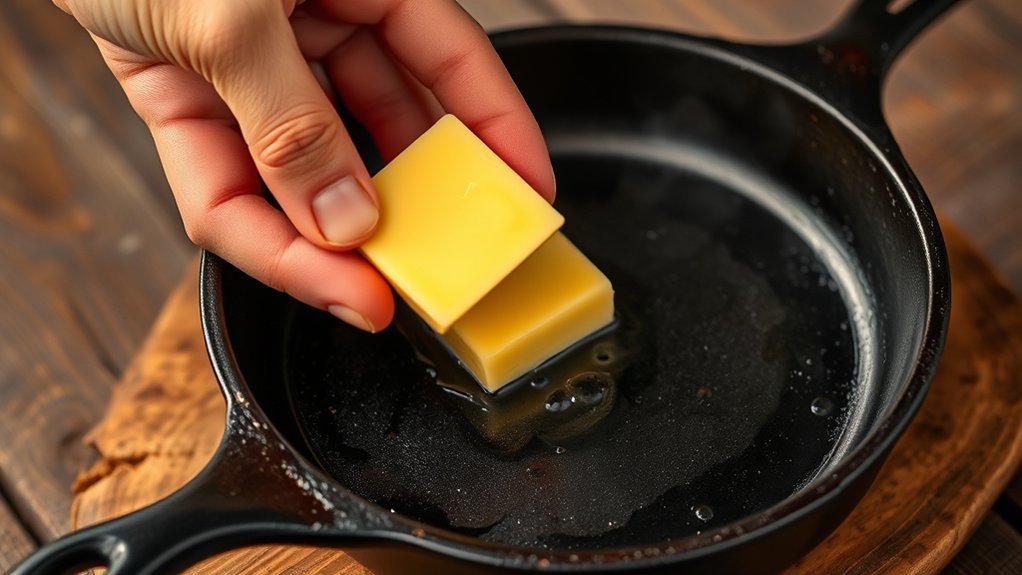

Think of your cast iron skillet as a seasoned athlete—already equipped to perform without extra padding. When you wonder, “Do you butter a cast iron skillet?” it’s important to consider how butter interacts with the pan’s surface. Adding butter might seem like it enhances flavor, but it can also lead to burning and residue buildup.
Understanding when and how to use butter can make a significant difference in both your cooking results and the longevity of your skillet’s seasoning. But there’s more to consider before you reach for that pat of butter.
Key Takeaways
- Buttering a cast iron skillet is generally unnecessary due to its natural non-stick, well-seasoned surface.
- Butter burns quickly at high heat, so alternatives like vegetable oil or clarified butter are better for cooking.
- To prevent butter from burning, add it just before cooking and preheat the skillet on medium heat.
- Combining butter with high-smoke-point oils (e.g., avocado or grapeseed) raises the smoke point and improves browning.
- Avoid overheating or overcrowding the pan and never add cold butter to a hot cast iron surface.
Should You Butter a Cast Iron Skillet Before Cooking?
Should you butter a cast iron skillet before cooking? Generally, it’s not necessary to butter the pan itself. Cast iron skillets are renowned for their natural non-stick surface, built through proper seasoning and maintenance.
Instead, you should apply fat directly to the food or use butter alternatives like vegetable oil or clarified butter to avoid burning. Butter can burn quickly at high temperatures, producing an undesirable smoky flavor that may overpower your dish.
If you want that rich buttery taste without the risk, consider using ghee or coconut oil as butter alternatives. They withstand heat better and enhance flavor without creating smoke. Ultimately, relying on the skillet’s seasoning and choosing the right cooking fat ensures optimal performance and taste without buttering the pan itself.
What Butter Does When Cooking in Cast Iron
Understanding butter’s behavior in a cast iron skillet is key to mastering your cooking technique. When you heat butter in cast iron, it quickly melts and spreads, delivering a rich butter aroma that enhances your dish’s flavor.
However, you must manage the heat carefully; cast iron retains high temperatures, which can cause butter to brown or burn rapidly. This is where butter risks come into play. Overheating leads to burnt milk solids, creating a bitter taste and tough residue that’s hard to clean.
To avoid this, melt butter on medium or low heat, allowing it to coat the skillet evenly without scorching. By controlling temperature and timing, you harness butter’s aroma and flavor benefits while minimizing the risks associated with cooking in cast iron.
How Butter Affects Cooking Different Foods in Cast Iron
When you cook with butter in a cast iron skillet, it enhances the flavor by adding rich, nutty notes that complement many foods. Butter also influences texture, creating a tender crust on meats and a delicate crispness on vegetables.
Understanding these effects helps you control the outcome of your dishes with precision.
Butter’s Impact On Flavor
Although cast iron skillets excel at evenly distributing heat, adding butter substantially enhances the flavor profile of the foods you cook. When you introduce butter, its rich butter flavor infuses directly into your ingredients, elevating dishes beyond what oil alone can achieve.
The butter aroma released during cooking stimulates your senses, creating a more appetizing experience. You’ll notice that delicate foods, such as eggs or fish, particularly benefit, as the butter’s subtle sweetness and nuttiness complement their natural flavors without overpowering them.
Butter’s milk solids also brown and caramelize, contributing complex, savory notes that deepen your dish’s overall taste. By using butter in your cast iron skillet, you harness both its heat conductivity and its unique flavor compounds to produce more flavorful, aromatic meals.
Butter And Food Texture
How exactly does butter influence the texture of foods cooked in a cast iron skillet? Understanding butter science reveals its essential texture impact during cooking. When you use butter, its water and milk solids interact with heat and food, altering texture in distinct ways.
- Crisping and Browning: Butter promotes Maillard reactions due to milk solids, creating a crisp, golden crust on meats and vegetables.
- Moisture Retention: The water content in butter helps maintain juiciness, preventing dryness in foods like eggs or fish.
- Tenderizing Effect: Butter’s fat coats proteins and starches, softening textures in baked goods or sautéed items.
Butter vs. Oil: Which Works Better for Cast Iron Skillets?
Because cast iron skillets require careful seasoning and maintenance, choosing between butter and oil markedly impacts cooking performance and skillet longevity. Butter offers rich flavor and excellent browning but contains milk solids that burn easily, affecting the skillet’s seasoning and raising concerns about butter health when overheated.
Oil, especially those with high smoke points, better protects the skillet and resists breakdown, reducing oil smoke and preserving seasoning.
| Factor | Butter | Oil |
|---|---|---|
| Smoke Point | Low (~350°F) | High (varies 400°F+) |
| Seasoning Impact | Can burn, damaging | Protects, enhances |
| Flavor | Rich, creamy | Neutral or mild |
| Health Aspects | Contains saturated fats | Varies, often healthier |
| Longevity | Shorter use per seasoning | Longer use, more stable |
Use oil for durability; butter adds flavor but demands care.
How to Use Butter Properly in Your Cast Iron Skillet
Using butter in your cast iron skillet requires deliberate steps to maximize flavor while protecting the pan’s seasoning. Understanding butter science and fat smokepoints is essential. Butter contains milk solids that burn quickly, so controlling heat is critical.
- Preheat your skillet on medium to avoid surpassing butter’s low fat smokepoints and causing burning.
- Add butter just before cooking to prevent premature browning of milk solids, preserving flavor and pan integrity.
- Use clarified butter or combine butter with a high-smoke-point oil to increase heat tolerance while maintaining butter’s rich taste.
Mistakes to Avoid When Cooking With Butter in Cast Iron
Why do some dishes stick or develop an off flavor when you cook with butter in cast iron? The main issue is overheating butter, which causes milk solids to burn and stick. For butter safety, avoid using it alone at high temperatures. Instead, combine butter with oil alternatives like avocado or grapeseed oil to raise the smoke point and reduce burning.
Another mistake is not preheating the skillet properly; this leads to uneven cooking and sticking. Also, don’t add cold butter directly into a hot pan. It can cause food to stick and cook unevenly. Finally, avoid overcrowding the pan, which traps moisture and prevents proper searing.
Master these points to cook efficiently with butter in your cast iron without compromising taste or pan integrity.
How Butter Affects Your Skillet’s Seasoning
When you cook with butter in your cast iron skillet, its milk solids can break down the seasoning layer faster than oils. Unlike pure oils, butter contains components that may cause uneven seasoning wear or build-up.
Understanding these differences helps you maintain a durable, non-stick surface over time.
Butter’s Impact On Seasoning
How does butter influence the seasoning of your cast iron skillet? Understanding butter myths and seasoning myths is essential here. Butter contains milk solids and water, which can interfere with seasoning’s polymerized oil layer.
When you cook with butter, these components can cause uneven seasoning or sticky residue, reducing its durability.
Consider these points:
- Butter’s low smoke point leads to quicker breakdown, compromising seasoning.
- Milk solids promote uneven browning and can burn, damaging the skillet’s surface.
- Butter doesn’t form a strong, stable seasoning layer like pure oils do.
Butter Vs. Oil Differences
What sets butter apart from oil in seasoning your cast iron skillet? The primary butter vs. oil differences lie in their composition and heat tolerance. Butter contains milk solids and water, which burn faster at high temperatures, potentially damaging your skillet’s seasoning.
Oils, especially those with high smoke points like flaxseed or grapeseed, polymerize more effectively, building a durable, non-stick layer. When you use butter, its lower smoke point means it can create uneven seasoning and sticky residue if overheated.
Oils, by contrast, provide a consistent, resilient coating that enhances the skillet’s longevity. While butter adds flavor during cooking, relying on it for seasoning isn’t ideal. To maintain and improve your skillet’s seasoning, choose oils designed for high-heat cooking to avoid degradation and preserve the integrity of the cast iron surface.
When You Should Avoid Using Butter in Cast Iron
Why should you steer clear of butter in your cast iron skillet at certain times? Butter’s low smoke point means it can burn quickly, damaging the seasoning and imparting a bitter flavor. Here are three key instances to avoid butter:
- Cooking at high heat: Butter’s high heat limits make it unsuitable for searing or frying where temperatures exceed 350°F.
- Long cooking durations: Prolonged exposure to heat causes butter to break down, leading to sticky residue and uneven seasoning wear.
- When you need neutral flavor: Butter’s distinct taste can overpower delicate dishes; butter substitutes like refined oils provide a neutral option.
In these scenarios, opt for butter substitutes with higher smoke points to protect your cast iron and maintain flavor integrity.
Tips for Combining Butter and Oil for Better Cooking Results
Although pure butter can pose challenges in cast iron cooking due to its low smoke point, combining it with oil offers a practical solution. To minimize butter smoke, use a proper oil ratio, typically two parts oil to one part butter. This blend raises the overall smoke point, allowing you to enjoy butter’s flavor without burning.
Choose oils with high smoke points, such as avocado or grapeseed oil, for best results. Preheat your skillet, then add the oil first, followed by the butter. This method ensures the butter melts gently and browns evenly without producing excessive smoke.
Adjust the oil ratio depending on your cooking temperature; higher heat requires more oil to prevent the butter from burning and smoking. Mastering this balance improves flavor and extends your skillet’s seasoning.
How to Clean a Cast Iron Skillet After Cooking With Butter
After cooking with butter in your cast iron skillet, proper cleaning is essential to maintain its seasoning and performance. Butter melting leaves behind oils that can affect skillet maintenance if not cleaned correctly. Follow these steps:
- Wipe Out Excess Butter: Use a paper towel to remove leftover butter and food particles while the skillet is still warm but not hot.
- Rinse with Hot Water: Avoid soap. Rinse the skillet under hot water, using a non-abrasive brush or sponge to dislodge stuck bits without damaging the seasoning.
- Dry and Oil: Thoroughly dry the skillet with a cloth or heat it briefly to evaporate moisture. Then, apply a thin layer of oil to preserve the seasoning and prevent rust.
This method ensures your cast iron skillet remains non-stick and durable after cooking with butter melting in it.
Frequently Asked Questions
Can You Store a Cast Iron Skillet With Butter Residue Inside?
You shouldn’t store a cast iron skillet with butter residue inside, as it promotes rancidity and bacterial growth. Proper storage ethics demand cleaning and thoroughly drying to maintain seasoning and prevent spoilage or unpleasant odors in your skillet.
Does Butter Cause Rust on Cast Iron Skillets?
You won’t believe butter corrosion is mostly a myth. Its fats don’t cause rust. But if butter residue cleanup is neglected, moisture trapped beneath can lead to rust. Always clean and dry your skillet thoroughly afterward.
Is It Safe to Use Salted Butter in Cast Iron Cooking?
Yes, using salted butter in cast iron cooking is safe. Butter salting adds flavor but can increase salt exposure.
Salt safety is manageable if you clean the skillet properly to prevent corrosion and maintain seasoning.
Can Butter Be Used in Pre-Seasoning a New Cast Iron Skillet?
You might think butter seasoning is ideal, but its water content leaves stubborn butter residue, hindering proper seasoning.
Instead, use oils with high smoke points to ensure a durable, non-sticky protective layer on your cast iron skillet.
How Long Can Butter Remain on a Cast Iron Skillet Before Cooking?
You shouldn’t leave butter on a cast iron skillet more than a few hours, as butter shelf life is short. Butter residue storage encourages rancidity and bacterial growth, so clean it promptly for ideal skillet maintenance and food safety.
Conclusion
You might think buttering your cast iron skillet is a must, but its seasoned surface already has your back. Ironically, butter—so beloved for flavor—can sabotage that non-stick magic by burning fast and leaving behind charred bits.
Instead, trust your skillet’s natural seasoning. If you crave butter’s richness, blend it with oil or add it just before cooking.
That way, you protect your pan and still savor butter’s charm without the mess. When it comes to whether you should butter a cast iron skillet, it’s best to use it sparingly and wisely.