
You might not realize it, but even a neglected cast iron skillet can be brought back to life with the right approach to unrust a cast iron skillet. Rust doesn’t have to mean the end of your pan’s usefulness.
By carefully removing rust and properly reseasoning, you’ll restore its nonstick surface and durability. Before you start, it’s important to understand the key steps that ensure your skillet stays in great shape long after the rust is gone.
Key Takeaways
- Scrub rusted areas with steel wool or a stiff brush using warm water and mild soap to remove surface rust.
- Soak stubborn rust spots in equal parts white vinegar and water for up to one hour, then scrub again.
- Rinse thoroughly and dry the skillet immediately to prevent new rust from forming.
- After rust removal, apply a thin layer of vegetable or flaxseed oil and bake at 450°F for one hour.
- Cool the skillet in the oven to polymerize the oil, creating a protective, non-stick surface and preventing re-rusting.
How to Remove Rust From Your Cast Iron Skillet
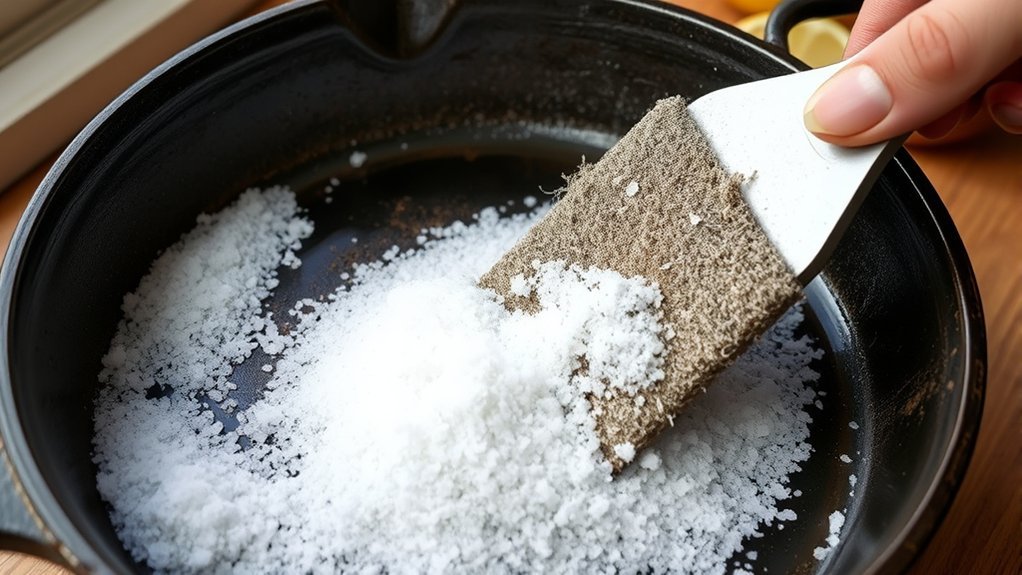
How do you effectively remove rust from your cast iron skillet without damaging its surface? Start by scrubbing the rusted areas with a fine steel wool pad or a stiff brush. This physical abrasion is essential for rust removal, but avoid harsh scrubbing that could gouge the skillet.
Use warm water and a mild dish soap to aid in loosening rust particles. After scrubbing, rinse thoroughly and dry the skillet immediately to prevent new rust from forming.
For stubborn rust, you can soak the skillet in a mixture of equal parts white vinegar and water for up to an hour, but don’t exceed this time to avoid metal damage. Skillet restoration requires patience and care. Once rust-free, you’re ready to re-season and protect your skillet for long-term use.
Getting Your Skillet Ready for Rust Removal
Preparing your cast iron skillet properly makes rust removal much more effective. Start by thoroughly washing the pan with warm water and mild soap to remove grease, dirt, and loose rust. Use a stiff brush or steel wool to scrub the surface, focusing on areas prone to getting rust.
Next, dry the skillet completely with a clean cloth or place it on low heat to evaporate any remaining moisture. This step is crucial for proper cast iron care. Avoid soaking the skillet, as prolonged exposure to water worsens rusting.
Clear the workspace and gather necessary supplies like vinegar, baking soda, or rust remover. By prepping your skillet carefully, you set the stage for efficient rust removal and help maintain its longevity.
How to Season Your Cast Iron Skillet After Rusting
Why should you season your cast iron skillet after removing rust? Seasoning after rust is essential because it restores the protective oil layer stripped away during rust removal. This layer prevents moisture from contacting the metal, vital for preventing re rust.
To season, apply a thin, even coat of vegetable oil or flaxseed oil all over the skillet, inside and out. Then, place it upside down in a preheated oven at 450°F (232°C) for an hour, with foil underneath to catch drips. Let it cool completely in the oven.
This process polymerizes the oil, creating a durable, non-stick surface that shields your skillet from oxidation. Proper seasoning after rust not only enhances cooking performance but also greatly extends the life of your cast iron cookware by preventing re rust effectively.
Daily Care Tips to Keep Your Cast Iron Skillet Rust-Free
Where should you start to keep your cast iron skillet rust-free every day? Begin by drying it thoroughly right after washing. Moisture is the main culprit in rust formation, so use a towel or heat it briefly on the stove to evaporate any water.
Follow these care tips: avoid soaking your skillet, clean it promptly after use with minimal soap, and never put it in the dishwasher. After drying, apply a thin layer of oil to create a protective barrier against moisture.
Store your skillet in a dry place with good air circulation. These simple daily habits form the foundation of effective rust prevention, ensuring your skillet stays in excellent condition and ready for cooking whenever you need it.
How to Prevent Rust From Coming Back on Your Skillet
How can you guarantee rust doesn’t return to your cast iron skillet after removing it? Focus on two word ideas: “proper seasoning” and “thorough drying.”
After cleaning, always dry your skillet completely. Moisture is the main culprit for rust. Next, apply a thin layer of oil to the surface to create a protective barrier.
Always dry your skillet fully and lightly oil it to prevent rust and protect its surface.
Store your skillet in a dry place, ideally with a paper towel inside to absorb any residual humidity. Avoid soaking or leaving it wet.
Regularly re-season your skillet by heating it with oil to maintain a durable, rust-resistant coating. By combining proper seasoning with thorough drying and smart storage, you reinforce rust prevention effectively, keeping your cast iron skillet in prime condition for years to come.
Frequently Asked Questions
Can I Use Vinegar to Remove Rust From a Cast Iron Skillet?
Yes, you can use vinegar for rust removal, but don’t soak your cast iron too long. Vinegar safety matters. Limit exposure to about an hour, then scrub and rinse thoroughly to prevent damage and restore your skillet effectively.
Is It Safe to Use a Dishwasher to Clean a Cast Iron Skillet?
You shouldn’t use a dishwasher for cast iron. Over 70% of users report accelerated rusting afterward. Dishwasher safety is a common myth; it strips seasoning and promotes rust.
Hand washing and drying immediately are essential for maintenance.
How Long Does the Seasoning Process Take After Rust Removal?
The seasoning timeline usually takes about 1-2 hours, including multiple thin oil coats and heating.
You’ll want to repeat this to build layers, ensuring effective rust prevention and a durable, non-stick surface for your skillet.
Can Rusted Cast Iron Skillets Affect the Taste of Food?
Imagine tasting your food with a rotary phone’s static. Rust flavor can sneak in, spoiling dishes.
You’ve got to prioritize seasoning maintenance to prevent rust and guarantee your cast iron skillet delivers pure, clean flavors every time you cook.
What Are Signs That a Cast Iron Skillet Is Beyond Repair?
You’ll know your cast iron skillet’s beyond repair if you spot significant pitting, structural compromise like cracks, or detect a persistent foul odor. These signs mean it’s unsafe or impractical to restore effectively.
Conclusion
Now that you know how to unrust your cast iron skillet and season it properly, keeping it rust-free is easier than ever. Can you imagine cooking with a perfectly smooth, well-seasoned skillet every time?
With simple daily care and proper storage, you’ll protect your investment and enjoy great meals for years to come. Remember, a little attention goes a long way in preserving your skillet’s performance and longevity.
By following these steps to unrust a cast iron skillet, you ensure your cookware remains in top condition and ready for any recipe.