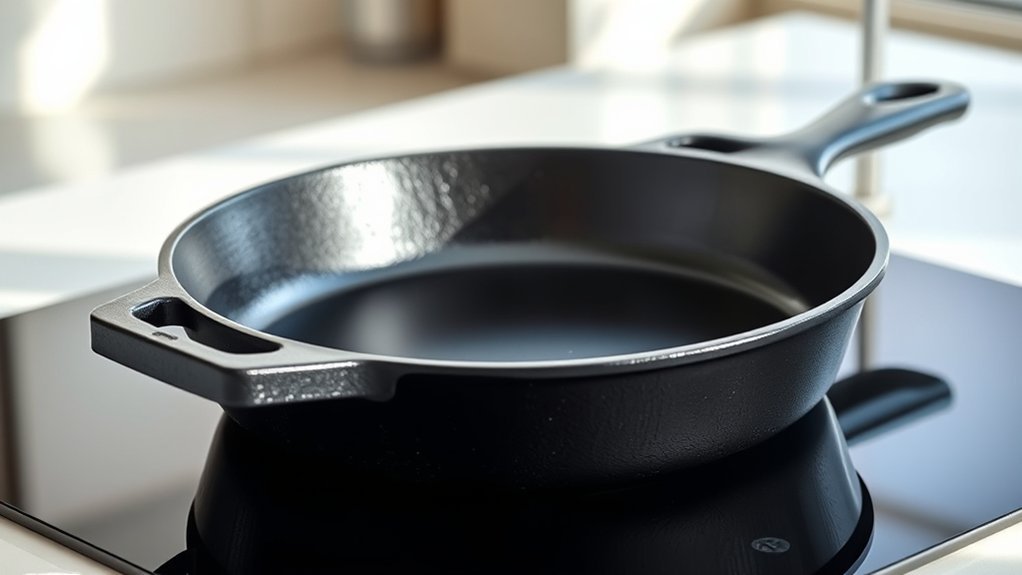

Just like a skilled craftsman trusts his tools, you might wonder if your trusty cast iron skillet can be used on an induction cooktop. The good news is that cast iron’s magnetic properties make it compatible with induction technology.
However, there are nuances to consider for optimal performance and safety. Understanding these details can help you make the most of your cookware without risking damage or uneven heating.
By knowing how to properly use your cast iron skillet on an induction cooktop, you ensure both longevity and excellent cooking results every time.
Key Takeaways
- Cast iron skillets are highly magnetic and work efficiently on induction cooktops due to direct energy transfer.
- Flat-bottomed cast iron ensures even contact and optimal heating on induction surfaces.
- Always lift cast iron cookware to move it, preventing scratches on the induction glass surface.
- Preheat cast iron gradually on medium heat to avoid thermal shock and protect seasoning.
- Regularly maintain and reapply seasoning to ensure consistent performance on induction cooktops.
Can You Use Cast Iron Skillets on Induction Cooktops?
How well do cast iron skillets perform on induction cooktops? Quite effectively, contrary to some cast iron myths you might have heard. Induction cooktops operate using magnetic fields generated by electric currents, which means your cookware must be ferromagnetic to work.
Cast iron, being highly magnetic, is an excellent match. The induction physics involved ensures the skillet heats quickly and evenly as the magnetic field induces electric currents directly in the pan’s material. This direct transfer of energy makes cast iron skillets efficient on induction surfaces.
Using Cast Iron Skillets Safely on Induction Cooktops
Since cast iron skillets work so well on induction cooktops, you’ll want to use them safely to protect both your cookware and your cooking surface. Always lift your skillet when moving it to avoid scratching the induction cooktop’s glass surface.
Avoid dragging or sliding the heavy cast iron, as this can cause damage. Maintain proper induction safety by ensuring the skillet’s base is clean and dry before use to prevent slipping and uneven heating.
To preserve seasoning longevity, avoid sudden temperature changes, like placing a hot skillet on a cold surface, which can cause warping or seasoning damage. Use moderate heat settings initially, since induction heats quickly.
Tips for Cooking With Cast Iron on Induction Cooktops
When cooking with cast iron on induction cooktops, what key techniques ensure optimal results? First, verify your skillet’s induction compatibility; cast iron naturally works well due to its magnetic properties, but ensure a flat bottom for even contact.
Preheat your pan gradually on medium heat to prevent thermal shock and warping. Avoid sudden temperature changes, which can damage your cookware and affect cast iron care.
Use moderate heat settings. Induction cooktops heat quickly, so high heat often isn’t necessary. Always lift the skillet when moving it to avoid scratching the induction surface.
After cooking, clean your cast iron skillet promptly and dry thoroughly to maintain seasoning and prevent rust. Following these tips maximizes cooking efficiency and extends your skillet’s lifespan.
Troubleshooting Cast Iron Skillets on Induction Cooktops
Even with proper techniques, you might encounter challenges using cast iron on induction cooktops. Ensuring cast iron compatibility and maintaining induction safe seasoning are key to smooth performance.
Below are common issues and quick fixes to keep your skillet working efficiently.
| Issue | Solution |
|---|---|
| Skillet not heating | Check cast iron compatibility; use flat-bottom skillets |
| Uneven heating | Preheat skillet gradually on low power |
| Cooktop error signals | Ensure skillet fully contacts the cooktop surface |
| Seasoning wears off quickly | Reapply induction safe seasoning regularly |
Best Alternatives to Cast Iron for Induction Cooking
What should you use if cast iron doesn’t suit your induction cooktop needs? Several alternative materials offer excellent induction compatibility. Stainless steel cookware is a top choice; it’s durable, non-reactive, and works efficiently on induction surfaces. Look for stainless steel with a magnetic base to ensure proper heat transfer.
Another option is enameled cast iron, combining cast iron’s induction compatibility with a smoother surface that’s easier to maintain. You can also consider carbon steel pans, which heat quickly and respond well on induction cooktops.
Lastly, some modern non-stick pans feature a magnetic stainless steel base designed specifically for induction use. When selecting alternative materials, always verify the manufacturer’s specifications for induction compatibility to guarantee optimal performance and safety.
Frequently Asked Questions
How Do You Season a Cast Iron Skillet Before Using It?
To season your cast iron skillet, clean it thoroughly, then apply a thin layer of oil choice like flaxseed or vegetable oil.
Heat it upside down in the oven at 450°F for an hour, completing the seasoning process.
Can Cast Iron Skillets Be Used on Glass Stovetops?
Using a cast iron skillet on glass stovetops is like walking on thin ice. Induction compatibility is great, but glass top safety demands caution. Avoid dragging to prevent scratches and always lift the skillet carefully to protect your cooktop.
What Is the Best Way to Clean a Cast Iron Skillet?
You should clean your cast iron skillet with hot water and a stiff brush, avoiding soap. Dry it thoroughly, then apply a thin layer of oil.
Follow proper seasoning methods to maintain its non-stick surface and prevent rust.
How Long Does a Cast Iron Skillet Typically Last?
Cast iron durability lets your skillet last over 50 years with proper care. Longevity factors include seasoning, avoiding rust, and gentle cleaning.
If you maintain it well, your skillet can become a lifelong kitchen companion.
Are Cast Iron Skillets Safe for Use in Ovens?
Yes, you can safely use cast iron skillets in ovens thanks to their excellent cast iron safety and heat resistance.
Plus, their induction compatibility means you can seamlessly switch between stovetop and oven cooking without worry.
Conclusion
You can confidently wield your cast iron skillet on an induction cooktop, much like a seasoned blacksmith forging a masterpiece. Just remember to lift—not drag—to protect your surface, preheat gradually, and keep your skillet well-seasoned.
By following these simple steps, you’ll harness the skillet’s ferromagnetic power for even, reliable cooking. Embrace this timeless tool with care, and your induction cooktop will become a stage for culinary excellence.
In conclusion, using a cast iron skillet on an induction cooktop is not only possible but ideal for achieving great cooking results.