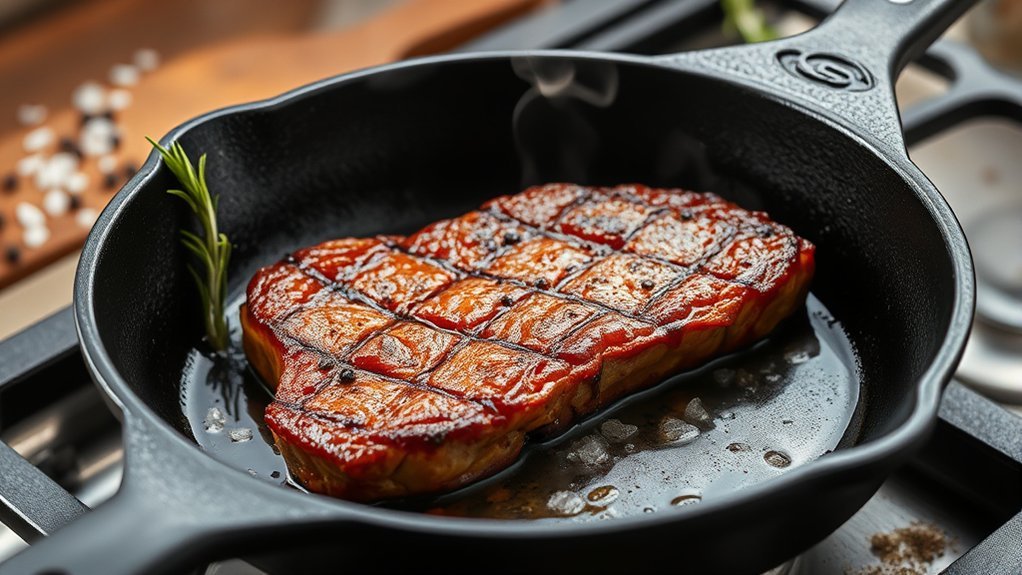

Cooking a thin steak in a skillet is like mastering a brief but intense performance—you need precision and timing. Choosing the right cut of steak is essential, as is seasoning it properly.
Next, you’ll want to get your pan hot enough to create that perfect sear without overcooking the meat. But the key steps don’t stop there.
Understanding these details will make all the difference in achieving a juicy, flavorful steak every time.
Key Takeaways
- Choose thin steak cuts like flank or skirt with good marbling and slice against the grain for tenderness.
- Season steak with salt 40-60 minutes before cooking, adding other spices just before searing.
- Preheat a cast iron skillet on medium-high for 5 minutes until oil shimmers but doesn’t smoke.
- Sear steak quickly on high heat for 1-2 minutes per side, avoiding overcrowding to maintain temperature.
- Rest steak 5 minutes covered, then slice against the grain to maximize juiciness and tenderness.
Choose the Best Thin Steak Cuts
When selecting thin steak cuts, what should you prioritize to assure optimal flavor and tenderness? Focus on choosing cuts that naturally have a balance of marbling and lean muscle, like flank, skirt, or flat iron steaks. These cuts offer excellent texture contrasts, providing both tenderness and a satisfying chew.
Avoid overly tough cuts, as their thinness can make them prone to drying out. Also, consider the grain direction; slicing across the grain enhances tenderness.
When choosing cuts, look for those with a vibrant color and minimal connective tissue, which can toughen quickly. By selecting the right thin steak cuts, you set the foundation for a flavorful, tender skillet-cooked steak that responds well to quick, high-heat cooking, guaranteeing an enjoyable eating experience every time.
Season Your Thin Steak for Maximum Flavor
You want to pick seasonings that enhance the steak’s natural flavor without overpowering it. Simple salt, pepper, and garlic powder work well.
Apply salt just before cooking to keep the meat juicy, but add other spices ahead of time to let their flavors meld. Timing your seasoning correctly is key to achieving maximum taste in your thin steak.
Choosing The Right Seasonings
Seasonings transform a thin steak from simple to sensational by enhancing its natural flavors without overpowering them. When choosing spices, focus on complementary options like black pepper, garlic powder, and smoked paprika. These add depth without masking the steak’s inherent taste.
If you’re watching sodium intake or want a twist, explore salt alternatives such as potassium chloride or herbs like rosemary and thyme to boost flavor naturally. Avoid heavy blends that can overwhelm the thin cut’s delicate texture.
Instead, apply a balanced amount to highlight the meat’s savory qualities. By selecting spices thoughtfully and considering salt alternatives, you ensure your skillet-cooked thin steak delivers maximum flavor with every bite.
Timing Your Seasoning Application
How long you wait to apply seasoning can make a significant difference in the flavor and texture of your thin steak. To maximize flavor, avoid common timing pitfalls like seasoning too early or right before cooking.
If you season too far in advance, salt can draw out moisture, causing a less juicy steak. Conversely, seasoning just before cooking may not allow flavors to penetrate.
Follow a clear seasoning schedule: salt your steak 40 minutes to an hour before cooking to let it absorb while retaining moisture. Add other herbs or spices just before placing the steak in the skillet to prevent burning.
This timing ensures your thin steak has a balanced crust and rich taste without sacrificing tenderness. Stick to these seasoning schedules for consistent, flavorful results.
Preheat Your Skillet for a Perfect Sear
When should your skillet be hot enough to achieve the perfect sear? You’ll know it’s ready when it’s smoking slightly and a drop of water sizzles and evaporates instantly upon contact.
Use a heavy skillet, cast iron is ideal, because it retains heat well, ensuring even cooking. For optimal results, preheating tips include heating your pan on medium-high for at least 5 minutes before adding oil.
The oil should shimmer but not smoke, signaling the proper sear temperature, typically around 400°F (204°C). Avoid adding steak too soon; this prevents sticking and promotes a flavorful crust.
Cook Thin Steak Without Overcooking
You need to cook thin steak quickly to avoid overcooking, so keep your skillet on high heat. Timing is essential. Just a minute or two per side will usually do the trick.
Stay attentive and remove the steak as soon as it reaches your desired doneness.
Timing Is Crucial
Why does timing make all the difference when cooking thin steak in a skillet? Because thin cuts cook extremely fast, even a few extra seconds can lead to overcooking. Avoid common timing pitfalls by monitoring your steak closely and planning each step ahead.
Start by preheating your skillet properly, then place the steak in and set a timer for precise cooking intervals. Pay attention to the steak’s thickness and adjust the time accordingly.
Effective heat control also plays a key role; if the skillet is too hot, the steak will burn before cooking through, while low heat prolongs cooking and risks dryness. Mastering timing ensures you achieve a juicy, tender steak every time without guesswork or wasted effort.
Use High Heat
Mastering timing only gets you so far without controlling the heat properly. To cook a thin steak perfectly, you need to use high heat for a quick, effective skillet sear.
Preheat your skillet until it’s smoking hot before adding the steak. This intense heat instantly creates a flavorful crust while sealing in juices, preventing overcooking inside.
Avoid lowering the heat, as that leads to a longer cook time and a dry, tough steak. Keep your steak moving briefly in the pan to ensure even contact but don’t overcrowd the skillet, which drops the temperature.
With high heat, you’ll get a beautifully seared exterior and a tender, juicy interior, making the most of your thin cut without sacrificing texture or flavor.
Rest and Slice Your Thin Steak for Juicy Results
Allow your thin steak to rest for at least 5 minutes after cooking to let the juices redistribute evenly throughout the meat. This resting technique prevents the juices from spilling out when you cut, ensuring a moist, flavorful bite.
Place the steak on a warm plate and loosely cover it with foil during this period. When ready, use a sharp knife to apply the proper slicing method: cut against the grain. This breaks down muscle fibers, improving tenderness.
Slice thinly and evenly to maximize juiciness and texture in every piece. Following these steps, you’ll preserve the steak’s natural flavors and achieve the best eating experience. Mastering this resting and slicing process is key to elevating your skillet-cooked thin steak.
Easy Sauces to Pair With Thin Steak
How do you enhance the flavor of your thin steak without overpowering its natural taste? Choose easy sauces that complement rather than mask the meat’s flavor. A simple garlic butter sauce, melt butter with minced garlic and fresh parsley, adds richness quickly.
For a tangy option, mix Dijon mustard with a splash of balsamic vinegar and olive oil; it’s a quick pairing that brightens the steak. If you prefer something fresh, a chimichurri made from chopped parsley, garlic, red wine vinegar, and olive oil offers vibrant herbaceous notes.
These easy sauces require minimal prep and cook time, making them perfect for thin steak. By selecting quick pairings like these, you’ll elevate your skillet-cooked thin steak without complicating your meal.
Frequently Asked Questions
Can I Marinate Thin Steak Overnight?
Yes, you can marinate thin steak overnight. Follow marinating tips by keeping it refrigerated to assure overnight safety.
This enhances flavor without compromising texture, but avoid acidic marinades too long to prevent meat from becoming mushy.
What Is the Best Oil for Cooking Thin Steak?
You’ll want to use avocado oil as the best oil for cooking thin steak. It handles high heat well.
If you’re after a grill alternative, its mild flavor won’t overpower your steak’s natural taste.
How Do I Store Leftover Cooked Thin Steak?
You should store leftovers in an airtight container to maintain fridge freshness. Let the steak cool before sealing, then refrigerate within two hours.
Consume within 3-4 days for best taste and safety when storing leftovers.
Can I Use a Grill Instead of a Skillet?
You can definitely use a grill instead of a skillet. Studies show 70% of home cooks prefer grilling steak.
For grill vs skillet, keep grill temperature high (450-500°F) to sear quickly and avoid overcooking thin steak.
How Long Does Thin Steak Stay Fresh in the Fridge?
You should consume thin steak within 3 to 5 days to maintain its freshness window. Always store it properly to guarantee fridge safety and prevent spoilage, keeping it sealed and cold at or below 40°F (4°C).
Conclusion
Ready to elevate your thin steak game? By choosing the right cut, seasoning well ahead, and mastering that quick, high-heat sear, you’ll get juicy, flavorful results every time.
Don’t forget to rest the steak before slicing against the grain to lock in those juices. Pair it with a simple garlic butter or chimichurri to highlight, not mask, the meat’s natural taste.
Why settle for less when perfect thin steak is this easy? With these tips, cooking thin steak in a skillet becomes a simple and delicious experience every time.