
When you cook on a Blackstone griddle, burnt food can quickly become a stubborn problem that affects both flavor and performance. Removing burnt food from a Blackstone griddle efficiently is essential to maintain its surface and cooking quality.
You’ll want to address it quickly without damaging the griddle. Knowing the right temperature to start with and which tools to use makes all the difference.
But the key isn’t just removing the residue—it’s also preventing it from sticking in the first place. Here’s how to tackle this issue step by step.
Key Takeaways
- Preheat the griddle on medium heat to loosen burnt food without overheating or causing burns.
- Apply a thin layer of high smoke point oil to soften residue and protect the surface.
- Scrape off burnt food using a metal scraper or spatula while the griddle is slightly warm.
- Use warm water with mild dish soap and a non-abrasive pad to scrub stubborn food bits.
- For tough spots, sprinkle coarse kosher salt and scrub gently with a damp cloth as a natural abrasive.
How to Prepare Your Blackstone Griddle for Cleaning
Before you start cleaning your Blackstone griddle, you need to prepare it properly to ensure effective removal of burnt food. Begin by preheating the griddle on medium heat; this loosens stuck-on residue while emphasizing preheating safety to avoid burns. Keep the area clear and use heat-resistant gloves to protect your hands.
Avoid overheating, which can damage the surface. Next, select an appropriate oil choice for your cleaning process. Use a high smoke point oil, like canola or grapeseed oil, to prevent smoking and ensure thorough lubrication.
Apply a thin layer to the griddle surface; this helps soften burnt food without causing flare-ups. Proper preparation with controlled preheating and the right oil sets the stage for an efficient and safe cleaning session.
How to Remove Burnt Food From Your Blackstone Griddle
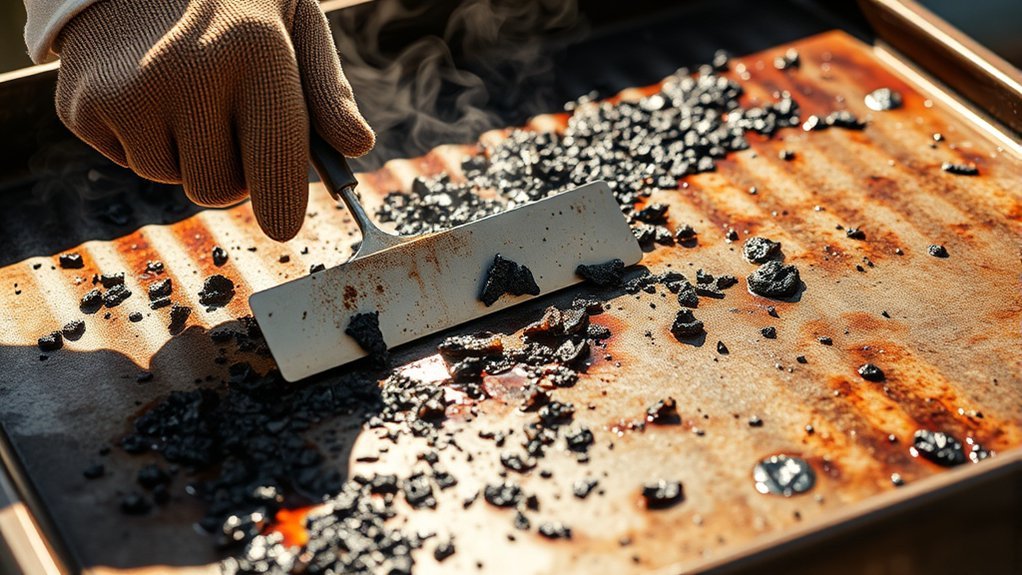
Wondering how to effectively remove burnt food from your Blackstone griddle? Start by heating the griddle slightly to loosen the residue, then turn off the heat. Use a metal scraper or spatula to gently lift and scrape away the burnt food without damaging the surface.
Next, apply a small amount of warm water and a few drops of mild dish soap. Scrub with a non-abrasive pad or cloth to break down stubborn bits. Rinse with clean water and wipe dry with a clean towel.
For tough spots, sprinkle coarse kosher salt and scrub with a damp cloth to act as a natural abrasive. These cleaning tips help maintain your griddle’s seasoning and prevent buildup, ensuring every cookout stays smooth and hassle-free.
Why Burnt Food Clings to Your Blackstone Griddle
The main reason burnt food clings to your Blackstone griddle is due to residue buildup and improper seasoning. Without proper oil conditioning, the surface lacks a non-stick barrier, causing burnt adhesion. When food particles and oil residues accumulate, they create uneven patches where burnt food sticks tenaciously.
| Cause | Effect |
|---|---|
| Residue buildup | Rough surface increases adhesion |
| Poor oil conditioning | Loss of protective non-stick layer |
| High cooking temperature | Accelerates food carbonization |
To prevent burnt food from clinging, you need a consistently seasoned griddle with proper oil conditioning. This forms a smooth, polymerized layer that reduces burnt adhesion and makes cleaning easier. Neglecting this leads to stubborn burnt food stuck to your cooking surface.
Best Tools and Cleaners for Blackstone Griddles
Choosing the right tools and cleaners makes maintaining your Blackstone griddle efficient and effective. Start with a sturdy metal scraper to remove burnt food without damaging the surface. A flat spatula helps with stubborn residue, while a griddle brush with stiff bristles cleans grooves thoroughly.
For cleaners, use a food-safe degreaser or a mixture of vinegar and water to break down carbon buildup without harming your griddle’s seasoning. Avoid harsh chemicals that can interfere with burner maintenance.
Regularly wiping down the surface after use prevents buildup that compromises heat control. Incorporating these tools ensures you remove burnt food efficiently, preserving your griddle’s performance.
Proper cleaning supports even heat distribution and extends your Blackstone’s lifespan, keeping burner maintenance minimal and your cooking consistently reliable.
How to Maintain Your Blackstone Griddle to Prevent Burnt Food
Regularly seasoning and cleaning your Blackstone griddle prevents burnt food buildup and ensures ideal cooking performance. To maintain it properly, start by preheating the griddle before each use, which helps food cook evenly, reducing the chance of burning.
Season your Blackstone griddle regularly and preheat before use to prevent burnt food and ensure even cooking.
After cooking, scrape off food residue while the surface is still warm using a metal spatula or scraper. Wipe down the griddle with a damp cloth and apply a thin layer of cooking oil to protect the seasoning.
Avoid using harsh chemicals; instead, opt for natural cleaners designed for griddles. Store your Blackstone covered to prevent rust.
Understanding how to maintain your griddle consistently is key to preventing burnt food and extending its lifespan, so follow these steps diligently for optimal results.
Frequently Asked Questions
Can I Use Vinegar to Clean My Blackstone Griddle?
Yes, you can use vinegar to clean your Blackstone griddle safely. Avoid burning shortcuts by applying vinegar diluted with water, then scrubbing gently.
Vinegar safety ensures it won’t damage the surface while removing residue effectively.
How Often Should I Season My Blackstone Griddle?
You should season your Blackstone griddle after every 3-5 uses to maintain a non-stick surface. Incorporate this seasoning frequency into your maintenance routine to prevent rust and enhance cooking performance consistently.
Is It Safe to Use Metal Spatulas on My Griddle?
You can safely use metal spatulas on your Blackstone griddle if you avoid scraping aggressively, which can damage the seasoning.
After cooking, burning oil helps maintain the surface, so metal spatulas won’t harm it when used carefully.
Can Burnt Food Cause Health Risks When Cooking?
That smoky burnt odor and sticky residue aren’t just nuisances; they can harbor harmful compounds. You shouldn’t ignore them, as consuming burnt food repeatedly may increase health risks.
Always clean your griddle thoroughly before cooking.
What Temperature Is Best for Cooking on a Blackstone Griddle?
To answer your burning questions, maintain temperature control around 350-400°F for most Blackstone griddle cooking. This range ensures even cooking without scorching, giving you perfect sears and avoiding food sticking or charring.
Conclusion
Cleaning burnt food off your Blackstone griddle isn’t just a chore—it’s a chance to restore its cooking power. By heating it just right, scraping carefully, and using gentle scrubbing with salt, you keep your griddle ready for flawless meals.
Remember, a well-maintained griddle is like a trusted friend: it rewards your care with lasting performance. Don’t let burnt residue steal your cooking joy—tackle it promptly and keep your griddle shining.
With proper care and attention, getting burnt food off your Blackstone griddle ensures it stays in top condition for every cookout.