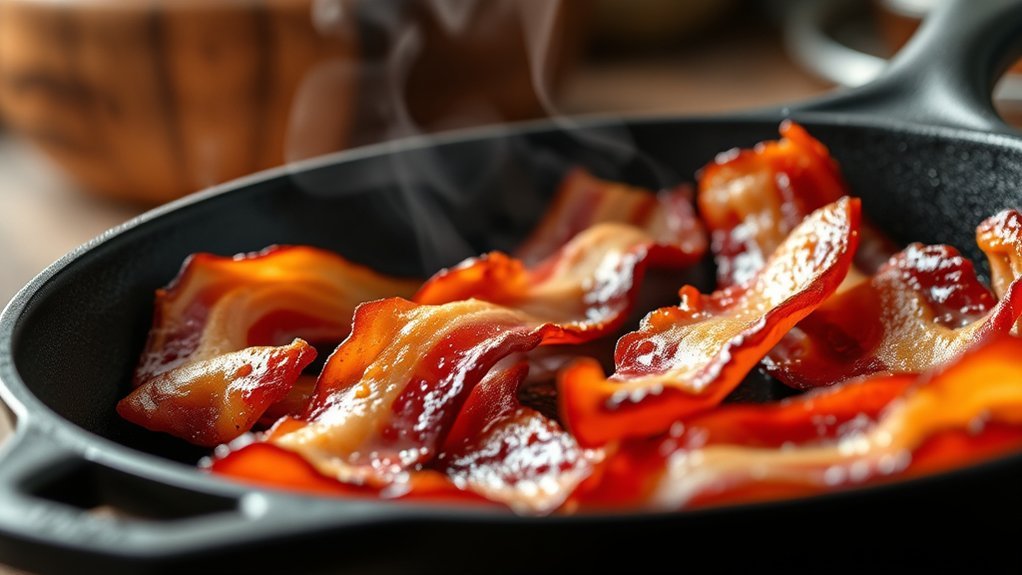

Think of your cast iron skillet as a forge, where raw bacon transforms into a crispy masterpiece through careful heat and timing. Making crispy bacon in a cast iron skillet starts with the right cut and temperature, ensuring the fat renders slowly without burning.
Mastering these steps can elevate your bacon from greasy to perfectly crisp. But there’s more to the process than just heat—details matter if you want consistent results every time.
Key Takeaways
- Choose streaky, dry-cured bacon with balanced fat for better flavor and crispiness in a cast iron skillet.
- Properly season and preheat the cast iron skillet gradually over medium-low heat to ensure even cooking and prevent sticking.
- Lay bacon strips flat without overlapping, maintaining slight gaps for optimal fat rendering and even crisping.
- Cook bacon on medium-low heat, adjusting as fat renders, and avoid overcrowding or high heat to prevent burning.
- Use tongs to handle bacon and cook in batches if necessary to achieve consistent crispiness and texture.
Choosing the Best Bacon for Crispy Cast Iron Cooking
Selecting the right bacon is essential for achieving that perfect crispiness in your cast iron skillet. You want to focus on sourcing streaky bacon because its higher fat content renders beautifully, ensuring even crisping.
When choosing, consider the bacon curing method. Dry-cured bacon tends to deliver more intense flavor and a better texture than wet-cured varieties.
Look for bacon with a balanced ratio of fat to meat; too lean, and it won’t crisp well; too fatty, and it may become greasy. Pay attention to thickness, too. Thinner slices crisp faster, while thicker cuts offer a meatier bite but require careful cooking.
How to Prep Your Cast Iron Skillet for Bacon
Before you start cooking, make sure your cast iron skillet is properly seasoned to prevent sticking and enhance flavor. Preheat the skillet gradually over medium heat to ensure even cooking and crispiness.
Also, clean your skillet thoroughly to remove any residue that could affect the taste or texture of the bacon.
Seasoning Your Skillet
A well-seasoned cast iron skillet guarantees your bacon cooks evenly and develops that perfect crispy texture without sticking. To start seasoning skillet properly, cleanse it thoroughly, dry it completely, then rub a thin layer of oil over the surface.
Bake it upside down at 450°F for an hour, placing foil below to catch drips. This creates a durable, non-stick patina essential for crispy bacon.
Maintain this seasoning skillet with a consistent maintenance routine. After cooking, clean with hot water and a brush, dry immediately, and apply a light oil coat before storing.
| Step | Action | Purpose |
|---|---|---|
| Clean | Remove residue | Prevents buildup |
| Dry | Thorough drying | Avoids rust |
| Oil | Thin layer application | Builds protective patina |
| Bake | High heat for 1 hour | Polymerizes oil to seasoning |
Preheating Techniques
How do you guarantee your cast iron skillet is perfectly primed for cooking bacon? The key lies in understanding preheating science. Start by placing your skillet on medium-low heat and let it warm gradually.
This controlled approach allows the metal to heat evenly, preventing hot spots that cause uneven cooking. Avoid cranking the heat instantly; slow warming ensures the skillet preps properly to render bacon fat without burning.
Use the water-drop test: sprinkle a few drops on the surface. If they sizzle and evaporate quickly, the skillet is ready. Proper preheating maximizes crispiness and prevents sticking.
Cleaning Before Use
Once your skillet reaches the ideal temperature, ensuring it’s clean and well-maintained becomes the next step for flawless bacon cooking. Start by inspecting your cast iron for any residual food or rust.
Follow established cleaning routines: rinse with hot water, scrub gently using a non-metal brush or sponge, and avoid soap to preserve seasoning. After cleaning, dry the skillet thoroughly to prevent rust.
Apply a thin layer of oil to maintain its non-stick surface. Always observe safety precautions: handle the skillet carefully, especially when hot, and avoid sudden temperature changes that cause warping.
Proper cleaning before use guarantees even heat distribution and prevents off-flavors, setting the stage for perfectly crispy bacon every time you cook.
How to Cook Bacon in a Cast Iron Skillet
Start by heating your prepped cast iron skillet over medium-low heat to guarantee even cooking. Lay the bacon strips flat without overlapping to allow proper rendering and crisping.
Maintain consistent temperature control throughout to prevent burning and achieve perfectly crispy bacon.
Preparing The Skillet
What’s the best way to prepare your cast iron skillet for perfectly crispy bacon? Start by ensuring your skillet is clean and well-seasoned. Seasoning techniques create a natural non-stick surface, crucial for even cooking and easy cleanup.
Before cooking, place the skillet on medium-low heat and begin preheating skillet slowly. Avoid high heat at this stage; gradual warming prevents warping and promotes even heat distribution.
Preheating skillet until it’s hot enough to make water droplets sizzle but not smoke ensures the bacon cooks uniformly without sticking. This preparation step is essential. Proper seasoning combined with controlled preheating lets the bacon render its fat efficiently, crisping up nicely without burning or sticking.
Taking these steps guarantees a flawless base for cooking your bacon.
Arranging Bacon Strips
With your skillet properly preheated and seasoned, you’re ready to arrange the bacon strips for ideal cooking. Start by laying each strip flat in the skillet, avoiding overlap to ensure even heat distribution.
Precise strip alignment is essential; position the strips parallel with a slight gap between them to allow the fat to render evenly. This careful arranging of bacon prevents sticking and promotes uniform crisping.
Use tongs to gently place each strip, maintaining consistent spacing. If the skillet is crowded, work in batches instead of forcing more strips in, which leads to uneven cooking.
Cooking Temperature Control
How exactly do you control the temperature to achieve perfectly crispy bacon in a cast iron skillet? Temperature control is essential to render fat evenly without burning. Start by heating your skillet over medium-low heat. This prevents surpassing the oil’s smoke point and guarantees gradual cooking. Focus on:
- Adjusting heat as bacon renders fat, lowering if it sizzles aggressively.
- Watching for the smoke point; if the skillet smokes, reduce heat immediately.
- Using visual cues—bacon should gently bubble, not aggressively fry.
Managing Heat for Perfectly Crispy Bacon
Why does managing heat make all the difference when cooking bacon in a cast iron skillet? Proper heat management ensures your bacon achieves that ideal crisping texture without burning or undercooking.
Start with medium-low heat to gradually render fat, allowing the bacon to crisp evenly. If the heat’s too high, the outside will char while the inside remains chewy. Conversely, too low heat prolongs cooking, resulting in limp bacon.
You want to maintain consistent heat, adjusting slightly to prevent flare-ups or smoke. This controlled approach lets the fat render slowly, crisping the bacon perfectly. Remember, cast iron retains heat well, so minor adjustments go a long way.
Mastering heat management is essential for that balanced, crispy texture every time you cook bacon.
Tips for Evenly Cooked Bacon in Cast Iron
Where should you place the bacon in your cast iron skillet to guarantee even cooking? Position each strip flat and without overlap, maximizing cast iron efficiency to render fat uniformly and produce crispy bacon. Follow these tips:
- Lay bacon strips side-by-side, leaving space for heat to circulate evenly.
- Start with a cold skillet to gradually warm fat, preventing uneven cooking and curling.
- Flip strips gently and consistently, ensuring both sides crisp up without burning.
Using and Storing Bacon Fat Safely
When should you save bacon fat, and how can you do it safely to enhance future recipes? Save bacon fat when you’ve cooked several slices at a moderate pan frying temperature to avoid burning. After cooking, carefully strain the hot fat through a fine mesh sieve or cheesecloth into a clean, heatproof container to remove any solids.
For safe bacon fat storage, let it cool to room temperature, then seal it tightly and refrigerate. Proper refrigeration prevents rancidity and bacterial growth. You can also freeze bacon fat for longer storage. Always use a clean utensil to scoop fat to avoid contamination.
Maintaining the right pan frying temperature initially ensures the fat stays clear and fresh-tasting, extending its usability and flavor benefits in your cooking.
Common Mistakes When Cooking Bacon in Cast Iron
How can you avoid ruining your bacon by common pitfalls in cast iron cooking? Mastering bacon curing and smokehouse techniques means respecting the skillet’s heat and your bacon’s integrity. Here are three critical mistakes to sidestep:
- Overcrowding the pan: Don’t pile too many slices in; they need room to crisp evenly and render fat properly.
- Using high heat: Cast iron retains heat well. Start low to medium to prevent burnt edges while allowing fat to render fully.
- Ignoring bacon curing differences: Not all bacon cures the same. Some thicker cuts require longer cooking times and gentler heat to avoid toughness.
Creative Ways to Use Crispy Bacon Beyond Breakfast
Now that you know how to perfectly cook bacon in a cast iron skillet without common mistakes, you can explore its versatility beyond the breakfast plate. Applying creative bacon science lets you elevate dishes with flavor and texture.
Crispy bacon works as a savory salad topper, a crunchy pizza layer, or a rich pasta enhancer. Use bacon garnish ideas to finish soups or deviled eggs for an impressive presentation.
| Dish Type | Usage Example | Effect Achieved |
|---|---|---|
| Salads | Crumbled bacon bits | Adds crunch & umami |
| Pasta & Pizza | Bacon strips or crumbles | Boosts depth & savor |
| Appetizers | Bacon garnish on eggs | Enhances flavor & look |
Incorporate these creative bacon uses to maximize your cast iron skillet skills and delight every meal.
Frequently Asked Questions
Can I Cook Turkey Bacon the Same Way in a Cast Iron Skillet?
Yes, you can cook turkey bacon in a cast iron skillet with excellent cast iron compatibility. Just adjust heat slightly lower than pork bacon for even induction cooking and crispiness without burning, ensuring thorough cooking and perfect texture.
How Long Does Cooked Bacon Stay Crispy After Cooling?
You know what they say, “time waits for no one.” After cooking, bacon stays crispy for about 20-30 minutes at room temperature.
To maintain cooking texture longer, store it airtight and reheat carefully within 2-3 days.
Is It Safe to Reuse Bacon Grease for Other Recipes?
Yes, safe reuse of bacon grease is possible if you strain it and store it properly. You’ll enhance flavor with bacon grease in dishes like eggs or vegetables, but avoid overheating to maintain its quality and safety.
What Is the Best Way to Clean a Cast Iron Skillet After Bacon?
You’ll clean your cast iron skillet best by wiping excess grease, scrubbing with coarse salt and a little water, then drying thoroughly.
Follow with seasoning tips: apply a thin oil layer, heat to maintain the non-stick surface.
Can I Cook Bacon in a Cast Iron Skillet on an Induction Stove?
Yes, you can cook bacon in a cast iron skillet on an induction stove. Ensure your skillet is induction friendly, preheat gradually, and manage skillet temperature carefully.
This will help prevent sticking or uneven cooking for crispy, delicious results.
Conclusion
Now that you’ve mastered crispy bacon in your cast iron skillet, you’re cooking with gas. Remember, patience and low heat are your best allies—rush it, and you’ll risk burning. Keep strips spaced and turn them carefully for even crispness.
Use the rendered fat to elevate other dishes, making every bit count. With these techniques, you’ll consistently achieve that perfect crunch, turning simple bacon into a culinary triumph.
By following these tips, you’ll always know how to make crispy bacon in a cast iron skillet perfectly every time.