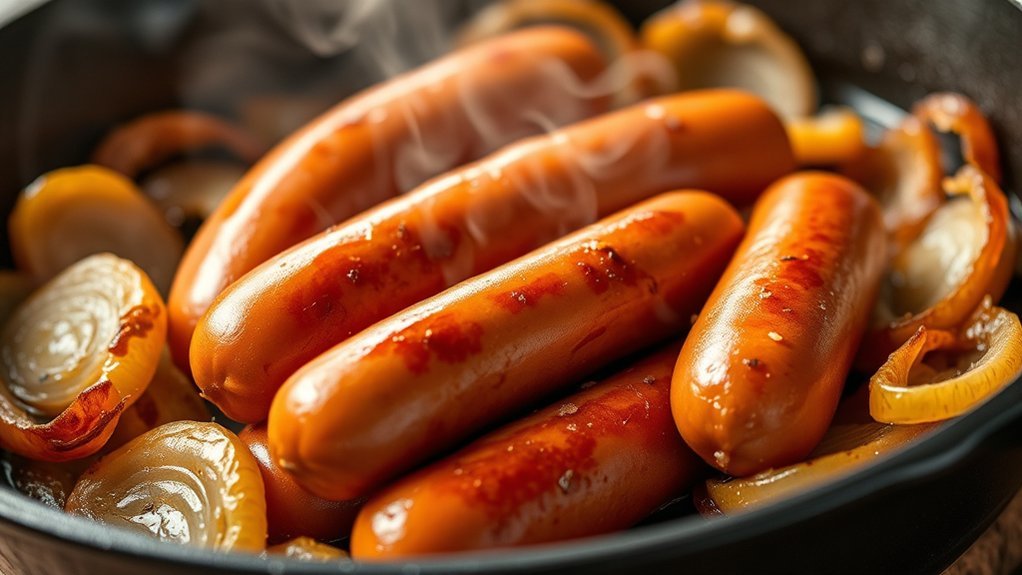

Cooking brats in a skillet might seem simple, yet achieving that perfect, golden-brown crust takes a bit of finesse. When you cook brats in a skillet, you’ll want to balance heat and timing carefully to avoid burning while ensuring the sausages cook through evenly.
Getting this right transforms ordinary brats into a flavorful, juicy meal that’s hard to beat. Keep going, and you’ll uncover the key steps that make all the difference.
Key Takeaways
- Prick each brat sausage lightly and let them sit at room temperature before cooking to prevent bursting and ensure even cooking.
- Preheat a heavy-bottomed skillet, preferably cast iron, over medium heat and add oil or butter to prevent sticking.
- Cook brats slowly on medium to medium-low heat, turning occasionally for an even, golden-brown crust without burning.
- Use an instant-read thermometer to ensure brats reach an internal temperature of 160°F (71°C) for safe doneness.
- Enhance flavor by sautéing onions or peppers with brats and serve on toasted buns with mustard, sauerkraut, or your favorite toppings.
Step-by-Step Guide to Cooking Brats in a Skillet
Wondering how to achieve perfectly cooked brats with a crispy exterior and juicy interior right on your stovetop? Start with thorough brat prep: prick each sausage lightly to prevent bursting, then let them sit at room temperature.
Achieve perfectly cooked brats with a crispy outside and juicy inside by prepping and cooking them right on your stovetop.
Heat your skillet over medium heat, adding a little oil or butter to prevent sticking. If you don’t have a classic cast-iron pan, consider pan alternatives like stainless steel or non-stick skillets, which work just fine.
Place the brats in the pan and cook them slowly, turning occasionally to ensure even cooking. Keep the heat moderate to avoid burning the casing while allowing the inside to cook through.
This straightforward approach guarantees juicy, flavorful brats ready to enjoy in minutes.
How to Get That Perfect Browned Crust on Your Brats
To get that perfect browned crust on your brats, start by choosing a heavy-bottomed skillet that distributes heat evenly. You’ll want to keep the heat at medium to medium-high. Too hot, and the outside burns before the inside cooks.
Mastering this balance helps you achieve a crispy, golden exterior without sacrificing juicy insides.
Choosing The Right Pan
Which pan you choose can make all the difference in achieving that perfect browned crust on your brats. When choosing pan options, skillet material is key. It affects heat distribution and crust quality.
Cast iron skillets excel by retaining and evenly spreading heat, creating that irresistible sear. Non-stick pans prevent sticking but won’t brown as crisply. Stainless steel offers a balance but demands more attention.
| Skillet Material | Pros |
|---|---|
| Cast Iron | Even heat, great crust |
| Non-stick | Easy cleanup, less sticking |
| Stainless Steel | Durable, moderate browning |
| Carbon Steel | Heats quickly, good crust |
| Enameled Cast Iron | Easy maintenance, good heat retention |
Choose wisely to get the best sear and flavor every time.
Managing Heat Levels
How exactly do you control heat to achieve that perfect browned crust on your brats? Start by preheating your skillet over medium heat. This balance is key. Too high, and the outside burns before the inside cooks; too low, and you won’t get that satisfying sear.
Pay close attention to pan temperatures: once the pan feels hot but not smoking, place your brats in. As they sizzle, adjust heat to maintain a steady medium-low level, allowing the pork to cook through evenly while the surface caramelizes beautifully.
Resist the urge to crank up the heat; consistent heat control ensures a golden, crispy exterior without scorching. Managing heat levels carefully transforms simple cooking into a flavorful, perfectly textured meal.
How to Know When Your Skillet Brats Are Done
You’ll know your skillet brats are done when they have a rich, golden-brown crust and the juices run clear.
To be absolutely sure, use a meat thermometer to check that the internal temperature reaches 160°F. This simple step guarantees juicy, perfectly cooked brats every time.
Visual Cues Of Doneness
When can you tell that your skillet brats have reached the perfect doneness? Trust the visual cues and sensory signals your brats give off. First, look for that beautiful golden-brown color on the casing. This crisp, caramelized exterior signals they’re cooking evenly.
You’ll notice the brats start to plump up, firming as the juices inside heat and expand. Pay attention to subtle sizzling sounds; a consistent, gentle sizzle means they’re cooking through without burning. When you gently press the brat with tongs, it should feel springy but not mushy or hard.
The juices that seep out should run clear, not pink or bloody. Watching these visual cues and tuning into sensory signals will help you perfectly time your skillet brats without guesswork.
Internal Temperature Check
Why rely solely on visual cues when you can use a precise internal temperature check to know exactly when your skillet brats are done? Patience during sear is key, but the real proof lies in the internal temperature checkpoints.
A reliable instant-read thermometer will be your best tool here.
- Insert the thermometer into the thickest part of the brat without touching the skillet.
- Look for a consistent reading of 160°F (71°C), the safe temperature for pork sausages.
- If below 160°F, continue cooking with patience during sear, checking every few minutes.
Selecting the Best Brats and Skillet for Cooking
How do you choose the perfect brats and skillet to guarantee your cooking experience is both enjoyable and delicious? Start by carefully selecting packaging that’s fresh, well-sealed, and clearly labeled. Look for brats made from quality meats or consider alternative meats like chicken or turkey for a leaner option.
When it comes to the skillet, a heavy-bottomed cast iron pan is ideal. It distributes heat evenly and helps develop a beautiful sear. Non-stick skillets work too, especially if you want easier cleanup, but they might not give you that signature crust.
Whichever you pick, ensure it’s large enough to hold your brats comfortably without crowding. Picking the right brats and skillet sets the stage for perfectly cooked, flavorful brats every time.
Simple Prep Steps for Your Brats
Where do you start to get your brats ready for the skillet? First, choose your brat variety carefully. Whether it’s classic pork, spicy jalapeño, or a leaner turkey option, each brings unique flavors to the table.
Next, prep your skillet material. A heavy cast iron skillet retains heat beautifully, ensuring even browning. Now, follow these simple steps to prep your brats:
- Pat the brats dry with paper towels to help them sear perfectly without steaming.
- Pierce each brat a few times with a fork to prevent bursting and allow steam to escape.
- Let the brats reach room temperature for about 15 minutes so they cook evenly.
With these prep steps, you’re set to get the most out of your brat variety and skillet material for a delicious skillet meal.
Flavor Boosters and Serving Ideas for Skillet Brats
What can take your skillet brats from tasty to unforgettable? It’s all about the flavor boosters you add while cooking and the serving ideas you choose. Try sautéing onions, bell peppers, or garlic alongside your brats to infuse them with rich, savory notes.
A splash of beer or apple cider vinegar during cooking adds a tangy depth that complements the sausage’s natural juices. For serving ideas, pile your brats on toasted buns and top with sauerkraut, spicy mustard, or tangy pickles.
Don’t forget a side of creamy coleslaw or crispy potato wedges to round out the meal. These simple flavor boosters and smart serving ideas transform skillet brats into a mouthwatering feast you’ll want to make again and again.
Frequently Asked Questions
Can I Cook Brats in a Non-Stick Skillet?
Yes, you can cook bratwurst in a non-stick skillet. Just remember bratwurst grilling techniques for even cooking and practice good nonstick skillet care by avoiding metal utensils to keep your pan’s surface smooth and lasting longer.
How Do I Store Leftover Cooked Brats?
Like a treasure chest, store leftover cooked brats in an airtight container to lock in flavor and freshness. Refrigerate within two hours to ensure food safety, and enjoy them within 3-4 days for best taste.
Are There Vegetarian Alternatives to Bratwurst?
Yes, you’ll find delicious vegetarian alternatives like plant-based sausages made from soy, pea protein, or mushrooms. They mimic bratwurst flavors perfectly, letting you enjoy that savory, smoky taste without any meat.
Can I Grill Brats Instead of Using a Skillet?
You can absolutely grill brats, hearing that sizzle and seeing grill marks char them beautifully. Grilling alternatives offer smoky depth, while skillet methods give juicy control. You’ll enjoy both, but grilling adds a bold, outdoor flavor twist.
What Side Dishes Pair Best With Skillet Brats?
You’ll love side dish ideas like tangy sauerkraut, creamy mashed potatoes, and grilled veggies for perfect flavor pairing. These sides balance your skillet brats’ savory richness, making every bite satisfying and deliciously memorable.
Conclusion
Now that you know the secrets to skillet-cooking perfect brats, imagine biting into that golden, crispy crust as juicy flavors burst with every chew. But here’s the twist—mastering this technique isn’t just about cooking; it’s about creating a moment you’ll crave again and again.
So grab your skillet, fire it up, and get ready to transform simple brats into an unforgettable feast that’ll have everyone asking for seconds. Your best brat awaits, and with these tips, you’ll be skillet-cooking brats like a pro in no time.