
Did you know that improper cleaning can reduce your Calphalon skillet’s lifespan by up to 30%? When you clean your Calphalon skillet correctly, you preserve its nonstick surface and overall performance.
It’s essential to avoid common mistakes that cause damage, but the right techniques also guarantee thorough residue removal without compromising the finish. Understanding these steps will make your skillet last longer and perform better every time you cook.
Key Takeaways
- Wash the skillet while warm using a soft sponge, mild dish soap, and warm water to loosen and remove food residues efficiently.
- Avoid harsh abrasives and steel wool to protect the nonstick coating and prevent surface damage.
- Use silicone, wooden, or nylon utensils to prevent scratches and maintain the skillet’s nonstick surface.
- For stubborn stains, soak in warm soapy water, scrub gently with baking soda paste, or apply a vinegar-water solution heated briefly on low.
- Dry the skillet immediately after washing to prevent water spots and store it carefully to avoid abrasion and damage.
How to Wash Your Calphalon Skillet After Every Use
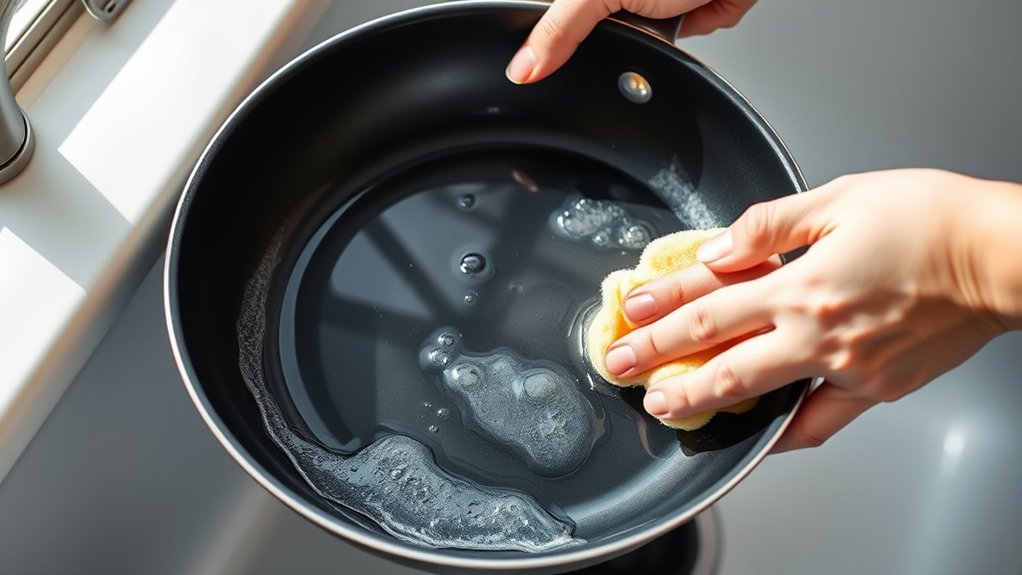
How should you wash your Calphalon skillet after each use to maintain its performance? Start by allowing the skillet to cool slightly but not completely; washing while warm helps loosen residues. Rinse the skillet with warm water to remove loose food particles.
Avoid harsh abrasives or steel wool, as these can damage the nonstick surface. Instead, use a soft sponge or a nonabrasive scrubber with mild dish soap. Gently scrub the cooking surface to prevent compromising the coating.
Rinse thoroughly to remove all soap residues. Dry the skillet immediately with a soft cloth to prevent water spots and maintain the skillet’s integrity. Following this method ensures effective cleaning while promoting nonstick preservation, extending your Calphalon skillet’s lifespan and optimal cooking performance.
Essential Tips to Preserve Your Calphalon Skillet’s Nonstick Surface
Maintaining your Calphalon skillet’s nonstick surface extends beyond daily washing techniques. To preserve the skillet’s glossy finish, avoid using metal utensils that can scratch and degrade the coating. Opt for silicone, wooden, or nylon tools instead.
Protect your Calphalon skillet’s nonstick finish by choosing silicone, wooden, or nylon utensils over metal ones.
Avoid overheating the skillet, as excessive heat can damage the nonstick layer and impair even heat distribution, leading to hotspots that compromise cooking performance. Always preheat on low to medium settings and use moderate heat during cooking.
Store the skillet carefully, placing a soft cloth or paper towel between stacked pans to prevent abrasion. Regularly inspect the surface for signs of wear and discontinue use if the coating shows significant damage, to maintain safety and efficiency.
Following these precise measures ensures your Calphalon skillet remains functional and visually pristine.
How to Remove Stubborn Stains From Your Calphalon Skillet
Stubborn stains on your Calphalon skillet challenge its performance and appearance, but you can effectively restore its surface with targeted cleaning techniques. Begin by soaking the skillet in warm, soapy water for 15-20 minutes to loosen residue without damaging the nonstick coating.
Use a nonabrasive sponge with a paste of baking soda and water to gently scrub the stained areas. This method excels in stain removal while preserving nonstick care. Avoid steel wool or harsh scouring pads, as they compromise the skillet’s surface integrity.
For persistent stains, apply a solution of equal parts vinegar and water, heating it briefly on low to break down buildup. Rinse thoroughly and dry immediately to prevent water spots.
Consistent, careful stain removal maintains your skillet’s longevity and optimal cooking performance.
When to Skip DIY and Call a Pro
While many stains and residues can be managed with careful at-home methods, certain issues require professional expertise to avoid further damage. You should know when to skip DIY and call a pro, especially if your Calphalon skillet has deep discoloration, warped surfaces, or persistent corrosion.
Attempting to fix these problems without proper tools or knowledge risks exacerbating the damage, compromising both functionality and safety. If you’re unsure how to fix severe buildup or structural defects, seeking professional advice ensures the skillet’s integrity is preserved.
Technicians possess specialized cleaning agents and repair techniques unavailable to consumers. Ultimately, recognizing when to skip DIY protects your investment and restores optimal performance effectively. Don’t hesitate to call a pro when standard cleaning methods fail or the damage appears extensive.
Key Precautions Before Cleaning Your Calphalon Skillet
How should you prepare your Calphalon skillet before cleaning to assure its longevity? Following strict care instructions and heat considerations is crucial.
First, make sure the skillet has cooled completely; thermal shock can warp the metal and degrade the nonstick surface. Second, avoid harsh abrasives or steel wool, which damage the finish.
Third, detach any detachable parts if applicable, to clean thoroughly without causing damage.
Frequently Asked Questions
Can I Use Metal Utensils on My Calphalon Skillet?
You shouldn’t use metal utensils on your Calphalon skillet to avoid scratching its nonstick surface.
Though it’s dishwasher safe, hand washing extends its lifespan and preserves the cookware’s performance and finish.
Is It Safe to Put My Calphalon Skillet in the Dishwasher?
You might think tossing your Calphalon skillet in the dishwasher’s easy, but dishwasher safe concerns arise. The harsh environment can degrade the nonstick surface, especially if you’ve used metal utensils, reducing its lifespan considerably.
How Do I Season My Calphalon Skillet, if Needed?
You don’t usually need to season your Calphalon skillet, but for seasoning basics, apply a thin layer of oil, heat it until smoking, then cool.
Regular maintenance tips include avoiding harsh detergents and drying thoroughly.
What Should I Do if My Skillet Warps or Dents?
Worrying warped or dented skillet? Don’t despair. You should stop using it immediately, contact Calphalon’s customer service for expert evaluation, and avoid DIY fixes that might worsen damage or void warranties. Professional repair ensures reliable results.
Can I Use Cooking Sprays on a Nonstick Calphalon Skillet?
You shouldn’t use cooking sprays on a nonstick Calphalon skillet. The propellants can damage the nonstick coating, causing residue buildup that complicates cleaning oils and reduces the skillet’s lifespan and performance.
Conclusion
By properly cleaning your Calphalon skillet, you can extend its nonstick life by up to 50%, ensuring optimal cooking performance. Always avoid abrasives and use gentle methods to protect the surface. Remember, immediate drying prevents damage and rust.
For stubborn stains, soak the skillet or apply a vinegar solution as recommended. If issues persist, don’t hesitate to consult a professional.
Following these precise steps preserves your skillet’s quality and maximizes its lifespan. Proper care is essential when learning how to clean a Calphalon skillet effectively.