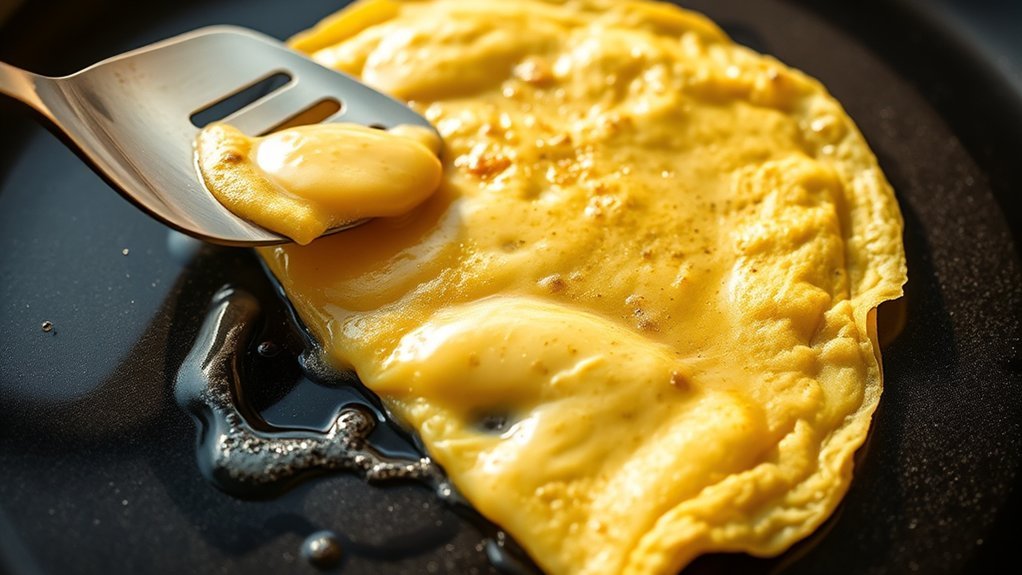

Did you know that over 70% of home cooks struggle to make a perfectly cooked omelette on a griddle? If you want to master this classic breakfast staple using a griddle, you need the right temperature, technique, and timing.
Getting these elements right ensures even cooking and prevents sticking or burning. Keep following to learn the precise steps that will help you achieve a consistently flawless omelette every time.
Key Takeaways
- Preheat the griddle to medium-low (300°F to 325°F) and season evenly with high-smoke-point oil for a smooth, nonstick surface.
- Whisk eggs until fully combined and slightly frothy, then pour steadily on the tilted griddle for even distribution.
- Add fillings like sautéed vegetables or cheese when eggs are mostly set but still slightly runny, avoiding overloading.
- Fold the omelette using half-moon, tri-fold, or roll techniques to retain moisture and ensure even cooking.
- Maintain consistent temperature with a thermometer, avoid overheating, and clean the griddle before each use to prevent sticking.
Gather Ingredients and Prepare Your Omelette Fillings
Where do you begin when making a perfect omelette on a griddle? Start by gathering all your ingredients and preparing your fillings meticulously. Don’t fall for misleading etiquette that suggests complicated or excessive ingredients; simplicity often yields the best results.
Choose fresh eggs, quality cheese, and vegetables like bell peppers, mushrooms, or spinach, chopping them uniformly for even cooking. Avoid distractions like unrelated weather concerns; your focus should be on the task, not the forecast.
Prepare fillings ahead of time to maintain workflow efficiency. This preparation ensures that when your griddle is ready, everything is at hand, preventing overcooking or uneven mixing. Precise ingredient readiness sets the foundation for a flawless omelette, so don’t skip this critical step.
Heat and Season Your Griddle for Omelette Cooking
Start by preheating your griddle to a consistent medium-low temperature, around 300°F to 325°F, to guarantee even cooking. Use a high-smoke-point oil like avocado or grapeseed to season the surface and prevent sticking.
Apply the oil evenly with a paper towel or brush to create a smooth, nonstick layer before pouring your eggs.
Preheating Temperature Guidelines
Although it might be tempting to crank the heat to maximum, you should preheat your griddle to a moderate temperature, around 325°F to 350°F, to ensure even cooking and prevent burning. Understanding preheating basics is essential; this temperature range allows the griddle surface to stabilize, providing consistent heat for your omelette.
Use an accurate thermometer to monitor temperature targets closely. Avoid guessing, as too low a temperature results in undercooked eggs, while too high causes sticking and uneven browning.
Once the griddle reaches your target temperature, give it a minute to maintain that heat before adding your ingredients. This disciplined approach to preheating sets the foundation for a perfectly cooked omelette with a tender, fluffy texture and a golden finish every time.
Choosing The Right Oil
Which oil you choose can make all the difference in how your omelette cooks and tastes. To avoid unpleasant flavors and sticking, pick an oil with a high smoke point.
Oils like avocado, grapeseed, or refined canola handle high heat without producing oil smoke, preserving the griddle’s surface and food quality. Avoid oils with low oil smoke points such as extra virgin olive oil or butter, as they burn quickly, creating smoke and bitterness.
Before heating your griddle, apply a thin, even layer of your chosen oil to ensure proper seasoning and prevent sticking. Monitor for any signs of oil smoke during heating; if you see smoke, reduce the heat immediately to maintain an optimal cooking environment for your omelette.
Even Seasoning Techniques
Once you’ve selected the right oil, the next step is to evenly season your griddle to create a smooth, nonstick surface for your omelette. Begin by preheating the griddle over consistent heat, aiming for medium temperature to avoid burning the oil.
Pour a thin layer of oil onto the surface and use a heat-resistant spatula or paper towel to spread it evenly across the entire cooking area. Maintain consistent heat throughout this process to allow the oil to bond with the griddle’s surface.
This even seasoning forms a protective layer that prevents sticking and promotes easy flipping. Repeat this process regularly to preserve the nonstick quality, ensuring every omelette cooks perfectly without tearing or sticking to the griddle.
Whisk Eggs and Pour Evenly on the Griddle
Crack your eggs into a bowl and whisk them thoroughly until the yolks and whites are fully combined and slightly frothy. This ensures an even texture and avoids uneven cooking.
When pouring onto the griddle, follow these steps:
- Tilt the griddle slightly to spread the eggs evenly, preventing thick spots that increase overcooking risk.
- Pour in a steady stream at a low height to control egg distribution and minimize splatter.
- Adjust the flipping angle once cooking begins; a shallow angle helps you flip the omelette cleanly without breaking it.
Mastering these techniques sets the foundation for a perfectly cooked omelette, ensuring consistent thickness and preventing common pitfalls like uneven cooking or tearing during flipping.
Cook and Fold Your Omelette With Simple Steps
Start by ensuring your griddle is evenly heated to cook the eggs consistently without burning.
Watch the edges carefully as the omelette begins to set, then use a spatula to fold it gently but firmly.
Mastering these simple steps will give you a perfectly cooked and neatly folded omelette every time.
Preparing Your Griddle
How do you guarantee your griddle is perfectly ready for cooking an omelette? Start by ensuring griddle cleanliness; wipe off any food residue or grease from previous use with a damp cloth or scraper.
Next, preheat the griddle to a medium temperature to prevent sticking and promote even cooking. Finally, apply seasoning oil evenly across the surface; use a paper towel or brush to spread a thin layer of oil. This step enhances non-stick properties and adds flavor.
Follow these three steps precisely:
- Clean the griddle surface thoroughly.
- Preheat the griddle to medium heat.
- Season the griddle by applying a thin layer of oil.
Cooking Omelette Evenly
When should you pour the eggs onto your griddle to guarantee an even cook? Pour the beaten eggs once the surface is evenly heated but not smoking. This ensures the eggs set uniformly, avoiding undercooked or burnt spots.
After pouring, gently tilt the griddle to spread the eggs evenly. As the edges begin to firm, use a spatula to lift them slightly, allowing uncooked egg to flow underneath. This technique promotes consistent cooking and preserves the omelette aesthetics by creating a smooth, uniform surface.
Add your savory fillings only when the base is mostly set but still slightly runny on top; this prevents overcooking and sogginess. By controlling heat and timing, you’ll achieve an evenly cooked omelette with perfectly integrated savory fillings and appealing omelette aesthetics.
Folding Techniques Explained
Once your omelette base is mostly set with fillings in place, the next step is mastering the folding technique to finish cooking and present it neatly. Folding techniques have evolved through omelette history, emphasizing both form and function.
Here’s how to do it:
- Half-Moon Fold: Use a spatula to gently lift one side and fold it over the other, creating a classic half-moon shape.
- Tri-Fold: Fold one third of the omelette towards the center, then fold the opposite side over it, producing a compact, layered look.
- Roll Fold: Starting at one edge, carefully roll the omelette onto itself for a cylindrical shape.
Master these folding techniques to ensure your omelette cooks evenly, retains moisture, and looks professional every time.
Add Fillings and Customize Your Omelette Flavors
Why settle for a plain omelette when you can customize it with a variety of fillings? Start by selecting creative omelette fillings like sautéed mushrooms, diced tomatoes, fresh herbs, or shredded cheese to elevate your dish.
Consider flavor pairings carefully. Combining ingredients like spinach and feta or ham and cheddar enhances taste harmony. Add fillings once the eggs begin to set but remain slightly runny to ensure even distribution and melting.
Avoid overloading the omelette to maintain a manageable fold and proper cooking. Use a spatula to gently spread fillings across one half, then fold the other half over. This method locks in flavors and creates a satisfying texture.
Experiment with different combinations to find your perfect balance and transform your omelette into a personalized culinary experience.
Troubleshoot Common Omelette Problems on a Griddle
How can you fix common issues that arise while making an omelette on a griddle? Identifying core issues quickly helps you avoid common pitfalls and secure a perfect omelette every time. Here’s how to troubleshoot effectively:
- Sticking to the griddle: Prevent this by preheating your griddle and using enough butter or oil. If sticking occurs, lower the heat and gently loosen edges with a spatula.
- Uneven cooking: Adjust the griddle temperature to medium-low. Too high heat cooks edges too fast while leaving the center raw.
- Overcooked or rubbery texture: Avoid overcooking by removing the omelette from heat as soon as it sets but remains slightly moist.
Address these core issues promptly to master omelette-making on your griddle without hassle.
Frequently Asked Questions
What Type of Griddle Is Best for Making Omelettes?
You’ll want a nonstick griddle with aluminum or cast iron material for even heat distribution. Precise heat control is essential, so choose one with adjustable settings to cook your omelette evenly without burning or sticking.
Can I Make a Vegan Omelette on a Griddle?
Yes, you can make a vegan omelette on a griddle by using vegan alternatives like chickpea flour or tofu. Your griddle’s flavorability enhances the dish, so preheat it well and cook evenly for the best texture and taste.
How Do I Clean My Griddle After Cooking an Omelette?
You’ll want to start your cleaning routine immediately, as 75% of griddle users miss greasy residue spots. Scrape excess, wipe with hot soapy water, then rinse and dry thoroughly to keep your griddle spotless and long-lasting.
What Temperature Setting Is Ideal for Griddle Omelettes?
You should set your griddle to medium-low for the ideal omelette temperature. This two-word idea guarantees even cooking without burning, letting your omelette cook gently while staying tender and flavorful throughout.
Can I Freeze a Cooked Griddle Omelette for Later?
Yes, you can freeze omelette for later. Freezing cooked omelette works best if you wrap it tightly in plastic wrap and foil, then store in an airtight container or freezer bag to preserve freshness and texture effectively.
Conclusion
Now that you know the exact steps, making a perfect omelette on a griddle is easier than flipping a pancake in a hurricane! By heating and seasoning your griddle properly, whisking eggs just right, and folding with confidence, you’ll master this simple yet impressive skill.
Remember, steady heat and quick technique are your best friends. Keep practicing, and soon you’ll create omelettes that are consistently fluffy, flavorful, and restaurant-quality every time.
With patience and practice, making an omelette on a griddle will become second nature, allowing you to enjoy delicious results whenever you want.