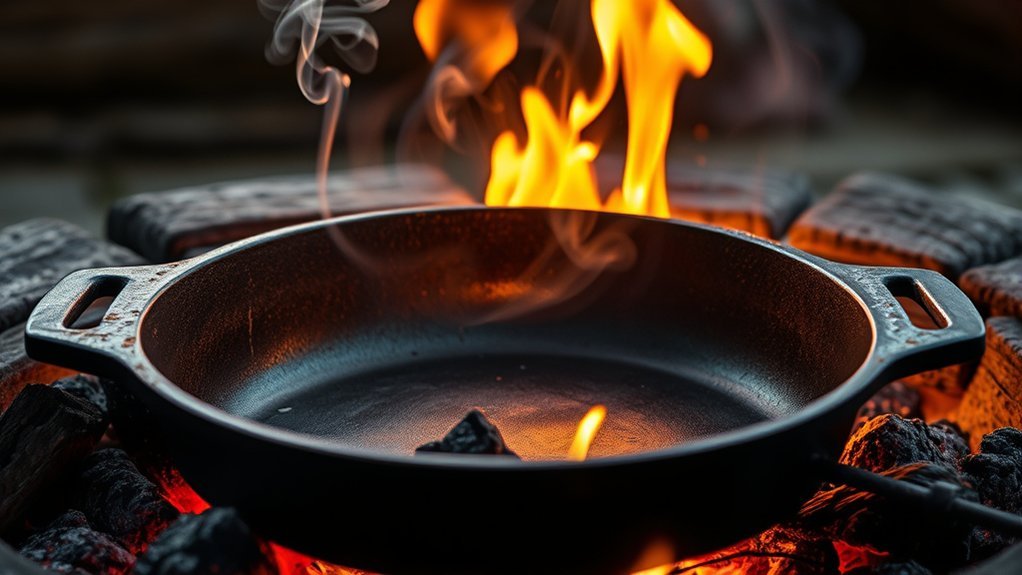

When you decide to fire a cast iron skillet, you’re committing to a process that enhances its durability and cooking performance. Firing a cast iron skillet starts with thorough cleaning and applying the right oil evenly, ensuring every surface is coated. Precision in temperature and timing during baking is crucial to develop a strong, non-stick layer.
But the steps after firing—cooling and storing—are just as important to maintain your skillet’s integrity over time. Proper care ensures your cast iron skillet remains reliable and improves with each use. Following these steps will help you get the best results from your skillet.
Key Takeaways
- Preheat oven to 450°F (232°C) for optimal seasoning heat control.
- Apply a thin, even layer of high-smoke-point oil over the entire skillet surface.
- Place skillet upside down on the middle oven rack to ensure even seasoning.
- Use a foil-lined tray on the lower rack to catch oil drips during firing.
- Maintain consistent heat for one hour, then cool skillet gradually to room temperature.
Gather Materials and Prep Your Cast Iron Skillet
Before you begin firing your cast iron skillet, gather all necessary materials to ensure a smooth process. Start by collecting your skillet, a stiff brush, mild soap, clean cloths, and a heat-resistant surface.
Next, prep skillet thoroughly by scrubbing off any rust or residue with the brush and soap, then rinse and dry completely to prevent moisture during seasoning. Although you’ll select oil later, have a high-smoke-point oil ready to apply seasoning effectively.
Ensure your workspace is well-ventilated and protected from spills. This organized setup allows you to focus on evenly applying seasoning, which is crucial for building a durable, non-stick surface.
Choose and Apply Oil for Seasoning Your Skillet
Select an oil with a high smoke point, such as flaxseed, grapeseed, or refined avocado oil, to ensure effective seasoning and prevent sticky residue. Avoid topic drift by sticking to oils proven for cast iron; inconsistent terminology around “seasoning oils” can confuse your process.
Apply a thin, even layer of oil over the entire skillet surface, including the handle. Excess oil leads to uneven seasoning and sticky buildup.
| Oil Type | Smoke Point (°F) | Benefits |
|---|---|---|
| Flaxseed Oil | 450 | Polymerizes into hard coating |
| Grapeseed Oil | 420 | Neutral flavor, durable |
| Avocado Oil | 520 | High smoke point, stable |
Choose wisely and apply sparingly for a durable, non-stick finish.
How to Fire Your Cast Iron Skillet Properly
After applying a thin, even coat of oil, you’ll need to fire your cast iron skillet to bond the seasoning properly. Preheat your oven to 450°F (232°C), ensuring the high temperature initiates polymerization for a durable, non-stick layer.
Place the skillet upside down on the middle rack to prevent pooling oil, and position a foil-lined tray on the lower rack to catch drips. Maintain consistent heat for one hour, allowing the oil to fully bond with the iron surface.
This two word discussion idea heat control is critical; fluctuating temperature can cause uneven seasoning. Equally important is the two word discussion idea oven placement, which ensures even exposure. Firing your skillet properly guarantees a smooth, resilient finish ready for cooking.
Cool and Store Your Skillet After Firing
How long should you let your cast iron skillet cool before storing it? Allow it to cool completely at room temperature to avoid thermal shock, which can cause warping or cracking. Use these effective cooling methods:
Let your cast iron skillet cool fully at room temperature to prevent warping or cracking from thermal shock.
- Place the skillet on a heat-resistant surface away from drafts to cool naturally.
- Avoid rapid cooling techniques like running water or refrigeration.
- Let residual heat dissipate gradually to preserve the seasoning layer.
Once cool, consider these storage ideas to maintain your skillet’s integrity:
- Store in a dry, well-ventilated area to prevent rust.
- Place a paper towel or cloth between stacked skillets to protect the seasoning.
- Keep the lid off or ajar to allow airflow and moisture escape.
Following these precise steps ensures your cast iron skillet remains seasoned and ready for future use.
Maintain and Re-Fire Your Cast Iron Skillet Over Time
Why does your cast iron skillet need regular maintenance and occasional re-firing? Over time, normal use, cleaning, and exposure to moisture can degrade the skillet’s seasoning layer. To preserve optimal non-stick performance and prevent rust, you must follow a consistent reseasoning cadence.
Typically, reseasoning every few months or sooner if you notice dullness or sticky buildup restores the protective polymerized oil coating. When maintaining your skillet, clean it promptly after each use, dry it thoroughly, and apply a thin layer of cooking oil before storage.
Proper storage prolongs your skillet’s longevity by minimizing oxidation. If rust or flaking appears, don’t hesitate to strip the old seasoning and re-fire the skillet using your initial firing process. Maintaining this disciplined routine ensures your cast iron remains durable, reliable, and ready for years of use.
Frequently Asked Questions
Can I Use a Cast Iron Skillet on an Induction Cooktop?
Yes, you can use a cast iron skillet on an induction cooktop because it has excellent induction compatibility. It also provides superior heat distribution, ensuring even cooking.
Just handle it carefully due to its heavy weight.
How Do I Remove Rust From My Cast Iron Skillet?
You remove rust by scrubbing your skillet with steel wool or a rust remover, then thoroughly washing and drying it.
Afterward, perform seasoning revival by applying oil and baking it to restore the protective coating.
Is It Safe to Cook Acidic Foods in a Cast Iron Skillet?
You can cook acidic foods safely in your cast iron skillet, but limit exposure time to preserve seasoning longevity.
Prolonged contact may degrade the seasoning, causing metallic flavors and potential rust, so avoid long simmering of acidic dishes.
Can I Use Soap When Cleaning a Cast Iron Skillet?
Of course, you can use soap if you enjoy destroying your skillet’s seasoning depth! But seriously, mild soap won’t harm well-seasoned cast iron.
Just avoid harsh detergents to maintain soap safety and preserve that perfect non-stick layer.
How Do I Know if My Skillet Is Pre-Seasoned?
You’ll know your skillet is pre-seasoned if it has a dark, even seasoning color and a smooth, non-sticky surface.
Perform an aroma test: a faint, slightly smoky scent confirms factory seasoning’s presence and quality.
Conclusion
Now that you’ve fired your cast iron skillet to a glossy, black perfection, don’t just admire it like a museum piece. Remember, this skillet thrives on heat and food—neglect it, and it’ll rust faster than you can say “seasoning.” Treat it like a loyal friend: clean, dry, oil, and fire again when needed.
With care, your skillet won’t just cook meals—it’ll build a legacy worth passing down. Irony: a fiery ritual that cools into timeless durability.
In the end, how to fire a cast iron skillet is more than a technique; it’s the key to preserving your cooking companion for generations to come.