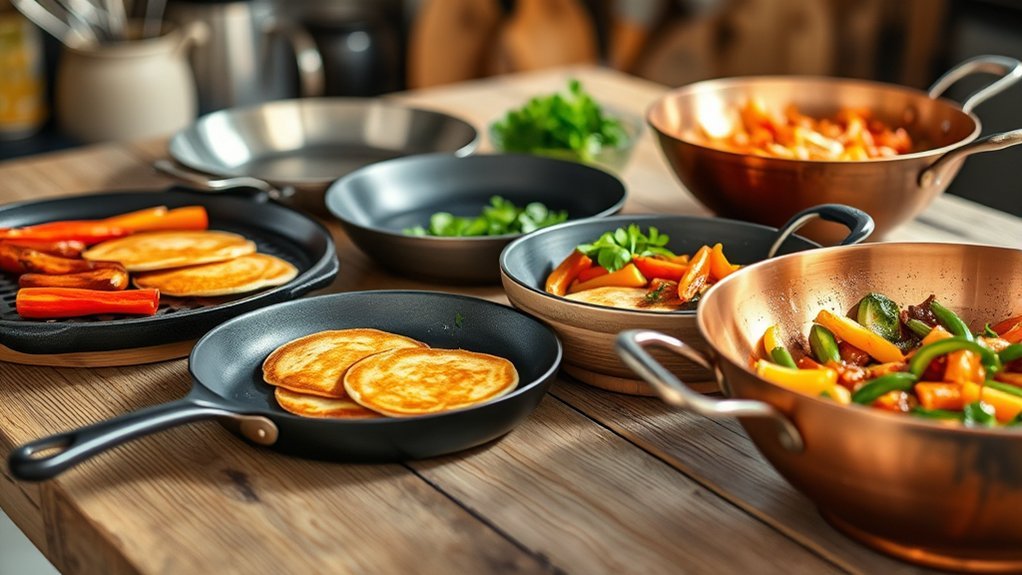

When life hands you no skillet pan, you don’t have to pause your cooking ambitions. You can reach for several everyday alternatives that offer a similar wide, flat surface and heat control, but each comes with its quirks.
Knowing which pan to choose and how to adapt your technique can make all the difference, especially when it comes to achieving that perfect sear or even browning. Let’s explore your best options.
Key Takeaways
- Non-stick frying pans offer even heating and easy food release, ideal for delicate items when avoiding sticking.
- Cast iron griddles provide superior heat retention and a flat surface for searing and grilling multiple foods simultaneously.
- Dutch ovens distribute heat evenly, supporting sautéing, searing, braising, and oven transitions for versatile cooking.
- Sauté pans and Dutch ovens mimic skillet functions but require careful stirring and preheating to prevent overcrowding and uneven cooking.
- Oven-safe baking dishes and grill pans serve as practical substitutes, offering even heat distribution and specialized cooking effects like grill marks.
Why You Can’t Always Swap Out Your Skillet
Why can’t you always swap out your skillet when cooking? It comes down to techniques mismatch and material expandability. Different pans distribute heat uniquely; for instance, cast iron retains heat longer than stainless steel.
If you replace your skillet with a pan that heats unevenly, your cooking results can suffer. Also, materials expand differently under high temperatures. Using a pan with poor material expandability can warp or damage your cookware, especially if you suddenly change heat levels.
These factors mean your cooking technique must adapt to the pan, or your food won’t cook evenly. So, swapping out your skillet isn’t always straightforward. You need to consider how the alternative’s heat distribution and material properties align with your recipe’s demands.
Using a Non-Stick Frying Pan as a Skillet Alternative
You can use a non-stick frying pan as a practical alternative to a skillet, especially for cooking delicate foods without sticking. Just be mindful to cook on medium or low heat to preserve the coating and avoid metal utensils that can damage the surface.
With proper care, a non-stick pan can deliver even cooking and easy cleanup.
Benefits Of Non-Stick Pans
How can a non-stick frying pan serve as a reliable alternative to a traditional skillet? Its primary benefit lies in effortless food release, reducing the need for excess oil and making your meals healthier.
Thanks to advanced heat safe coatings, these pans withstand high temperatures without compromising performance. You’ll appreciate how nonstick maintenance is straightforward—avoid metal utensils and harsh abrasives to preserve the surface. This ease of cleaning saves you significant time compared to traditional skillets.
Additionally, non-stick pans often heat evenly, preventing hotspots that can cause uneven cooking. Their versatility allows you to sauté, fry, and sear with minimal sticking issues. By choosing a quality non-stick frying pan, you combine convenience with durability, making it a practical skillet substitute in your everyday kitchen routine.
Cooking Tips For Non-Stick
When cooking with a non-stick frying pan as a skillet alternative, mastering temperature control is essential to preserving the pan’s coating and ensuring even cooking. Avoid high heat; medium or low settings work best to prevent damage.
Use utensils made of wood, silicone, or plastic to maintain proper utensil care and avoid scratching the surface. When selecting ingredients, consider flavor pairing carefully. Non-stick pans excel at cooking delicate foods like eggs and fish, which benefit from gentle heat and minimal oil.
Clean the pan promptly with a soft sponge and mild detergent, steering clear of abrasive scrubbers. Proper care extends the pan’s lifespan and retains its non-stick qualities, making it a reliable skillet substitute for everyday cooking tasks.
Using a Cast Iron Griddle Instead of a Skillet
When you switch to a cast iron griddle instead of a skillet, you’ll benefit from even heat distribution across a larger surface. The flat, ridged cooking area cooks food differently, providing great sear marks and allowing excess fat to drain.
This makes it ideal for grilling and frying tasks where you want consistent heat and texture.
Heat Distribution Benefits
A cast iron griddle offers exceptional heat distribution that can enhance your cooking experience compared to a traditional skillet. Because cast iron is a dense pan material, it retains and spreads heat evenly across its surface. This means you’ll avoid hot spots that often cause uneven cooking or burning in thinner pans.
When you use a cast iron griddle, the steady, uniform heat allows you to cook multiple items at once without constantly adjusting the temperature. The pan material’s ability to maintain consistent heat also improves searing and browning, giving your food better texture and flavor.
In short, a cast iron griddle’s superior heat distribution helps you cook more efficiently and with greater control than many other pans.
Cooking Surface Differences
How does the cooking surface of a cast iron griddle differ from that of a skillet? Unlike the deeper, curved surface of a skillet, a cast iron griddle offers a flat, expansive cooking area. This design makes the griddle ideal for foods needing even contact, such as pancakes or sandwiches.
As alternative cookware, it provides unique advantages in heat distribution. The flat surface ensures consistent heat across the entire area, preventing hotspots common in some skillets. Additionally, the griddle’s open surface allows for easier handling of multiple items simultaneously.
When you choose a cast iron griddle instead of a skillet, you’re opting for a versatile tool that excels in searing and grilling flat foods while maintaining excellent heat retention and uniform cooking.
Using Oven-Safe Baking Dishes as Skillet Substitutes
Oven-safe baking dishes offer a versatile alternative to skillet pans, especially when you need to move your cooking from stovetop to oven seamlessly. If you lack a skillet, you can rely on these dishes by mastering pan substitute techniques focused on oven safe baking.
Choose a dish that distributes heat evenly and withstands high temperatures.
Consider these benefits when using baking dishes as skillet substitutes:
- Retain moisture for juicier dishes
- Simplify oven finishing without transferring food
- Reduce cleanup with non-stick surfaces
- Maintain consistent heat for thorough cooking
- Avoid flare-ups common with open flame pans
Using a Sauté Pan as a Skillet Alternative
When you need a reliable skillet alternative, a sauté pan can step in effectively thanks to its wide, flat bottom and taller sides. Unlike a traditional skillet, its deeper walls help contain sauces and prevent splatter, making it an excellent choice for searing, sautéing, or pan-frying.
When considering skillet alternatives in your cookware swaps, the sauté pan’s design allows for even heat distribution, ensuring your food cooks uniformly. Its versatility means you can easily transfer it from stovetop to oven if it’s oven-safe, expanding your cooking options.
While it may not provide the exact same surface area or edge shape as a skillet, it’s a practical substitute that handles most skillet tasks efficiently without compromising your recipe’s integrity.
Using a Grill Pan Instead of a Skillet
Why choose a grill pan over a skillet? A grill pan offers unique advantages that address some skillet swap limitations, especially when you want those classic grill marks and a smoky flavor indoors. Unlike typical grill pan alternatives, it adds texture and visual appeal to your food.
Using a grill pan instead of a skillet:
- Delivers rich, charred flavor without outdoor grilling
- Creates attractive sear lines that elevate presentation
- Allows fat to drain away, promoting healthier cooking
- Handles high heat well for quick, even cooking
- Works great for veggies, meats, and sandwiches
Keep in mind, grill pans have ridges that limit their use for sauces or delicate foods. Still, as a skillet substitute, they bring grilling benefits to your stovetop.
Using a Wok as a Skillet Substitute
How can a wok serve as an effective skillet substitute in your kitchen? Its unique shape and design offer impressive wok versatility, allowing you to sauté, sear, and stir-fry with ease.
The sloped sides give you more surface area to cook evenly, while the deep bowl helps contain ingredients without spilling. Thanks to excellent heat retention, a wok maintains consistent high temperatures, essential for quick cooking and developing rich flavors.
You can use it on most stovetops, and its lightweight nature makes it easy to maneuver, unlike heavier skillets. Just ensure you preheat it well to maximize the heat retention benefits.
Why a Dutch Oven Makes a Great Skillet Alternative
If you’ve found a wok handy for its versatility, a Dutch oven offers a different kind of functionality that can also replace a skillet effectively. Its thick walls and heavy lid create an even heat distribution, making it ideal for achieving savory outcomes that a skillet might struggle with.
The Dutch oven’s culinary versatility lets you sauté, sear, braise, and even bake—all in one pot. When you use it, you’ll appreciate:
- Retains heat evenly for consistent cooking
- Excellent for slow-cooked, flavor-rich dishes
- Durable and long-lasting, often cast iron
- Can transition from stovetop to oven seamlessly
- Spacious interior supports large or small portions
Choosing a Dutch oven means you’re not just substituting a pan; you’re unlocking a new dimension of cooking possibilities.
Adjusting Cooking Techniques When You Lack a Skillet
When you don’t have a skillet on hand, you need to rethink your cooking approach to achieve the best results. Start by mastering cleared techniques like sautéing or searing in alternatives such as a sauté pan or Dutch oven. These tools often have higher sides, so watch your stirring and turning to avoid overcrowding.
Heat management becomes essential. Adjust your stove’s temperature more frequently since different cookware distributes heat unevenly compared to a skillet. Use medium or medium-high heat rather than high to prevent burning and guarantee even cooking.
Also, consider preheating your pan thoroughly to compensate for heat loss. By adapting your timing and stirring habits, you’ll maintain control over texture and flavor, successfully replicating skillet-cooked dishes without compromise.
Frequently Asked Questions
Can I Use a Microwave-Safe Dish Instead of a Skillet?
You can use a microwave-safe dish, but remember skillet cooking involves high heat and browning, which microwaves don’t provide.
Choose dish material alternatives like ceramic or glass, ensuring they meet microwave safety standards for best results.
How Do I Clean a Skillet Substitute Properly?
You clean a skillet substitute by choosing methods suited to its material durability. Use mild soap and soft sponges for non-stick, avoid harsh scrubbers on cast iron, and ensure thorough drying to prevent rust or damage.
Will Using a Skillet Alternative Affect Cooking Time?
Like switching from a trusty steed to a sleek motorbike, alternative cookware can change your time impact. Some heat faster, others slower. You’ll want to adjust cooking times slightly to get perfect results every time.
Are Electric Skillets a Good Replacement Option?
Electric skillets work well as replacements, offering even heat and versatility. If you lack one, consider electric skillet alternatives like microwave safe dish options for quick reheating, though they won’t achieve the same sear or browning.
Can I Bake and Sear Food Using the Same Skillet Substitute?
Like Da Vinci blending art and science, you can sear and bake using a versatile cookware alternative like a cast iron pan.
It handles high heat for searing and shifts smoothly to the oven for baking without compromise.
Conclusion
When you don’t have a skillet, don’t sweat it—you’ve got plenty of trusty sidekicks like sauté pans, grill pans, or even a Dutch oven ready to step in. Each alternative has its quirks, so keep a close eye on heat and timing to avoid cooking mishaps.
With a bit of practice, you’ll turn any pan into a culinary superhero, searing and sautéing like a pro without missing a beat. Remember, knowing what can I use instead of a skillet pan will keep your cooking game strong no matter what cookware you have on hand.