
A skillet is more than just a cooking tool—it’s the foundation of countless meals, and how you care for your skillet directly shapes its performance and lifespan. Proper cleaning, drying, and seasoning are essential if you want to keep your skillet reliable and non-stick.
Neglecting maintenance can lead to rust, food sticking, and a shorter lifespan. But what exactly does effective maintenance look like for different types of skillets? How do you handle common issues before they become costly problems?
Key Takeaways
- Clean skillets promptly with appropriate methods: warm water and soft tools for cast iron, soapy water for stainless steel, and gentle washing for non-stick.
- Avoid harsh detergents, steel wool, or abrasive scrubbers to protect seasoning and surface coatings.
- Dry skillets thoroughly after washing to prevent rust and maintain heat distribution.
- Regularly season cast iron skillets using high-smoke-point oils and baking to sustain a durable non-stick surface.
- Store skillets in dry places with breathable separators to preserve seasoning and prevent moisture damage.
How Proper Cleaning Extends Skillet Life
Proper cleaning is essential to extend the life of your skillet. When you clean it correctly, you preserve the integrity of the seasoned surface, which is crucial for natural non-stick properties and enhanced heat distribution.
Avoid harsh detergents or abrasive tools that can strip away this protective layer. Instead, use warm water and a soft brush or sponge to remove food residues promptly after cooking.
Dry the skillet thoroughly to prevent rust, which compromises both the surface and heat conduction. Maintaining this seasoned surface ensures even heat distribution during cooking, preventing hot spots and improving performance.
Safely Cleaning Cast Iron Skillets
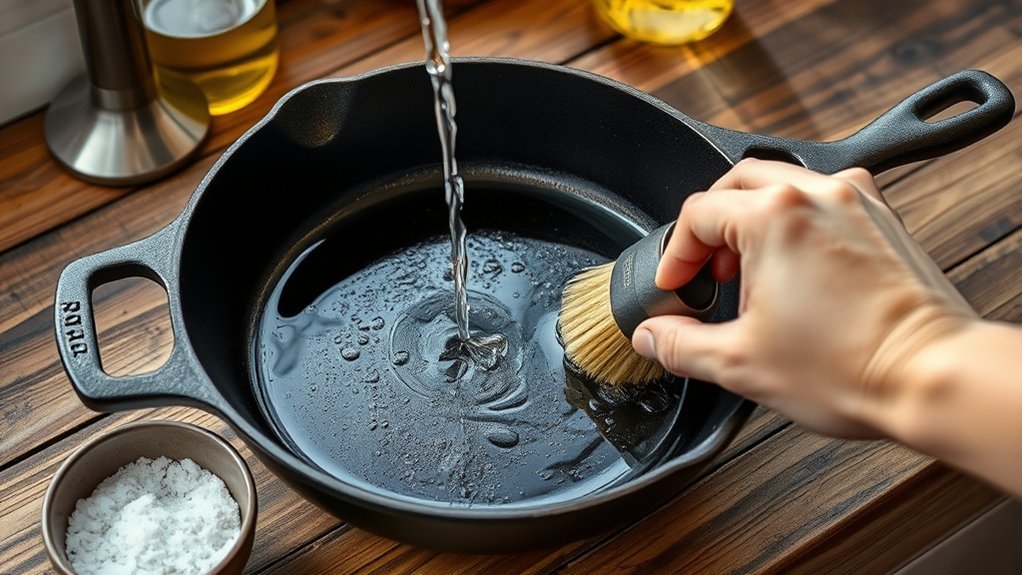
How should you clean cast iron skillets to protect their seasoning and prevent rust? Start by avoiding harsh soaps or soaking, which can strip seasoning, a common seasoning myth. Instead, clean your skillet while it’s still warm using a stiff brush or plastic scraper and hot water.
For stuck-on food, add coarse salt as an abrasive scrub. Never use steel wool; it damages the seasoning layer. After washing, dry your skillet thoroughly to avoid rust.
Then, apply a light coat of oil with a smoke point suitable for seasoning maintenance, such as flaxseed or grapeseed oil. Heat the skillet briefly to bond the oil, reinforcing the seasoning. Following these steps preserves your skillet’s non-stick surface and extends its life without falling for seasoning myths.
Best Ways to Clean Stainless Steel Skillets
While cast iron skillets demand careful seasoning care, stainless steel pans require a different cleaning approach to maintain their shine and performance. You’ll want to focus on material nuances to avoid scratching or dulling the surface.
Use warm, soapy water and a soft sponge immediately after cooking. For stuck-on food, soak the skillet briefly, then scrub gently with a non-abrasive pad. Avoid harsh detergents or steel wool to preserve the finish.
Here are essential care tips:
| Step | Action | Result |
|---|---|---|
| Immediate Cleaning | Soap and warm water | Prevents residue |
| Soaking | Brief soak for tough spots | Eases removal |
| Gentle Scrubbing | Non-abrasive pad | Protects surface |
| Dry Thoroughly | Wipe and air dry | Prevents water spots |
Follow these steps to keep your stainless steel skillet gleaming.
How to Maintain Non-Stick Skillet Coatings
When was the last time you thought about preserving your non-stick skillet’s coating? To ensure nonstick safety and extend coating longevity, avoid using metal utensils. They scratch and degrade the surface.
Always cook on low to medium heat; excessive heat can warp and damage the coating. Hand wash your skillet with a soft sponge and mild detergent instead of the dishwasher, which can erode the coating over time.
Avoid abrasive scrubbers or harsh chemicals that compromise the non-stick layer. Store your skillet carefully, preferably with a soft cloth between pans to prevent scratches.
Following these straightforward steps not only maintains your skillet’s performance but also keeps your food healthier by preventing coating particles from mixing in. Prioritize these habits to protect your investment and enjoy reliable non-stick cooking.
When and How to Season Your Cast Iron Skillet
You should season your cast iron skillet when it’s new or whenever the surface looks dull or sticky. Use a high-smoke-point oil like flaxseed, grapeseed, or vegetable oil for the best results.
Follow a simple process: clean the skillet, apply a thin layer of oil, and bake it upside down at 450°F for an hour to build a durable non-stick surface.
Timing for Seasoning
How often should you season your cast iron skillet to keep it in top condition? Seasoning timing depends on your skillet’s usage and condition. If you use your skillet daily, a monthly seasoning might suffice. For occasional use, seasoning every few months works well. Always season after deep cleaning or if the surface looks dull or rusty. Consistent seasoning builds a durable non-stick layer.
When you’re ready to season, ensure your skillet is clean and dry. Apply a thin, even coat of your chosen oil. Oil selection impacts the quality of the seasoning layer, so pick one suited for high-heat baking. Bake your skillet upside down at 375–450°F for an hour, then let it cool in the oven. Proper timing and consistent care keep your skillet performing flawlessly.
Choosing the Right Oil
Why does the choice of oil matter so much for seasoning your cast iron skillet? The right oil ensures effective polymerization, creating a durable, non-stick surface. You want an oil with a high smoke point to withstand heat without burning, which protects your skillet’s seasoning layer.
Proper heat distribution during seasoning is essential, and oils with stable smoke points help achieve this evenly.
| Oil Type | Smoke Point (°F) | Best Use |
|---|---|---|
| Flaxseed Oil | 225 | Durable seasoning, requires care |
| Canola Oil | 400 | Balanced, widely available |
| Grapeseed Oil | 420 | High smoke point, smooth finish |
| Vegetable Oil | 400-450 | Reliable, good heat distribution |
Choose an oil that fits your seasoning needs and matches your heating approach.
Step-by-Step Seasoning Process
When should you season your cast iron skillet to maintain its performance? Proper seasoning timing is essential. Season your skillet when it shows signs of dullness, rust, or food sticking.
Seasoning restores the protective layer, ensuring durability and non-stick properties. Follow this step-by-step process:
- Clean the skillet thoroughly and dry it completely.
- Apply a thin, even layer of your chosen oil. Focus on oil selection; use oils with high smoke points like flaxseed, grapeseed, or vegetable oil.
- Place the skillet upside down in a preheated oven at 450°F (230°C) for one hour. Let it cool inside the oven.
Repeat seasoning as needed to maintain an excellent cooking surface and prolong your skillet’s lifespan.
How to Store Your Skillet to Prevent Damage
You need to keep your skillet completely dry before storing it to prevent rust. Use protective liners between stacked skillets to avoid scratches and chipping.
Always store your skillet in a cool, dry place to maintain its condition.
Keep Skillet Dry
How can you protect your skillet from rust and damage during storage? Keeping your skillet dry is essential for preventing moisture buildup, which leads to rust and degrades seasoning oils. After cleaning, thoroughly dry your skillet with a towel or on low heat.
Effective moisture control during storage preserves the skillet’s surface and functionality.
To keep your skillet dry, follow these key steps:
- Store it in a well-ventilated area to avoid trapped humidity.
- Apply a thin layer of seasoning oils to create a moisture barrier.
- Avoid stacking damp cookware on or inside the skillet.
Use Protective Liners
Why should protective liners be part of your skillet storage routine? Using protective liners prevents scratches and dents when you stack your skillets or store them close together. These liners act as a barrier, preserving the surface integrity and seasoning of your cookware.
When choosing liners, ensure liner compatibility with your skillet material. Silicone and felt liners work well with cast iron and stainless steel. Avoid abrasive materials that can damage the skillet’s finish.
Place a liner between each skillet or pan to prevent direct metal-to-metal contact. This simple step reduces wear and extends the lifespan of your skillet.
Incorporating protective liners into your storage approach is a practical, effective way to maintain your skillet’s condition and performance over time.
Store In A Dry Place
Moisture is the silent enemy of your skillet, accelerating rust and degrading its seasoning. To keep your skillet in top shape, always store it in a dry place. This prevents moisture buildup that can compromise your seasoning frequency and lead to frequent re-seasoning.
After cleaning and drying thoroughly, consider the following storage tips:
- Use a breathable cloth or paper towel between stacked skillets to absorb residual moisture.
- Avoid airtight containers or plastic bags that trap humidity.
- Store near heat sources below oil smoke points to maintain seasoning integrity.
Fixing Common Skillet Problems You Can Handle at Home
Tackle common skillet issues like rust, sticking, and uneven seasoning quickly to keep your cookware in top shape. For rust, scrub the affected area with steel wool or a stiff brush, then re-season your skillet immediately.
When food sticks, it usually means your seasoning layer needs repair. Clean the skillet thoroughly and apply a thin coat of oil before heating it to restore the non-stick surface.
Uneven seasoning can cause inconsistent cooking. Correct this by evenly applying oil and baking the skillet upside down in the oven at 400°F for an hour.
These simple fixing issues are manageable home repairs that extend your skillet’s life. Address problems promptly, and your skillet will perform reliably for years.
When to Replace Your Skillet for Best Cooking
A well-maintained skillet can last for decades, but there comes a point when replacement is necessary to ensure optimal cooking performance. You should consider replacing your skillet if you notice significant warping, persistent rust that won’t come off, or a severely damaged cooking surface. Ignoring these issues compromises your food quality and safety.
When deciding on a new skillet, keep these factors in mind:
- Monitor pricing trends to find the best value without sacrificing quality.
- Weigh the benefits of brand loyalty against innovation from newer brands.
- Evaluate material and coating advancements that improve durability and heat distribution.
Replacing your skillet at the right time ensures your cooking remains efficient and enjoyable without unnecessary expense or compromise.
Maximizing Your Skillet’s Performance Over Time
Even if your skillet is in good condition, you can extend its lifespan and maintain top cooking performance by following a few key care practices. Prioritize consistent seasoning frequency; regularly apply a thin layer of oil and heat your skillet to reinforce its non-stick surface.
Use oils with a high smoke point, such as grapeseed or avocado oil, to prevent breakdown during seasoning and cooking, which protects the skillet’s surface. Avoid overheating, as excessive heat can degrade seasoning layers and warp the pan.
After each use, clean your skillet promptly without harsh detergents, dry it thoroughly, and apply a light coat of oil before storing. These steps ensure your skillet stays responsive and durable, maximizing performance and preserving its cooking efficiency over time.
Choosing the Best Skillet for Your Cooking Style
Choosing the right skillet starts with understanding the materials available, from cast iron to stainless steel, and how each suits different cooking methods. You’ll also need to consider the size and shape that match your typical recipes and kitchen space.
Making informed choices here ensures your skillet performs well and lasts longer.
Material Options Explained
Which skillet material suits your cooking style best? Your choice impacts seasoning frequency, oil selection, and overall maintenance. Cast iron demands regular seasoning and high-smoke-point oils, making it ideal if you prefer durability and enhanced flavor over time.
Carbon steel offers a balance. It is lighter than cast iron with similar seasoning needs but quicker heating. Non-stick skillets require less seasoning and allow varied oil use but aren’t suited for high-heat searing.
Consider these material traits:
- Cast Iron: durable, requires frequent seasoning, uses specific oils
- Carbon Steel: lighter, moderate seasoning frequency, versatile oil use
- Non-Stick: minimal seasoning, flexible oil choices, best for gentle cooking
Match material with your cooking habits to maintain your skillet effectively and enjoy optimal performance.
Size and Shape Choices
How do you determine the right size and shape of skillet for your cooking needs? First, consider the meals you frequently prepare. If you often cook for one or two, smaller size options like 8- or 10-inch skillets work best.
For family meals or batch cooking, a 12-inch skillet provides ample space. Next, assess the shape variety. Traditional round skillets offer versatility, while square or rectangular pans provide extra surface area, ideal for multiple items or larger cuts of meat.
Also, consider skillet depth. A deeper skillet suits saucy dishes, while shallow ones excel at searing. Choosing the right size and shape ensures even cooking and easy handling. Prioritize what fits your stove and storage too.
This practical approach helps you maintain your skillet’s performance and longevity.
Frequently Asked Questions
Can I Use a Dishwasher for Cleaning My Skillet?
You shouldn’t use a dishwasher for skillet cleaning because it risks damaging the seasoning and isn’t dishwasher safe. Avoid metal utensil use to protect the surface, and clean your skillet by hand with gentle methods instead.
Is It Safe to Use Metal Utensils on All Skillet Types?
Like a sword on silk, metal utensils can damage delicate skillets. You shouldn’t use them on non-metal safe skillets like cast iron or nonstick.
Stick to metal safe tips: choose wooden, silicone, or plastic tools instead.
How Do I Remove Rust From a Cast Iron Skillet?
To remove rust from your cast iron skillet, scrub it with steel wool, rinse thoroughly, then dry completely.
Restore seasoning by applying a thin layer of oil and baking it in the oven to protect and maintain its surface.
Can I Use My Skillet on an Induction Cooktop?
When Sarah switched to an induction cooktop, she found her cast iron skillet worked perfectly due to induction compatibility.
You’ll enjoy precise heat distribution, making it practical and efficient for cooking your favorite meals every time.
What Oils Are Best for Seasoning a Cast Iron Skillet?
You should use seasoning oils with a high smoke point, like flaxseed, grapeseed, or canola oil. These oils polymerize well, creating a durable, non-stick layer on your cast iron skillet for long-lasting performance.
Conclusion
By properly cleaning and seasoning your skillet, you can extend its life by over 20 years, saving money and enhancing your cooking experience. Regular maintenance prevents rust, preserves non-stick surfaces, and ensures even heat distribution.
Remember, skipping seasoning or using harsh cleaning methods can reduce your skillet’s effectiveness quickly. Stick to gentle cleaning techniques, dry thoroughly, and store your skillet correctly to keep it performing like new.
With consistent care, your skillet becomes an indispensable kitchen tool for decades. Proper maintenance is key to maintaining your skillet’s durability and cooking performance.